

Michelin Plate
Our verdict
Yeni Lokanta sits in Beyoğlu's Tomtom quarter at the intersection where Anatolian pantry ingredients meet European culinary technique. Ranked 22nd in Opinionated About Dining's Casual Europe list for 2025 and holding a Michelin Plate, it occupies a distinct position in Istanbul's modern Turkish dining scene: serious in approach, accessible in register, and priced a tier below the city's ₺₺₺₺ contemporary restaurants.

Pearl is the En Primeur Club membership app, where members save venues, book tables and use the concierge.
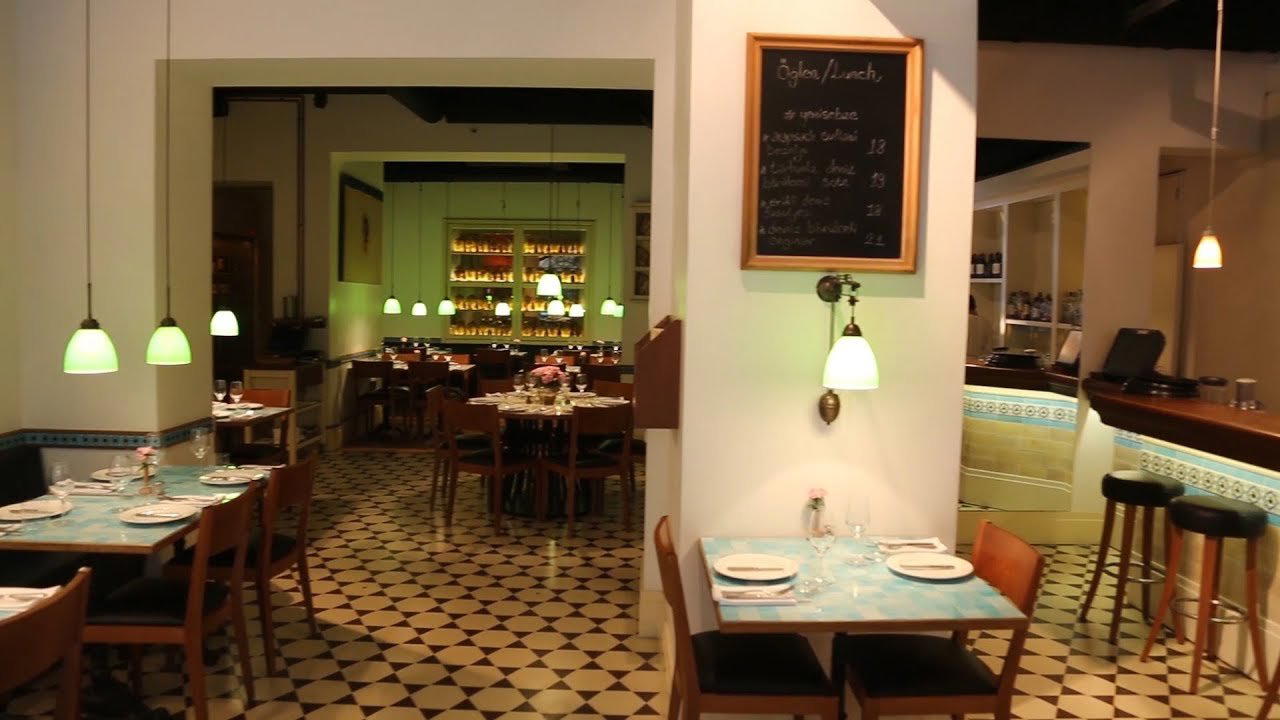
Kumbaracı Yokuşu and the Beyoğlu Dining Shift
Kumbaracı Yokuşu is one of those Beyoğlu streets that resists easy categorisation. It runs steeply uphill from the lower edges of Galata toward Tomtom, lined with a mix of neighbourhood bars, small galleries, and restaurants that have, over the past decade, become a reference point for the more considered end of Istanbul's casual dining scene. The street doesn't announce itself the way İstiklal Caddesi does, but that's precisely the point: the places worth knowing on Kumbaracı Yokuşu earn their reputation through what happens at the table, not through foot traffic.
Yeni Lokanta occupies a ground-floor space on this street, at number 66/B in the Tomtom neighbourhood of Beyoğlu. The setting matters because Beyoğlu has functioned for generations as Istanbul's most cosmopolitan district, a place where the city's Ottoman inheritance, its Republican-era modernism, and its absorption of European influence have coexisted in productive tension. A restaurant working at the intersection of Turkish ingredients and international technique lands, in this neighbourhood, as something entirely plausible rather than a statement of novelty.
Where Anatolian Ingredients and European Method Converge
Istanbul's contemporary restaurant scene has developed along two distinct tracks over the past fifteen years. One track runs toward the high-end modern Turkish format, where restaurants like Mikla, Neolokal, and Nicole operate at ₺₺₺₺ price points with tasting-menu structures and extensive research programs. The other track is smaller, less discussed internationally, and in many ways more interesting: it involves kitchens that apply serious technique to Turkish ingredients without the ceremony or the pricing of the tasting-menu tier.
Yeni Lokanta, priced at ₺₺₺, sits firmly in this second category. Chef Adrian Glaza brings a perspective shaped outside Turkey, which is itself a recurring pattern in the more technically ambitious Istanbul kitchens. What distinguishes the approach here is that the technique functions in service of the ingredient rather than as a demonstration of method. Anatolian products, the dried pulses, the regional cheeses, the cured and smoked preparations that form the backbone of Turkish kitchen tradition, are handled with the precision associated with European training rather than the volume-cooking habits of the traditional lokanta.
The word lokanta in the restaurant's name carries deliberate weight. In Turkish, a lokanta is a working restaurant, typically affordable and unpretentious, feeding tradespeople and neighbourhood residents rather than tourists or special-occasion diners. Attaching the word to a kitchen operating at this level of seriousness is a positioning statement: the ambition is contemporary, but the register is democratic. That combination is harder to sustain than it sounds.
Recognition and Peer Position
In 2025, Yeni Lokanta holds a Michelin Plate and ranks 22nd on the Opinionated About Dining Casual Europe list, a ranking that places it among the continent's more noticed casual-format restaurants. OAD's Casual Europe list operates differently from its main rankings in that it specifically identifies restaurants where the cooking is serious but the setting and pricing are deliberately non-formal.
The comparison set here matters. Within Istanbul, the ₺₺₺₺ tier of modern Turkish restaurants, including Turk Fatih Tutak, Mikla, and Arkestra, prices against a different expectation and operates with a different ambition around ceremony and format. Yeni Lokanta competes instead with a smaller group of technically serious but structurally casual places, and in that group it has accumulated more international critical attention than most. For readers tracking Istanbul's broader restaurant offer, 29, Aheste, and Alaf each occupy adjacent territory and reward comparison.
The Broader Turkish Dining Context
Understanding what Yeni Lokanta is doing requires some understanding of what modern Turkish restaurant cooking has been working through. For most of the twentieth century, the prestige register of Istanbul dining was dominated by either meyhane culture, where food arrived alongside rakı in a format designed for long, convivial evenings, or by Ottoman-inflected hotel dining, heavy on presentation and light on ingredient specificity. The serious reevaluation of Anatolian ingredients as the foundation for contemporary cooking is a relatively recent development, and it has happened partly through chefs returning from training abroad and partly through a broader cultural reckoning with what Turkish cuisine actually contains beyond its most exported forms.
Yeni Lokanta belongs to that renegotiation. It is not an argument that Turkish food needs to be made French, or that technique imports automatically improve traditional preparations. It is, more usefully, an example of what happens when a kitchen has access to both the depth of the Anatolian pantry and the technical vocabulary to use it with control. That combination is what places Istanbul on the same map as other cities where this kind of conversation is happening, and restaurants like Narımor in Izmir and Kitchen by Osman Sezener in Bodrum are conducting parallel versions of it across Turkey's dining cities.
For grill-focused Turkish cooking at a different register, Adana Ocakbaşı and Ali Ocakbaşı represent Istanbul's strength in the ocakbaşı tradition. Further afield, 7 Mehmet in Antalya, Agora Pansiyon in Milas, Ahãma in Göcek, and Aravan Evi in Ürgüp show how regional Turkish cooking varies sharply by geography. And internationally, dede in Baltimore and Adil Müftüoğlu in Izmir offer different angles on what Turkish-rooted cooking looks like when it moves or translates.
Planning Your Visit
Yeni Lokanta is located at Kumbaracı Yokuşu Sok. No:66/B in the Tomtom quarter of Beyoğlu, a ten-to-fifteen minute walk from Taksim Square and accessible from Karaköy below. The price register at ₺₺₺ makes it one of the more approachable serious restaurants in the city without dropping into casual territory. Given its OAD ranking and Michelin recognition, reservations are advisable, particularly for weekend evenings; booking in advance rather than walking in is the dependable approach. Our full Istanbul restaurants guide covers the wider dining scene, and if you're building a longer trip around Istanbul, our guides to hotels, bars, wineries, and experiences provide the fuller picture.
Frequently asked questions
What do regulars order at Yeni Lokanta?
The kitchen's identity is built around Turkish ingredients handled with European technique, so the dishes that draw repeat visitors tend to be those where the Anatolian pantry, fermented, dried, or cured preparations, meets precise contemporary cooking. Given the Michelin Plate recognition and OAD Casual Europe ranking, the menu's more composed vegetable and protein dishes are the ones critics have responded to most consistently.
Is Yeni Lokanta better for a quiet night or a lively one?
Beyoğlu sets the ambient register here as much as the restaurant itself. The Kumbaracı Yokuşu location sits in one of the neighbourhood's more considered pockets rather than its loudest stretches, and the ₺₺₺ pricing and OAD Casual recognition suggest a room that skews toward engaged diners rather than a party crowd. Istanbul's energy means even mid-tier casual restaurants carry some noise, but Yeni Lokanta's profile points toward the focused end of that spectrum rather than the festive.
Is Yeni Lokanta suitable for children?
At ₺₺₺ in an Istanbul casual-dining context, the restaurant is accessible enough that families are not categorically out of place. That said, the kitchen's technical approach and the Beyoğlu evening dining culture mean it is more naturally suited to adult diners with an interest in the food. Younger children will find the format better at lunch or early evening; the later the booking, the more the room skews toward adults. If the itinerary is primarily family-focused, Istanbul's broader restaurant scene offers formats better designed around that need.
How It Stacks Up
A compact comparison to help you place this venue among nearby peers.
| Venue | Cuisine | Price | Awards | Notes |
|---|---|---|---|---|
| Yeni LokantaThis venue (the venue you are viewing) | Contemporary Turkish | Not listed | Michelin Plate | Not listed |
| Turk Fatih Tutak | Modern Turkish Fine Dining | $200–300 | 2 Michelin Stars · World's 50 Best #66 | Modern Turkish, ₺₺₺₺ |
| Mikla | New Anatolian Kitchen | $100–150 | 1 Michelin Star · World's 50 Best #44 | Modern Turkish, Mediterranean Cuisine, ₺₺₺₺ |
| Neolokal | Modern Turkish Fine Dining | $200–300 | 1 Michelin Star · World's 50 Best #100 | Modern Turkish, Turkish, ₺₺₺₺ |
| Arkestra | Modern European with Global Influences | $100–150 | 1 Michelin Star · Gault & Millau Türkiye 3 Toques | Fusion, ₺₺₺₺ |
| Nicole | Contemporary Turkish Fine Dining | $150–200 | 1 Michelin Star · Gault & Millau Türkiye 3 Toques | Modern Turkish, Modern Cuisine, ₺₺₺₺ |
Recognition history
Dated appearances from independent guides and award organizations, with the underlying list record or original source where available.
Michelin Plate
Michelin
Opinionated About Dining Top Restaurants in Europe Ranked #150
Opinionated About Dining
Full recognition history (3 entries)
Opinionated About Dining Casual in Europe Ranked #22
Opinionated About Dining
Continue exploring
More in Istanbul
Restaurants in Istanbul
All restaurants in Istanbul →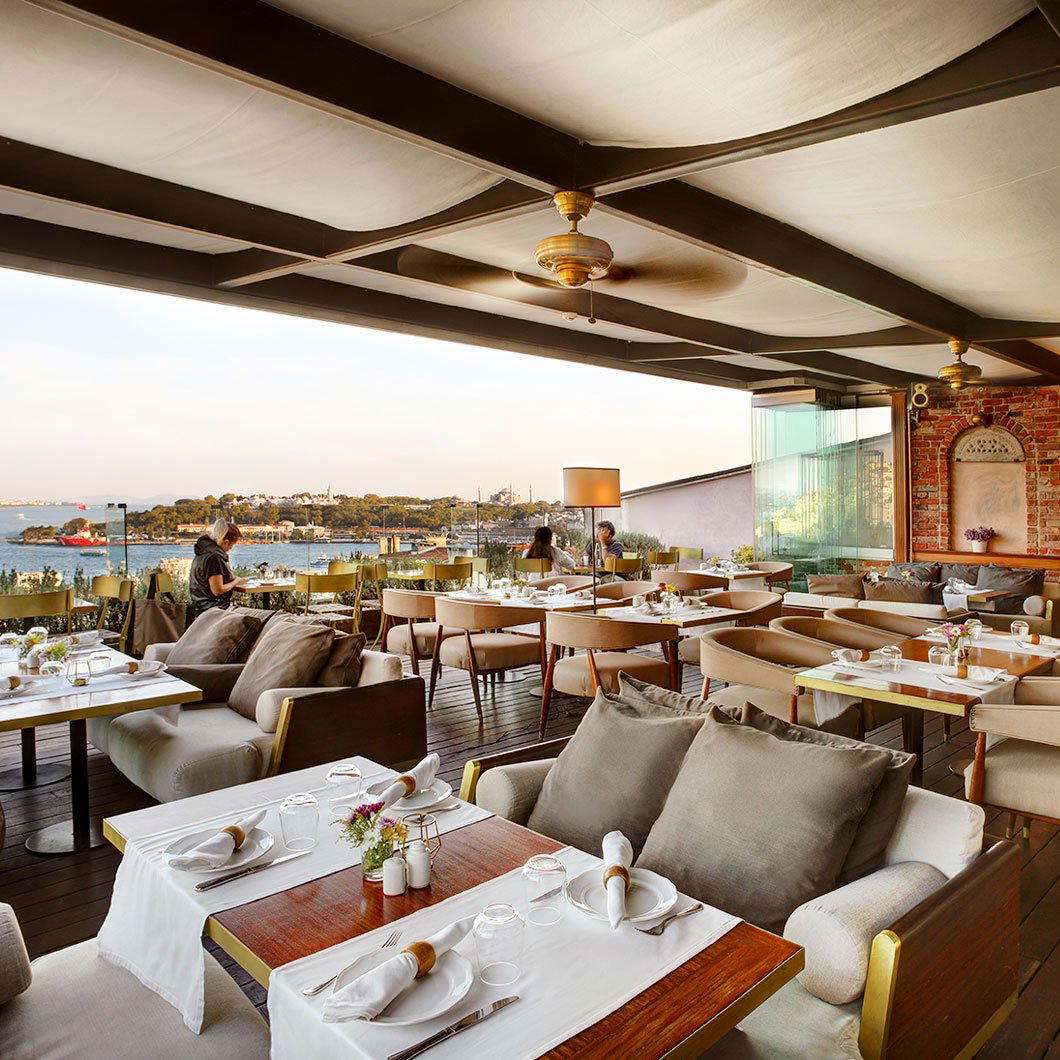
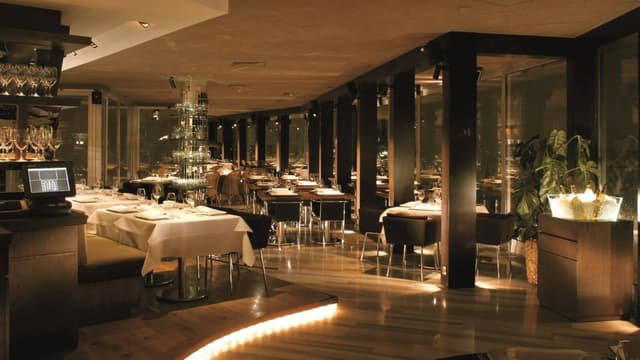
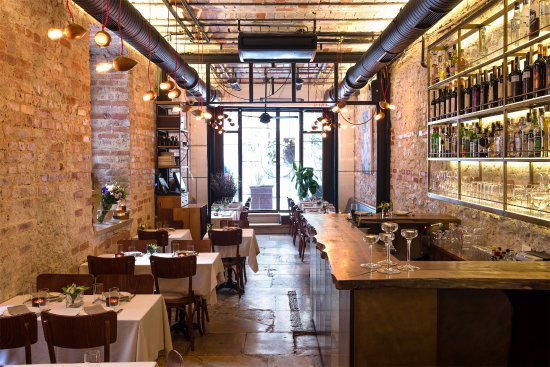
Bars in Istanbul
All bars in Istanbul →
Details
- Modern
- Lively
- Trendy
- Sophisticated
- Date Night
- Business Dinner
- Special Occasion
- Group Dining
- Standalone
- Private Dining
- Design Destination
- Local Sourcing
- Tasting Menu
- A La Carte
- Wine
- Bar Menu
Current opening hours
- Monday
- 12–4 PM, 5 PM–12:30 AM
- Tuesday
- 12–4 PM, 5 PM–12:30 AM
- Wednesday
- 12–4 PM, 5 PM–12:30 AM
- Thursday
- 12–4 PM, 5 PM–12:30 AM
- Friday
- 12–4 PM, 5 PM–12:30 AM
- Saturday
- 12–4 PM, 5 PM–12:30 AM
- Sunday
- 1–10 PM
Hours can change for holidays and private events. Hours as of .
Bright Mediterranean-style dining room with a bustling but welcoming atmosphere and relaxed, polished service.