
Michelin Bib Gourmand · Black Pearl 1 Diamond
Our verdict
A Michelin Bib Gourmand–awarded vegetarian restaurant on Xiamen's Huandao South Road beachside promenade, Wuwei Natural Food serves two season-driven set menus in a villa setting with open patio seating and ocean views. The Six-Treasure Soup, a plant-based reinterpretation of the Fujian classic Buddha Jumps Over the Wall, anchors the menu. Priced at the ¥¥ tier, it holds both 2025 Michelin Bib Gourmand and Black Pearl 1 Diamond recognition.

Pearl is the En Primeur Club membership app, where members save venues, book tables and use the concierge.

The menu
What to order
- Six-Treasure Soup
- Green Lotus Pod and Bamboo Pith Egg Soup
- Overlord Flower Stewed with Matsutake
- Crispy Handmade Bean Steak
- Crispy Taro Minced Meat
Where the South China Sea Sets the Pace
Xiamen's coastline along Huandao South Road occupies a specific register in the city's dining geography. The stretch runs between the sea and a recreational promenade, and the restaurants that have established themselves here tend to position around view and atmosphere as much as cuisine. Within that context, the plant-based format Wuwei Natural Food occupies is a deliberate outlier: while its neighbours lean into seafood and Fujian comfort cooking, this villa restaurant builds its offering around seasonal vegetables, fungi, and the slow logic of Chinese monastic cooking traditions. The setting and the menu tell a coherent story, though the story is one about a broader movement in Chinese dining rather than about any single address.
Plant-based fine dining in mainland China has evolved considerably since Fu He Hui opened in Shanghai and began accumulating serious critical recognition. What was once a format associated with Buddhist temple kitchens and tourist-adjacent vegetarian buffets has gradually split into a more differentiated field. At one end sit the high-ceremony tasting menus in tier-one cities, Fu He Hui, Vegetarian in Shanghai and Lamdre, Vegetarian in Beijing both occupy that space. Xiamen's version of this shift is quieter and more grounded in local produce logic, which is where Wuwei sits: awarded but unpretentious, seasonal in a specific Fujian sense, and priced accessibly enough to hold Michelin's Bib Gourmand designation in both 2024 and 2025.
The Calendar Behind the Menu
Fujian's subtropical climate means the province does not follow the stark four-season produce rhythm that defines menus further north. The growing windows are longer, the wild mushroom cycles run across multiple months, and coastal humidity shapes what arrives in kitchen deliveries week to week. A menu built seriously around seasonal produce in this part of southern China is therefore not about dramatic seasonal pivots but about a granular responsiveness to what is available at peak condition across shorter cycles.
Wuwei operates on a two-set-menu format. This structure is itself an editorial position: it limits table turnover and forces the kitchen to commit fully to a defined sequence rather than hedging across a large à la carte spread. For a seasonal-produce-led program, the discipline matters. When a kitchen can only execute two menus rather than twenty dishes, ingredient selection becomes load-bearing. Produce sourcing in Fujian has genuine depth to draw from. The province grows shiitake, oyster mushrooms, and a range of regional fungi varieties that have no easy equivalents elsewhere in China, and which appear in temple cooking traditions going back several centuries.
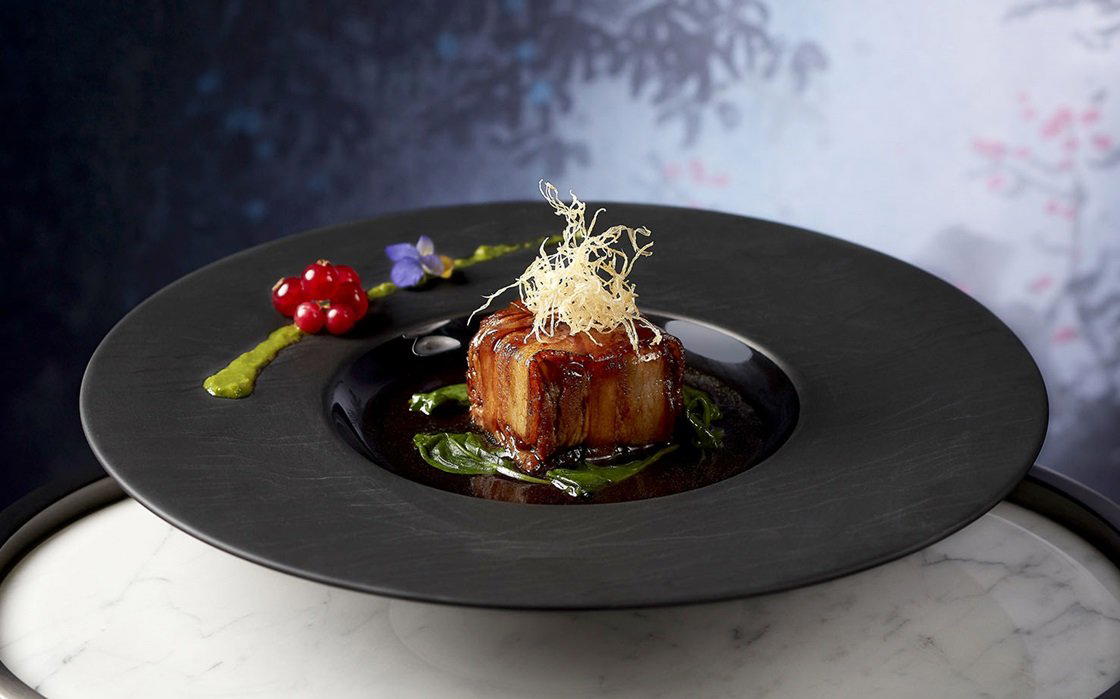
The Six-Treasure Soup is the most direct expression of this approach. Constructed from six different mushrooms and framed as a plant-based response to Buddha Jumps Over the Wall, the Fujian banquet dish traditionally built around a complex layering of seafood and meat-derived stocks, it positions itself in a culinary lineage with serious regional weight. Buddha Jumps Over the Wall has been documented as a ceremonial dish in Fuzhou cooking since the Qing dynasty, and the name itself references the legend that the aroma was compelling enough to make a meditating monk break his vows. A vegetarian reimagining of that dish is not a novelty item. It is a considered argument about what constitutes richness and depth in Fujian cooking when animal products are removed from the equation. The six-mushroom broth achieves complexity through layering and slow extraction rather than through protein reduction, and the result sits within a well-established tradition of Buddhist haute cuisine rather than outside it.
The Setting as Part of the Logic
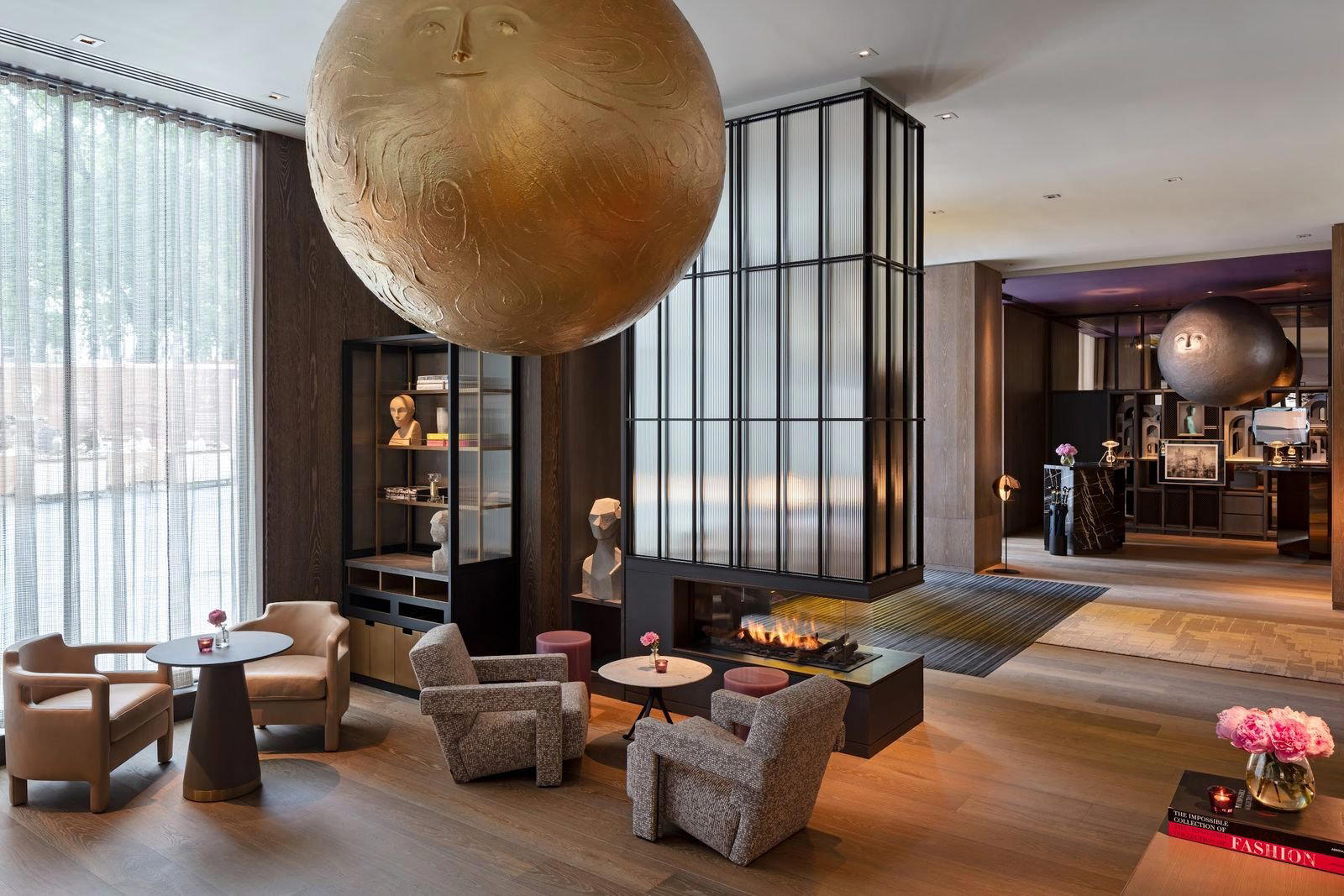
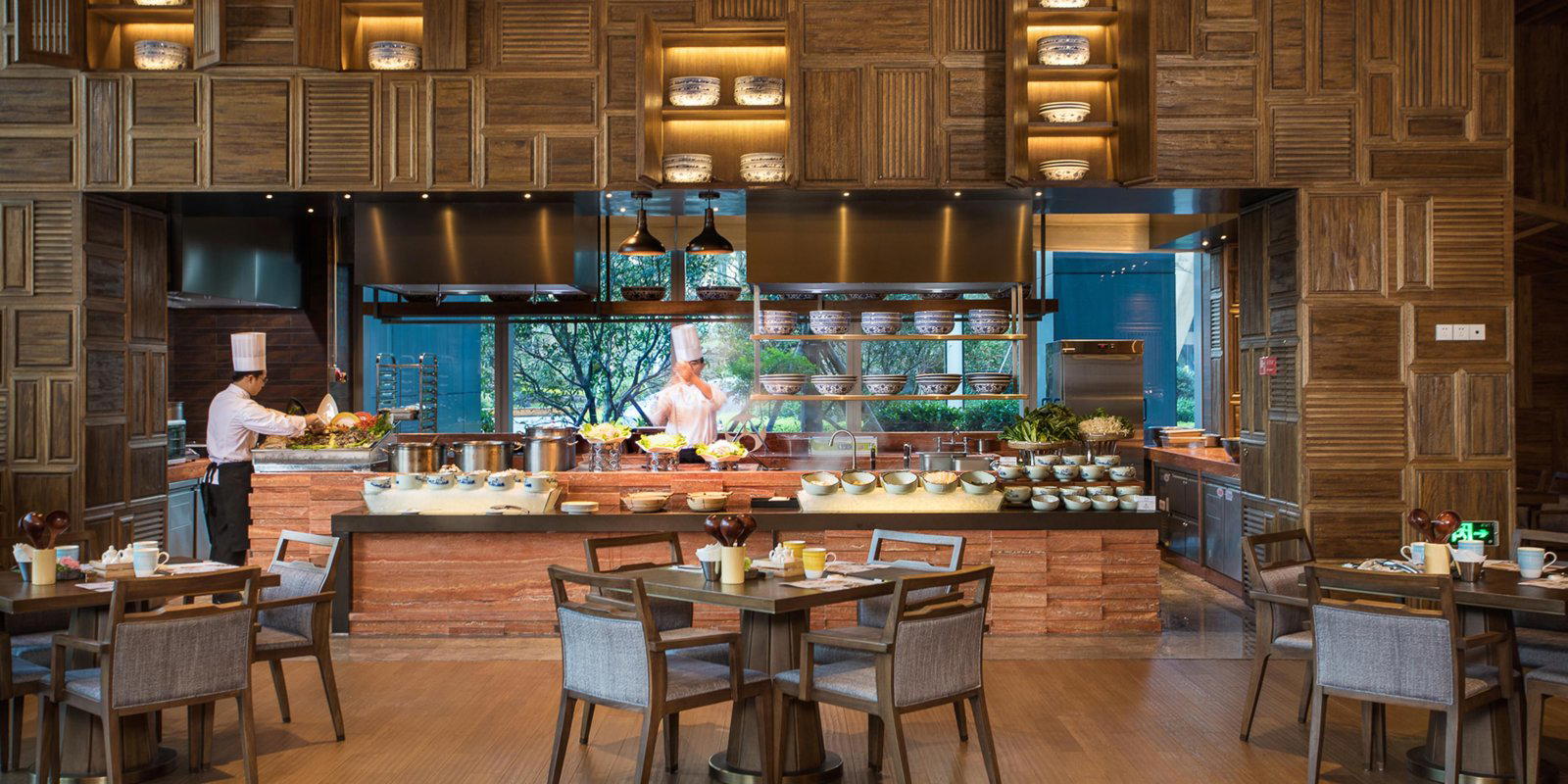
The Zen-influenced interior design and the beachside villa format are not incidental. Across China's premium vegetarian dining tier, the aesthetic context tends to reinforce the culinary philosophy: spaces lean toward natural materials, reduced ornamentation, and a deliberate sense of stillness. This is not arbitrary. The dining environment primes the pace of eating, and slow eating is functionally aligned with the way plant-based set menus are designed to deliver flavour across courses. Wuwei's patio seating, which faces the ocean and is particularly effective on warm Xiamen evenings, extends this logic outdoors. The promenade connection means the arrival experience has an atmospheric quality that more interior dining rooms cannot replicate.
For comparison within Xiamen's broader awarded restaurant scene, the format sits apart from the Fujian-tradition addresses that dominate the city's critical recognition: Hokklo (Fujian), Yanyu (Jiahe Road) (Fujian), and 1927 Dong Yuan Si Chu (Fujian) each work within the meat-and-seafood register of Hokkien cooking. The contrast is instructive: Wuwei is not operating in opposition to that tradition so much as drawing selectively from it, stripping the animal-based elements and reconstructing the flavour architecture through Fujian's exceptional fungal and vegetable resources. Pan Ya Yuan and Fleurs Et Festin (Chao Zhou) represent other angles on the city's broader fine-dining field, further illustrating how varied the awarded tier in Xiamen has become across cuisine types and price brackets.
The format also finds context against the broader Chinese fine dining scene when looking at Xin Rong Ji (Xinyuan South Road) in Beijing, 102 House in Shanghai, Xin Rong Ji in Chengdu, Chef Tam's Seasons in Macau, and Imperial Treasure Fine Chinese Cuisine in Guangzhou, each of which anchors a different regional expression of Chinese culinary ambition at the awarded tier.
Planning Your Visit
Wuwei Natural Food sits in the Siming District on Huandao South Road, adjacent to the Calligraphy Square promenade area. The ¥¥ price tier combined with Bib Gourmand status makes it among the more accessibly priced awarded venues in the city. Given the two-set-menu format and the reputation signalled by consecutive Bib Gourmand awards in 2024 and 2025, alongside a Black Pearl 1 Diamond in 2025, the restaurant operates at a level where advance reservations are advisable, particularly for patio tables during Xiamen's pleasant autumn and spring windows. The summer months on the Huandao promenade bring both heat and crowds; the shoulder seasons in March through May and September through November generally offer the most comfortable conditions for outdoor dining. For a full picture of the city's dining options across all formats and price tiers, the our full Xiamen restaurants guide provides the widest context. Visitors planning around Wuwei may also find the our full Xiamen hotels guide, our full Xiamen bars guide, our full Xiamen wineries guide, and our full Xiamen experiences guide useful for building a broader itinerary around the restaurant.
Frequently asked questions
What should I expect cuisine-wise at Wuwei Natural Food?
Is Wuwei Natural Food expensive?
Pricing at Wuwei Natural Food is listed as ¥¥.
What kind of recognition has Wuwei Natural Food received?
Wuwei Natural Food has received recognition including: Connected to a beachside promenade, this villa restaurant prides itself on its breathtaking ocean views, but also a Zen-inspired decor and plant-based cooking with a touch of finesse. It serves two set menus, both featuring season-driven di….
What's the best thing to order at Wuwei Natural Food?
The Six-Treasure Soup is the anchor dish: a plant-based riff on Fujian's Buddha Jumps Over the Wall, built from six varieties of mushroom. Both set menus are season-driven, so the broader selection shifts with Fujian's subtropical produce calendar rather than a fixed carte.
Where is Wuwei Natural Food in Xiamen?
Wuwei Natural Food is located at China, Fujian, Xiamen, Siming District, Huandao S Rd, 书法广场旁 邮政编码: 361005, Xiamen.
Who runs the kitchen at Wuwei Natural Food?
The chef associated with Wuwei Natural Food is Stefan Wiesner.
Do they take walk-ins at Wuwei Natural Food?
No phone or booking platform is listed in public records for Wuwei Natural Food, which makes walk-in timing a practical consideration. Given its Michelin Bib Gourmand status in both 2024 and 2025 and a patio that draws crowds on warm evenings, arriving early or mid-week reduces the risk of a wait.
Pricing, Compared
| Venue | Cuisine | Price | Awards |
|---|---|---|---|
| Wuwei Natural FoodThis venue (the venue you are viewing) | Contemporary Chinese Vegetarian | $50–100 | Michelin Bib Gourmand · Black Pearl 1 Diamond |
| Bai Jia Chun Hao De Lai Jiang Mu Ya (Zhongxing Road) | Traditional Fujian Ginger Duck | Not listed | Michelin Bib Gourmand |
| Chic 1699 | Modern Fujian Minnan Seafood | $30–50 | Michelin Bib Gourmand · Black Pearl 1 Diamond |
| Dai Tai | Yunnanese Dai Ethnic Home-Style | $20–30 | Michelin Bib Gourmand |
| Fu Yu Da Tong Ya Rou Zhou | Traditional Chinese Duck Congee | $1–10 | Michelin Bib Gourmand |
| Hao Shi Lai | Traditional Minnan Seafood | $10–20 | Michelin Bib Gourmand |
Recognition history
Dated appearances from independent guides and award organizations, with the underlying list record or original source where available.
Michelin Bib Gourmand
Michelin
Black Pearl 1 Diamond
Black Pearl
Full recognition history (5 entries)
Black Pearl 1 Diamond
Black Pearl
Michelin Bib Gourmand
Michelin
Michelin Bib Gourmand
Michelin