White Bear


Our verdict
A walk-up window on Roosevelt Avenue in Flushing, Queens, White Bear has earned consecutive Opinionated About Dining Cheap Eats recognition from 2023 through 2025, peaking at a North America-wide ranking of #366. The draw is the No. 6: pork wontons dressed in prickly chile oil, scallions, and pickled vegetables. The rest of the menu holds its own, but those wontons are why the line forms.

Pearl is the En Primeur Club membership app, where members save venues, book tables and use the concierge.
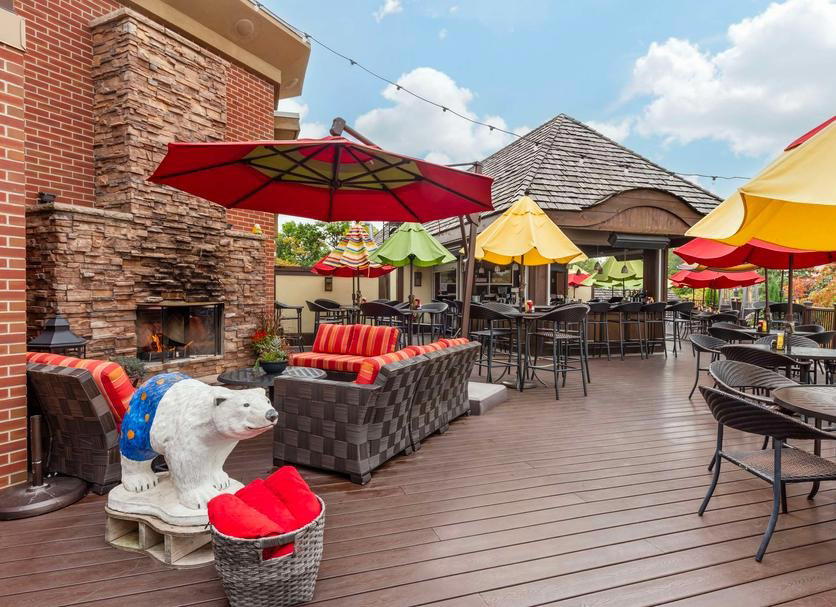
The menu
What to order
- Wontons with Hot Oil (#6)
- Pork and Cabbage Dumplings (#19)
Flushing's Walk-Up Window and What It Tells You About Chinese Food in New York
Flushing, Queens has spent the better part of three decades becoming the most consequential Chinese food district on the East Coast. The shift accelerated in the 1990s as Taiwanese, Fujianese, and Sichuan communities expanded eastward from Manhattan's Chinatown, bringing regional specificity that Manhattan's older dining corridors rarely achieved. By the mid-2000s, the blocks around Main Street and Roosevelt Avenue had developed a density of regional Chinese cooking that rivals any district outside mainland China or Taiwan. White Bear arrived inside that context, operating as a walk-up window at 135-02 Roosevelt Avenue, and has remained there, modest in format, narrow in scope, consistent in execution.
The format itself says something about how Flushing's food culture operates at its most serious level. In a neighbourhood where a handful of tables and a laminated menu can house one of North America's most compelling dumplings or noodle preparations, square footage is not a proxy for quality. The walk-up counter is a common format in this part of Queens precisely because the economics of the food do not require the overhead of a dining room. What they do require is repetition, precision, and sourcing discipline.
The No. 6 and the Wonton Tradition It Belongs To
The pork wonton has a long and geographically varied history across Chinese cuisine. In Cantonese cooking, wontons tend toward silky, thin-skinned wrappers and a clear broth. In Sichuan tradition, the form shifts: chili oil, numbing heat from Sichuan peppercorn, and a layering of aromatics that turns the wonton into a vehicle for complex spice rather than delicate soup. White Bear's No. 6 operates in that second tradition, but with a Queens sensibility baked in through local sourcing and the accumulated adjustments of a kitchen cooking for a neighbourhood that knows what the dish is supposed to taste like.
Opinionated About Dining, which tracks cheap eats across North America with the same methodological rigour it applies to fine dining, ranked White Bear's pork wontons at #377 in its 2025 North America Cheap Eats list, up from #366 in 2024, having placed the restaurant in its Recommended tier in 2023. The OAD notes specifically: overflowing with pork, stained with a prickly chile oil, doused with scallions and sprinkled with pickled vegetables that punctuate every bite with brine. That description is precise enough to tell you something about the technique: the pickled vegetables are not garnish. They are structural, providing acid contrast that keeps the chile oil from becoming monotonous across a full serving. The scallion layer adds a raw, green sharpness. The pork filling is deliberately generous, which means each wonton carries enough weight to hold its own against the volume of dressing. This is a dish that has been calibrated, not assembled.
The intersection of imported method and local execution is where White Bear fits the broader editorial angle most legibly. Sichuan chile oil technique, applied to a wonton format that has been refined through years of service to a Flushing clientele who eat this dish regularly, produces something that operates differently from the same preparation in a Manhattan restaurant menu designed partly for novelty.
White Bear in the Flushing Dining Ecosystem
Flushing's Chinese food scene sorts into a few distinct tiers. At the formal end, banquet-style Cantonese restaurants like Asian Jewel Seafood Restaurant handle large-format dim sum and seafood service. Mid-tier sit-down restaurants cover regional breadth: Sichuan, Shanghainese, Northern Chinese, Taiwanese. Then there is the counter-and-window tier, where White Bear operates alongside a dense collection of vendors who specialise in one or two preparations executed with a depth that full-menu restaurants rarely sustain. Alley 41, Blue Willow, and Chongqing Lao Zao operate across related but distinct niches in the same neighbourhood fabric. Big Wong, further west in Manhattan's Chinatown, offers a useful comparison point: a different Chinese-American tradition, a different price register, a different customer demographic.
What sets the walk-up counter format apart from even the leading sit-down versions of similar food is the feedback loop. A counter serving hundreds of portions of the same dish daily accumulates corrective data at a rate that a restaurant with a broad menu cannot match. The wonton that arrives at the window is the product of that repetition. This is how regional Chinese cooking at the informal end of the market achieves a consistency that sometimes exceeds what more formal settings produce.
For comparative context, it is worth noting that the Chinese cooking attracting international critical attention in other cities often works from a different premise. Mister Jiu's in San Francisco applies California ingredient sourcing to Cantonese frameworks in a full-service restaurant with a wine program. Restaurant Tim Raue in Berlin abstracts Chinese flavour systems into a European fine-dining format. These are legitimate approaches, and restaurants like Alinea in Chicago, The French Laundry in Napa, Lazy Bear in San Francisco, Single Thread Farm in Healdsburg, Providence in Los Angeles, and Emeril's in New Orleans represent the high-investment, technique-forward end of American dining that operates in an entirely different economic register. White Bear operates from the opposite premise: no dining room, no wine program, no tasting menu, no fine-dining pedigree in the conventional sense. What it has is a preparation, a ranking, and three consecutive years of recognition from one of the more rigorous cheap-eats tracking systems operating in North America.
Planning a Visit
White Bear is located at 135-02 Roosevelt Avenue in Flushing, Queens, a short walk from the Flushing-Main Street 7 train terminus. The walk-up format means no reservations and no booking system. Arriving outside peak lunch and dinner windows reduces wait time, though the counter operates with enough throughput that lines move quickly relative to the food's reputation. The No. 6 pork wontons are the reference order, though OAD notes the broader menu is worth attention. Cash or card practice varies at walk-up counters in this part of Flushing; confirming payment method on arrival is advisable. For a broader survey of the neighbourhood and the rest of the city's dining options, see our full New York City restaurants guide, our full New York City hotels guide, our full New York City bars guide, our full New York City wineries guide, and our full New York City experiences guide.
Quick reference: Walk-up window, 135-02 Roosevelt Avenue, Flushing, Queens. No reservations. OAD Cheap Eats North America #377 (2025).
Frequently asked questions
What is the signature dish at White Bear?
The No. 6, pork wontons dressed in chile oil, scallions, and pickled vegetables, is the reference order and the preparation that earned White Bear three consecutive years of recognition from Opinionated About Dining's North America Cheap Eats rankings (Recommended 2023, #366 in 2024, #377 in 2025). OAD's published note describes the wontons as overflowing with pork and specifically calls out the pickled vegetables as a brine element that punctuates every bite. The rest of the menu is cited as worth attention, but the No. 6 is the reason for the walk from the 7 train terminus.
How It Stacks Up
| Venue | Cuisine | Price | Awards | Notes |
|---|---|---|---|---|
| White BearThis venue (the venue you are viewing) | Chinese Dumplings | $10–20 | Not listed | Not listed |
| Le Bernardin | French Seafood Fine Dining | $300–500 | 3 Michelin Stars · World's 50 Best #13 | French, Seafood |
| Atomix | Modern Korean Tasting Menu | $300–500 | 2 Michelin Stars · World's 50 Best #7 | Modern Korean, Korean |
| Masa | Seasonal Hokkaido Tempura Omakase | $150–200 | Tabelog 100 #34 | Sushi, Japanese |
| Per Se | French Fine Dining Tasting Menu | $300–500 | 3 Michelin Stars · World's 50 Best #40 | French, Contemporary |
| Eleven Madison Park | Contemporary Plant-Based Fine Dining | $300–500 | 3 Michelin Stars · World's 50 Best #4 | French, Vegan |
Recognition history
Dated appearances from independent guides and award organizations, with the underlying list record or original source where available.
New York Times Best Restaurants in New York City #83
New York Times
Opinionated About Dining Cheap Eats in North America Recommended
Opinionated About Dining
Full recognition history (6 entries)
New York Times Best Restaurants in New York City
New York Times
Opinionated About Dining Cheap Eats in North America Ranked #377
Opinionated About Dining
Opinionated About Dining Cheap Eats in North America Ranked #366
Opinionated About Dining
Opinionated About Dining Cheap Eats in North America in Recommended
Opinionated About Dining
Continue exploring
More in New York City
More from Chef Various
Browse all →
Restaurants in New York City
All restaurants in New York City →
Bars in New York City
All bars in New York City →





Details
- Cozy
- Casual Hangout
- Standalone
- A La Carte
Current opening hours
- Monday
- 10 AM–7 PM
- Tuesday
- 10 AM–7 PM
- Wednesday
- 10 AM–7 PM
- Thursday
- 10 AM–7 PM
- Friday
- 10 AM–7 PM
- Saturday
- 10 AM–7 PM
- Sunday
- 10 AM–7 PM
Hours can change for holidays and private events. Hours as of .
Tiny hole-in-the-wall with white walls, minimal seating at a few small tables, shabby and no-frills atmosphere focused on takeout.