

Star Wine List · White Guide Sweden Restaurants - Very Fine Level
Our verdict
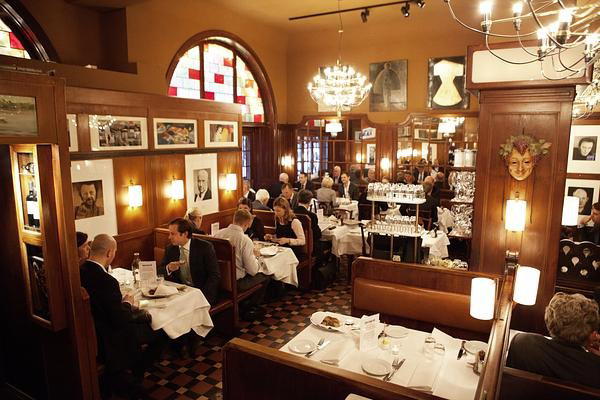
One of Stockholm's most enduring seafood addresses, Wedholms Fisk has anchored the city's classical fish dining tradition from Arsenalsgatan since long before Nordic cuisine became an international reference point. Ranked #455 in Opinionated About Dining's 2025 Classical European list and recognised by Star Wine List, it occupies a distinctive position: formal, seafood-focused, and largely indifferent to trend cycles.

Pearl is the En Primeur Club membership app, where members save venues, book tables and use the concierge.
The menu
What to order
- Sjötunga Meunière
- Turbot
- Halibut
- Lobster soup
- Sole
Where Stockholm's Classical Seafood Tradition Holds Its Ground
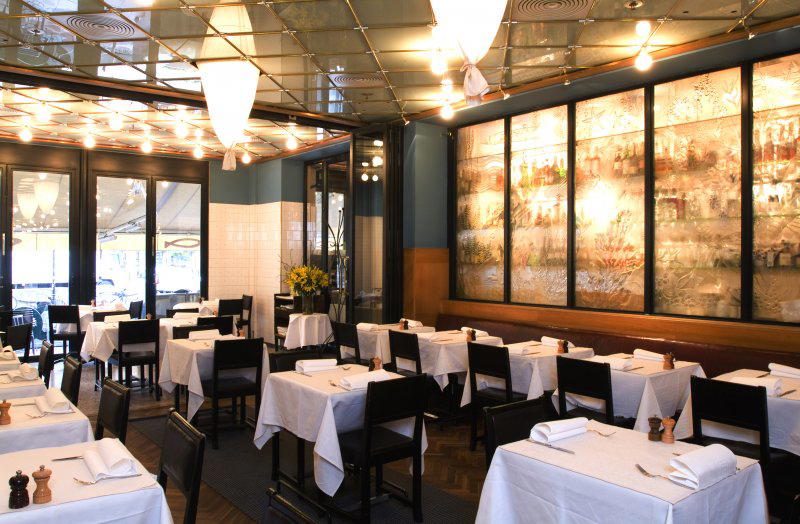
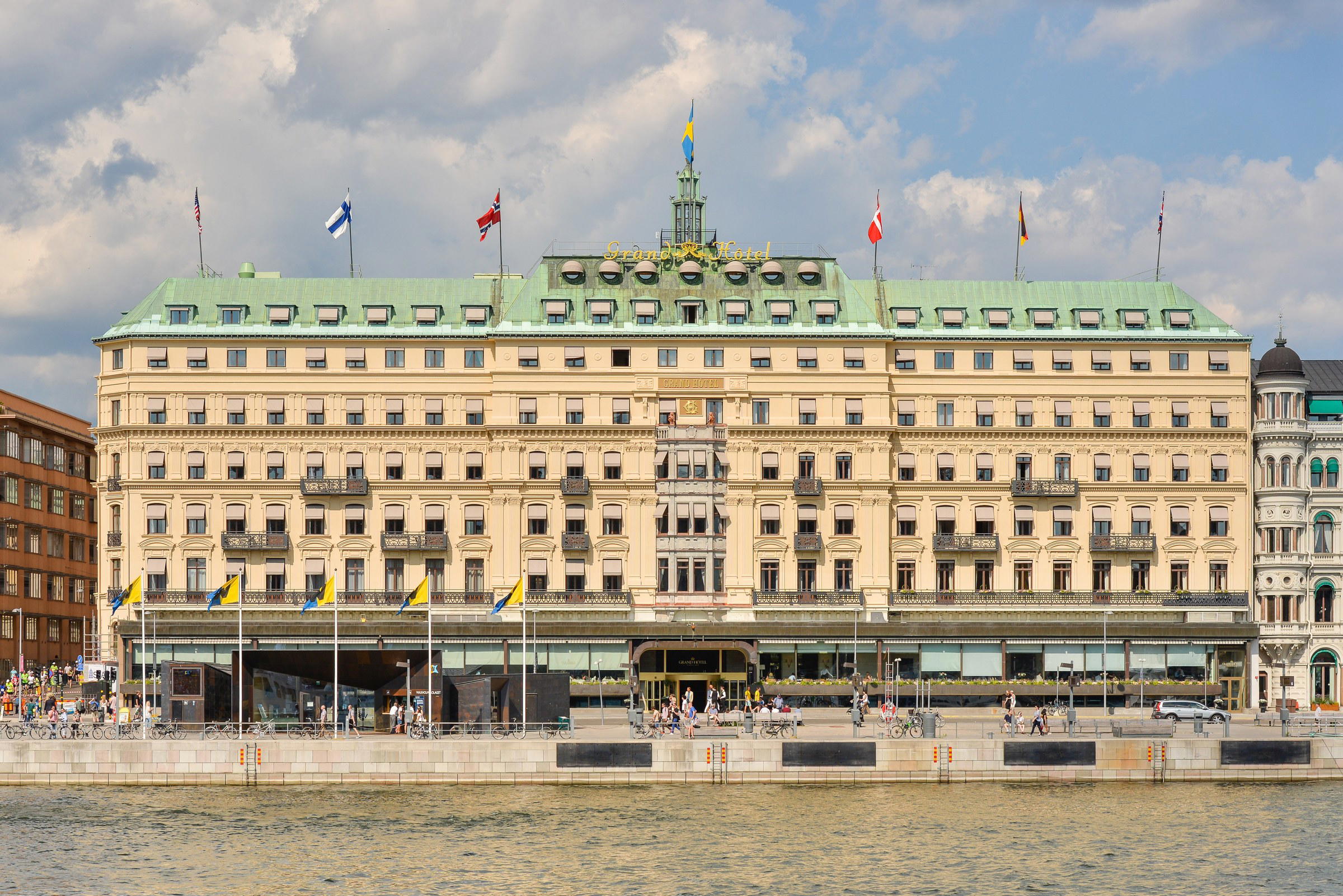
Arsenalsgatan runs between the Grand Hôtel waterfront and the Nationalmuseum, a short stretch of central Stockholm where the city's older dining culture has survived longer than almost anywhere else in the capital. The buildings are solid early-twentieth-century Stockholm, the water is close, and the restaurants on this strip operate with the kind of quiet institutional confidence that comes from decades of relevance rather than recent hype. Wedholms Fisk sits on this street at number one, and its address tells you something about its orientation before you have even read the menu.
Swedish seafood dining has followed two distinct trajectories over the past two decades. One branch absorbed the techniques of the New Nordic movement, with fermentation, foraged garnish, and reductive plating reshaping how fish appears at counters like those you find at Frantzén or the progressive end of Operakällaren. The other branch held its position: classical French-influenced technique applied to Scandinavian waters, with a wine list that takes the work seriously and a dining room that expects a certain register from its guests. Wedholms Fisk belongs to the second category, and it represents that tradition with more consistency than almost any comparable address in Stockholm.
The Ethical Logic of Seasonal and Regional Sourcing
Classical seafood restaurants in northern Europe have always operated closest to the sustainability argument by structural necessity rather than marketing strategy. When your menu is defined by what the North Sea, the Baltic, and the Swedish west coast are producing at a given moment, you are already working within a seasonal and regional framework that the broader dining industry has spent the last decade trying to retrofit. The fish that arrives at a kitchen like this one comes from cold, relatively clean waters, and the classical preparation tradition that Wedholms Fisk follows does not require long supply chains, imported tropical garnish, or ingredient categories that carry high environmental cost.
The Opinionated About Dining classification as a Classical European restaurant, where Wedholms Fisk ranked #455 in 2025, reflects this approach: the cooking category implies a fidelity to technique and product that tends to favour shorter, more direct sourcing over the complexity of global ingredient assembly. Swedish seafood in the classical mode centres on species that are genuinely proximate, pike-perch from Swedish lakes, herring from the Baltic, shellfish from the archipelago and the west coast. These are not premium imports dressed up as local; they are the actual local product, and the kitchen's job is to handle them with enough skill that no substitution is needed.
For the reader interested in how fine dining intersects with responsible consumption, this model deserves more attention than it typically receives. The sustainability conversation in high-end restaurants often focuses on the newest intervention: the zero-waste tasting menu, the regenerative farm partnership, the menu printed on seed paper. Classical seafood restaurants that have been working with proximate, seasonal product for decades represent a quieter version of the same argument. Venues across the broader Scandinavian fine dining circuit, from Signum in Mölnlycke to VYN in Simrishamn, have built their identity around exactly this kind of regional product focus. Wedholms Fisk predates much of that conversation.
Classical French Technique in a Nordic Context
The wine programme recognition from Star Wine List, published in December 2021, is a useful indicator of the kitchen's overall register. Restaurants that receive serious wine editorial attention at this level typically pair it with food that can hold the comparison: structured sauces, considered acidity, protein that arrives at the table in a state that rewards rather than punishes an aged white Burgundy or a serious Chablis Premier Cru. Classical seafood preparation at this tier means butter-mounted sauces, precise heat application, and a respect for the ingredient that prioritises clarity over novelty. That framework is also, incidentally, a low-waste one: classical French fish cookery leaves little room for the kind of complicated pre-preparation that generates high food waste.
Chef Bengt Wedholm's name is attached to the restaurant's identity in the way that a few Stockholm institutions have maintained a singular authorial presence over time. At this level of classical dining, the chef's role is less about innovation and more about the kind of rigorous quality maintenance that prevents the menu from drifting.
For context on Stockholm's wider seafood positioning, Seafood Gastro and B.A.R. represent different points on the same spectrum, while Sture Hof occupies the classic Swedish brasserie category adjacent to it. Wedholms Fisk operates at a more formal and focused register than any of these, which defines both its strength and its specific audience.
European Comparisons and Where Stockholm Sits
Stockholm's classical seafood dining tradition is occasionally underestimated by visitors who arrive expecting primarily Nordic-progressive cooking. The city has both, but the classical strand has genuine depth. Wedholms Fisk's position at #455 in the OAD Classical European ranking places it in a peer group that includes serious rooms across France, Belgium, and northern Spain, restaurants operating on the principle that product quality and technical precision matter more than conceptual ambition. For those travelling through Scandinavia more broadly, the comparison extends to coastal-focused addresses like 28+ in Gothenburg and PM & Vänner in Växjö, which each move through the Swedish ingredient tradition from different angles. Further south in Europe, the classical seafood argument plays out differently at addresses like Gambero Rosso in Marina di Gioiosa Ionica and Alici on the Amalfi Coast, where warm-water species and Italian technique produce a structurally different but philosophically adjacent approach to letting seafood speak without obstruction.
Planning Your Visit
Wedholms Fisk is located at Arsenalsgatan 1, a short walk from Kungsträdgården metro station and within the central Blasieholmen area where Stockholm's museum and waterfront institutions cluster. Reservations should be made directly. Dress code information is not published centrally, but the neighbourhood context and the restaurant's classical positioning suggest that smart dress is the working assumption. Our full Stockholm restaurants guide provides broader context on where Wedholms Fisk sits within the city's dining geography, while our Stockholm hotels guide, bars guide, wineries guide, and experiences guide round out the full picture for a longer stay. For those extending into Sweden beyond the capital, Knystaforsen in Rydöbruk and Vollmers in Malmö represent the kind of serious regional cooking that complements a Wedholms Fisk visit within a broader Swedish itinerary.
Frequently Asked Questions
What's the must-try dish at Wedholms Fisk?
The specific menu at Wedholms Fisk is not published in a format that allows a single dish to be named with confidence here. What the classical tradition and the Star Wine List recognition both point toward is a kitchen where the approach to fish is built on technique and product quality rather than garnish complexity. At this register, the most instructive choice is usually the simplest preparation on the menu, the one that shows you what the kitchen can do with a piece of fish, butter, and heat. Ask the room what the catch of the day is and how the kitchen is treating it; that answer will tell you more than any fixed menu description.
Frequently asked questions
What distinctions does Wedholms Fisk have?
Wedholms Fisk has received recognition including: Wedholms Fisk is a restaurant in Stockholm, Sweden. It was published on Star Wine List on December 2, 2021 and is a White Star.; Opinionated About Dining Classical in Europe Ranked #455 (2025).
How would you describe the cuisine at Wedholms Fisk?
What's the must-try dish at Wedholms Fisk?
Wedholms Fisk has built its reputation over decades on classical French-influenced seafood cookery applied to Nordic ingredients, so the kitchen's treatment of seasonal catch from Scandinavian waters is where its identity sits. Specific dishes are not published in available detail, but Opinionated About Dining's 2025 ranking at #455 in Classical Europe reflects consistent execution rather than a single signature item. Ask the dining room what is in season on the day you visit, at a restaurant operating in this register, that question will get a precise answer.
What part of town is Wedholms Fisk in?
Wedholms Fisk is located at Arsenalsgatan 1, 111 47 Stockholm, Sweden, Stockholm.
Style and Standing
| Venue | Cuisine | Price | Awards | Notes |
|---|---|---|---|---|
| Wedholms FiskThis venue (the venue you are viewing) | Classic Seafood Fine Dining | Not listed | Star Wine List · White Guide Sweden Restaurants - Very Fine Level | Not listed |
| Operakällaren | Modern Scandinavian Fine Dining | $150–200 | 1 Michelin Star · World's 50 Best #27 | Swedish, Modern Cuisine |
| AIRA | Modern Nordic Seasonal Tasting Menu | $200–300 | 2 Michelin Stars · La Liste Top Restaurants | Modern European, Modern Cuisine |
| Adam / Albin | Modern Scandinavian Fine Dining | $100–150 | 1 Michelin Star · La Liste Top Restaurants | New Nordic |
| Ekstedt | Wood-Fire Nordic Fine Dining | $200–300 | 1 Michelin Star · La Liste Top Restaurants | Progressive Asador, Grills |
| Etoile | Creative International Fine Dining | $300–500 | 1 Michelin Star · Star Wine List | Contemporary French, Creative |
Recognition history
Dated appearances from independent guides and award organizations, with the underlying list record or original source where available.
Star Wine List
Star Wine List
White Guide Sweden Restaurants - Very Fine Level
White Guide
Opinionated About Dining Classical in Europe Ranked #455
Opinionated About Dining