Uzuki


Michelin Plate
Our verdict
A Michelin Plate-recognised soba specialist in Greenpoint, Brooklyn, Uzuki brings hand-cut buckwheat noodles and hand-thrown ceramics under one industrial roof. Chef Shuichi Kotani, originally from Hyōgo Prefecture, serves a fully gluten-free menu of cold and hot soba preparations alongside vegetable-forward dishes. Reservations are advisable; pricing sits at the higher end of the Brooklyn Japanese category.

Pearl is the En Primeur Club membership app, where members save venues, book tables and use the concierge.
The menu
What to order
- Duck shio soba
- Ume shio soba
- Soba ice cream
Buckwheat in Brooklyn: Where Soba Becomes the Main Event
New York's Japanese restaurant category has expanded considerably over the past decade, but the distribution of specialisms remains uneven. Ramen draws the longest queues; omakase sushi claims the highest price points. Soba, by contrast, occupies a quieter corner of the market, one where craft credentials matter more than social media footprint. In Greenpoint, Brooklyn, that corner has found a serious address.
The broader soba tradition it draws from is worth understanding before you visit. In Japan, dedicated sobaya restaurants operate with a level of technical specificity that most Western diners haven't encountered: the ratio of buckwheat to wheat flour, the temperature of the water used to bind the dough, the angle of the cutting knife, each variable produces a meaningfully different noodle. Restaurants anchored by that tradition, whether in Tokyo or abroad, tend to operate with a formality of process that sits apart from the izakaya model of communal drinking and casual ordering. Uzuki's format sits somewhere between the two: the menu has the rigour of a dedicated soba house, but the industrial warehouse setting and the integration of ceramics classes creates a more sociable, workshop-like atmosphere.
The Setting and Its Logic
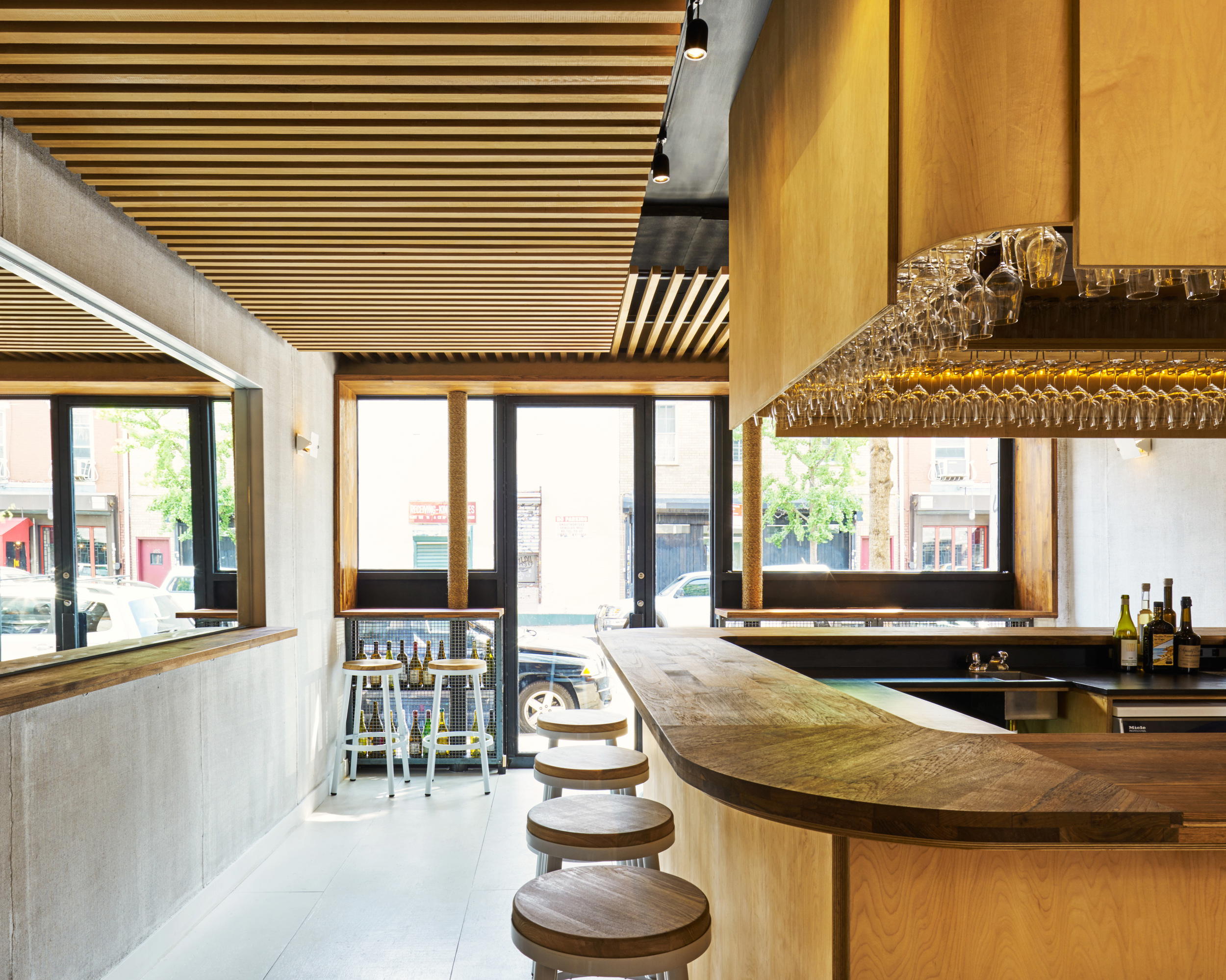
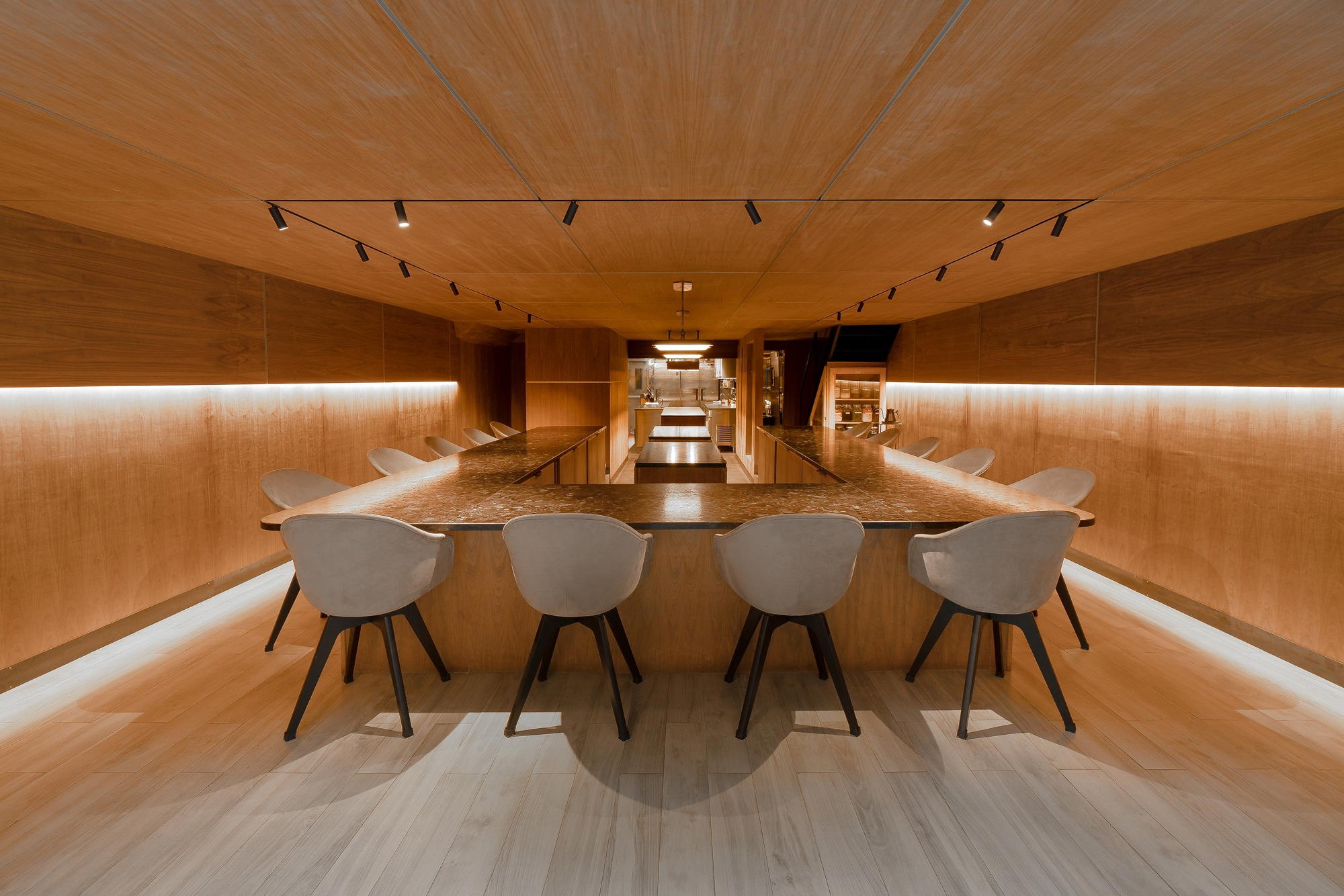
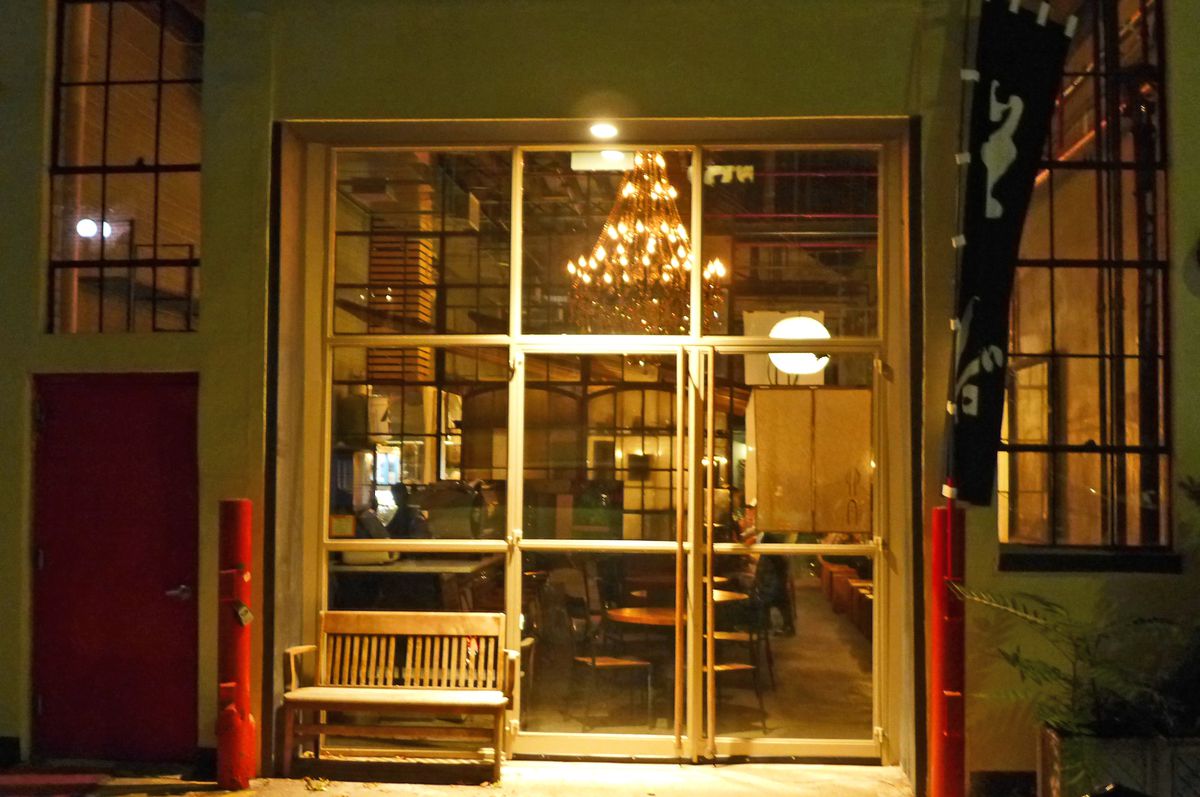
Industrial Greenpoint has absorbed a number of food and beverage concepts that wouldn't survive in Manhattan's denser, higher-rent blocks, not because the quality is lower, but because the format requires space. Uzuki's warehouse footprint, with factory windows and overhead skylights, gives the restaurant a physical scale that a soba counter in the West Village couldn't justify. That space isn't decorative. It accommodates the ceramics work that runs alongside the kitchen, and it creates the kind of diffuse, unhurried atmosphere that encourages the slow, communal progression of dishes that defines good izakaya eating.
The izakaya tradition, which prizes the steady accumulation of small dishes over a long evening rather than the structured march of a tasting menu, translates well to a soba-centred format. At Uzuki, the approach encourages ordering broadly across the menu before arriving at the noodles, much as a Japanese pub-style dinner might move through pickles, salads, and grilled items before the carbohydrate anchor arrives. The red tosaka salad, with cucumber, tomatoes, and daikon radish in a yuzu dressing, operates in that preliminary register: it's a palate-clearing dish that establishes the kitchen's vegetable-forward sensibility before the soba takes over.
The Craft at the Centre
Hand-cut soba is one of the few dishes in Japanese cuisine where the chef's physical technique is directly legible in every bite. Machine-cut noodles achieve a uniform cross-section; hand-cut noodles don't, and that irregularity produces a texture, described in Japanese as having koshi, a springy resistance, that changes how the noodle holds dashi and how it feels against the palate. Uzuki's cold and hot soba preparations are built around hand-cut noodles of this kind, served in ceramic bowls that Chef Shuichi Kotani has thrown himself. The pairing of handmade vessel with handmade noodle is not incidental: it reflects a continuity of craft that runs through both the ceramics classes and the kitchen.
The gluten-free menu positioning is also worth noting in context. Buckwheat is naturally gluten-free, but most commercial soba contains a proportion of wheat flour (the classic ratio is 80% buckwheat to 20% wheat, known as ni-hachi soba) to improve workability and texture. A fully gluten-free menu implies a higher buckwheat ratio, which produces a more intensely flavoured, slightly more fragile noodle. For diners who have not previously encountered high-buckwheat soba, the difference is perceptible, earthier, with a more pronounced nuttiness than the blended versions common at mainstream Japanese restaurants.
Among the soba venues operating in New York at this level of specialisation, Uzuki holds a distinct position. The ceramics programme and warehouse format set it apart from the compact, counter-only model more common in the category. For comparison, the izakaya format at Blue Ribbon Sushi Izakaya and the refined Japanese dining at Odo and Noda represent different points on the Japanese dining spectrum in New York, approaches that prioritise either social breadth or tasting-menu depth. Uzuki's position is more specific: a craft-focused soba house with an artisan sensibility that extends beyond the plate.
Elsewhere in the city's Japanese category, venues like Tsukimi and Chikarashi represent further points of comparison for diners mapping the range of Japanese cooking available across the boroughs. New York's depth in this category is considerable, a point reinforced by looking at what dedicated Japanese restaurants achieve at the Tokyo end of the spectrum, where venues like Myojaku and Azabu Kadowaki operate at a different register of formality and investment.
What the Awards Signal
For a soba specialist in an outer-borough warehouse, that combination of recognitions is a meaningful signal, it suggests the kitchen is performing at a level that rewards the commute from Manhattan.
Planning Your Visit
Uzuki sits at 95 Guernsey Street in Greenpoint, Brooklyn, accessible from the G train at Greenpoint Avenue or Nassau Avenue. The price range is $$$$, which, in the context of a soba restaurant rather than an omakase counter, positions the experience at the higher end of its category, a point the restaurant's own listing acknowledges directly. Checking Uzuki on Resy (search: uzuki resy) is the practical first step for reservation planning, as availability at venues of this profile tends to move on lead times that reward early booking.
The ceramics and soba-making classes run alongside the restaurant operation and represent a different kind of engagement with the kitchen's central craft, useful context if you're visiting with a group that wants more than a meal. For further orientation across the city's dining, drinking, and cultural options, see our full New York City restaurants guide, our full New York City hotels guide, our full New York City bars guide, our full New York City wineries guide, and our full New York City experiences guide. For reference points across the broader American fine dining scene, The French Laundry in Napa, Alinea in Chicago, Lazy Bear in San Francisco, Providence in Los Angeles, Emeril's in New Orleans, and Single Thread Farm in Healdsburg represent different approaches to the premium restaurant format.
Quick reference:
What Dish Is Uzuki Famous For?
Uzuki's reputation centres on its hand-cut soba noodles, served in both cold and hot preparations with dashi, in ceramic bowls made by Chef Shuichi Kotani himself. The red tosaka salad with yuzu dressing is noted as a starting point in critical assessments of the menu, but the soba preparations are the kitchen's primary credential.
Frequently asked questions
Is Uzuki Michelin-listed?
Uzuki has received recognition including: Chef Shuichi Kotani brings his passion for buckwheat to this industrial corner of Greenpoint. Born in the Hyōgo Prefecture, he works in a sprawling warehouse fit with factory windows and skylights. In addition to leading classes for making ….
Is Uzuki expensive?
Pricing at Uzuki is listed as $$$$.
What dish is Uzuki famous for?
Uzuki's reputation is built on its hand-cut soba noodles, offered in both cold and hot preparations with dashi, served in ceramic bowls that Chef Shuichi Kotani throws himself. The buckwheat focus extends across a gluten-free menu that also features vegetables, with the red tosaka salad with cucumber, tomato, daikon, and yuzu dressing serving as a notable opener.
What cuisine category does Uzuki fall under?
Where exactly is Uzuki?
Uzuki is located at 95 Guernsey St, Brooklyn, NY 11222, New York City.
Price and Positioning
| Venue | Cuisine | Price | Awards | Notes |
|---|---|---|---|---|
| UzukiThis venue (the venue you are viewing) | Gluten-Free Buckwheat Soba | $50–100 | Michelin Plate | Not listed |
| Le Bernardin | French Seafood Fine Dining | $300–500 | 3 Michelin Stars · World's 50 Best #13 | French, Seafood |
| Atomix | Modern Korean Tasting Menu | $300–500 | 2 Michelin Stars · World's 50 Best #7 | Modern Korean, Korean |
| Masa | Seasonal Hokkaido Tempura Omakase | $150–200 | Tabelog 100 #34 | Sushi, Japanese |
| Per Se | French Fine Dining Tasting Menu | $300–500 | 3 Michelin Stars · World's 50 Best #40 | French, Contemporary |
| Eleven Madison Park | Contemporary Plant-Based Fine Dining | $300–500 | 3 Michelin Stars · World's 50 Best #4 | French, Vegan |
Recognition history
Dated appearances from independent guides and award organizations, with the underlying list record or original source where available.
Michelin Plate
Michelin
Opinionated About Dining Casual in North America Recommended
Opinionated About Dining
Full recognition history (3 entries)
Michelin Plate
Michelin