Ukiah
.png)
Ukiah brings a focused Japanese kitchen to Biltmore Avenue, earning a Michelin Plate in 2025 and positioning itself as one of Asheville's more deliberate fine-dining addresses. The $$$ price tier places it firmly in the city's upper bracket, where technique and sourcing carry the argument. For a mountain city better known for craft breweries and Southern comfort food, that distinction matters.
 Discover on Pearl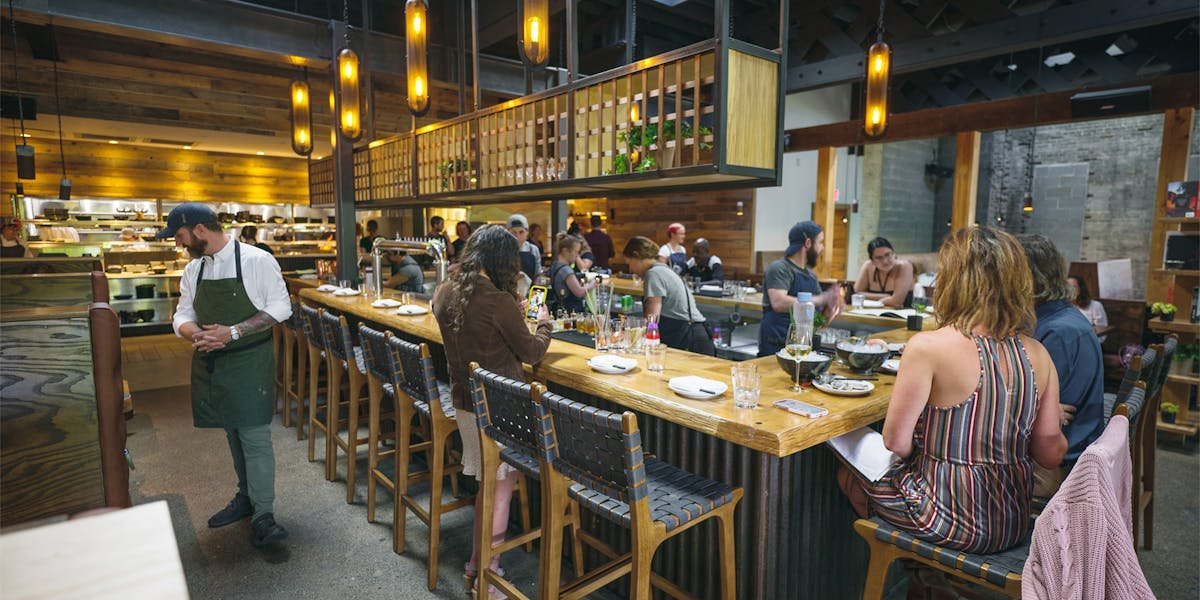
Japanese Precision on a Southern Main Street
Biltmore Avenue runs through the spine of downtown Asheville, threading past gallery fronts, craft cocktail bars, and the kind of mid-century storefronts that get repurposed every decade or so. At 121 Biltmore Ave, the streetscape shifts register. The exterior signals restraint rather than spectacle, which is itself a statement on a corridor where volume and visibility tend to drive foot traffic. Inside, the design logic follows the same edit: less is doing more work than usual, and the room asks you to slow down rather than perform.
That physical cue is consistent with what a Japanese kitchen at this price tier typically demands of its guests. The $$$ positioning, confirmed in the venue data, places Ukiah above the mid-market casual dining that dominates much of Asheville's restaurant scene and closer to the small cohort of addresses where the experience is built around attention rather than throughput. In a city whose fine-dining identity has historically leaned Southern and Appalachian, a Japanese counter-and-table format at this level represents a specific kind of bet on the audience.
The Michelin Signal and What It Means Here
Ukiah holds a Michelin Plate for 2025, awarded as part of the Michelin Guide's expanding coverage of American regional dining. The Plate designation, which sits below Star level but above simple inclusion, signals that inspectors found cooking worth noting: technically grounded, consistent, and worth a deliberate detour. In the context of Asheville specifically, where the Michelin footprint remains thin, the award places Ukiah in a very short list of venues that have cleared that bar.
For comparison, the kinds of Japanese restaurants that carry Michelin recognition in denser markets, like Atomix in New York City, operate in competitive clusters where the credential is one signal among many. In Asheville, it carries more weight precisely because the field is narrower. The relevant peer set is not the full national Michelin roster but the small group of mountain-region restaurants that have drawn inspector attention at all. Within that frame, a Plate here reads differently than the same award in a major coastal city.
Japanese Dining in the Blue Ridge Context
Fine Japanese dining in mid-size American cities tends to follow one of two patterns: either a sushi-forward format built around premium fish supply chains, or a broader washoku-influenced kitchen that draws on seasonal vegetables and locally sourced proteins. Both approaches face a logistics reality in inland mountain markets: the fish supply is less direct than on the coasts, and the seasonal produce calendar is compressed by altitude and latitude.
Asheville's farm ecosystem, which feeds kitchens like Chai Pani and anchors the regional identity of addresses like Blackbird, actually creates a useful counterweight to that supply constraint. A Japanese kitchen with serious intent can build around Appalachian produce with the same rigor that high-end Japanese restaurants in Kyoto apply to their regional agricultural context. The mountain South, with its distinct variety of foraged mushrooms, heirloom grains, and cool-weather brassicas, is not an obstacle to Japanese technique — it is a different set of ingredients to work with at the same level of care.
Whether Ukiah leans toward that localist synthesis or pursues a more classically orthodox Japanese format is something the venue data does not confirm directly. What the Michelin Plate does confirm is that the approach, whatever its specific orientation, has earned external credentialing at a meaningful level.
The Drink Program and Its Role at This Price Point
At a $$$ Japanese restaurant, the drink program is rarely secondary. In the upper tier of Japanese dining globally, sake selection, natural wine lists, and Japanese whisky programs often function as independent arguments for a reservation. Venues operating at this level in other American cities have built wine programs around the specific challenge of pairing with umami-forward, acid-driven Japanese cuisine, where the usual sommelier playbook does not always apply cleanly.
The broader shift in premium restaurant beverage programs over the past decade has been toward curation over volume: shorter lists, higher average quality, and a house perspective that reflects kitchen philosophy rather than just covering the obvious categories. That approach aligns naturally with Japanese dining, where restraint in the glass tends to serve the food better than an expansive cellar built for show. What Ukiah's specific drink program looks like in practice remains a function of the kitchen's overall philosophy and the cellar resources the ownership has chosen to invest in, but the Michelin credentialing at least confirms that the overall execution has cleared a threshold where inspectors are paying attention to the full experience.
For drinkers planning around the meal, the $$$ tier and Michelin recognition suggest this is an address where bringing your own or defaulting to house pours by the glass is less likely to serve you well. Coming in with a clear idea of what you want to drink — sake, wine, or both , and asking the floor staff for guidance is typically how these rooms work leading.
Placing Ukiah in the Asheville Dining Argument
Asheville has built a food reputation that punches considerably above its population size, drawing comparisons to mid-tier food cities and attracting national press attention across a range of formats. The city's diversity of serious restaurants, from the Spanish tapas precision at Cúrate to the East African warmth of Addissae Ethiopian Restaurant and the all-day American ease of All Day Darling, reflects a restaurant culture that has moved well past regional comfort food as its only register.
In that context, a Michelin-recognized Japanese restaurant at the $$$ tier is both a logical extension of the city's culinary ambition and a signal that the audience for this kind of cooking has reached sufficient depth to support it. The comparison is instructive: destinations that have built out fine Japanese dining at the regional level, including markets like Vancouver with venues such as Yuwa, tend to do so when a combination of culinary infrastructure, ingredient supply, and diner sophistication reaches a tipping point. Asheville appears to have crossed that threshold.
For readers building a full Asheville itinerary, Ukiah sits in a different register than the casual exploratory eating that the city's bar and brewery culture invites. It belongs in the same planning category as the city's other deliberate, reservation-required rooms, the kind of meal you structure a night around rather than stumble into. For the full picture of what Asheville offers at this level and below, see our full Asheville restaurants guide, alongside resources for hotels, bars, wineries, and experiences in the area.
Planning Your Visit
Ukiah sits at 121 Biltmore Ave, walkable from the central downtown hotel cluster and accessible from the broader Biltmore Village area. At the $$$ price tier with Michelin recognition, booking ahead is the standard expectation rather than the exception. Arriving without a reservation is possible in some cases but carries real risk, particularly on weekends and during Asheville's peak tourist season, which runs from late spring through the fall foliage window in October and early November. That autumn period in particular draws significant visitor volume to the city, and the better-reviewed restaurants fill quickly.
For a Michelin-recognized Japanese restaurant at this price point, the meal is leading approached with time on either side. Rushing a $$$ tasting or omakase-adjacent format undermines the whole logic of the investment. If you are calibrating against other Michelin-recognized experiences you have had at places like Lazy Bear in San Francisco or Le Bernardin in New York City, set your expectations for a meal built around pacing and course progression rather than a fast two-course dinner.
What to Order at Ukiah
The venue database does not confirm specific dishes, so any named menu item would be speculation. What the Michelin Plate credential does indicate is that inspectors found the cooking consistent and technically grounded across the menu rather than dependent on one signature showpiece. At a Japanese restaurant in this tier, the standard advice holds: trust the chef's selection format if it is offered, and resist the impulse to build a custom order from the a la carte list on a first visit. The kitchen's leading argument for itself tends to come through in the full arc of a meal rather than in any single dish.
Peers You’d Cross-Shop
A fast peer set for context, pulled from similar venues in our database.
| Venue | Cuisine | Price | Notes |
|---|---|---|---|
| Ukiah | $$$ · Japanese | This venue | |
| Cúrate | Spanish - Tapas Bar | Spanish - Tapas Bar | |
| Chai Pani Asheville | Indian | Indian | |
| OWL Bakery | American Bakery | American Bakery | |
| The Admiral | Regional American | Regional American | |
| Dining Room at Inn on Biltmore Estate | American Fine | American Fine |
Need a table?
Our members enjoy priority alerts and concierge-led booking support for the world's most difficult tables.
Get Exclusive Access