Addissae Ethiopian Restaurant

Addissae Ethiopian Restaurant on Commerce Street holds a 2025 Michelin Plate, making it one of Asheville's few internationally recognized spots for African cuisine. Communal injera-based dining and slow-cooked stews bring a tradition rooted in East African cooking to a city better known for its Appalachian larder. For a downtown dining scene that skews heavily Southern and American, Addissae represents a meaningful counterpoint.
Pearl is the En Primeur Club membership app — saves, bookings, and concierge access live there. Same editors, same standards.
- Address
- 48 Commerce St, Asheville, NC 28801
- Phone
- (828) 417-7189
- Website
- addissae.com
- Directions
- Get directions
 Saves & bookings on Pearl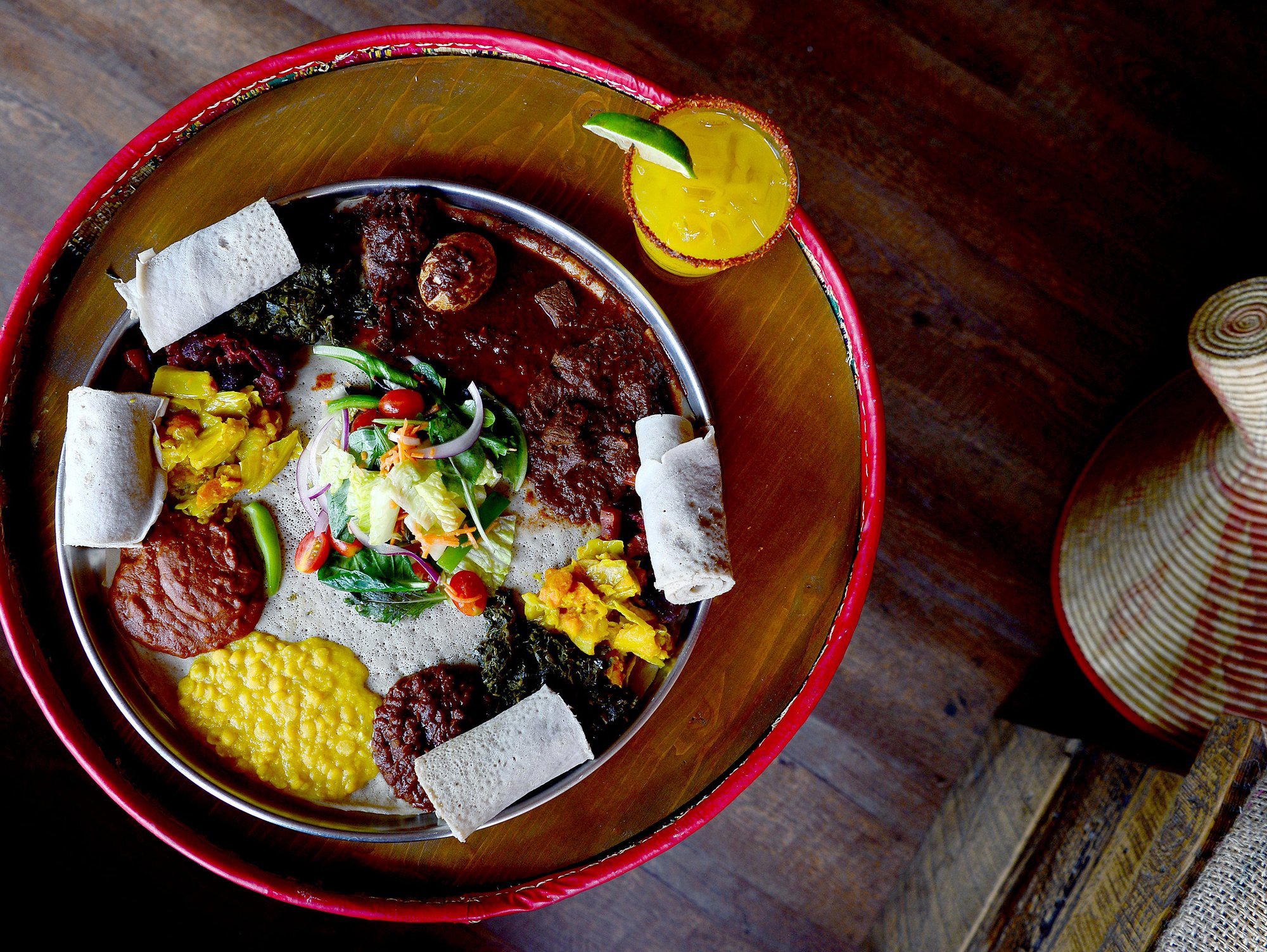
Commerce Street and the Case for East African Cooking in Asheville
Downtown Asheville runs on a particular culinary logic: wood-fired Southern kitchens, locally sourced Appalachian produce, and a craft beverage culture that has drawn national food press for over a decade. Commerce Street, where Addissae Ethiopian Restaurant sits at number 48, feeds into that same dense walkable core, surrounded by the kind of blocks where Cúrate has built a serious Spanish program and Chai Pani Asheville has earned its own Michelin recognition for Indian street food. Into that concentrated stretch, Addissae has carved out something relatively uncommon in the American Southeast: a traditional Ethiopian kitchen.
The Michelin Plate, awarded as part of the guide's 2025 North Carolina coverage, signals food worth eating rather than a starred destination, but it matters precisely because of where it lands. Ethiopian restaurants in the South are sparse, and those earning any international recognition are sparser still. The Plate puts Addissae in a select category of recognized restaurants in a city whose dining scene more typically garners attention for places like Blackbird or All Day Darling, both working firmly within American idioms. For Ethiopian cooking specifically, the recognition functions as a geographic signal as much as a culinary one.
The Tradition Behind the Plate
Ethiopian cuisine is built around a few foundational principles that distinguish it structurally from most of what surrounds Addissae on Commerce Street. Injera, the spongy sourdough flatbread fermented from teff flour, serves simultaneously as plate, utensil, and starch. The fermentation process gives it a mild acidity that functions as a counterpoint to the richness of the stews and spiced preparations it carries. Teff is a grain native to the Horn of Africa, high in protein and iron, and its use places Ethiopian cooking in a direct conversation with ingredient provenance that extends thousands of miles from the Blue Ridge.
The spice architecture is equally specific. Berbere, a complex blend that typically includes dried chilies, fenugreek, coriander, and other aromatics, underpins many of the meat-based dishes. Niter kibbeh, a spiced clarified butter infused with onion, garlic, and herbs, provides the cooking fat for much of the menu. These are not convenience pantry items assembled locally; they represent supply chains and culinary lineages that trace directly to Ethiopia. In a dining scene that prizes local sourcing, there is an honest integrity to a restaurant that instead insists on the authenticity of its own tradition's core ingredients rather than substituting regional equivalents.
The communal format of Ethiopian dining, where multiple wots and salads arrive on a single shared platter lined with injera, also sets Addissae apart from most of what surrounds it. Asheville has cultivated a strong sharing-plates culture, visible at places like Cúrate's tapas format, but Ethiopian service takes the communal premise further by eliminating individual plates almost entirely. Eating here is a physical act of collective decision-making at the table.
Where Addissae Sits in Asheville's Culinary Picture
Asheville's restaurant scene is unusually dense for a city of its size, with a concentration of recognized addresses that would not embarrass a much larger American city. The guide's North Carolina expansion brought attention to a range of formats, from fine dining to casual and from American to international. Within that spread, Addissae occupies the affordable end of the price range, marked with a single dollar sign, a positioning that aligns with Ethiopian dining's general accessibility rather than any compromise in craft.
That price positioning places it in a different competitive conversation than, say, the tasting-menu tier occupied by nationally prominent restaurants like Lazy Bear in San Francisco, Alinea in Chicago, or The French Laundry in Napa. Addissae's recognition speaks to a different Michelin premise: that cooking can be worth seeking out at any price point, provided it is done with sufficient skill and honesty to the tradition. The Plate designation, in that sense, is doing more democratic work than a star might.
Compared to other international restaurants operating in Asheville, Addissae represents the city's broadest geographic reach in culinary terms. While Crow and Quill and similar spots play within distinctly Western frameworks, Ethiopian cooking brings the Horn of Africa's fermentation culture, spice complexity, and communal service tradition into a city that has otherwise built its food identity on Southern Appalachian foundations. The contrast is not a tension so much as an expansion of what this dining scene can hold.
Planning Your Visit
Addissae sits at 48 Commerce St in downtown Asheville, walkable from most of the city's central accommodation and within easy reach of the broader restaurant cluster nearby. The dollar-sign pricing means a full meal for two typically stays well within what a comparable number of courses would cost at the more prominent American kitchens nearby. For the wider Asheville dining picture, our full Asheville restaurants guide covers the breadth of the scene, while our Asheville hotels guide, bars guide, wineries guide, and experiences guide cover the rest of a city that rewards thorough planning.
Hours and booking details are not listed publicly through the venue's current channels, so confirming availability before visiting is advisable. As with many independent restaurants of this scale, walk-in timing on quieter weekday evenings tends to offer the smoothest entry, though. Internationally, the Michelin Plate benchmark sits alongside recognized addresses like Le Bernardin in New York City, Emeril's in New Orleans, Atomix in New York City, and 8½ Otto e Mezzo Bombana in Hong Kong, a context that clarifies the standard Addissae has been measured against, even if the format and price point differ considerably, and even if the scale of Single Thread Farm in Healdsburg operates in an entirely different register.
How It Stacks Up
Comparable venues nearby, for context on price, style, and recognition.
| Venue | Cuisine | Price | Awards | Notes |
|---|---|---|---|---|
| Addissae Ethiopian RestaurantThis venue — the venue you are viewing | Traditional Ethiopian | $$ | Michelin Plate | Not listed |
| All Day Darling | Modern American Breakfast & Brunch Cafe | $$ | Michelin Plate | Historic Montford |
| Sunny Point Cafe | Farm-to-Table American Breakfast & Brunch | $$ | Michelin Plate | West Asheville |
| Little Chango | Latin Caribbean Arepas | $$ | Michelin Plate | South Slope |
| Mother | Seasonal American Bakery-Cafe | $$ | Michelin Plate | South Slope |
| OWL Bakery | Artisanal Bakery Cafe | $$ | Not listed | West Asheville |
Recognition history
Dated appearances from independent guides and award organizations, with the underlying list record or original source where available.
Michelin Plate
Michelin
Continue exploring
More in Asheville
Restaurants in Asheville
Browse all →
Bars in Asheville
Browse all →




At a Glance
- Cozy
- Intimate
- Casual Hangout
- Family
- Standalone
Current opening hours
- Monday
- 5–9 PM
- Tuesday
- Closed
- Wednesday
- Closed
- Thursday
- 5–9 PM
- Friday
- 5–9 PM
- Saturday
- 4–9 PM
- Sunday
- 4–9 PM
Hours can change for holidays and private events. Last verified .
Cozy neighborhood spot with friendly service and a casual, welcoming atmosphere.