
Tabelog 100 #21
Our verdict
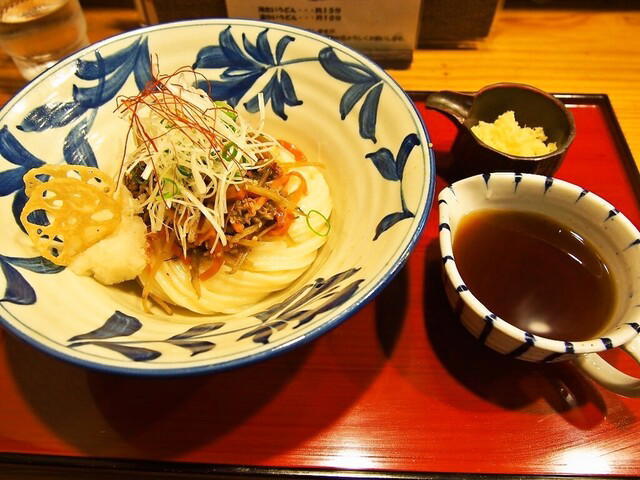
Udon Kobo Yuuyu puts Amagasaki’s everyday noodle culture into a more serious frame: udon and tempura, a compact counter-led room, and repeated selection for Tabelog’s Udon WEST 100. The interest here is not luxury signalling, but how a low-price local format can carry ingredient discipline, especially with an owner noted as a certified vegetable sommelier.

Pearl is the En Primeur Club membership app, where members save venues, book tables and use the concierge.
The menu
What to order
- Handmade udon
- Tempura udon
- Wagyu beef and seaweed udon
Amagasaki’s everyday shopping blocks put lunch in close quarters: local foot traffic, small counters, quick turnover, and restaurants that live or fail by repeat local use rather than ceremony. In that setting, udon has a different grammar from tasting-menu dining. The question is not how much theatre can be built around a bowl, but whether wheat noodles, broth, and frying are handled with enough care to justify a detour inside a working city.
Udon Kobo Yuuyu belongs to that Amagasaki category: compact, casual, and sharper than its price tier suggests. Its 2024 recognition in Tabelog’s Hyakumeiten udon listings places it in a recognised noodle conversation rather than a purely neighbourhood one. That matters in Hyogo, where the stronger dining headlines often cluster around higher-spend formats. Here, the signal is narrower and more useful: a small udon shop recognised for a craft that depends on texture, timing, and ingredient handling.
Udon and tempura in a city better known for everyday eating
Ingredient handling is often discussed loudly at expensive restaurants and quietly at noodle shops. Udon is a good corrective. A bowl can expose weak preparation immediately, especially when tempura sits beside noodles rather than behind a sauce-heavy dish. At Udon Kobo Yuuyu, the category itself gives the shop a concrete angle: wheat noodles and frying technique both have to read clearly in a short, casual meal.
That detail also explains why the place can read differently from a generic noodle counter. Udon culture rewards balance as much as volume: broth, noodles, and tempura need to work together without the structure of a long meal. The appeal is direct rather than showy. It pushes attention toward texture and timing without turning the meal into a lecture.
The comparison inside Amagasaki is useful because the city’s dining map spans a broad spend range. Angle sits in a modest everyday bracket, while Dairen occupies a slightly higher casual-dining lane. Gyoraku Karakara and Ogitani move the conversation into heavier evening spend. Against that spread, this shop makes a specific argument: the city’s serious food does not only sit at dinner counters or seafood rooms. It can also sit in a short lunch window, built around noodles and tempura.
A compact counter format with award-level scrutiny
Small Japanese noodle shops often work because the room compresses the entire process. A compact format can place cooking, service, and customer rhythm in the same field of view, and a limited footprint reduces the distance between kitchen decisions and the bowl. That format rewards consistency. There is less room to hide behind ambience, wine service, or a long menu arc.
The recognition history reinforces that point. Selection for Tabelog’s udon Hyakumeiten in 2024 suggests more than ordinary neighbourhood attention, with a listed score of 3.72. For travellers, the value of that signal is practical as much as critical: it identifies a low-cost, specialist stop with enough validation to merit planning around, particularly for visitors using Amagasaki as more than a rail connection between Osaka and Kobe.
It also helps separate the shop from a common mistake in Japan dining itineraries: treating inexpensive restaurants as filler between higher-ticket reservations. Udon’s craft is not a lesser category; it is a different one. The discipline is in preparation, boiling, broth, oil control, and timing. A place like this belongs in an itinerary for the same reason any focused specialist counter does: it shows how much technique can sit inside a brief, casual meal.
How to place it in an Amagasaki itinerary
Amagasaki rewards travellers who plan by city and format rather than by prestige alone. This is not the glossy version of destination dining, but that is part of the appeal for food-focused visitors. The city is useful for a daytime stop, especially when the goal is to read local eating habits through a restaurant that is small, specific, and not built around celebration dining.
For a broader city plan, use our full Amagasaki restaurants guide to balance noodle shops with casual counters and higher-spend Japanese dining. Travellers staying locally can pair that with our full Amagasaki hotels guide, while evening planning sits better with our full Amagasaki bars guide. The wider city pages for Amagasaki wineries and Amagasaki experiences are more useful for mapping a full day than for judging this meal directly.
The better way to approach Udon Kobo Yuuyu is with category discipline. Do not expect the pacing or privacy of a formal Japanese restaurant. Expect a specialist udon and tempura shop whose credibility comes from focused execution, a compact setting, a low spend, and attention to noodles and frying. In Amagasaki, that combination is precisely the point: serious eating without the architecture of occasion.
Frequently asked questions
Is Udon Kobo Yuuyu a family-friendly restaurant?
Udon Kobo Yuuyu is a casual udon and tempura restaurant in Amagasaki. For questions about children, seating, or current service details, check the venue's official channels before visiting.
Is Udon Kobo Yuuyu formal or casual?
It reads as casual rather than formal. Udon Kobo Yuuyu is best understood as a specialist udon and tempura stop in Amagasaki, suited to a straightforward noodle meal rather than a ceremony-driven restaurant experience.
What price level is Udon Kobo Yuuyu?
Pricing at Udon Kobo Yuuyu is listed as - JPY 999 - JPY 999.
What is Udon Kobo Yuuyu known for?
Udon Kobo Yuuyu is known for udon and tempura in Amagasaki, with 2024 recognition from Tabelog’s udon Hyakumeiten.
Comparable Spots, Quickly
Comparable venues by cuisine and price in the same metro.
| Venue | Cuisine | Price | Awards | Notes |
|---|---|---|---|---|
| Udon Kobo YuuyuThis venue (the venue you are viewing) | Udon and Tempura Shop | $10–20 | Tabelog 100 #21 | Not listed |
| Ramen Senmon Nagomi Mukonosou ten | Ramen counter near Mukonoso Station | $10–20 | Tabelog 100 #56 | Mukonoso |
| Nord | Okonomiyaki & Teppanyaki Izakaya | $10–20 | Tabelog 100 #66 | Tachibana |
| Honkaku Sanuki Udon Honoka | Traditional Sanuki udon | $1–10 | Tabelog 100 #59 | Amagasaki |
| majide hamal | Thai-style biryani & curry house | $20–30 | Tabelog 100 #41 | Mukonoso |
| Sanuki Udon Harushin | Sanuki-style Udon & Tempura | $10–20 | Tabelog 100 #92 | /潮江 (Shioe) |
Recognition history
Dated appearances from independent guides and award organizations, with the underlying list record or original source where available.
Tabelog 100 #21 · No. 21
Tabelog · Tabelog 100 - Udon - WEST - 2024
Continue exploring
More in Amagasaki
Restaurants in Amagasaki
All restaurants in Amagasaki →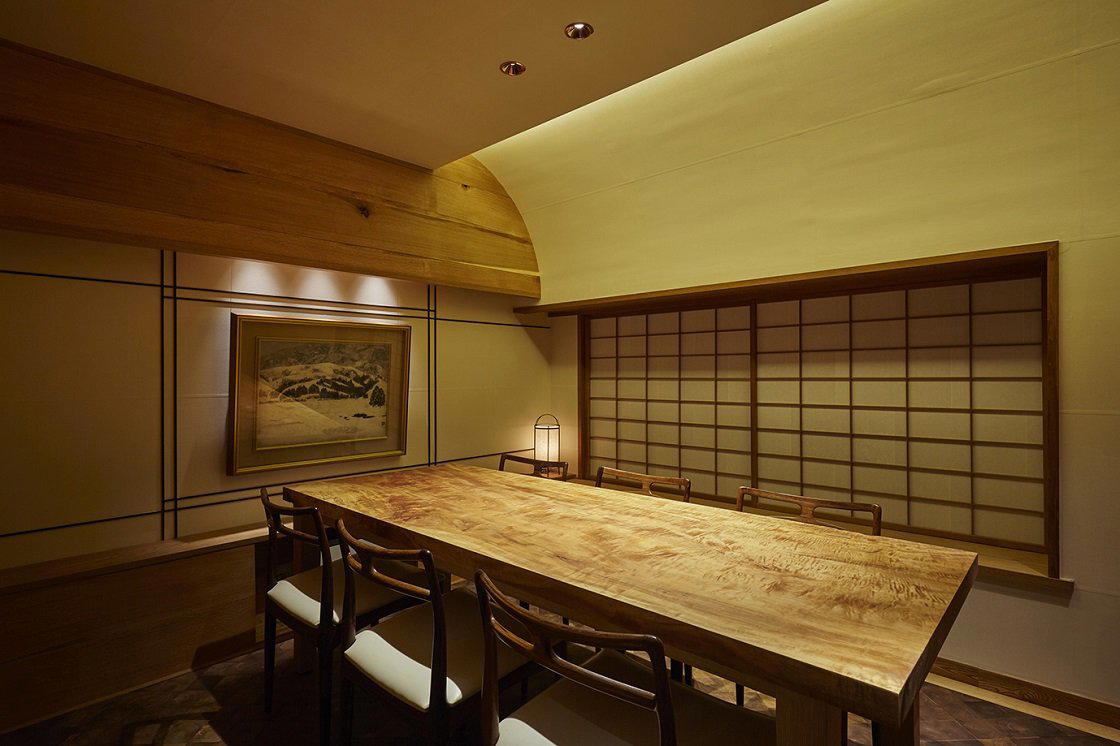



Bars in Amagasaki
Browse all →




Hotels in Amagasaki
Browse all →




Wineries in Amagasaki
Browse all →
Details
- Cozy
- Classic
- Solo
- Family
- Casual Hangout
- After Work
- Standalone
- Sake Program
- Beer Program
- A La Carte
- Counter Dining
- Sake
- Shochu
- Beer
A small, counter‑focused udon shop with simple interiors, relaxed everyday vibes, and a comfortable, family‑friendly atmosphere that feels like a local hideout near the station.