U Fleků
"Drink Up at a Prague Institution With a history dating back to 1499, U Fleku is a Pragueinstitution and the only brewery and restaurant in Central Europe that has been brewing non-stop for over five centuries. Beer lovers, backpackeres and tourists come from all corners of the world todrink theirdark lager which is the only beer on the menu, made with all natural ingredients. The restaurant, serving traditional Czech and Bohemian cuisine – roast pork knuckle, garlic soup, apple strudel – includes eight beer halls (each with its own distinctive décor) and an inner beer garden that seats up to 500 people. Everyday U Fleků serves around 2,000 pints of beer. If you want to know more, they also have a brewey tour and a beer museum (reservations only) in the former malt house."
Pearl is the En Primeur Club membership app — saves, bookings, and concierge access live there. Same editors, same standards.
- Address
- Křemencova 11, 110 00 Nové Město, Czechia
- Phone
- +420 602 660 290
- Website
- ufleku.cz
- Directions
- Get directions
 Saves & bookings on Pearl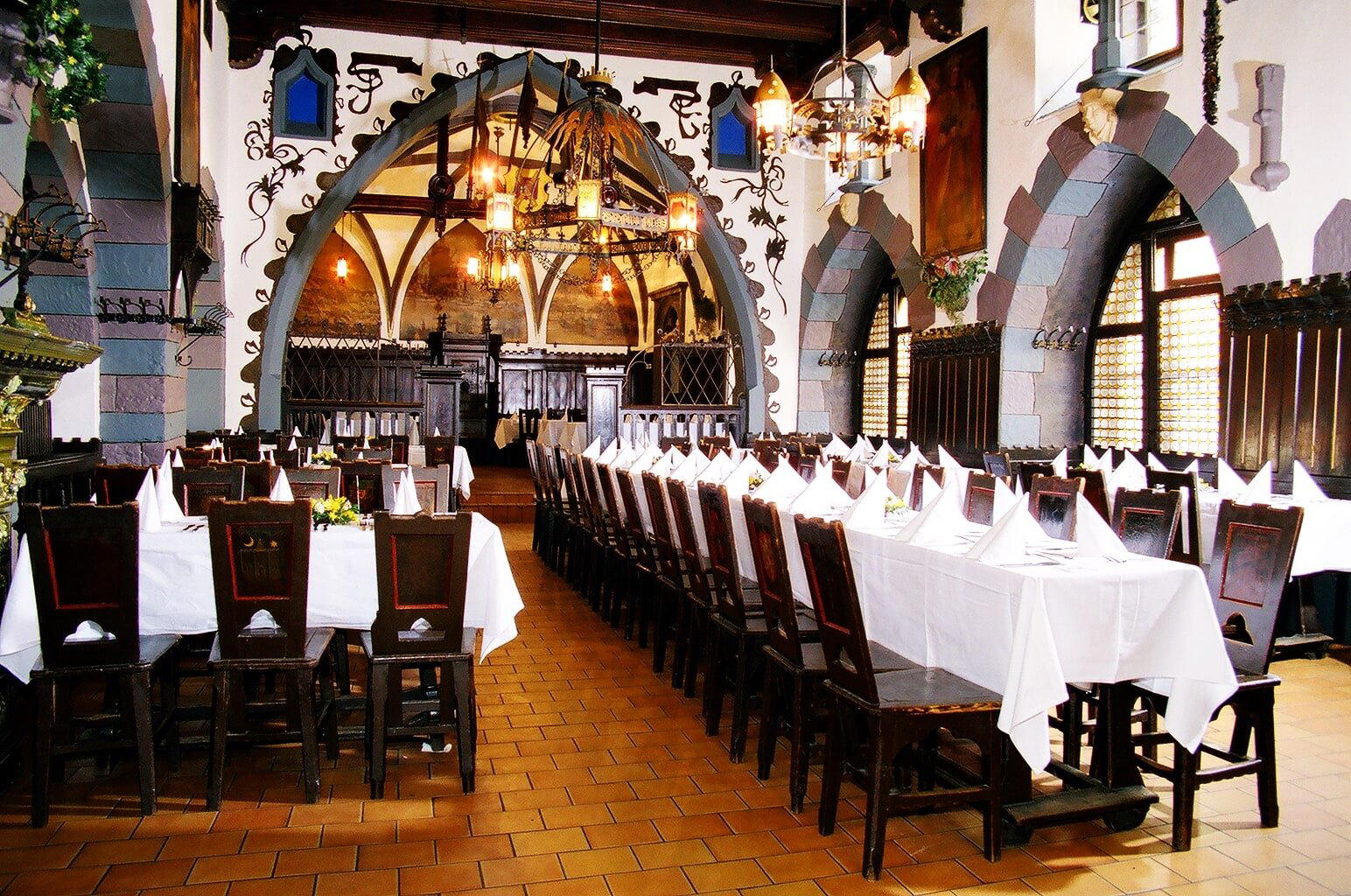
Where Nové Město's History Pours Into a Glass
Cross the threshold at Křemencova 11 and the century closes around you. The ceilings are vaulted, the wooden benches worn to a polish by generations of drinkers, and the smell of malt and old timber arrives before the first round does. U Fleků is a traditional Czech brewery in Prague, at Křemencova 11 in Nové Město. U Fleků has been brewing and serving on this site in Prague's Nové Město district since 1499, making it one of the oldest continuously operating brewery-restaurants in Central Europe. The building's age is not a marketing position; it is the physical fact that organises every element of the experience.
Nové Město, despite its name meaning "New Town," was founded in 1348 by Charles IV and sits immediately south of the Old Town across from Wenceslas Square. The neighbourhood holds a different register than the tourist-dense Royal Mile: more residential in texture, more workaday in rhythm. U Fleků sits on a quieter side street here, which means the crowds it draws are self-selecting. Visitors who find it have usually sought it out deliberately, rather than stumbling in from a walking tour. That distinction shapes the room's atmosphere: louder and more convivial than a neighbourhood pub, but without the frantic throughput of venues directly on the tourist circuit.
A Single Beer, Brewed on the Premises
The brewing tradition at the restaurant centres on one product: a dark lager produced in the on-site microbrewery. Czech dark lager occupies a specific position in the country's brewing culture, distinct from the pale Pilsner style that dominates export markets. Where pale Czech lager tends toward herbal bitterness, the dark style leans into roasted malt, often with a caramel undercurrent and softer carbonation. The restaurant's version, served in half-litre ceramic mugs, is the anchor of the visit rather than its accompaniment. The kitchen supports the beer rather than competing with it: the food programme at this type of established Czech beer hall typically runs to roasted meats, bread dumplings, goulash, and dishes built for the table rather than for individual plating. For visitors comparing Prague's traditional food institutions, the food approach here differs sharply from the refined Czech-French tasting menu at La Degustation Bohême Bourgeoise or the modern European cooking at Alcron. The beer hall format and the fine-dining format exist in the same city but answer entirely different questions.
Across Czech cities, the beer-hall-with-working-brewery model appears at a handful of addresses. Na Spilce in Pilsen operates on similar principles inside the Pilsner Urquell brewery complex. The restaurant in Prague functions with more independence, its brewing operation small enough that the beer stays local rather than being scaled for distribution. That scarcity is part of the point: what's poured here cannot be bought in a supermarket.
The Architecture of Communal Drinking
Czech beer culture is organised around the table, not the bar. Long communal benches encourage the sort of conversation that shortcuts social formality. Strangers share tables routinely; the practice is not considered unusual. This format has counterparts across Central Europe, from Munich's beer gardens to Vienna's Heurigen, but the Czech version places the beer hall inside the city fabric rather than on its suburban periphery. The restaurant's courtyard, which opens in warmer months, extends the seating into an outdoor configuration that shifts the mood further toward the relaxed end of the spectrum. The indoor rooms, by contrast, carry the full weight of the building's history: the decorated ceilings, the institutional scale of the dining spaces, and the visible age of the fittings read less as preserved charm and more as simple continuity.
The scale of the operation means service is functional rather than attentive. Waiters circulate with trays, marking consumption at the table rather than bringing individual checks after every round. It is the rhythm of the brewery visit rather than the restaurant meal, and understanding that distinction before arrival prevents misaligned expectations.
Planning the Visit
The restaurant sits in Nové Město at Křemencova 11, roughly a fifteen-minute walk from Old Town Square and close to the Karlovo náměstí metro stop. Prague's traditional food institutions at this price and format tier rarely require advance booking for small groups, though the venue's reputation draws consistent foot traffic during evening hours and peak tourist months. Walk-ins are practical on weekdays; weekend evenings may require patience or earlier arrival. The venue operates without the booking lead times associated with the city's tasting-menu restaurants, where a table at 420 Restaurant or Alma may require planning days or weeks ahead.
For visitors building a broader Czech itinerary, the brewery-restaurant format repeats in other cities and regions at places like Tlustá Kachna in Chrudim, Chapelle in Písek, and Pavillon Steak House in Brno. Each sits in a different register, but the pattern of regional Czech food anchored to local drink is consistent. Further afield, venues like Long Story Short Eatery & Bakery in Olomouc, Cattaleya in Čeladná, Dvůr Perlová voda in Budyně nad Ohří, Perk Restaurant in Šumperk, ARRIGŌ in Děčín, and V Bezovém Údolí in Kryštofovo Údolí illustrate the range of the country's dining scene beyond the Prague centre. See the full Prague restaurants guide for a complete editorial map of the city. And for a sense of what ambitious communal-format dining looks like in other contexts, Lazy Bear in San Francisco offers an instructive comparison: the communal table format transplanted into a tasting-menu framework, far removed from the beer-hall tradition but sharing its core logic of shared space and collective rhythm. Equally, the precision-service model at Le Bernardin in New York City or contemporary European cooking at Amano in Prague clarifies, by contrast, what the restaurant is not trying to be.
A Minimal comparable set
Comparable venues nearby, for context on price, style, and recognition.
| Venue | Cuisine | Price | Notes |
|---|---|---|---|
| U FlekůThis venue — the venue you are viewing | Nove Mesto, Traditional Czech Brewery | $$ | Not listed |
| Letenský zámecek | Not listed | $$ | Pelc Tyrolka, Traditional Czech with International Influences |
| Červený jelen | Josefov, Modern Czech Steakhouse | $$ | Not listed |
| U Raka | Hradcany, Traditional Czech | $$ | Not listed |
| Senses Garden Restaurant | Hradcany, Modern Bohemian Czech | $$ | Not listed |
| Krystal Bistro | Not listed | $$ | Karlin, Traditional Czech with French Charm |

At a Glance
- Lively
- Rustic
- Well Known
- Historic
- Cozy
- Group Dining
- Casual Hangout
- Late Night
- Live Music
- Historic Building
- Beer Program
Rustic historic interiors with old Prague decor, live music, and a lively, crowded beer hall atmosphere.