What the Category Asks of the Kitchen
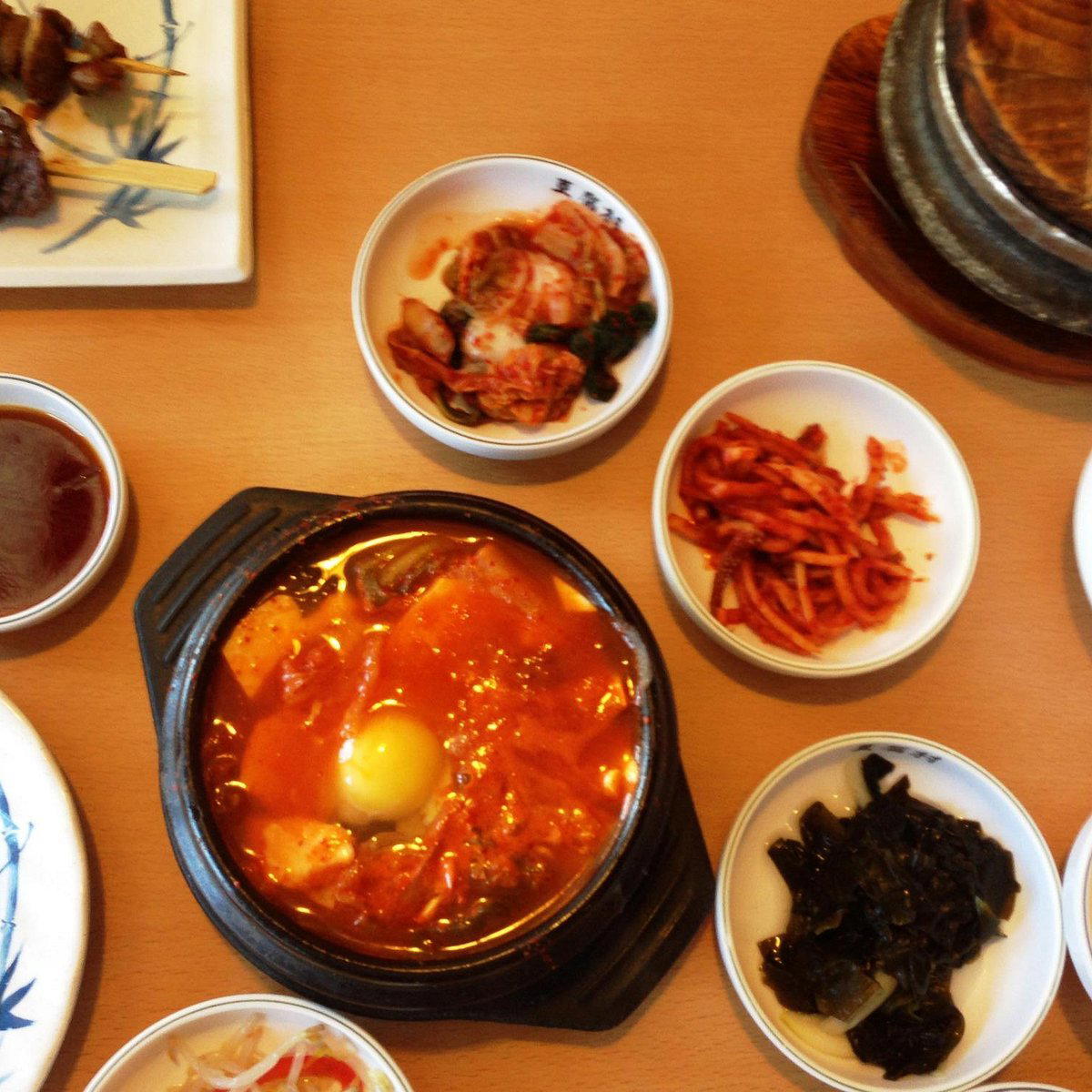
Soondubu jjigae — soft tofu stew, is a Korean dish that exposes the kitchen almost completely. The broth is the argument: a well-made version carries depth from anchovy and kelp stock, heat calibrated to the customer's preference, and a silkiness from the tofu that holds its structure through the boil without going grainy. There is nowhere to hide a thin or imprecise broth behind sauce complexity or plating technique. The format strips the cooking down to fundamentals in the same way that a Neapolitan pizza or a French onion soup does, traditions where simplicity is the point and quality differences are immediately legible.
Korean-American dining in Houston has developed enough critical mass that diners on Bellaire can make meaningful comparisons across multiple kitchens running the same dishes. That competitive environment tends to sharpen the cooking. Restaurants in this category are benchmarked not against fine dining peers like Musaafer or BCN Taste and Tradition, but against the institutional Korean-American standard, the version that a diner who grew up eating this food will immediately recognize as right or wrong.
Across the American Korean dining scene, the restaurants that build durable reputations in this category do so through broth consistency, tofu sourcing, and the quality of banchan, the small accompanying dishes that arrive before the main bowl. Banchan here functions as both a generosity signal and a calibration tool: sparse or careless banchan often predicts a kitchen cutting corners elsewhere.
Planning Your Visit: What the Booking Experience Actually Looks Like
Tofu Village operates in a category where the booking experience differs fundamentally from the high-demand reservation systems that define Houston's upper tier of fine dining. Venues like Tatemó require advance planning and structured timing; the Korean casual register on Bellaire typically does not. That accessibility is part of the value proposition, the trade-off being that peak hours on weekends produce genuine waits, and the room fills with neighborhood regulars who have established their own ordering habits.
For first-time visitors from outside the Bellaire corridor, the practical intelligence is simple: arrive before noon on weekdays to avoid a wait, or accept that a Saturday lunch will involve some queue time. This is not a venue you book three months out on a reservation platform. It is a venue you plan around meal timing and proximity to the neighborhood. That difference in logistics reflects a different kind of restaurant economy, one where repeat volume rather than occasion dining drives the business.
Visitors familiar with the Korean soft tofu format at similar establishments elsewhere, in Los Angeles's Koreatown, in New York's Flushing, or in the Chicago corridor, will find the ordering framework immediately legible. The heat level customization, the raw egg dropped into the boiling broth tableside, and the rice served separately are conventions of the category, not inventions of any single kitchen. Understanding those conventions before you arrive removes friction from the experience.
Where Tofu Village Sits in Houston's Dining Range
Houston's restaurant range in 2024 runs from Michelin-recognized tasting counters and James Beard-nominated kitchens down through the dense informal dining infrastructure of its immigrant corridor neighborhoods. Tofu Village operates in that second geography, not the city's formal fine dining tier, which includes references like March, but the layer of daily-use restaurants that represent Houston's genuine culinary breadth.
That breadth is one of the city's real claims to dining authority. Cities with narrow fine dining peaks but thin everyday infrastructure, common in markets that developed quickly around expense-account dining, cannot match Houston's depth across price points. The Bellaire corridor contributes meaningfully to that argument. Alongside comparable deep-cuisine corridors in Houston's Vietnamese, Chinese, and South Asian neighborhoods, it forms the evidence base for a city that functions as a serious eating city rather than merely a city with some serious restaurants.
For context on how Houston's formal dining tier presents internationally, EP Club also covers venues in comparable American cities: Le Bernardin in New York City, Lazy Bear in San Francisco, Smyth in Chicago, Providence in Los Angeles, and Addison in San Diego. Internationally, the editorial range extends to Atelier Moessmer Norbert Niederkofler in Brunico. For Korean dining with formal fine dining credentials, Atomix in New York City represents the high end of Korean-American restaurant ambition. Tofu Village operates at a different register entirely, the register where tradition and community repetition define quality, not competitive tasting menu format. Further afield, The French Laundry in Napa, Blue Hill at Stone Barns in Tarrytown, Single Thread Farm in Healdsburg, Emeril's in New Orleans, and The Inn at Little Washington round out the broader American fine dining picture that EP Club tracks.
For a full map of Houston dining across formats and price points, see our full Houston restaurants guide.
Know Before You Go
Planning Details
- Address: 9889 Bellaire Blvd, Houston, TX 77036
- Neighborhood: Bellaire corridor, southwest Houston
- Reservations: Walk-in format typical for this category; confirm current policy directly with the venue
- Leading timing: Weekday lunch hours to avoid peak waits
- Price tier: Informal neighborhood dining; price data, expect the casual Korean-American range
- Parking: Strip mall lot on-site, typical of the Bellaire Boulevard format