Ohn
Our verdict
Ohn occupies a strip-mall address on Clarewood Drive in Houston's Sharpstown district, placing it squarely inside the city's most quietly productive corridor for Southeast and East Asian dining. The address alone signals something about how Houston's serious restaurant culture operates: credential travels by word of mouth, not postcode. A close read of what Ohn represents rewards anyone paying attention to where Houston's dining ambitions are quietly expanding.

Pearl is the En Primeur Club membership app — saves, bookings, and concierge access live there. Same editors, same standards.
- Address
- 9630 Clarewood Dr a16, Houston, TX 77036
- Phone
- (832) 831-1862
- Website
- ohneatery.com
- Directions
- Get directions
The Address as Editorial Statement
Houston's most consequential dining rarely announces itself from the exterior. The stretch of Clarewood Drive that runs through Sharpstown — a district anchored by one of the highest concentrations of Vietnamese, Chinese, and broader Southeast Asian communities in the American South — has long operated as a parallel dining economy to the polished rooms of Montrose or the Galleria corridor. Ohn sits at 9630 Clarewood Dr, suite A16, which means it shares a building with other tenants, parks without valets, and asks nothing of you before you arrive. In cities where serious food culture has matured past the need for theatrical arrival sequences, that kind of address carries its own signal. For context on how Houston's fine-dining and chef-driven rooms operate at the opposite end of the formality spectrum, see our coverage of March, which layers Venetian reference points across a very different room.
Where Ohn Fits in Houston's Dining Conversation
Houston's restaurant culture has developed two distinct currents over the past decade. One runs through the ambitious tasting-menu operations that compete with rooms like Le Jardinier Houston for the attention of the city's finance and energy sector clientele. The other runs through the ethnic dining corridors, Bellaire's Chinatown, Harwin Drive, Mahatma Gandhi District, where the product quality often matches or exceeds what the formal rooms deliver, at a fraction of the price and ceremony. Ohn's Clarewood address places it in that second current, a geography where the dining public navigates by reputation and repetition rather than by press coverage or awards cycles. That positioning is itself a form of editorial argument about what Houston values and where its food identity is most authentically expressed. The city's diversity, frequently cited as the most ethnically diverse major city in the United States, generates a restaurant ecosystem where a strip-mall address in Sharpstown can carry the same cultural weight that a starred room carries in a more conventionally structured dining city. For a sense of how other American cities have developed analogous fine-dining-adjacent corridors, the programming at Smyth in Chicago and Lazy Bear in San Francisco offer useful comparison points for how chef-driven ambition operates outside conventional luxury frameworks.
Reading the Menu Architecture
A Vietnamese restaurant in this district is rarely just Vietnamese, it is likely Hue-style, or southern pho, or a particular family's interpretation of a central Vietnamese canon. A Chinese restaurant here answers to a regional logic, Sichuan, Cantonese, Fujianese, that the broader market rarely bothers to articulate. The menu architecture of a serious independent in this geography tends to tell you exactly where its kitchen's loyalties lie, and reading it carefully is the most reliable guide to what the kitchen is actually trying to accomplish. This is meaningfully different from the menu logic at places like Musaafer, which builds its Indian menu around a pan-regional journey format, or Tatemó, which structures its Mexican menu around masa as a through-line. In the Clarewood corridor, the structure is often more compressed and more pointed: a short menu that knows exactly what it is doing. Nationally, the restaurants most often held up as models of disciplined menu architecture, Le Bernardin in New York City, Atomix, achieve their focus through deliberate constraint. Whether by design or by the economics of an independent in a working-class district, the independents along Clarewood operate with a similar discipline, because they have to.
The Sharpstown Context
Sharpstown was developed as a planned residential community in the 1950s and began its demographic transition in earnest through the 1980s and 1990s, as Vietnamese refugee communities and later Chinese and other Southeast Asian immigrant populations reshaped its commercial strips. That history matters to anyone eating in the district today, because it explains why the dining here is so specific and so technically serious: these are communities cooking for themselves first, for an outside audience second or not at all. The result is a standard of regional authenticity that is difficult to replicate in more curated dining environments. For comparison, consider how BCN Taste & Tradition brings Spanish regional specificity into Houston's more formal dining tier, a parallel project of regional fidelity, executed in a very different register. Restaurants in districts like Clarewood occupy the opposite end of the same ambition: the product is the thing, and the room exists only to serve it.
Planning a Visit
Many do not maintain a significant web presence or centralized booking infrastructure; discovery happens through community networks, Google Maps reviews in multiple languages, and the kind of word-of-mouth that does not translate easily into press coverage. The practical advice for anyone visiting the Clarewood corridor is to arrive at off-peak hours, mid-afternoon on a weekday, or early in the dinner service, and to be prepared to order from a menu that may not have an English translation for every item. Pointing at neighboring tables is an entirely legitimate strategy and often the most reliable one. For reference on how other serious American independents handle the logistics of discovery and access, the reservation structures at Providence in Los Angeles and Addison in San Diego represent the formal end of the planning spectrum; Ohn and its neighbors on Clarewood represent the opposite, where the barrier to entry is attentiveness rather than advance booking. Our full Houston restaurants guide maps the city's dining across both registers.
What Ohn Represents in a Broader National Frame
The conversation about where American restaurant culture is most alive has increasingly moved away from the rooms with the longest tasting menus and the most press-friendly interiors. The farms-to-table operations like Blue Hill at Stone Barns, the destination properties like The Inn at Little Washington, and the agricultural-format rooms like Single Thread Farm in Healdsburg define one version of American dining ambition. But a parallel and arguably more generative conversation is happening in the immigrant-anchored commercial strips of cities like Houston, Los Angeles, and the greater Bay Area, strips where the product quality is high, the price points are accessible, and the menu logic is governed by tradition rather than trend. Ohn on Clarewood Drive is part of that conversation. The European corollary is not difficult to identify: the kind of regional specificity and product-first discipline that defines the leading work at places like Atelier Moessmer Norbert Niederkofler in Brunico, where the argument is made through the product itself, has its American analogue not in the tasting-menu rooms but in exactly the kind of independent that an address like 9630 Clarewood Drive tends to house. The strip mall, in this reading, is not a limitation. It is a position statement.
Frequently asked questions
What do people recommend at Ohn?
In the Clarewood Drive corridor more broadly, regulars tend to navigate by watching what the kitchen sends to neighboring tables and asking staff directly, a more reliable method than any fixed recommendation list when menus shift seasonally or by availability. Anyone cross-referencing Houston's cuisine scene through the city's more documented rooms, from March to Musaafer, will find that Ohn operates in a different register entirely.
How far ahead should I plan for Ohn?
If Ohn operates without a formal reservation system, common for independents in this Houston corridor, walk-in timing matters more than advance planning. Arriving at the start of service, rather than peak hours, is the most reliable approach. Houston's more formally structured tasting-menu rooms, where lead times of two to four weeks are standard, represent a different planning logic entirely.
What is Ohn leading at?
Without confirmed cuisine type or menu documentation, a specific claim about Ohn's strengths would go beyond what available data supports. What can be said is that restaurants in the Clarewood Drive district that attract sustained local attention tend to do so through technical precision in a narrow set of dishes, a focused repertoire executed consistently, rather than through breadth. That pattern, if it applies here, would place Ohn in a category alongside the most discipline-oriented independents in Houston's Asian dining corridors.
Is Ohn allergy-friendly?
Houston's more formally staffed rooms, including those covered in our Houston restaurants guide, typically have documented accommodation policies; independents in community dining corridors vary considerably.
Should I splurge on Ohn?
Restaurants in the Sharpstown and Clarewood corridor are historically priced for the communities they serve, which means per-person costs that rarely approach the $100-plus benchmarks of Houston's formal tasting-menu tier. If that pattern holds, Ohn is not a splurge decision in the conventional sense, it is a value decision, where the relevant question is which corridor of Houston's dining ecosystem you want to spend time in, not whether to commit financially.
Is Ohn connected to any broader culinary tradition or regional cuisine that distinguishes it from other Sharpstown restaurants?
What the address and district context suggest is that any serious independent operating here draws on the deep bench of Southeast and East Asian culinary traditions that define Sharpstown's food identity, traditions that, in this part of Houston, are governed by community standards rather than market positioning. For readers tracking how Houston's immigrant-anchored dining corridors relate to the city's broader restaurant ambitions, our full Houston guide maps both registers.
Cuisine and Awards Snapshot
Comparable venues nearby, for context on price, style, and recognition.
| Venue | Cuisine | Price | Notes |
|---|---|---|---|
| OhnThis venue — the venue you are viewing | Korean Soju Bar Food | Not listed | Not listed |
| Tofu Village | Traditional Korean Tofu House | $10–20 | Bellaire West |
| The Del | Italian-Spanish Neighborhood Grill | $30–50 | Briarmeadow |
| Cafe Adel | Bosnian | Not listed | Briargrove |
| Nielsen's Delicatessen | Classic Danish-American Deli | $10–20 | Greenway |
| The Breakfast Klub | Southern Comfort Breakfast | $10–20 | Midtown |
Continue exploring
More in Houston
Restaurants in Houston
Browse all →
Bars in Houston
Browse all →
Hotels in Houston
Browse all →
Details
- Trendy
- Lively
- Modern
- Casual Hangout
- Late Night
- Group Dining
- Open Kitchen
- Sake Program
- A La Carte
- Small Plates
- Soju
- Makgeolli
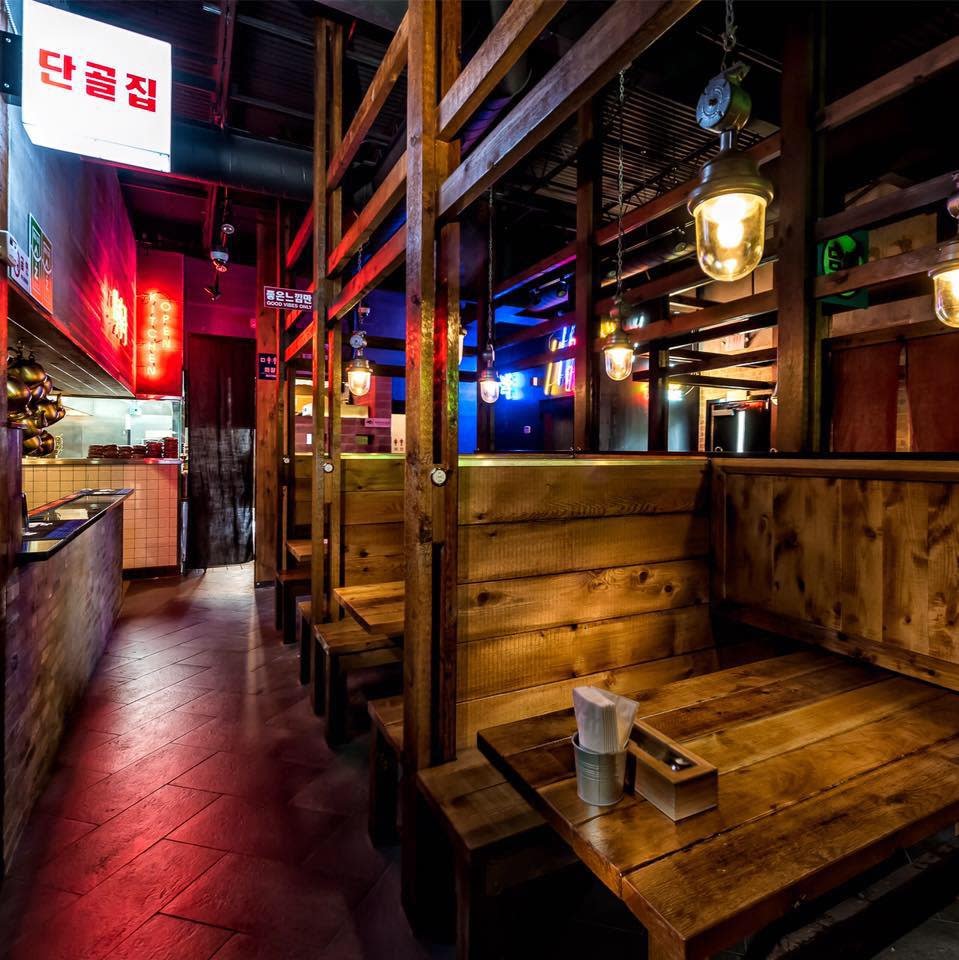
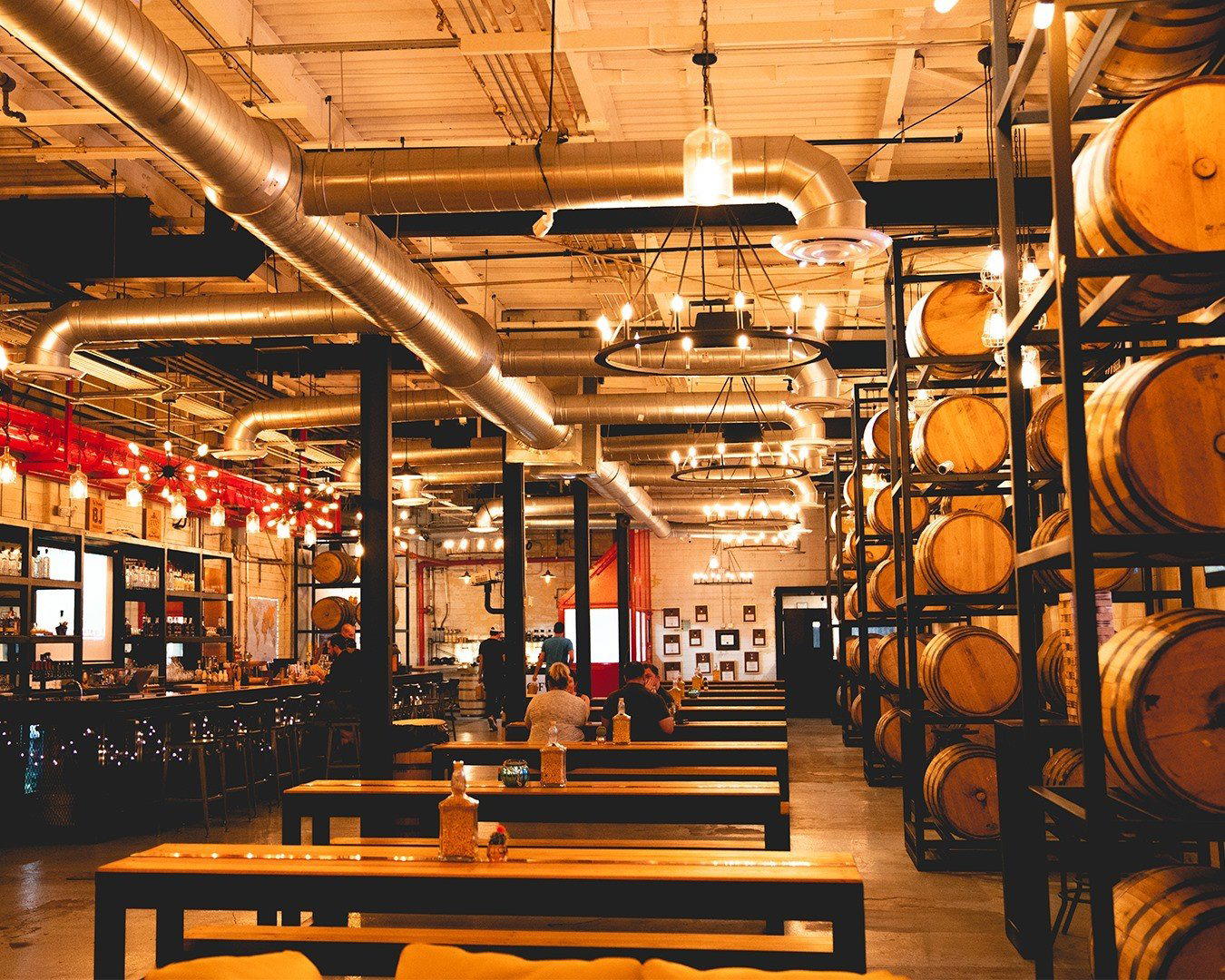
Cool urban atmosphere with dark wooden booths, concrete floors, and multicolored neon signs.