Ting Thai Teviot Place
Our verdict
Ting Thai Teviot Place occupies a spot on one of Edinburgh's busiest student-quarter streets, bringing Thai cooking into a city whose restaurant scene has long tilted toward Modern European and Nordic-influenced formats. Where the Old Town's higher-end addresses lean on tasting menus and local provenance, Ting Thai operates in a more direct register — Thai flavours, accessible pricing, and a format built for volume and repeat visits.

Pearl is the En Primeur Club membership app — saves, bookings, and concierge access live there. Same editors, same standards.
- Address
- 8, 9 Teviot Pl, Edinburgh EH1 2QZ, United Kingdom
- Phone
- +44 131 225 9801
- Hours
- Mon–Thu 12–10 PMFri–Sat 12–11 PMSun 12–10 PM
- Website
- tingthai.co.uk
- Directions
- Get directions
- Booking
- Book on the venue's website
Thai Cooking in a City That Defaults to the North
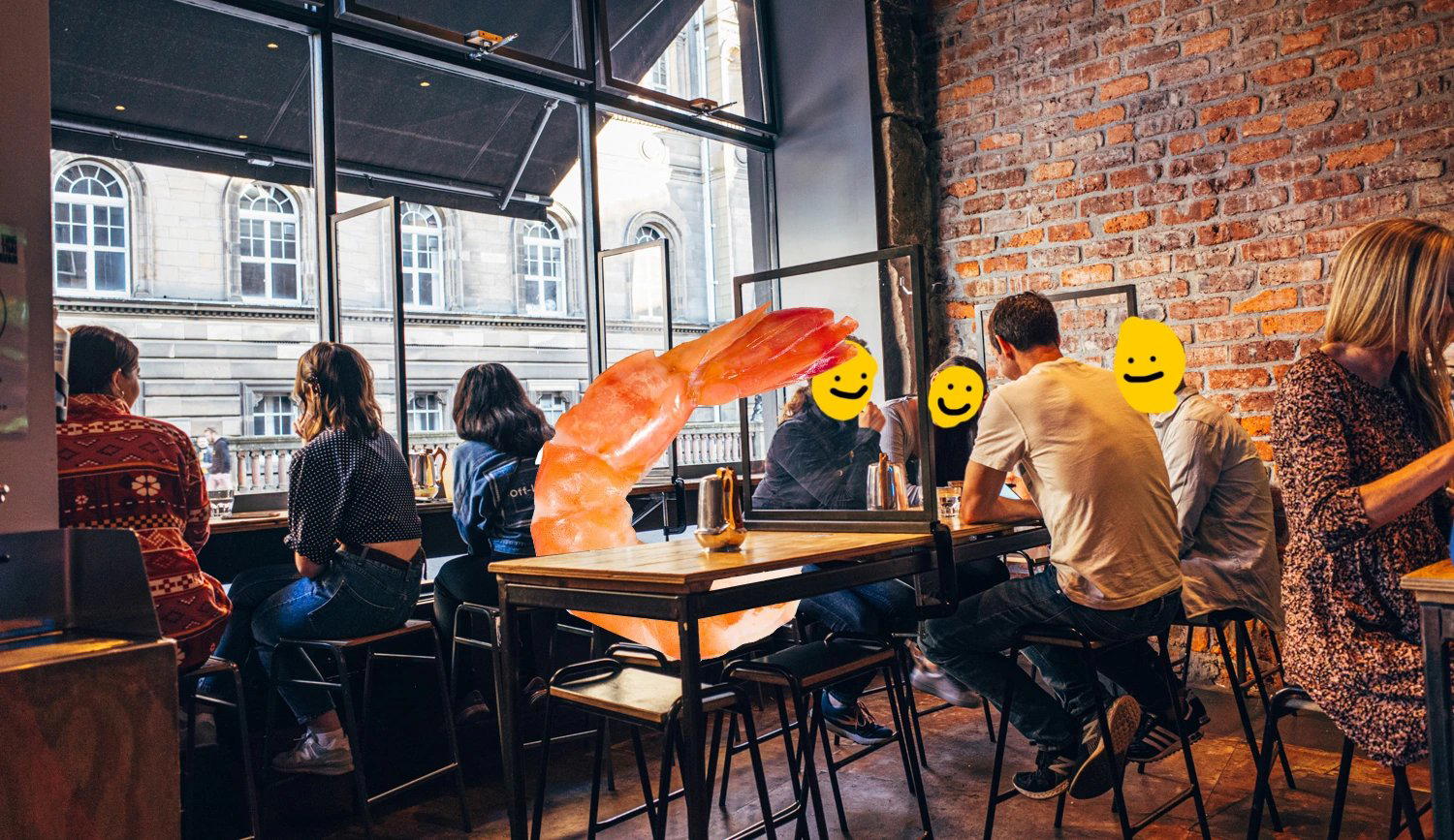
Edinburgh's serious restaurant conversation tends to orbit a familiar cluster: Modern European tasting menus at Martin Wishart, Nordic-inflected British cooking at Timberyard, creative tasting formats at Condita and AVERY, and the kind of local-produce-first ethos that defines places like The Kitchin. Thai cooking sits well outside that conversation — not because there's a shortage of Thai restaurants in the city, but because the format rarely demands the same attention. Ting Thai Teviot Place, on Teviot Place in the Southside, operates on different terms. It sits in a part of Edinburgh defined less by destination dining and more by proximity: to the University of Edinburgh, to the medical school, to the low-ceilinged pubs that line Bristo Square. The address draws a crowd that is largely local, largely regular, and largely indifferent to whether a dish carries a provenance story.
That neighbourhood context matters for understanding what the restaurant is and isn't trying to do. Thai cuisine in British cities has a well-documented split between fast-casual formats built around throughput and smaller, more considered operations that pursue regional specificity — the difference between a pad Thai built for speed and a northern Thai larb built for accuracy. Where Ting Thai Teviot Place sits in that spectrum is part of what makes it worth mapping.
How the Menu is Built, and What That Tells You
Menu architecture in Thai restaurants operating in British cities tends to follow one of two logics. The first is the encyclopaedic approach: a long document covering curries, noodles, stir-fries, salads, and soups with minor variations across protein choices, designed to ensure no guest leaves without finding something recognisable. The second is a tighter, more opinionated card that signals regional identity, dishes from the Isan northeast, Chiang Mai-style preparations, or southern coconut-heavy cooking that distinguishes itself from the Bangkok-inflected standard. Each approach implies a different relationship with the customer.
The encyclopaedic model is not a lesser one. In a student-quarter setting, where the same guest might return twice a week, range and reliability matter as much as precision. A menu that rotates too aggressively or demands too much explanatory work from staff works against the rhythm of that kind of operation. What a broad Thai menu in this context communicates is a commitment to accessibility, the understanding that pad kra pao, green curry, and mango sticky rice are entry points, not compromises, and that executing them well at consistent volume is its own discipline.
At street level, Thai cooking's structural logic, the balance of hot, sour, salty, and sweet adjusted dish by dish rather than imposed as a single keynote, means that a well-run mid-range Thai operation can deliver more textural and flavour complexity per cover than many restaurants charging considerably more. That's a category argument worth making in Edinburgh, where the fine dining tier, from Martin Wishart to The Kitchin, operates at price points that position it alongside UK peers like Waterside Inn in Bray, CORE by Clare Smyth in London, or L'Enclume in Cartmel. Thai cooking at an accessible price point fills a gap that the city's starred tier was never designed to address.
The Teviot Place Setting
Teviot Place is not a restaurant street in the way that, say, the Grassmarket or Leith Walk carry dining identity. It runs between Bristo Square and the southern edge of George IV Bridge, flanked by university buildings, a student union, and the kind of infrastructure that serves people moving between lectures and libraries. Foot traffic here is dense during term time and drops meaningfully in summer. A restaurant on this stretch lives by its relationship with the academic calendar in a way that Old Town or New Town addresses do not.
That seasonal rhythm shapes what kinds of operations succeed here. Volume-oriented formats with recognisable menus and efficient service tend to hold better than destination models that depend on advance booking and occasion dining. It's a pattern visible in student quarters across British cities, similar dynamics play out around King's College London, the University of Manchester, and Bristol's Clifton triangle, where Thai and Southeast Asian formats have consistently found footing that European fine dining has not.
Edinburgh Thai in a Broader UK Context
The United Kingdom's Thai restaurant sector has matured considerably over the past two decades. Early iterations of the format, often family-run operations serving a narrow canon of dishes adapted for British palates, have been joined by a second generation that takes regional specificity more seriously, in some cases bringing Michelin-level scrutiny to bear on Thai technique. The country's broader fine dining conversation, represented by addresses like Moor Hall in Aughton, Gidleigh Park in Chagford, Hand and Flowers in Marlow, and hide and fox in Saltwood, operates in a separate register entirely, where provenance and technique are the primary story. Scottish fine dining at Midsummer House-level ambition, or the kind of ingredient-first precision seen at Opheem in Birmingham in the Indian context, has not meaningfully arrived in the Scottish Thai space yet. For now, Thai cooking in Edinburgh remains largely in the accessible-to-mid-range tier, serving a function that complements rather than competes with the city's European fine dining core.
Internationally, the comparison is instructive. Thai cooking that has broken into the formal fine dining conversation, whether in Bangkok, Sydney, or at the tasting-menu level in New York at places like Le Bernardin's peer tier, or at the format-driven end exemplified by something like Lazy Bear in San Francisco, demonstrates that the cuisine can sustain that level of scrutiny.
Planning a Visit
Ting Thai Teviot Place sits at 8-9 Teviot Place, Edinburgh EH1 2QZ, within walking distance of the Old Town's main thoroughfares and directly adjacent to the University of Edinburgh campus. Given the student-quarter location, the restaurant operates in a high-footfall environment during term time, and walk-in availability is generally easier during university holidays. For visitors combining a meal here with Edinburgh's broader dining circuit, the address fits naturally into a day that might include the Southside's quieter streets before moving north toward the Old or New Town. Check current opening hours directly before visiting, as term-time and off-term schedules may differ. For a full map of Edinburgh's dining options across price points and formats, see our full Edinburgh restaurants guide.
Frequently asked questions
What's Ting Thai Teviot Place's location?
Ting Thai Teviot Place is located at 8, 9 Teviot Pl, Edinburgh EH1 2QZ, United Kingdom, Edinburgh.
Is Ting Thai Teviot Place a good option for eating near Edinburgh University?
Ting Thai sits at 8-9 Teviot Place, EH1 2QZ, placing it within the immediate orbit of Edinburgh University's central campus buildings and the McEwan Hall. That positioning makes it one of the closer full-service Thai options to the university's main thoroughfares, where the surrounding area skews heavily toward quick-service and pub food. For students and visitors looking for a sit-down Thai meal without crossing into Leith or the West End, the address is directly on-route.
What's the must-try dish at Ting Thai Teviot Place?
Thai restaurants in Edinburgh's mid-market tier typically anchor their reputation on pad thai, green curry, and som tam — visit Ting Thai's counter or check in-venue menus at 8-9 Teviot Place for current offerings. Your server will be the most reliable guide to what's performing well that week.
Do they take walk-ins at Ting Thai Teviot Place?
Given the location directly adjacent to Edinburgh University's Bristo Square campus, demand during term-time lunches and early evenings tends to run high at restaurants in this stretch of Teviot Place. Arriving outside peak hours — mid-afternoon or early evening — improves your odds considerably.
The Minimal Set
Comparable venues nearby, for context on price, style, and recognition.
| Venue | Cuisine | Price | Notes |
|---|---|---|---|
| Ting Thai Teviot PlaceThis venue — the venue you are viewing | Authentic Thai Street Food | $10–20 | Not listed |
| The Black Grape | Modern Small Plates | $30–50 | St. Leonard's, Modern Small Plates |
| Cafe Calton | Modern British Café with Scottish Influences | $20–30 | Greenside, Modern British Café with Scottish Influences |
| Puffin' Rooms - Edinburgh | Modern British Small Plates & Tasting Menus | $30–50 | Lauriston, Modern British Small Plates & Tasting Menus |
| Mother India Cafe | Indian Tapas | $20–30 | Old Town, Indian Tapas |
| Le Bistrot | Classic French Bistro | $30–50 | Old Town, Classic French Bistro |