Thyme Cafe & Market
On a quieter stretch of Ocean Park Boulevard, Thyme Cafe & Market occupies the space where the farmers market ethos meets the neighborhood café format, seasonal, produce-led, and less performance-driven than the tourist-facing strip to the north. The kitchen draws on Southern California's proximity to some of the country's most productive growing regions, placing it within a broader Santa Monica tradition of market-to-table cooking that predates the national trend by decades.
Pearl is the En Primeur Club membership app — saves, bookings, and concierge access live there. Same editors, same standards.
- Address
- 1630 Ocean Park Blvd, Santa Monica, CA 90405
- Phone
- +13103998800
- Website
- thymecafeandmarket.com
- Directions
- Get directions
 Saves & bookings on Pearl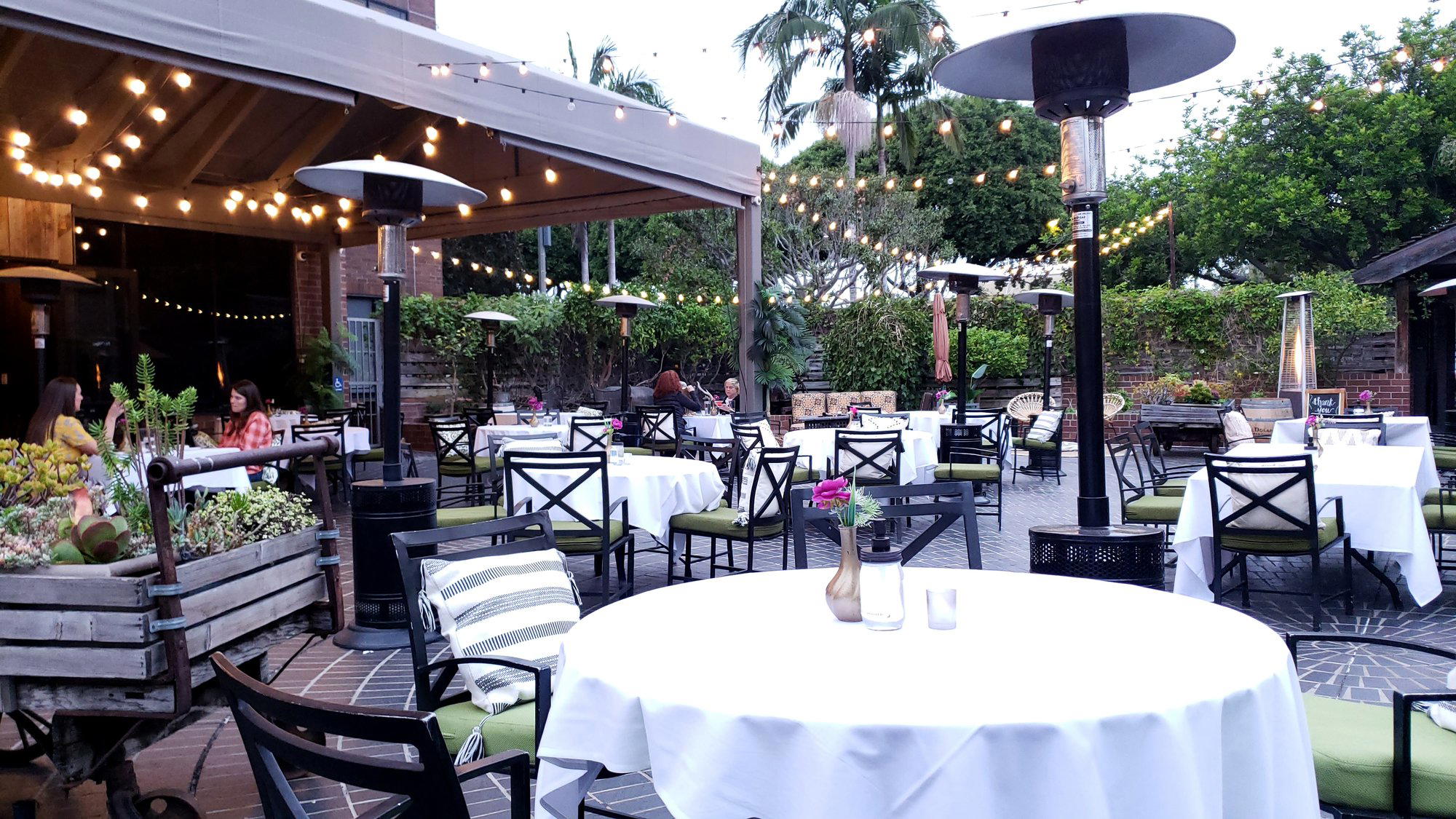
Where the Farmers Market Ethos Takes Root
Ocean Park Boulevard runs quieter than the commercial corridor a mile north, and that quietness is part of the point. The stretch around 1630 sits in one of Santa Monica's most residential pockets, away from the Third Street Promenade foot traffic and the beach-adjacent tourist economy that shapes so much of the city's food scene. What you find here instead is a neighborhood café format that has become increasingly deliberate in Southern California: market-driven, produce-forward, and calibrated for locals who expect their food sourcing to be legible.
Thyme Cafe & Market operates in that register. The format itself, a hybrid café-and-market model, reflects a durable trend in coastal California dining, where the boundary between where you eat and where you shop for the same ingredients has been dissolving for more than a decade. Places like Augie's On Main nearby and the broader Ocean Park neighborhood have helped establish this part of Santa Monica as a quieter counterpoint to the louder venues that draw visitors to the waterfront. The café-market hybrid signals a particular kind of consumer relationship: transparency about sourcing, a shorter supply chain, and a menu that shifts as the growing season does.
Southern California's Produce Advantage
The ethical sourcing argument is easier to make in Los Angeles than almost anywhere else in the United States. Santa Monica sits within driving distance of the Central Valley, Ventura County, and the Santa Ynez growing region, some of the country's most productive agricultural corridors. The Santa Monica Farmers Market, operating since 1981 and widely cited as among the more chef-frequented in the country, has for decades defined how the city's kitchens think about seasonal ingredients. This proximity gives cafés and restaurants in Santa Monica a structural advantage in building genuinely local supply chains, not as a marketing position but as a practical reality.
In that context, the café-market format is a logical evolution. By selling the same ingredients that appear on the menu, packaged goods, pantry staples, prepared items, a venue like Thyme can make its sourcing commitments visible in a way a conventional restaurant cannot. The customer sees both the finished dish and the raw material. That transparency has become a meaningful differentiator in a city where sustainability claims are common but accountability for them varies considerably.
Compare this to venues in the broader California farm-to-table category that have formalized the ethos at significant scale: Single Thread Farm in Healdsburg operates its own farm as an integrated supply system, and Blue Hill at Stone Barns in Tarrytown has built an internationally recognized model around agricultural proximity. These are high-investment, destination-dining propositions. The neighborhood café-market sits at the opposite end of the accessibility scale, lower price of entry, daily-use format, and an audience that is the immediate community rather than destination travelers. Both models serve the sustainability argument; they do so at entirely different registers of formality and cost.
The Santa Monica Café Tier
Santa Monica's café scene has split into at least two distinct tiers over the past decade. The first is the specialty coffee and light-food category, dominated by venues like Caffe Luxxe, which built its reputation on espresso quality and a spare, precise approach to the café format. The second is a more expansive category of all-day cafés that extend into substantial food programs, often with a market or retail component attached. Thyme sits in the second tier.
This distinction matters because it shapes what you go for and when. An all-day café with a food-forward program is not competing primarily on coffee quality; it is competing on menu range, sourcing credibility, and the ability to function as a reliable neighborhood resource from morning through lunch, and often into the afternoon. For the Ocean Park resident, that utility is the point. The venue functions less like a destination and more like a node in a daily routine, which, for a sustainability-oriented food business, is the more meaningful position. Frequency and loyalty reduce the carbon overhead of the supply chain per meal served.
Other Santa Monica venues approach the waterfront-adjacent, all-day format from different angles. Back on the Beach operates with the beach view as a primary draw; Azure addresses a different price tier entirely. Thyme's Ocean Park address removes it from direct comparison with most of those options, it is solving a different problem for a different customer.
How Thyme Fits the Broader California Conversation
California's farm-to-table conversation has matured past its initial phase of chef evangelism. At the fine dining tier, venues like Providence in Los Angeles and The French Laundry in Napa have embedded sourcing discipline into destination-level menus. At the opposite end of the register, neighborhood cafés and markets carry the same principles into daily life, and do more to normalize them. The sustainability argument does not scale from the leading down; it scales from the frequency of ordinary meals upward.
The café-market format also addresses food waste in a structural way. When a kitchen can redirect surplus prep into packaged goods or market-ready items, and when the menu is designed to flex with seasonal availability rather than holding to a fixed list, the waste reduction math improves significantly. This is not a new idea, it is the operating logic of the traditional market stall, applied to a modern California setting. What makes it feel current is the consumer expectation that has caught up with it: people in Ocean Park are asking sourcing questions more often than they were ten years ago, and a venue that can answer them at the point of sale has a structural advantage.
Venues nationally that have made similar arguments at higher price points include Lazy Bear in San Francisco and Addison in San Diego, both of which have formalized their sourcing commitments as part of a premium dining identity. The neighborhood café-market does not occupy that price tier, but the underlying logic, accountability, seasonality, reduced supply chain distance, is the same. For a reader building a picture of how Santa Monica eats, Thyme represents the everyday expression of principles that appear in more rarified form elsewhere in the California dining canon.
Planning Your Visit
Thyme Cafe & Market is located at 1630 Ocean Park Blvd in Santa Monica's Ocean Park neighborhood, a residential area most easily reached by car from Lincoln Boulevard or by the Big Blue Bus lines serving the south side of the city. The café-market format suggests a walk-in-friendly dynamic typical of the category, with breakfast and lunch service shaped by what is current rather than fixed. For a fuller picture of where Thyme fits among Santa Monica's broader dining options, the EP Club Santa Monica restaurants guide maps the city's food scene across neighborhoods, price points, and formats. Nearby, Amici Brentwood addresses the Italian neighborhood-restaurant category, while ArcLight Cinemas Santa Monica serves a different evening-out function entirely.
Cuisine and Credentials
Comparable venues nearby, for context on price, style, and recognition.
| Venue | Cuisine | Price | Notes |
|---|---|---|---|
| Thyme Cafe & MarketThis venue — the venue you are viewing | New American Cafe | $$ | Not listed |
| ArcLight Cinemas Santa Monica | American Cinema Concessions & Cocktails | $$ | Pico Neighborhood Association |
| Caffe Luxxe | Artisanal Coffee House & Bakery Cafe | $$ | Wilshire |
| Chez Jay | Classic American Steak & Seafood | $$ | Pico Neighborhood Association |
| Milo SRO | New York-Style Pizza | $$ | Ocean Park |
| HOLY COW BBQ | California-Style Slow-Smoked BBQ | $$ | Brentwood |
Continue exploring
More in Santa Monica
Restaurants in Santa Monica
Browse all →
Bars in Santa Monica
Browse all →
Hotels in Santa Monica
Browse all →

Wineries in Santa Monica
Browse all →
At a Glance
- Cozy
- Warm
- Casual Hangout
- Brunch
- Farm To Table
- Local Sourcing
Current opening hours
- Monday
- 8 AM–4 PM
- Tuesday
- 8 AM–4 PM
- Wednesday
- 8 AM–4 PM
- Thursday
- 8 AM–4 PM
- Friday
- 8 AM–4 PM
- Saturday
- 8 AM–4 PM
- Sunday
- 8 AM–3 PM
Hours can change for holidays and private events. Last verified .
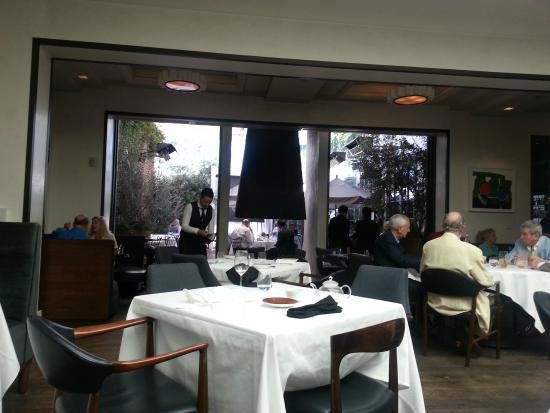
Warm, cozy, and laid-back with a welcoming community atmosphere and pleasant back patio.