Set inside Stanley Park on Vancouver's western edge, The Teahouse occupies a restored heritage building surrounded by old-growth forest and ocean views toward the North Shore mountains. The location places it in a different register from downtown Vancouver's restaurant scene, closer to a destination dining tradition than a neighbourhood drop-in, with the park's conservation context framing every visit.
Pearl is the En Primeur Club membership app — saves, bookings, and concierge access live there. Same editors, same standards.
- Address
- 7501 Stanley Park Dr, Vancouver, BC V6G 1Z4, Canada
- Phone
- +1 604 669 3281
- Website
- vancouverdine.com
- Directions
- Get directions
 Saves & bookings on Pearl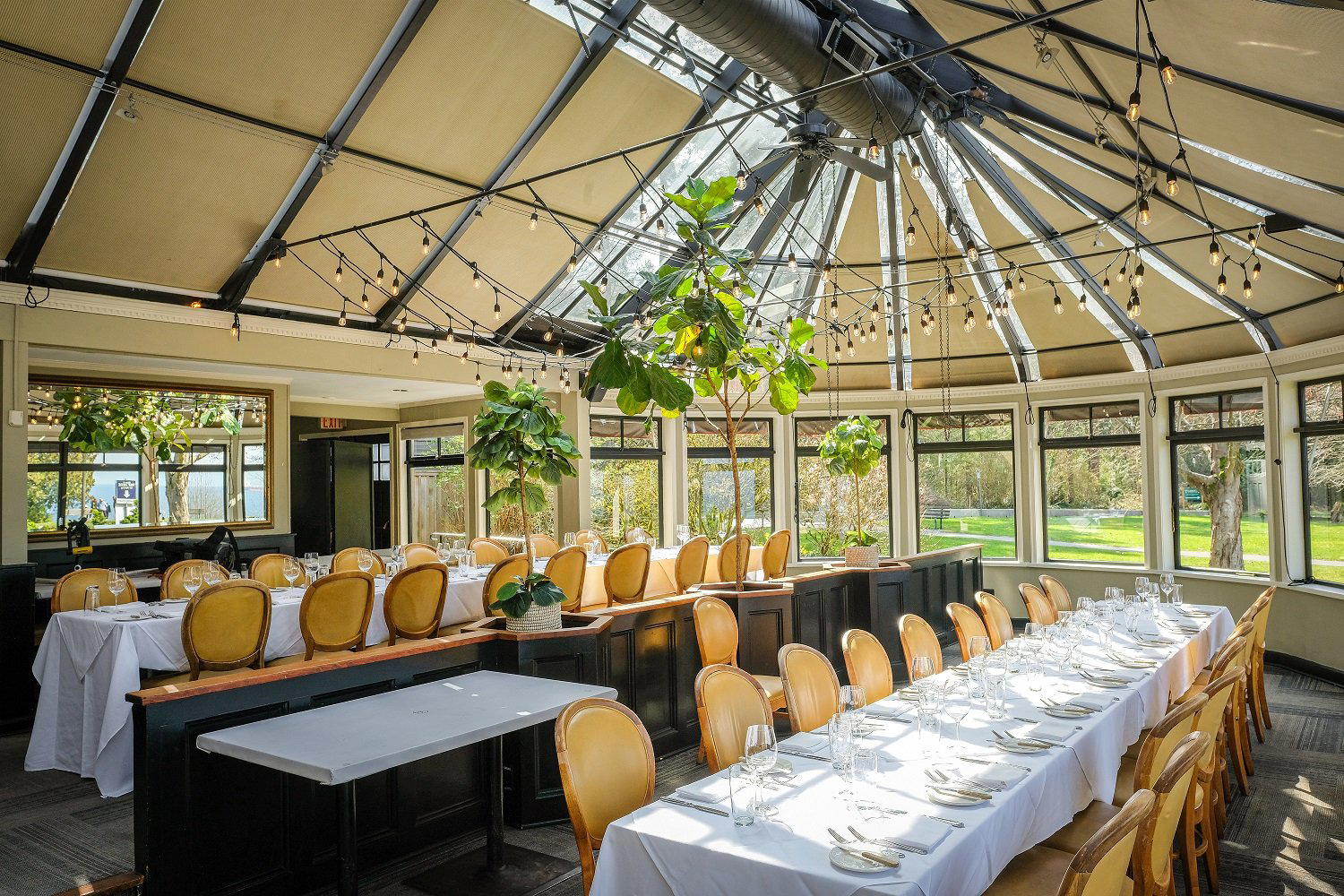
Dining at the Edge of a Forest: The Teahouse in Stanley Park's Broader Context
The Teahouse in Stanley Park is a restaurant in Vancouver serving West Coast Seafood. The city's upper bracket, [AnnaLena]($$$$ · Contemporary), [Kissa Tanto]($$$$ · Fusion), and [Masayoshi]($$$$ · Japanese) among them, operates in Kitsilano and Mount Pleasant rooms where the architecture is deliberately spare and the focus is on the plate. The Teahouse in Stanley Park sits in a different and less common category: a dining destination whose primary credential is its physical situation inside one of North America's most-visited urban parks. That distinction shapes the kind of experience it offers, and how it should be evaluated against the rest of the city.
Stanley Park itself covers roughly 405 hectares and is managed under a conservation mandate that predates most of Vancouver's current restaurant culture by several generations. The building that houses the Teahouse has a long history within the park, and the relationship between the dining operation and its protected setting is not incidental, it defines the guest experience from the moment you approach along the seawall or arrive through the park's internal roads. Few Canadian restaurants operate under such a direct and sustained relationship with a conservation zone, which makes the Teahouse's sustainability position not simply a branding choice but a structural fact of its existence.
The Setting as the Primary Argument
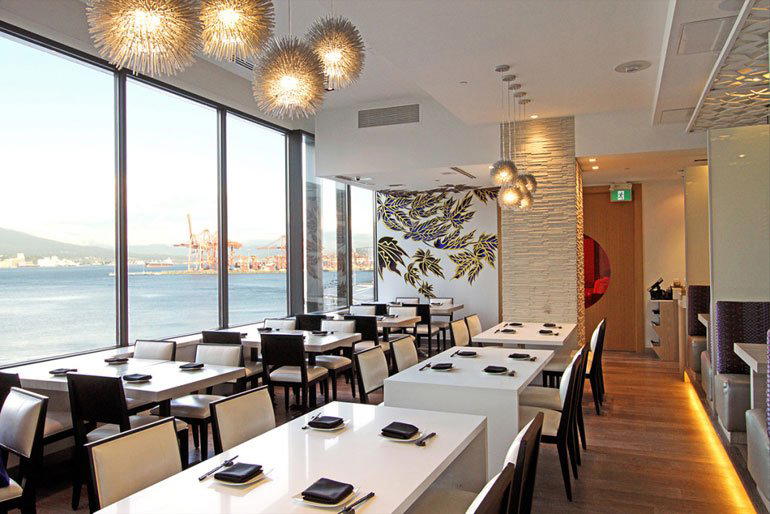
The view from the Teahouse terrace toward English Bay and the North Shore mountains is the kind of thing that makes the room's other attributes secondary on first encounter. That is both the venue's strength and its critical complication: setting this dominant tends to absorb attention that might otherwise fall on food, service, and sourcing. For the Teahouse to earn sustained credibility as a dining destination rather than a scenic lookout with a menu attached, the food program has to carry more weight than the panorama alone provides.
What the Stanley Park location does provide is a natural alignment with environmentally conscious sourcing. British Columbia's Pacific coast larder, Dungeness crab, wild salmon species, geoduck, spot prawns, is among the more documented and closely regulated seafood supply chains in Canada. Restaurants operating in or adjacent to protected natural environments face a particular kind of scrutiny: the gap between conservation optics and actual sourcing practice is visible in a way it isn't in a downtown room with no explicit connection to the natural world. The Teahouse's setting makes that accountability legible and, on the evidence of its longevity in the park, suggests some meaningful degree of consistency in meeting it.
Sourcing, Setting, and the British Columbia Context
The sustainability conversation in Canadian fine dining has moved beyond the broad declarations of local sourcing that characterised the mid-2010s and toward more granular questions about supply chain traceability, seasonal discipline, and waste reduction. Across Canada, restaurants working at the intersection of landscape and table, Eigensinn Farm in Singhampton, Fogo Island Inn Dining Room in Joe Batt's Arm, Restaurant Pearl Morissette in Lincoln, have demonstrated that an environmental premise can structure a food program with genuine rigour rather than simply serving as backdrop.
The Teahouse's version of this sits within the specific ecology of the Pacific Northwest coast. BC's fisheries certification frameworks and the province's strong agricultural hinterland in the Fraser Valley and Okanagan give a kitchen in this location real sourcing infrastructure to work with. The Teahouse's sustained presence inside Stanley Park, a setting where the parks board maintains oversight of commercial operations, provides at least a structural argument that the relationship between dining and conservation is taken as something more than decorative.
Placing the Teahouse in Vancouver's Dining Tier
Against Vancouver's upper-bracket contemporary rooms, the Teahouse occupies a different competitive position. Where AnnaLena and Barbara compete on the strength of their kitchens, the Teahouse competes partly on access to an experience that cannot be replicated in any other Vancouver postcode. That is a meaningful advantage, particularly for visitors whose primary interest is in the park itself and who want a dining experience commensurate with the setting.
Within the broader Canadian context, the Teahouse belongs to a tradition of destination restaurants whose location is inseparable from their value proposition, a category that includes Tanière³ in Quebec City and Narval in Rimouski, both of which use regional geography as a structuring principle for their menus. The specific claim the Teahouse makes is more about the immediacy of a protected natural setting than about terroir in the winemaker's sense, it is the forest and the water that frame the meal, not the soil that grew it.
For context on how Vancouver's mid-to-upper restaurant tier prices and formats have developed, Elsewhere in the province, Cafe Brio in Victoria offers a useful comparison: a long-established room with a clear commitment to regional sourcing operating in a city whose dining culture rewards that consistency.
Planning Your Visit
The Teahouse is accessible by car via Stanley Park Drive, by bicycle along the seawall, or on foot from the park's main entrances. Given its location inside the park, the experience of arriving, through old-growth trees, past the seawall, with views opening toward the water, is part of the visit rather than a prelude to it. Reservations are recommended, particularly during summer months when the park sees its highest traffic and the terrace is in full demand. The shoulder seasons, specifically September through October and April through May, offer manageable crowds and light conditions on the water.
For comparison with other destination restaurants in Canada where the journey and the setting are part of the experience, The Pine in Creemore and Jérôme Ferrer - Europea in Montréal represent different models of how a strong sense of place can anchor a food program. Internationally, the question of how a restaurant earns its setting is addressed with particular rigour at Le Bernardin in New York City and Lazy Bear in San Francisco, both of which demonstrate that a compelling environmental or conceptual premise requires a food program of equivalent seriousness to sustain credibility over time.
Price and Recognition
Comparable venues nearby, for context on price, style, and recognition.
| Venue | Cuisine | Price | Notes |
|---|---|---|---|
| The Teahouse in Stanley ParkThis venue — the venue you are viewing | Stanley Park, West Coast Seafood | $$ | Not listed |
| The Fish Counter | Not listed | $$ | Riley Park, Sustainable Seafood Fish & Chips |
| Guu Original Thurlow | Robson, Authentic Japanese Izakaya | $$ | Not listed |
| The Greedy Pig | Not listed | $$ | Gastown, Gastropub with Gourmet Sandwiches |
| The Flamingo Room | Commercial, Latin Contemporary | $$ | Not listed |
| Momo Factory | Not listed | $$ | West End, Indo-Chinese Fusion with Nepalese Specialties |
Continue exploring
More in Vancouver
Restaurants in Vancouver
Browse all →
Bars in Vancouver
Browse all →

At a Glance
- Romantic
- Scenic
- Well Known
- Cozy
- Elegant
- Date Night
- Special Occasion
- Brunch
- Family
- Waterfront
- Terrace
- Historic Building
- Panoramic View
- Extensive Wine List
- Local Sourcing
- Sustainable Seafood
- Waterfront
- Mountain
Current opening hours
- Monday
- 11:30 AM–9 PM
- Tuesday
- Closed
- Wednesday
- Closed
- Thursday
- 11:30 AM–9 PM
- Friday
- 11:30 AM–9 PM
- Saturday
- 10:30 AM–9 PM
- Sunday
- 10:30 AM–9 PM
Hours can change for holidays and private events. Last verified .
Comfortable contemporary atmosphere with oceanfront views, towering trees, and a relaxed yet elegant coastal charm well-suited for sunsets.