The Stage Deli
Our verdict
The Stage Deli at 6873 Orchard Lake Rd in West Bloomfield Township carries the cultural weight of the American Jewish deli tradition into a suburban Detroit corridor that has long supported one of the Midwest's most concentrated Jewish communities. Expect the format and portion logic that defines the genre: stacked sandwiches, brined meats, and the kind of counter energy that resists quiet dining.

Pearl is the En Primeur Club membership app — saves, bookings, and concierge access live there. Same editors, same standards.
The menu
What to order
- Corned beef sandwich
- Matzo ball soup
- Cheese blintzes
- Mark Beltaire salad
- Original stuffed cabbage
- West Side Story sandwich
The Deli Counter as Cultural Institution
The American Jewish delicatessen is one of the few dining formats that functions simultaneously as restaurant, community hall, and living archive. The pastrami, the rye, the half-sour pickle arriving without being ordered — these are not menu decisions so much as inherited grammar. West Bloomfield Township and the broader Oakland County corridor have supported a dense Jewish community for decades, and that demographic concentration is exactly the condition under which deli culture survives and, in some cases, deepens. The Stage Deli at 6873 Orchard Lake Rd sits within that context, operating in a zip code where the genre has genuine local roots rather than novelty appeal.
For broader context on what the North Farmington dining corridor offers across categories, our full North Farmington restaurants guide maps the area's range. Within that map, the deli occupies a specific and culturally distinct lane.
What the Format Demands
The deli format has a discipline that casual observers often miss. The quality markers are specific: the cure on the pastrami, the fat ratio on corned beef, the texture of hand-sliced versus machine-cut brisket, the acid level on house pickles, the density of rye bread. These are technical benchmarks that separate a serious deli operation from a sandwich shop running deli-adjacent menu items. Nationally, the category has contracted significantly since its mid-twentieth-century peak — New York alone lost hundreds of deli counters over four decades, which makes the surviving operations in secondary markets like greater Detroit worth paying attention to as documents of a tradition under genuine pressure.
The comparison set for a deli is not the tasting-menu tier represented by venues like The French Laundry in Napa or Alinea in Chicago. The deli answers a different brief entirely: abundance over restraint, familiarity over surprise, generational continuity over seasonal reinvention. That is not a concession, it is the point. A pastrami sandwich at a serious deli is as deliberate a product as a composed plate at Le Bernardin in New York City; the craft simply operates through different vocabulary.
The West Bloomfield Context
Oakland County's Jewish community is among the largest in Michigan and has shaped the food culture of the Orchard Lake Road corridor in measurable ways. Kosher bakeries, Middle Eastern grocers serving an overlapping demographic, and deli-format restaurants have clustered here in a way that does not happen by accident. The Stage Deli's address places it squarely within this corridor, which means its customer base likely includes both habitual locals for whom this is a weekly rhythm and visitors making a deliberate trip from Detroit proper or surrounding suburbs.
That geographic and demographic specificity matters when assessing what a deli in this location is doing. It is not performing Jewish deli culture for an unfamiliar audience, it is serving a community that has its own reference points and will notice immediately if the corned beef is wrong. That standard of informed local expectation is its own form of quality enforcement, and it distinguishes this kind of neighborhood operation from trend-driven concepts in gentrifying urban cores.
For a sense of how other regional American dining traditions hold their ground against national trends, the work being done at Bacchanalia in Atlanta, Emeril's in New Orleans, and Frasca Food & Wine in Boulder offers useful parallel cases, each anchored to a regional identity that the format itself expresses. The deli tradition is older and less chef-forward than any of those, but the rootedness principle is the same.
Reading the Menu Logic
Deli menus are long by design. The breadth, soups, appetizers, sandwiches measured in fractions of a pound, full dinner plates, baked goods, reflects the deli's historical role as an all-day establishment where a family could eat breakfast, a businessman could eat lunch, and a table could linger through dinner. The sheer volume of options is not indecision; it is category fidelity. A deli that narrows its menu to ten items has made a different choice about what it wants to be.
The portions that define the genre, sandwiches that require two hands, bowls of matzo ball soup that constitute a full meal, are also not accidents of generosity. They are structural. The deli's value proposition was historically built around working-class abundance: the sense that leaving hungry was not possible. That logic still governs how the format reads, which is why the deli sits outside the price-tier conversation that applies to places like Atomix in New York City, Addison in San Diego, or Providence in Los Angeles. The metrics are simply different.
Other venues in the North Farmington area worth considering alongside include, which operates in a separate culinary register entirely.
Practical Planning
The Stage Deli is located at 6873 Orchard Lake Rd, West Bloomfield Township, MI 48322, accessible from both the I-696 and M-5 corridors and within reasonable reach of Farmington Hills, Bloomfield Hills, and the greater Southfield area. Deli-format dining at this tier typically does not require advance reservations for most visits, but weekend midday service, the peak deli hour, can produce meaningful wait times at operations with a loyal local following. Arriving before noon or after the main lunch rush is the practical move if table availability is a concern.
For readers whose itineraries extend beyond the Detroit metro, the EP Club covers the full spectrum of American dining ambition, from the farm-driven format at Blue Hill at Stone Barns in Tarrytown and the progressive tasting structure at Lazy Bear in San Francisco to the hyper-local sourcing model at Single Thread Farm in Healdsburg and the chef-driven intensity at Brutø in Denver. The deli tradition that The Stage Deli represents is a different chapter in that story, older, less decorated, and more communally embedded than any of those, but it belongs in the same conversation about what American food culture actually looks like when you move beyond the award-season tier.
Frequently asked questions
Where is The Stage Deli in North Farmington?
The Stage Deli is located at 6873 Orchard Lake Rd, West Bloomfield Township, MI 48322, North Farmington.
Does The Stage Deli serve traditional Jewish deli food in West Bloomfield Township, Michigan?
The Stage Deli operates on Orchard Lake Road in West Bloomfield Township, a corridor that has served Oakland County's large Jewish community for decades and where the deli format carries genuine cultural weight. West Bloomfield Township's Jewish population is among the largest in Michigan, meaning the local clientele for a deli at this address brings specific expectations around cured meats, house soups, and baked goods rooted in Ashkenazi tradition. The Orchard Lake Road address places the restaurant within easy reach of both the I-696 and M-5 corridors.
What's the must-try dish at The Stage Deli?
At a traditional Jewish delicatessen on the Orchard Lake Road corridor, the pastrami and corned beef sandwiches are the format's defining measures — these are the dishes that regulars return for and against which the kitchen is judged. The Stage Deli sits within West Bloomfield Township's established deli culture, where that standard is well understood by the local clientele. Specific current menu items are best confirmed directly with the restaurant before your visit.
How far ahead should I plan for The Stage Deli?
Deli-format restaurants in West Bloomfield Township's Orchard Lake Road corridor tend to operate without advance reservations — walk-in seating is the norm for the format. Weekend mornings and Sunday brunch hours historically draw the heaviest traffic at Jewish delis in Oakland County. Confirming current hours and any reservation policy directly with The Stage Deli at 6873 Orchard Lake Rd before arrival is advisable.
What do critics highlight about The Stage Deli?
Within the West Bloomfield Township dining scene, the Orchard Lake Road corridor's deli institutions are generally recognised by the local Oakland County Jewish community as community anchors rather than destination restaurants seeking press attention. That community-first orientation is itself a meaningful signal about the venue's purpose.
What if I have allergies at The Stage Deli?
Traditional Jewish delicatessens present specific allergen considerations: wheat is present throughout (breads, rye, challah), and meat-dairy separation under kosher conventions varies by establishment. Guests with gluten, sesame, or specific meat-preparation concerns should contact The Stage Deli at 6873 Orchard Lake Rd, West Bloomfield Township directly to discuss current menu accommodations before visiting.
Is The Stage Deli overpriced or worth every penny?
No current pricing data is documented for The Stage Deli. As a reference point, Jewish deli sandwiches in Michigan's suburban market typically run in the $14–$22 range depending on meat portion weight, with full dinner plates priced higher. The format at an established Orchard Lake Road deli is built around generous portions rather than fine-dining margins, which is a different value proposition entirely.
Booking and Cost Snapshot
| Venue | Cuisine | Price | Awards | Notes |
|---|---|---|---|---|
| The Stage DeliThis venue — the venue you are viewing | Jewish Deli | $20–30 | Not listed | Not listed |
| Le Bernardin | French Seafood Fine Dining | $300–500 | 3 Michelin Stars · World's 50 Best #13 | French, Seafood |
| Atomix | Modern Korean Tasting Menu | $300–500 | 2 Michelin Stars · World's 50 Best #7 | Modern Korean, Korean |
| Lazy Bear | Modern American Tasting Menu | Not listed | 2 Michelin Stars · World's 50 Best #25 | Progressive American, Contemporary |
| Alinea | Avant-Garde Molecular Gastronomy | $300–500 | 2 Michelin Stars · World's 50 Best #37 | Progressive American, Creative |
| Atelier Crenn | Contemporary French Fine Dining | $300–500 | 3 Michelin Stars · World's 50 Best #44 | Modern French, Contemporary |
Continue exploring
More in North Farmington
Restaurants in North Farmington
All restaurants in North Farmington →

Bars in North Farmington
Browse all →
Details
- Classic
- Cozy
- Well Known
- Family
- Group Dining
- Casual Hangout
- Brunch
- Standalone
- Beer Program
- Craft Cocktails
- Local Sourcing
- A La Carte
- Beer
- Wine
- Cocktails
- Vegetarian Friendly
- Gluten Free Options
Current opening hours
- Monday
- Closed
- Tuesday
- 11 AM–8 PM
- Wednesday
- 11 AM–8 PM
- Thursday
- 11 AM–8 PM
- Friday
- 11 AM–8 PM
- Saturday
- 11 AM–8 PM
- Sunday
- 11 AM–8 PM
Hours can change for holidays and private events. Last verified .
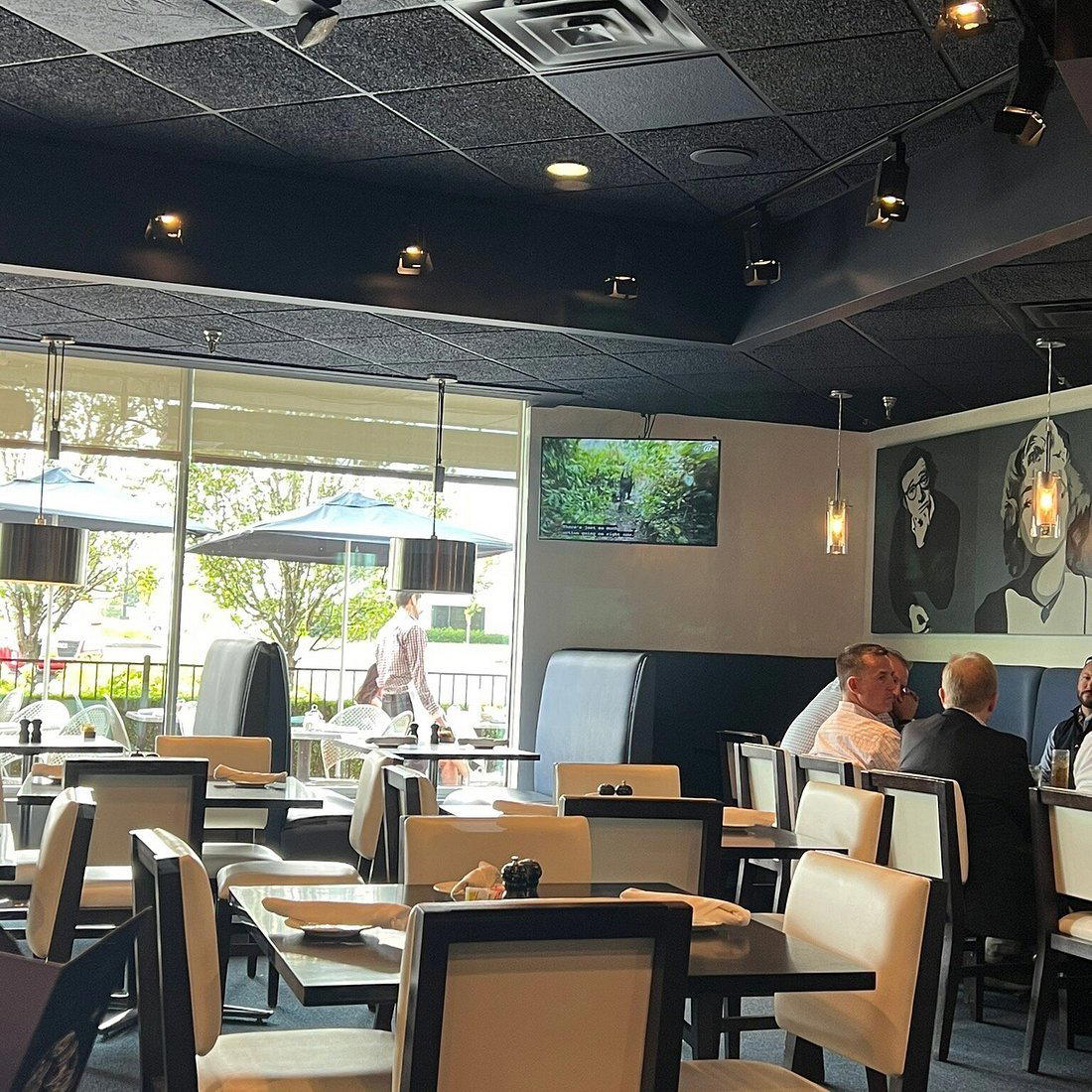
A contemporary dining room with a classic Jewish deli feel, complemented by a patio for al fresco cocktails and a lively, nostalgic atmosphere rooted in family tradition.