The Portrait by Richard Corrigan

Perched above the revamped National Portrait Gallery on St Martin's Place, The Portrait by Richard Corrigan trades on a 190-degree rooftop view and a seasonal menu built around ingredient-driven modern British cooking. It sits in a different competitive tier from London's tasting-menu circuit, offering set-menu value and à la carte flexibility that draws a loyal, repeat crowd to one of the capital's most architecturally charged dining rooms.
Pearl is the En Primeur Club membership app — saves, bookings, and concierge access live there. Same editors, same standards.
- Address
- 2 St. Martin's Pl, London WC2H 0HE, United Kingdom
- Phone
- +44 20 3872 7610
- Website
- theportraitrestaurant.com
- Directions
- Get directions
 Saves & bookings on Pearl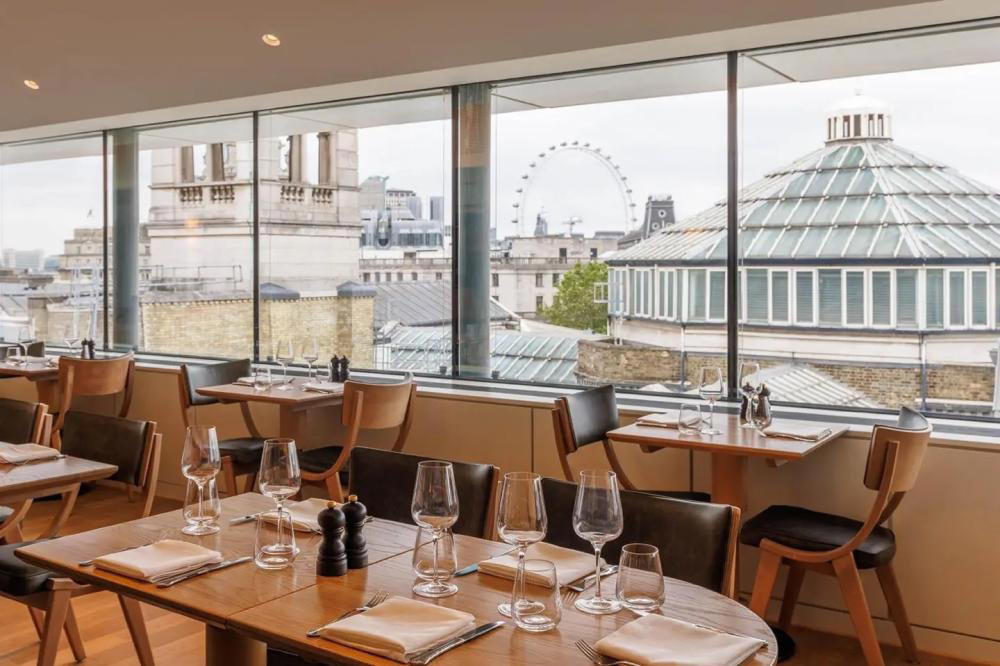
A Room With a Working View
The Portrait by Richard Corrigan is a modern British fine dining restaurant in London at the National Portrait Gallery. The Portrait, which occupies the upper floor of the revamped National Portrait Gallery on St Martin's Place, has spent enough time in that doldrums category to make its current form feel like a genuine course correction. What you get now is a room that earns its view rather than hiding behind it.
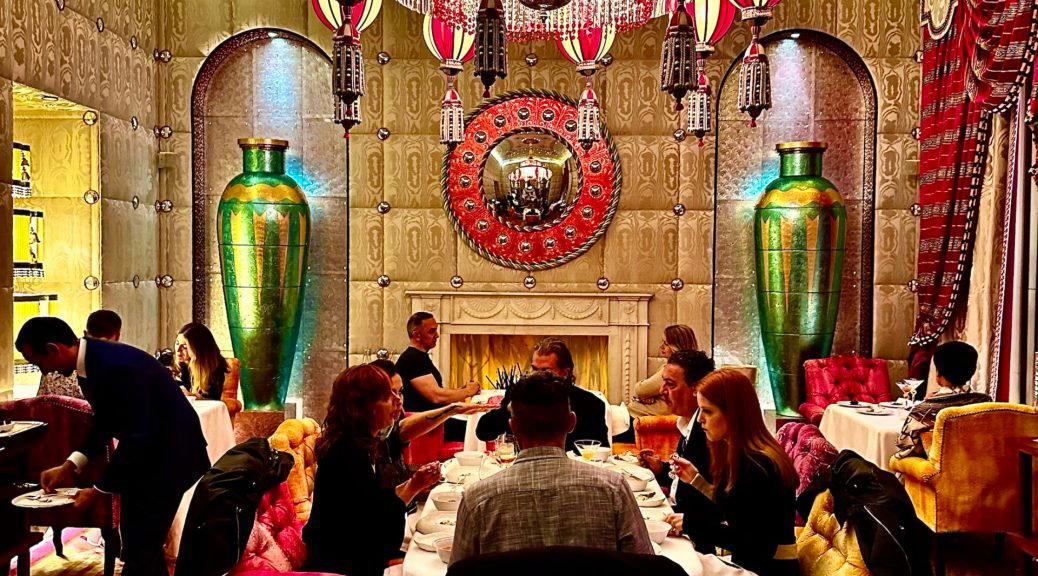
The 190-degree sightline from the dining room takes in the London Eye, Nelson's Column, and a sweep of rooftops that few restaurants in WC2 can match. That view functions as an orientation device: you arrive knowing where you are in the city, which gives the meal a sense of occasion without requiring the kitchen to manufacture one through ceremony. The room itself is comfortable without being fussy, and the service, led by Jon Spiteri, runs at a register that matches the clientele, attentive without being stiff.
Where It Sits in London's Dining Spectrum
London's higher-end restaurant market has effectively split into two operating models. At one end, multi-course tasting menus with prix-fixe-only formats occupy the tier represented by CORE by Clare Smyth, The Ledbury, Ikoyi, and The Clove Club, where the commitment is total and the bill reflects it. At the other end, accessible modern British cooking with flexible ordering sits in a more usable, more frequently visited bracket.
The Portrait belongs firmly in that second category, and it works precisely because it does not try to compete with the tasting-menu circuit. The regularly changing menu runs on a set-menu structure that represents strong value by central London standards, with the additional option of ordering a single dish and a glass of wine, a format that suits gallery visitors, post-meeting lunchers, and the kinds of regulars who return every few weeks rather than every few months. Compared with the commitment required at Alain Ducasse at The Dorchester, the entry cost here is lower in both price and formality, which broadens the repeat-visit case considerably.
The Menu's Logic
Ingredient-led modern British cooking at this price point lives or dies by its sourcing discipline and its restraint. Richard Corrigan, whose name is above the door, has a background in seasonal sourcing, and the menu reflects that rather than using it as marketing. The kitchen concentrates on manageable, well-executed dishes rather than reaching for technical complexity: a beetroot salad with red onion, sheep's yoghurt, and hazelnuts; cauliflower conchigliette (made in-house) with Stilton, pickled pear, and walnut; guinea fowl breast with 'nduja stuffed under the skin. Desserts follow the same logic, marmalade steamed pudding with crème anglaise, Syrian saffron rice pudding with pistachio and bergamot.
These are not dishes designed to generate social media documentation. They are dishes designed to be eaten, enjoyed, and remembered without being analysed. That distinction matters for the regulars' calculus: you can order the same dish twice without feeling like you've missed the point of coming.
Why Regulars Keep Coming Back
The question of what sustains a loyal dining room is worth taking seriously. In London, where new openings generate immediate attention before often thinning out within eighteen months, the restaurants that hold a crowd over years tend to share certain characteristics: consistent execution, flexible formats, and a room that gives people a reason to be there beyond the food itself.
The Portrait hits those markers. The view is repeatable without becoming mundane, it changes with the light and the season. The set menu rotates with enough regularity to reward return visits, and the single-dish option means a visit does not require a two-hour commitment. The dining room itself, with its sightlines onto the gallery's upper spaces and the parade of visitors moving through the building, provides the ambient social texture that makes a long lunch feel inhabited rather than staged.
Portions are generous by the standards of modern British restaurant cooking, which matters at lunch: the meal does not leave you calculating whether to add courses to feel adequately fed. The wine list runs a short house roster by the 125ml glass, carafe, or bottle, with a broader list extending into Old and New World bottles from £35. There are also cocktails that read as genuine rather than perfunctory additions.
The Gallery Context as an Asset
Museum restaurants in major cities occupy a specific cultural position. Strong examples among them understand that their clientele arrives already intellectually engaged and looking for continuity rather than contrast. The Portrait benefits from the National Portrait Gallery's reopening and the renewed attention it brought to the building. The restaurant's position within that renewed institution gives it a legitimacy that a standalone rooftop-view restaurant on the same block might not command.
That institutional anchor also shapes the composition of the room. The dining room draws gallery visitors extending their afternoon, local professionals, and repeat visitors who treat it as a reliable fixture in the WC2 lunch rotation rather than a destination in its own right. That mix creates a room that feels genuinely metropolitan, occupied by people with different reasons for being there, which is a harder thing to engineer than it sounds.
Waterside Inn in Bray and Moor Hall in Aughton to L'Enclume in Cartmel, Gidleigh Park in Chagford, and Hand and Flowers in Marlow, as well as regional finds like hide and fox in Saltwood and international benchmarks including Le Bernardin in New York City and Emeril's in New Orleans.
Know Before You Go
- Address: 2 St Martin's Place, London WC2H 0HE
- Setting: Leading floor of the National Portrait Gallery, above Trafalgar Square
- Format: Set menu and à la carte; single-dish ordering available
- Wine: House wines by 125ml glass, carafe, or bottle; full list from £35
- Service style: Floor-led by Jon Spiteri; attentive, metropolitan register
- Good for: Gallery visits extended into lunch, professional lunches, repeat midweek visits
- Getting there: Charing Cross station (National Rail and Bakerloo/Northern lines) is the closest rail connection; Leicester Square (Northern/Piccadilly) is a short walk
The Short List
Comparable venues nearby, for context on price, style, and recognition.
| Venue | Cuisine | Price | Notes |
|---|---|---|---|
| The Portrait by Richard CorriganThis venue — the venue you are viewing | Not listed | $$$$ | Not listed |
| Skylon | South Bank, Modern British Fine Dining | $$$$ | Not listed |
| Launceston Place | Not listed | $$$$ | South Kensington, Modern British Fine Dining |
| Boisdale of Belgravia | Not listed | $$$$ | Belgravia, Traditional Scottish Steakhouse |
| Afternoon Tea at The Milestone Hotel | Not listed | $$$$ | Kensington Palace Gardens, Traditional British Afternoon Tea |
| Simpsons in The Strand | Strand, Traditional British Fine Dining | $$$$ | Not listed |
Recognition history
Dated appearances from independent guides and award organizations, with the underlying list record or original source where available.
The Good Food Guide GFG Very Good
The Good Food Guide

At a Glance
- Elegant
- Sophisticated
- Modern
- Date Night
- Special Occasion
- Business Dinner
- Panoramic View
- Hotel Restaurant
- Open Kitchen
- Extensive Wine List
- Craft Cocktails
- Local Sourcing
- Skyline
Current opening hours
- Monday
- 11:30 AM–5:30 PM
- Tuesday
- 11:30 AM–5:30 PM
- Wednesday
- 11:30 AM–10:30 PM
- Thursday
- 11:30 AM–10:30 PM
- Friday
- 11:30 AM–10:30 PM
- Saturday
- 11:30 AM–10:30 PM
- Sunday
- 11:30 AM–5:30 PM
Hours can change for holidays and private events. Last verified .
Airy, elegant space with bright, minimalist decor, laidback luxury, and a relaxed atmosphere enhanced by natural light and well-known city views.