The Lost Kitchen

Our verdict
A converted threshing barn outside Tiverton, The Lost Kitchen puts Devon's larder at the centre of its menu, with a wood-fired oven driving everything from sourdough pizzas to roasted estate venison. The sourcing is deliberate and local, the atmosphere is family-friendly without being casual, and the home-brewed Perdu IPA and Wylde Ferment cider give it a character most rural restaurants can only gesture at.

Pearl is the En Primeur Club membership app — saves, bookings, and concierge access live there. Same editors, same standards.
- Address
- The Lost Kitchen, The Long Barn, Chettiscombe, Tiverton EX16 7PT, United Kingdom
- Phone
- +44 1884 242427
- Hours
- Mon–Tue ClosedWed–Thu 8:30 AM–6 PMFri 8:30 AM–10 PMSat 9 AM–10 PMSun 9 AM–5 PM
- Website
- lostkitchen.co.uk
- Directions
- Get directions
- Booking
- Book on SevenRooms
The menu
What to order
- Sourdough pizza
- Polenta chips with Lebanese toum
- Wood-roasted Cornish cod
- Shakshuka
- Wood-roasted cauliflower
A Devon Barn Where the Sourcing Does the Work
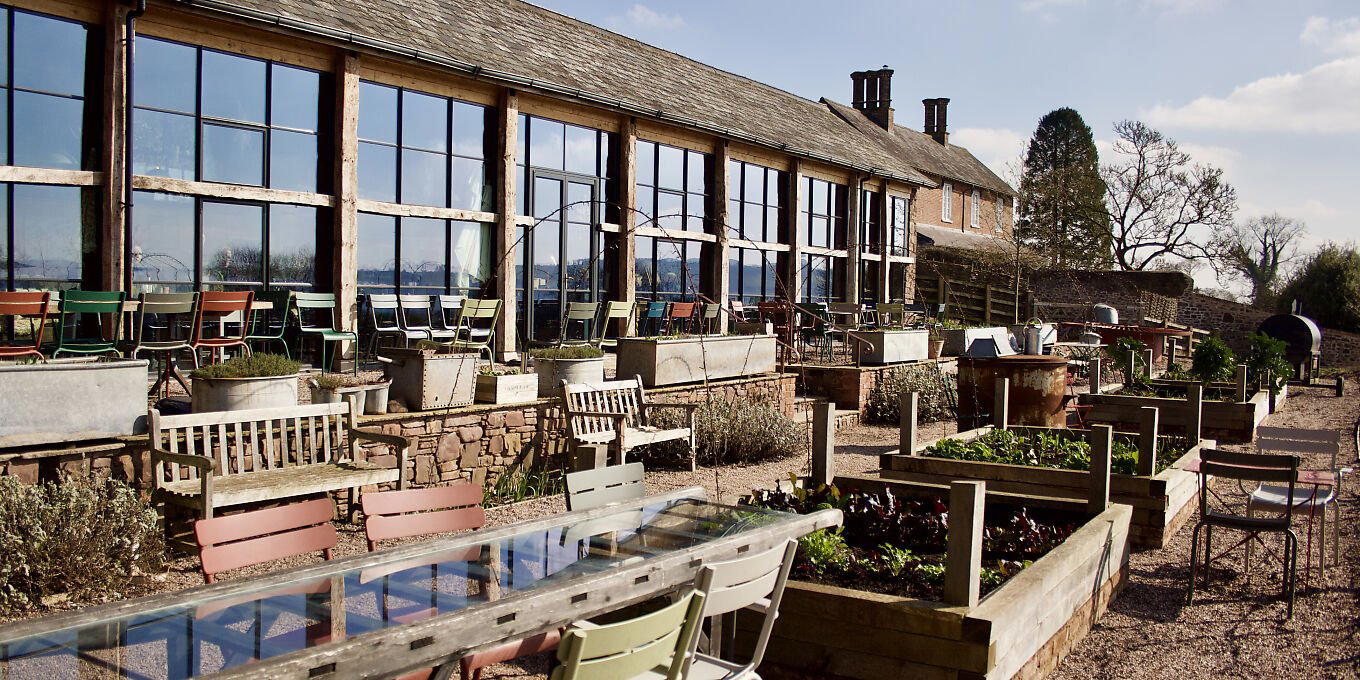
The approach to The Lost Kitchen sets the tone before you reach the door. The Long Barn at Chettiscombe sits in the Devon hills outside Tiverton, and the views across the landscape from the terrace make a case for eating outside whenever the weather permits. The building itself is a converted threshing barn, and the conversion has kept the bones of the structure intact rather than dressing the space in generic rural-chic. You arrive expecting countryside quiet and get something more animated: an open kitchen at one end of a long dining room, dominated by a large wood-fired oven that drives the heat and the smell of the room in roughly equal measure.
That oven is the editorial statement the kitchen makes every service. In a country where farm-to-table rhetoric has outpaced farm-to-table practice at many restaurants, the sourcing model here runs deeper than a menu annotation. Estate venison appears on the plate as wood-roasted venison with new season's potatoes, purple beetroot and carrots. Brixham scallops arrive in the shell, baked with wild garlic and lemon butter, the provenance traceable to one of Devon's most active fishing harbours. The kitchen uses what is close, what is in season, and what the land and coast around Tiverton actually produce, rather than building menus around aspirational ingredients that happen to be seasonal somewhere.
The Wood-Fired Approach and What It Produces
The decision to centre operations on wood fire is a practical and philosophical one. It limits what the kitchen can do and, in doing so, focuses it. Sourdough pizzas are described in the venue's own notes as the stars of the show, and the characterisation holds: the combination of live fermentation and high-heat baking produces results that sit in a different category from the wood-fired pizzas that proliferate across British casual dining. The dough carries flavour the firing alone cannot create.
Beyond the pizzas, the wood-fired oven extends its reach into flatbreads, stuffed and roasted with ricotta, red onion marmalade, truffle and thyme, and into larger plates like the venison. The kitchen also works with formats less commonly associated with fire cooking: an orzotto with roasted fennel and broad beans has drawn consistent reader approval, the technique shifting what might be a predictable vegetarian option into something with genuine texture and char. These are not backup dishes on a meat-forward menu. They reflect a kitchen that has thought about what fire does to different ingredients rather than defaulting to a grill-and-serve model.
Dessert at this price tier often feels like an afterthought, but the honey and lavender-scented iced parfait with macerated strawberries reads as a considered seasonal finish rather than a hedging bet. The kitchen is tracking what is ripe and adjusting accordingly.
Where The Lost Kitchen Sits in the Devon Dining Picture
Devon's restaurant offer spans a wide range. At the formal end, Gidleigh Park in Chagford operates within the country-house hotel model, with the tasting-menu format and service structure that comes with it. That is a different competitive set from The Lost Kitchen, which operates closer to the all-day, accessible-to-families, value-driven end of serious cooking. The comparison is not about quality hierarchy but about intent. Where Gidleigh Park asks for occasion and ceremony, The Lost Kitchen asks for appetite and openness to the season.
Nationally, the conversation about British rural cooking has tilted toward the kind of destination dining represented by L'Enclume in Cartmel or Moor Hall in Aughton, where the sourcing ambition is matched by formal tasting structures and significant price points. The Lost Kitchen occupies a different position: it delivers the sourcing rigour without the ceremony, and prices in a range that keeps it accessible to repeat visits rather than annual pilgrimages. That is a harder balance to hold than it looks. Most restaurants that relax the formality also relax the sourcing standards. This one does not appear to have made that trade.
For a broader read on what the region is doing with its ingredients maps the local dining picture in more detail.
Drinks Worth Noting
The beverage programme at The Lost Kitchen is more thought-through than the rural café-restaurant category typically delivers. The home-brewed Perdu IPA uses organic sourdough grain that would otherwise go unused, closing a loop between the bakery operation and the bar. It is a small detail that signals how the sourcing philosophy extends beyond the kitchen. The Wylde Ferment cider is produced in-house, adding a third strand to a drinks offering that covers wine by the glass, house-made ferments, and a mocktail and soft drink list that includes homemade lemonade. Designated drivers are not an afterthought here, which is worth noting for a rural venue where driving is the default mode of arrival.
The wine list, described as well-chosen rather than exhaustive, suits the format. This is not a destination for extended cellar exploration in the way that Waterside Inn in Bray or Le Manoir aux Quat' Saisons in Great Milton are, but the by-the-glass selection is broad enough to eat through a full meal without repeating yourself.
Planning a Visit
Lost Kitchen operates as both a sit-down restaurant and a café, and booking is advisable even for coffee and cake, which indicates the volume of traffic the venue handles relative to its size. The terrace takes advantage of the Devon hill views and functions as a draw in its own right during warmer months, so timing a visit for late spring through early autumn makes the most of the setting. Chettiscombe sits close to Tiverton in mid Devon, accessible by car from the M5 corridor. For context on accommodation in the area covers the local options.
Family-friendly positioning is genuine rather than performative. This is a venue where children are accommodated without the rest of the dining room being reorganised around them, which puts it in a narrower category than the label suggests.
If you are building a wider Devon or Somerset itinerary, the Chettiscombe experiences guide, bars guide, and wineries guide sit alongside the restaurant coverage for a fuller picture of what the area offers.
Frequently asked questions
What do people recommend at The Lost Kitchen?
The sourdough pizzas from the wood-fired oven draw the most consistent praise, alongside baked Brixham scallops in the shell with wild garlic and lemon butter. The orzotto with roasted fennel and broad beans has won over at least one reader, and the honey and lavender iced parfait is cited for its seasonal accuracy. On the drinks side, the home-brewed Perdu IPA — made with unused organic sourdough grain — is a notable order.
How It Stacks Up
Comparable venues nearby, for context on price, style, and recognition.
| Venue | Cuisine | Price | Awards | Notes |
|---|---|---|---|---|
| The Lost KitchenThis venue — the venue you are viewing | Wood-Fired Mediterranean with Global Influences | $30–50 | Not listed | Not listed |
| At the Chapel | Mediterranean with Wood-Fired Pizzas | $20–30 | The Good Food Guide GFG Good | Bruton |
| Corkage | Mediterranean Small Plates | Not listed | Star Wine List · The Good Food Guide GFG Good | Chapel Row |
| Saltie Girl London | Premium Tinned Fish & New England Seafood | Not listed | Not listed | Mayfair |
| Cafe Kowloon | Modern Cantonese inspired by Hong Kong cafés | $50–100 | Not listed | London Fields |
| Akira Back London | Modern Japanese-Korean Fusion Fine Dining | $100–150 | Not listed | Mayfair |
Recognition history
Dated appearances from independent guides and award organizations, with the underlying list record or original source where available.
The Good Food Guide Good Food Guide Best Local Restaurant
The Good Food Guide
Full recognition history (3 entries)
The Good Food Guide Good Food Guide Best Local Restaurant #18
The Good Food Guide
The Good Food Guide GFG Good
The Good Food Guide
Continue exploring
More in Chettiscombe
Restaurants in Chettiscombe
Browse all →
Bars in Chettiscombe
Browse all →
Details
- Rustic
- Scenic
- Cozy
- Energetic
- Bohemian
- Family
- Group Dining
- Celebration
- Casual Hangout
- Date Night
- Open Kitchen
- Garden
- Terrace
- Panoramic View
- Standalone
- Craft Cocktails
- Beer Program
- Farm To Table
- Local Sourcing
- Garden
- Mountain
- A La Carte
- Small Plates
- Family Style
- Wine
- Craft Cocktails
- Local Apple Juice
- Vegetarian Friendly
- Vegan Options
- Gluten Free Options
- Allergy Accommodating
Current opening hours
- Monday
- Closed
- Tuesday
- Closed
- Wednesday
- 8:30 AM–6 PM
- Thursday
- 8:30 AM–6 PM
- Friday
- 8:30 AM–10 PM
- Saturday
- 9 AM–10 PM
- Sunday
- 9 AM–5 PM
Hours can change for holidays and private events. Last verified .
Warm and inviting rustic barn interior with handmade tables, sheepskins on benches, floor-to-ceiling windows revealing idyllic countryside views, and an open kitchen dominated by a wood-fired oven that creates an enveloping, cave-like welcome.