
We're Smart World 4 Radishes
Our verdict
On a quiet stretch of Barceloneta, The Green Spot takes a deliberately ingredient-led approach to plant-based cooking, drawing on seasonal Catalan produce without relying on meat substitutes or processed alternatives. Chef Julia Kleist steers a menu that moves between Moroccan, Vietnamese, Thai, and European registers, all rooted in whole vegetables cooked from scratch. It sits at a notable distance from Barcelona's fine-dining tasting-menu circuit, occupying a more accessible but no less considered tier.

Pearl is the En Primeur Club membership app, where members save venues, book tables and use the concierge.
The menu
What to order
- Sweet potato tagliatelle
- Jackfruit tacos
- Kimchi tempura
- Chocolate cake
Where the Plate Begins with the Land
Walk along Carrer de la Reina Cristina in the Barceloneta district and you are already in a neighbourhood defined by its relationship with what is local and immediate. The waterfront sits nearby, the old fishing quarter behind you, and the produce markets of the Eixample within reasonable reach. Into this context, The Green Spot plants itself at number 12 with a particular commitment: every dish starts with vegetables, sourced with an eye on what Catalonia is producing at any given point in the year, and nothing on the plate pretends to be something it is not. No mock meat. No meat substitutes. Whole ingredients, processed through cooking.
That last detail carries more weight than it might first appear. In a city where plant-based dining has expanded rapidly, most venues in the category default to some version of the substitution model, replacing animal protein with textured alternatives and presenting the result as innovation. The Green Spot's refusal to follow that pattern places it in a smaller, more disciplined tier of vegetarian restaurants where the kitchen's skill is measured against the vegetable itself, not against how convincingly it can replicate something else.
Sustainability as Kitchen Logic, Not Marketing Language
Barcelona's broader restaurant culture has absorbed sustainability as a talking point faster than it has absorbed sustainability as a structural practice. The distinction matters. At the top of the city's creative dining circuit, venues like Cocina Hermanos Torres, Disfrutar, and ABaC incorporate seasonal sourcing as one element within wider creative programs that still centre proteins, luxury ingredients, and technically elaborate tasting menus. The Green Spot operates from a different premise: the entire menu structure is built around what ethical, seasonal, ingredient-first cooking looks like when the category constraints are removed from the start.
Chef Julia Kleist's approach, as documented in the venue's own framing, positions innovation and seasonality not as competing values but as mutually reinforcing ones. The kitchen seeks new preparations and cross-cultural techniques while keeping Catalan produce as a consistent anchor. That tension, between the local and the global in terms of culinary reference, is what gives the menu its range. Moroccan spicing, Vietnamese herb structures, Thai aromatic frameworks, and European technique all appear across the menu, applied to vegetables that are, in many cases, grown within the region.
This kind of cooking sits outside the lineage of Spain's more documented fine-dining tradition. Restaurants like Lasarte, Enigma, El Celler de Can Roca in Girona, Arzak in San Sebastián, and Azurmendi in Larrabetzu have collectively built a reputation for Spanish gastronomy that leans heavily on technical elaboration, premium animal proteins, and regional identity expressed through meat and fish. The Green Spot is not competing in that register.
The Menu as a Map of Conscious Sourcing
The cross-cultural breadth of the menu is not a design choice made for variety's sake. It reflects what whole-vegetable cooking at this level actually requires: a much wider technical vocabulary than any single culinary tradition provides. A European kitchen alone does not contain enough reference points to cook vegetables at the depth and complexity that a meat-free menu demands across multiple courses and visits. Kleist draws on the aromatics of North African cooking, the layered herb and citrus structures of Southeast Asian cuisines, and the textural philosophies of Thai preparation, all of which have long traditions of treating vegetables as primary rather than secondary elements.
The seasonal anchoring in Catalonia provides the counterweight. Whatever the global technique, the ingredient base responds to what is available locally. That creates a menu that changes with the calendar rather than holding to a fixed identity, which is both a commitment and a constraint. It means the kitchen cannot simply run a signature program indefinitely; it has to keep working as the produce shifts. For a visitor arriving in spring, the experience will differ from one arriving in autumn, not because the concept has changed but because the concept demands it.
Across Spain, the most discussed expressions of ethical sourcing and environmental consciousness in restaurant kitchens operate at the high end of the fine-dining tier. Aponiente in El Puerto de Santa María has built much of its identity around marine sustainability, while Azurmendi has positioned regenerative agriculture and local sourcing as core to its program. The Green Spot operates at a different price point and with a different public profile, but the underlying logic shares ground with those commitments: sourcing decisions made upstream determine what is possible on the plate.
Where This Fits in Barcelona's Dining Map
Barcelona's restaurant scene has grown more stratified over the past decade. At the leading sits the tasting-menu circuit, where Disfrutar and Cocina Hermanos Torres compete on the 50 Best list and Michelin guide alongside Lasarte and Enigma. Below that sits a wide middle band of casual neighbourhood restaurants, tourist-adjacent tapas bars, and concept-driven bistros. The Green Spot occupies a distinct position in that middle tier, differentiated by its category discipline and its sourcing commitment rather than by price or prestige signals.
For travellers building a broader Barcelona itinerary, the venue pairs naturally with the city's market culture. The Boqueria and the Mercat de Santa Caterina both sit within the same general radius as Barceloneta, and the produce culture they represent connects directly to what The Green Spot is doing at the plate level. Anyone spending time in the city for its food should consider the full picture; our full Barcelona restaurants guide covers the range from this tier through to the best of the fine-dining spectrum. For a complete stay, see also our Barcelona hotels guide, bars guide, wineries guide, and experiences guide.
The address at Carrer de la Reina Cristina 12 places the restaurant in the 08003 postal zone, close to the waterfront and accessible from central Barcelona without difficulty. Given the venue's reputation and the specificity of what it offers within Barcelona's plant-based tier, booking ahead rather than walking in is the practical approach, particularly for groups or weekend visits.
Frequently asked questions
Has The Green Spot won any awards?
The Green Spot has received recognition including: If you like vegetarian dishes made from scratch and are bursting with flavour and aroma, The Green Spot is a recommended place. Vegetables play a central role. They are processed in vegetarian and vegan preparations. Mock meat or meat subst….
Where do I go for The Green Spot?
The Green Spot is located at C. de la Reina Cristina 12, 08003 Barcelona, Spain, Barcelona.
What should I order at The Green Spot?
The kitchen draws on Moroccan, Vietnamese, Thai, and European traditions, all built around whole vegetables without mock meat or meat substitutes. Your best approach is to follow what the season dictates, chef Julia Kleist structures the menu around Catalan produce cycles, so the dishes that rotate with local harvests tend to reflect the kitchen at its most focused.
Do I need a reservation for The Green Spot?
The Green Spot is located at Carrer de la Reina Cristina 12 in the Barceloneta district, a neighbourhood with consistent foot traffic and a well-established dining culture. Booking ahead is the sensible approach for dinner, particularly on weekends when demand across the area is highest.
What's the defining dish or idea at The Green Spot?
The defining idea is that vegetables are processed entirely on their own terms, no meat substitutes, no shortcuts. Chef Julia Kleist applies this across a menu that spans continents, from Moroccan preparations to Thai and Vietnamese, while keeping Catalan seasonality as the structural thread beneath the global range.
Is The Green Spot good for vegetarians?
Yes, directly and without qualification, the entire menu is built on vegetarian and vegan preparations using whole vegetables sourced with attention to Catalan seasons. Mock meat is explicitly absent, which means the kitchen has to make vegetables work on flavour alone, a discipline that places it in a different category from venues that simply offer vegetarian options alongside a meat-led menu.
Recognition, Side-by-Side
Comparable venues nearby, for context on price, style, and recognition.
| Venue | Cuisine | Price | Awards | Notes |
|---|---|---|---|---|
| The Green SpotThis venue (the venue you are viewing) | Modern Vegetarian with Vegan Options | $20–30 | We're Smart World 4 Radishes | Not listed |
| La Dentellière | Mediterranean Tapas & Small Plates | $30–50 | Not listed | Barri Gotic |
| Sal Mar | Mediterranean Fusion with Paella | $30–50 | Not listed | la Barceloneta |
| Noble Barcelona | Contemporary Mediterranean Bistró | $30–50 | Not listed | l'Antiga Esquerra de l'Eixample |
| Viana Barcelona | Modern Mediterranean Tapas | $30–50 | Not listed | Barri Gotic |
| Tapes Jardi | Mediterranean Tapas | $30–50 | Not listed | la Vila Olimpica del Poblenou |
Recognition history
Dated appearances from independent guides and award organizations, with the underlying list record or original source where available.
We're Smart World 4 Radishes
We're Smart World
Continue exploring
More in Barcelona
Restaurants in Barcelona
All restaurants in Barcelona →
Bars in Barcelona
All bars in Barcelona →




Details
- Cozy
- Elegant
- Modern
- Trendy
- Date Night
- Casual Hangout
- Open Kitchen
- Craft Cocktails
- Small Plates
- A La Carte
- Vegetarian Friendly
- Vegan Options
- Gluten Free Options
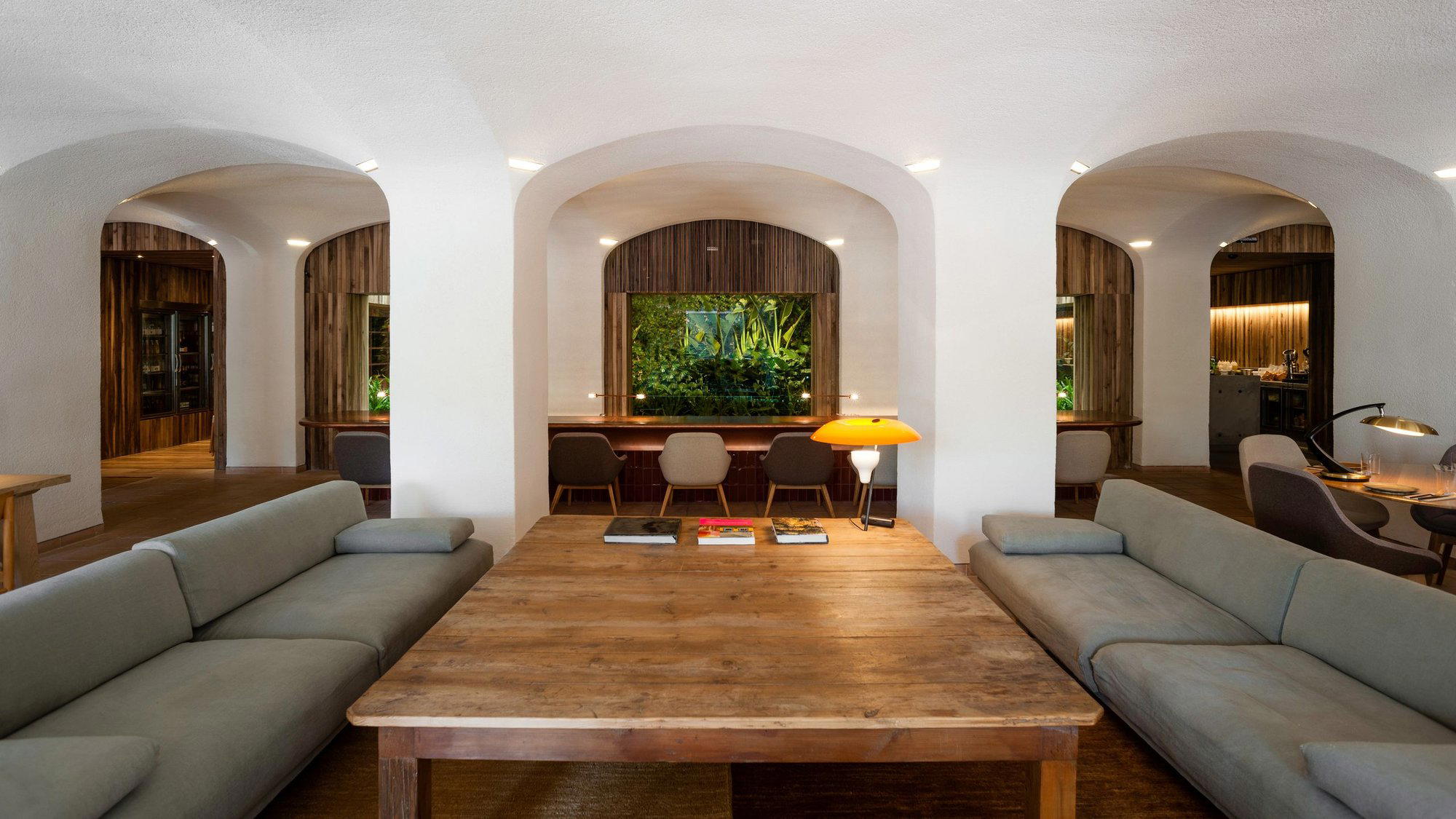
Calming and relaxing with warm lighting, wooden furniture, plants, and sophisticated, natural decor.