THE GATE

Canada's 100 Best Recommended Restaurant #14
Our verdict
Jonathan Gushue, the chef behind landmark Canadian kitchens at Fogo Island Inn, Langdon Hall, and Elora Mill, has brought classical French technique to the small town of Flesherton in Grey County. At The Gate, that technique meets Grey Highlands produce head-on: dishes like poached cod with lentil and mustard nage, or red-wine-roasted chicken with smoked bacon and baby onion, are made entirely in-house and read deceptively simple on the plate.

Pearl is the En Primeur Club membership app, where members save venues, book tables and use the concierge.
The menu
What to order
- Semolina pasta
- Ontario lamb
- Scallops
A Small Town on the Grey Highlands, and What Arrives on the Plate
Flesherton sits in the Grey Highlands, a stretch of Ontario countryside roughly two hours north of Toronto where the Niagara Escarpment flattens into farmland and the towns are small enough that a serious restaurant registers as a civic event. The Gate occupies a modest address at 14 Sydenham Street, and the surrounding streetscape, unhurried, rural, unremarkable from the road, gives little away about what the kitchen is doing inside. That gap between exterior and interior is part of what defines a certain strand of serious Canadian cooking that has been quietly building outside the country’s major cities over the past decade.
The broader pattern is worth noting: kitchens that once required a Toronto address to attract trained culinary talent are no longer the only option. Restaurant Pearl Morissette in Lincoln, The Pine in Creemore, and Eigensinn Farm in Singhampton have all demonstrated that the farmland belt running through Ontario’s mid-province can support cooking at the level that previously demanded a city dining room. The Gate belongs to that cohort, and its placement in Flesherton is less a quirk than a continuation of a documented regional trend.
Where the Ingredients Come From and Why That Shapes the Plate
The editorial case for The Gate rests less on biography than on sourcing logic. Grey Highlands produces are not interchangeable with urban supply-chain ingredients: the proximity to farms, the cooler growing season at this latitude, and the availability of local proteins and root vegetables all push toward a specific kind of cooking. Dishes described as deceptively minimal are, in that context, a technique choice with a sourcing rationale behind it. Red-wine-roasted chicken with smoked bacon and baby onion reads as a classical bistro preparation, but executed with local poultry and in-season alliums, it becomes an argument about what the region actually produces well rather than a demonstration of imported luxury goods.
Poached cod with lentil, parsnip, and mustard nage follows the same internal logic. Parsnip is a cold-climate root that Grey County handles better than warmer regions; lentils carry through the winter months when lighter produce is scarce; mustard nage is a classical French technique that needs no premium imported ingredient to work. Every component can be sourced regionally, made in-house, and presented with no visual flourish other than precision. In Canada’s rural fine dining tier, that combination is a relatively clear editorial position: classical training applied to what grows here, not to what arrives by courier.
For context on how this sourcing-led approach reads against the national scene, compare the trajectory of kitchens like Tanière³ in Québec City or Narval in Rimouski, both of which have built reputations on similar principles of regional produce and classical or contemporary technique applied without imported shorthand. The Gate occupies a parallel position in Ontario’s rural corridor rather than Quebec’s.
The Chef’s Institutional History as Evidence, Not Biography
Jonathan Gushue’s career record functions as a credential set rather than a narrative subject. Fogo Island Inn, Langdon Hall, and Elora Mill are not adjacent points on a career arc; they are three of the most closely watched kitchens in Canadian hospitality, operating at different scales and in different regional contexts. Fogo Island Inn represents remote, source-driven cooking under international scrutiny; Langdon Hall is the established country-house fine dining benchmark for southern Ontario; Elora Mill brought serious kitchen ambition to a heritage mill building in Wellington County. Across those three postings, the consistent thread is cooking that operates at a formal technical level without requiring the infrastructure of a major city.
That institutional history explains why The Gate’s placement in Flesherton reads as a deliberate choice rather than a retreat. Chefs with Gushue’s track record in Canadian fine dining can generally choose their context; the Grey Highlands location signals an intent to work with what the region offers rather than to import a city-restaurant model. For diners assessing the room against peers like Alo in Toronto or AnnaLena in Vancouver, The Gate sits in a different competitive tier by geography but not necessarily by culinary seriousness.
Planning a Visit to Flesherton
The two-hour drive from Toronto makes Flesherton a viable day trip or weekend destination rather than a casual city-night-out addition. Given the scale of the town, a visit to The Gate pairs naturally with the broader Grey County offer: the Beaver Valley, the trails of the Escarpment, and a handful of accommodation options in the surrounding area covered in our full Flesherton hotels guide. For those building a longer itinerary in the region, our full Flesherton restaurants guide maps the wider dining context, while our full Flesherton bars guide, wineries guide, and experiences guide cover adjacent options for a full stay.
Walk-in availability in small-town fine dining rooms of this type is generally unpredictable and tends to favour weekday visits over weekends in warmer months.
For diners who want to map The Gate against comparable Canadian kitchens operating outside the major cities, Auberge Saint-Mathieu in Saint-Mathieu-du-Parc, ÄNKÔR in Canmore, and ARLO in Ottawa each represent adjacent points in the national picture, and Jérôme Ferrer - Europea in Montréal anchors the urban end of the classical-technique spectrum for comparison. Internationally, the sourcing-led, technique-first approach that The Gate appears to practice has clear reference points in kitchens like Le Bernardin in New York City and Atomix in New York City, both of which demonstrate how rigorous classical or contemporary frameworks handle ingredient provenance at a high level.
Frequently asked questions
Is THE GATE good for families?
The kitchen's classical register and focus on seasonal tasting-style plates points toward adult dining rather than casual family meals. That said, Flesherton's rural Grey Highlands setting makes it a natural stop for families on a weekend trip through the area. The decision depends less on policy and more on the age and appetite of the group.
What's the overall feel of THE GATE?
The Gate operates as a rural fine dining room in a small Grey Highlands town, two hours north of Toronto. Jonathan Gushue's background at Fogo Island Inn, Langdon Hall, and Elora Mill sets the culinary register: classical technique applied to local seasonal produce, with everything made in-house. The setting is low-key by geography, serious by kitchen.
Is THE GATE Michelin-listed?
THE GATE has received recognition including: Jonathan Gushue (Fogo Island Inn, Langdon Hall, Elora Mill) lands in Grey Highlands, two hours north of Toronto, to apply his masterful classical techniques to local seasonal ingredients. Dishes are deceptively minimal, red-wine-roasted ch….
What's the best thing to order at THE GATE?
The menu is built around what Grey Highlands produces at any given point in the season, with every component made in-house. Documented dishes include red-wine-roasted chicken with smoked bacon and baby onion, and poached cod with lentil, parsnip, and mustard nage. Following the seasonal produce calendar gives the strongest case for what the kitchen is doing at its best.
Where exactly is THE GATE?
THE GATE is located at 14 Sydenham St, Flesherton, ON N0C 1E0, Canada, Flesherton.
Do they take walk-ins at THE GATE?
The Gate is in a small rural town with a kitchen operating at fine dining calibre, which typically means covers are limited and walk-in availability is unreliable, particularly on weekends or during Ontario's peak summer and fall travel season. Booking ahead is the practical approach for a two-hour drive from Toronto.
What do critics highlight about THE GATE?
The central credential attached to The Gate is Jonathan Gushue's institutional history: Fogo Island Inn, Langdon Hall, and Elora Mill represent three of the more closely watched serious kitchens in Canada over the past decade. Critics point to the discipline of applying that classical training to Grey Highlands produce with deceptively minimal plating and full in-house production.
A Quick Peer Check
Comparable venues nearby, for context on price, style, and recognition.
| Venue | Cuisine | Price | Awards | Notes |
|---|---|---|---|---|
| THE GATEThis venue (the venue you are viewing) | Modern Mediterranean | $50–100 | Canada's 100 Best Recommended Restaurant #14 | Not listed |
| Casa Paco | Spanish & Italian Mediterranean | $100–150 | Canada's 100 Best Restaurants #32 | Palmerston-Little Italy |
| Byblos | Eastern Mediterranean | Not listed | Not listed | Entertainment District |
| The Berczy | New Canadian Bistro with Mediterranean Influences | Not listed | Not listed | Church-Yonge Corridor |
| Abrielle | Coastal Mediterranean | $50–100 | Star Wine List · Wine Spectator Award of Excellence | Entertainment District |
| Lake House Restaurant | European Mediterranean | $30–50 | Not listed | Vineland |
Recognition history
Dated appearances from independent guides and award organizations, with the underlying list record or original source where available.
Canada's 100 Best Recommended Restaurant #14
Canada's 100 Best
Full recognition history (2 entries)
Canada's 100 Best Restaurants #84
Canada's 100 Best
Continue exploring
More in Flesherton
Restaurants in Flesherton
All restaurants in Flesherton →

Bars in Flesherton
Browse all →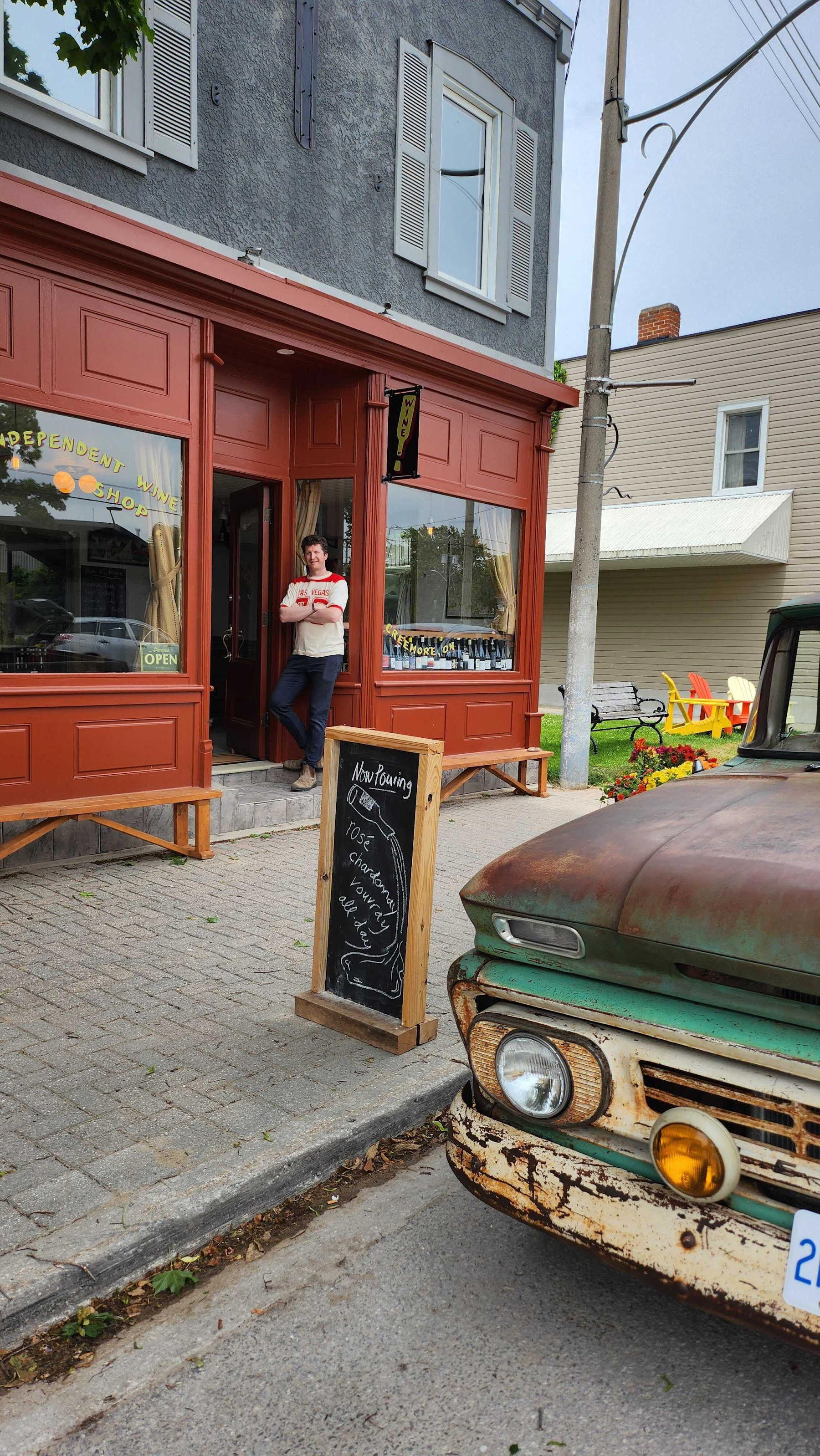
Details
- Cozy
- Rustic
- Elegant
- Intimate
- Date Night
- Special Occasion
- Celebration
- Open Kitchen
- Historic Building
- Extensive Wine List
- Local Sourcing
- Farm To Table
- A La Carte
- Small Plates
- Wine
- Vegetarian Friendly
Current opening hours
- Monday
- Closed
- Tuesday
- Closed
- Wednesday
- Closed
- Thursday
- 5–8 PM
- Friday
- 5–8 PM
- Saturday
- 5–8 PM
- Sunday
- Closed
Hours can change for holidays and private events. Last verified .
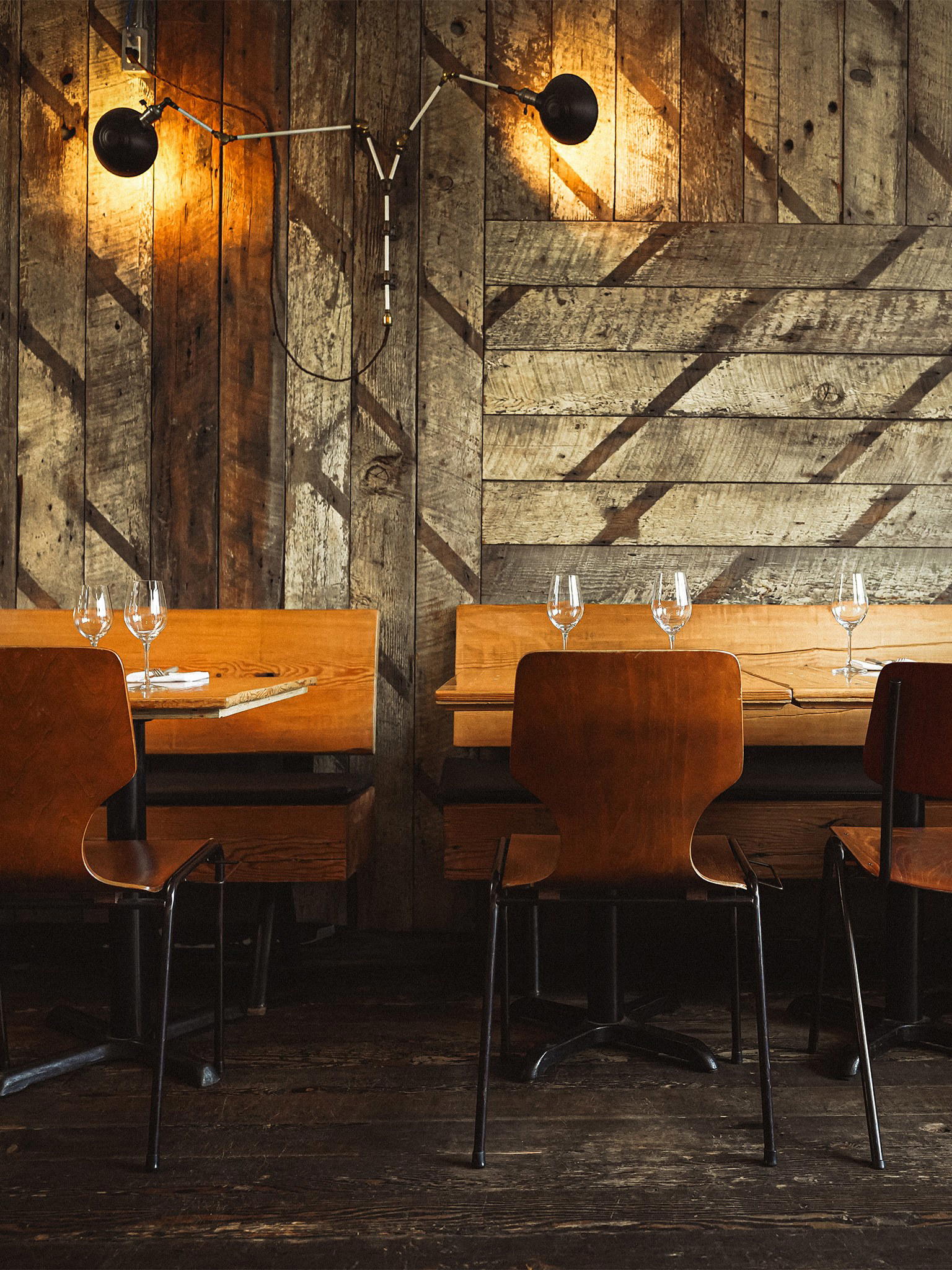
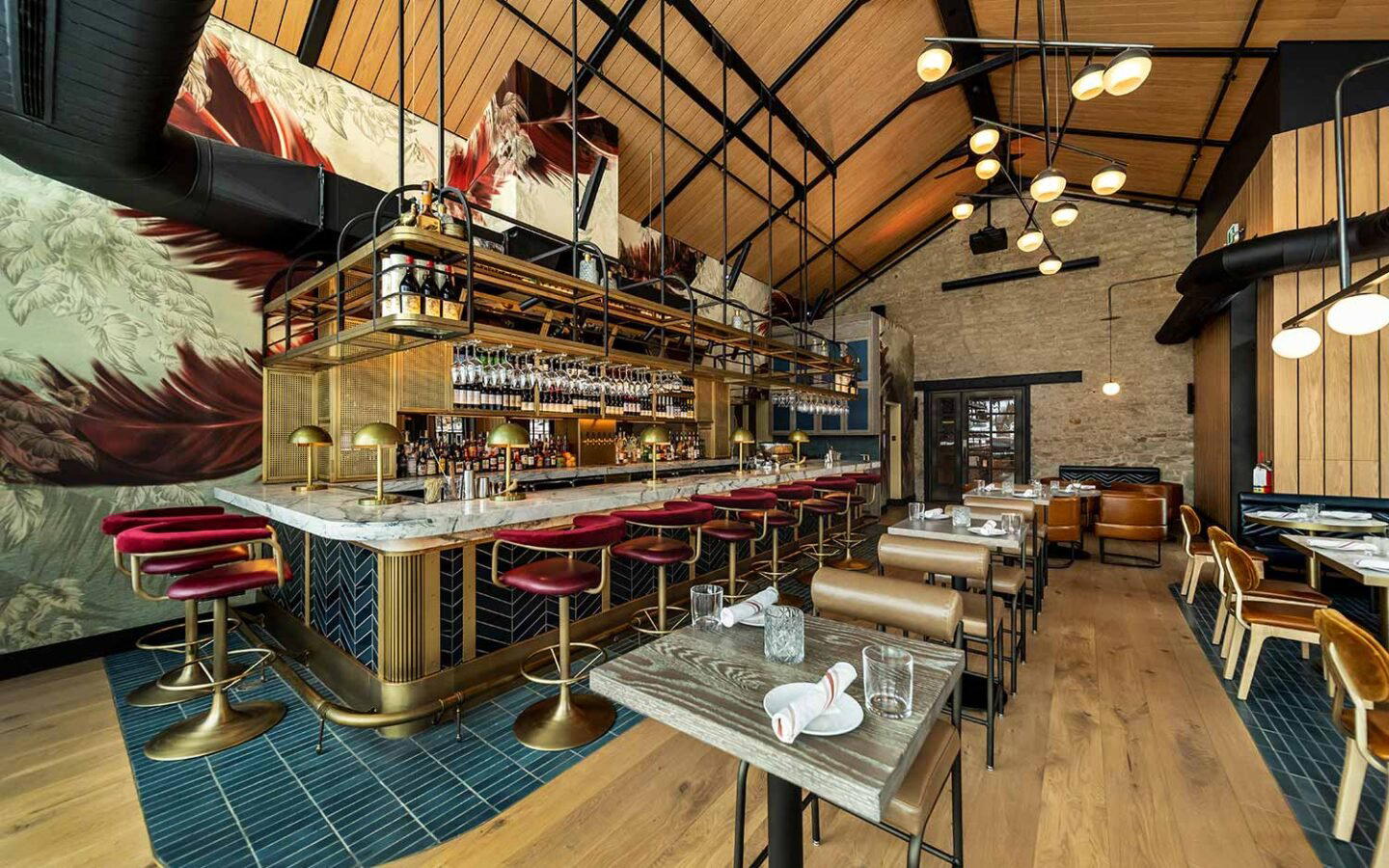
Warm and inviting with exposed brick walls, wooden elements, softly glowing ambient lighting, and cozy comfortable atmosphere.