


Michelin Plate · Canada's 100 Best Restaurants #39 · We're Smart World 1 Radish
Our verdict
Down Home in Markdale, Ontario operates from a regenerative organic farm where the menu is dictated entirely by what the land produces each day.

Pearl is the En Primeur Club membership app, where members save venues, book tables and use the concierge.
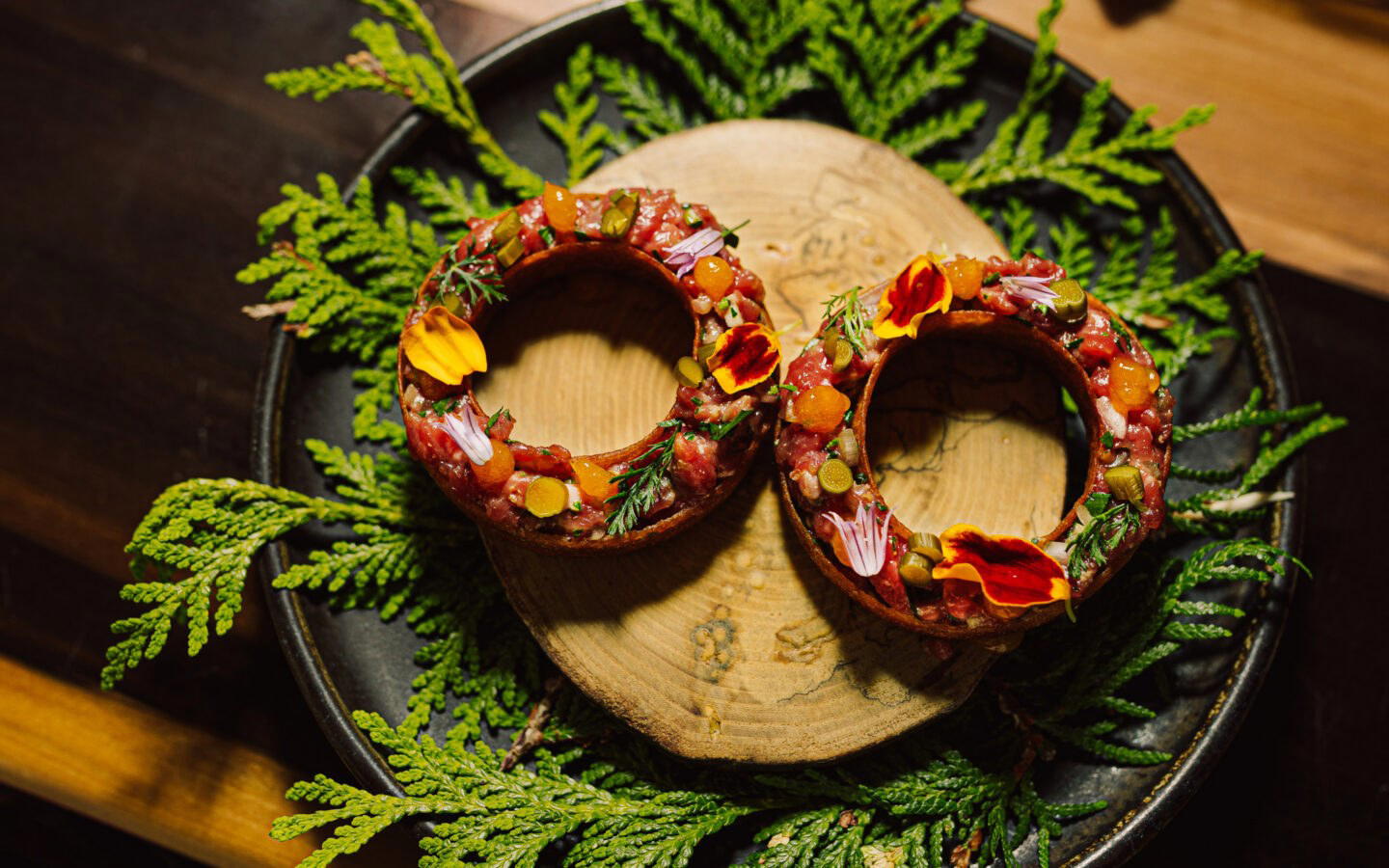
Where the Farm Sets the Menu
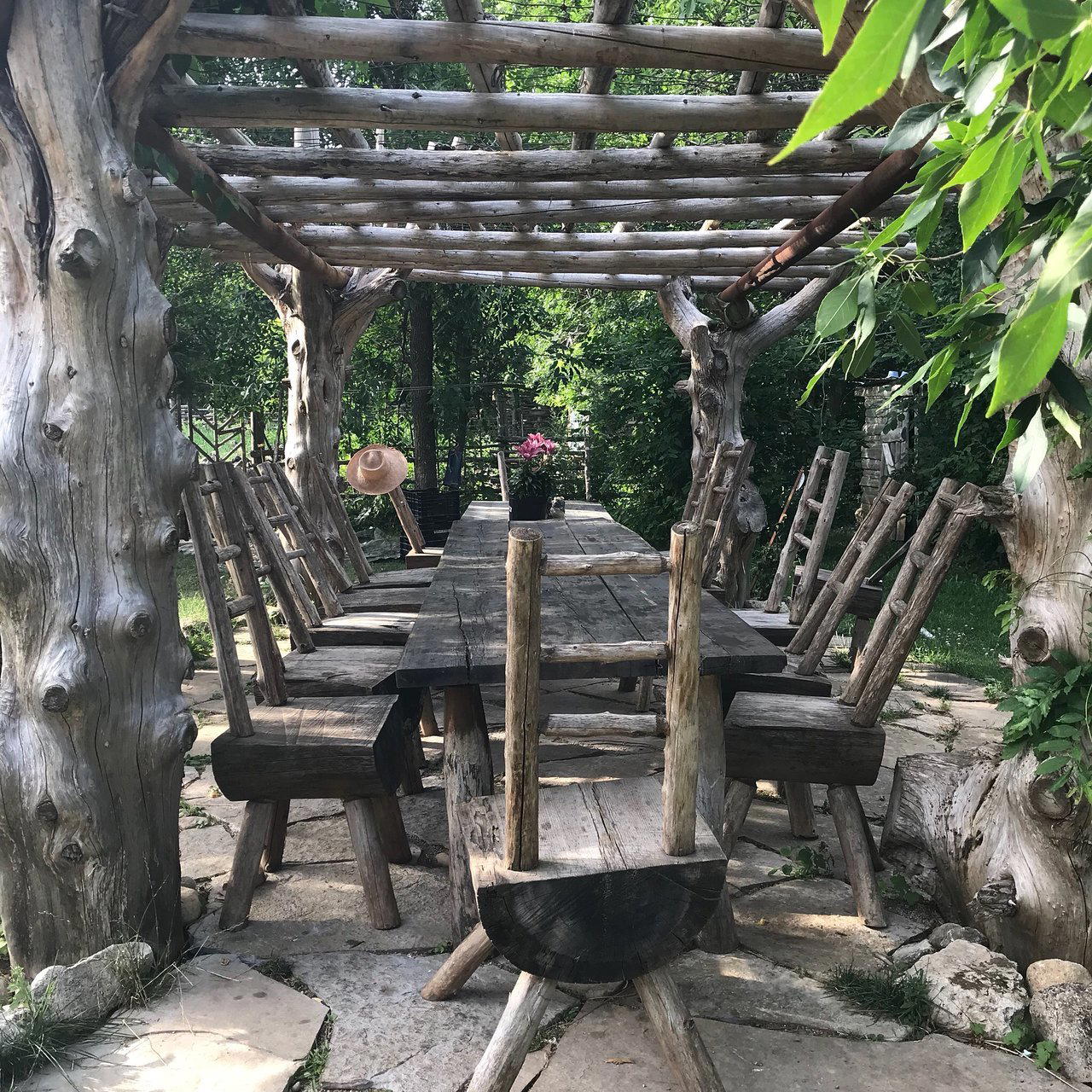
Pull off Grey Road 12 onto the gravel approach to 135299 9 Line and the premise announces itself before you reach the door. The fields are the restaurant. The garden is the kitchen's calendar. At Down Home, the farmhouse setting in Markdale, Ontario is not decorative context, it is the operating logic of the entire enterprise. What Hannah Harradine and Chef Joel Gray have built here belongs to a specific and growing category of Canadian fine dining: properties where the supply chain is not sourced from outside but grown on-site, and where the boundary between agriculture and hospitality has been deliberately dissolved.
That model has precedent across Canada. Eigensinn Farm in Singhampton, roughly forty kilometres north, established the template for the Ontario farmhouse dining format long before regenerative agriculture became a common phrase in food media. Restaurant Pearl Morissette in Lincoln has taken a similar position in the Niagara peninsula, tying its kitchen output to estate agriculture with serious critical recognition to follow. Down Home sits within that peer group, smaller-scale, rurally situated, and operating at the premium end of the market despite being well outside any major urban centre.
Regenerative at the Root
The phrase "farm-to-table" has been stretched so far by marketing usage that it can mean almost anything. What Down Home describes is more specific: a regenerative organic farm that functions as the foundation of every decision in the kitchen. Regenerative agriculture goes beyond organic certification. It prioritises soil health, biodiversity, and farming practices designed to restore rather than merely sustain the land. When a restaurant builds its menu on that foundation, it is making a structural commitment, not a seasonal gesture.
The practical consequence for the menu is complete dependency on what the farm yields. This is documented clearly in the We're Smart recognition Down Home has received: "The menu is therefore always evolving, shaped by what the garden has to offer at that very moment." That recognition also identified the challenge embedded in that approach, the absence of a pure plant-based option, flagged as a missed opportunity given the farm's obvious vegetable-forward production. It is a fair observation. A restaurant with this depth of agricultural infrastructure is unusually well-positioned to build a serious plant-focused menu, and the gap between the farm's output and the current menu construction remains something to watch.
Chef Joel Gray works within those constraints, and the We're Smart assessment frames it as both a genuine creative advantage and a meaningful operational pressure. That tension tends to produce either very good food or inconsistent food. The Michelin recognition suggests it is producing the former.
Michelin Plates in Grey County
Down Home holds a Michelin Plate for both 2024 and 2025. The Plate designation, introduced as Michelin expanded its Ontario guide, indicates a restaurant the inspectors consider worth knowing, not yet at star level but cooking at a standard that warrants attention. In rural Ontario, that signal carries particular weight. Grey County has no star-rated restaurants in the current guide, which means Down Home sits at the top of the local critical hierarchy by that measure.
The comparison context matters here. At the $$$$ price point, Down Home is pricing against urban fine dining peers rather than the casual Grey County dining market. Restaurants like Alo in Toronto and AnnaLena in Vancouver operate at the same price tier, both with stronger critical footprints. What Down Home offers that neither can is the vertical integration: the farm is here, the food comes from it, and the setting makes that relationship legible in a way that no urban kitchen can replicate. Internationally, restaurants like Frantzén in Stockholm have built their reputations partly on exactly this kind of closed-loop sourcing logic, applied at a higher price and recognition level. The model scales. Down Home is at an earlier stage of that arc.
Quebec has developed a parallel track of farm-anchored destination dining, with Tanière³ in Québec City and Narval in Rimouski both leaning into regional and foraged sourcing as a primary editorial position. Auberge Saint-Mathieu in Saint-Mathieu-du-Parc takes a similar approach in a lodge context. The pattern is consistent: the most critically engaged Canadian restaurants outside the major cities are almost always doing something specific with their sourcing geography. Down Home follows that logic from a strong position.
Planning the Visit
Markdale sits approximately two hours north of Toronto, putting Down Home in the category of a deliberate day or weekend trip rather than a spontaneous dinner option. Grey County has built a recognisable tourism draw around the Blue Mountains and Beaver Valley corridor, which means accommodation options exist nearby, though the town itself is small. The restaurant's rural address on 9 Line requires a car, there is no meaningful public transport option for this stretch of Grey County.
The $$$$ pricing and the Michelin recognition both suggest that booking in advance is advisable, particularly on weekends and during the summer growing season when the farm is at its most productive and demand from Toronto-based visitors typically peaks. Given that the menu evolves with daily farm yield, repeat visits tend to offer genuinely different experiences rather than variations on a fixed card, a structural feature that distinguishes this format from conventional tasting menu restaurants. The website and booking platform details are not listed publicly in accessible directories, so direct outreach or checking current listings is the practical approach for reservations.
For those building a longer Grey County itinerary, the region's dining options extend beyond Down Home. The Pine in Creemore offers a contrasting style in a nearby village setting. Broader planning resources for the area include our full Markdale restaurants guide, alongside guides to hotels, bars, wineries, and experiences in the area. For those tracing the farm-anchored dining format across Canadian provinces, ÄNKÔR in Canmore, ARLO in Ottawa, and Jérôme Ferrer - Europea in Montreal each offer comparable ambition in different regional contexts.
Frequently asked questions
What should I budget for a meal at Down Home?
Pricing at Down Home is listed as $$$$.
How do I find Down Home?
Down Home is located at 135299 9 Line, Markdale, ON N0C 1H0, Canada, Markdale.
Comparable Spots, Quickly
| Venue | Cuisine | Price | Awards | Notes |
|---|---|---|---|---|
| Down HomeThis venue (the venue you are viewing) | Modern Farm-to-Table Tasting | $150–200 | Michelin Plate · Canada's 100 Best Restaurants #39 | Not listed |
| Alo | Modern French Fine Dining with Asian Influences | $200–300 | 1 Michelin Star · La Liste Top Restaurants | Contemporary |
| Sushi Masaki Saito | Edomae-Style Omakase | $500+ | 1 Michelin Star · La Liste Top Restaurants | Sushi, Japanese |
| Aburi Hana | Modern Japanese Kyō-Kaiseki | $300–500 | 1 Michelin Star · The Best Chef One Knife | Kaiseki, Japanese |
| AnnaLena | Modern Canadian Tasting Menu | $100–150 | 1 Michelin Star · World's 50 Best #35 | Contemporary |
| Don Alfonso 1890 | Contemporary Italian, Italian | Not listed | Michelin 1 Star | Not listed |
Recognition history
Dated appearances from independent guides and award organizations, with the underlying list record or original source where available.
Michelin Plate
Michelin
Canada's 100 Best Restaurants #39
Canada's 100 Best
We're Smart World 1 Radish
We're Smart World
Full recognition history (4 entries)
Michelin Plate
Michelin
Continue exploring
More in Markdale
Restaurants in Markdale
All restaurants in Markdale →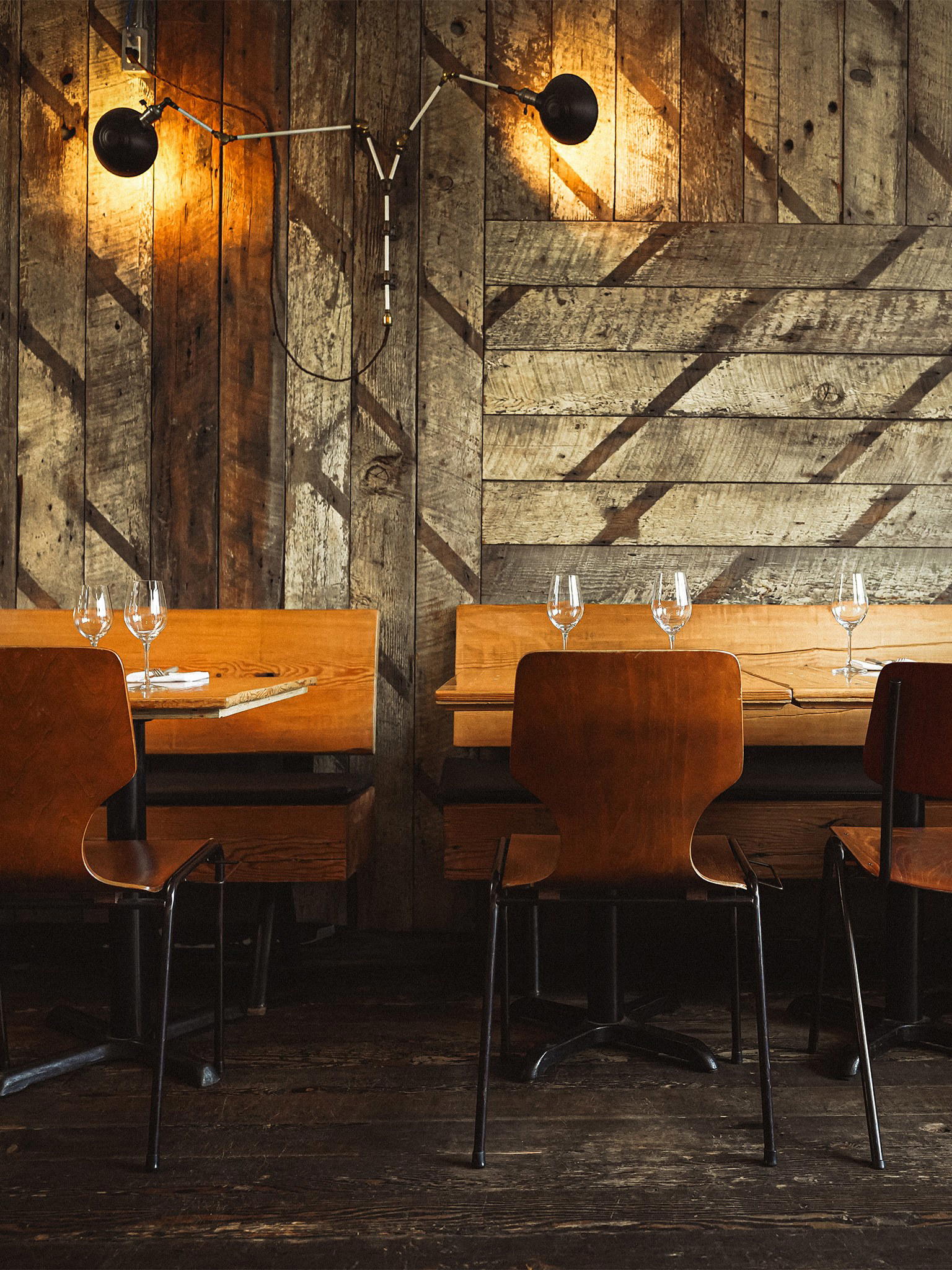

Bars in Markdale
Browse all →
Details
- Intimate
- Cozy
- Rustic
- Special Occasion
- Open Kitchen
- Garden
- Extensive Wine List
- Farm To Table
- Local Sourcing
- Garden
- Tasting Menu
Current opening hours
- Monday
- Closed
- Tuesday
- Closed
- Wednesday
- Closed
- Thursday
- 6:30–10 PM
- Friday
- 6:30–10 PM
- Saturday
- 6:30–10 PM
- Sunday
- Closed
Hours can change for holidays and private events. Last verified .
Cocooned twilight interior with navy walls, amber antique lighting, flickering candles, wooden tables, and handmade pottery creating a personal, lived-in warmth.