The French Laundry
<h2>A Stone Building on Washington Street That Changed American Dining</h2><p>Washington Street in Yountville is quiet in the way that only a small California wine-country town can manage: a two-lane road, old sycamores, the smell of oak and alluvial soil drifting in from the vineyards. The building at 6640 is unassuming from the outside, a nineteenth-century stone structure that once housed a French steam laundry. Nothing about its exterior announces consequence. That restraint is, it turns out, entirely intentional, and it mirrors the discipline that has defined what happens inside for three decades.</p><p>The French Laundry sits at the centre of a specific and still-unresolved argument in American dining: whether fine dining here ever had a native grammar of its own, or whether it borrowed wholesale from France. Thomas Keller answered that question not by rejecting French technique but by applying it to American ingredients with a rigour that the industry had not previously attempted at scale. The result altered the expectations that American diners, chefs, and critics brought to the table. Much of what now reads as standard practice at serious tasting-menu restaurants across the country, from produce sourced within walking distance of the kitchen to the pacing of multi-course formats, traces some lineage to what was established in this building.</p><h2>The Cultural Roots of the Format</h2><p>French haute cuisine arrived in the United States through several channels: the grand hotel dining rooms of the late nineteenth century, the wave of French-trained chefs who settled in New York and California after the Second World War, and the influence of writers like M.F.K. Fisher and later Julia Child, who gave American audiences a language for thinking seriously about food. What remained missing for most of that period was a restaurant that could hold the technical standards of a Parisian brigade while being unambiguously, specifically American in its sourcing and sensibility.</p><p>The tasting-menu format itself carries French precedent. The progression from amuse-bouche through savoury courses to cheese and dessert, the insistence on wine pairings chosen with institutional seriousness, the brigade structure in the kitchen — these are French inventions, refined over centuries in houses like <a href="https://www.enprimeurclub.com/restaurants/alain-ducasse-louis-xv-monte-carlo-restaurant">Alain Ducasse's Louis XV in Monte Carlo</a>. The French Laundry imported that architecture and planted it in the Napa Valley, where the surrounding agriculture made a different kind of argument possible: that luxury did not require importation, that California's soil could support a table of that ambition. That argument now looks obvious. In the mid-1990s, it was a wager.</p><p>The wines that accompany the meal have always been treated as a co-equal element rather than an afterthought, a posture that reflects Napa Valley's own evolution from regional curiosity to a premium appellation whose Cabernet Sauvignon now prices against Bordeaux's upper-tier estates. For Napa wineries and the broader context of the valley's drinking culture, see <a href="https://www.enprimeurclub.com/wineries/yountville">our full Yountville wineries guide</a>.</p><h2>Where It Sits in the American Fine Dining Conversation</h2><p>American fine dining at the top tier has never been a monolith. <a href="https://www.enprimeurclub.com/restaurants/le-bernardin">Le Bernardin in New York City</a> operates from a different premise: classical French seafood technique, white tablecloths, the controlled formality of midtown Manhattan. <a href="https://www.enprimeurclub.com/restaurants/alinea">Alinea in Chicago</a> took the tasting-menu format and bent it toward avant-garde spectacle, making the experience itself the subject. <a href="https://www.enprimeurclub.com/restaurants/lazy-bear">Lazy Bear in San Francisco</a> adapted the format for a more communal, less ceremonial register. <a href="https://www.enprimeurclub.com/restaurants/blue-hill-at-stone-barns-tarrytown-restaurant">Blue Hill at Stone Barns in Tarrytown</a> made agricultural philosophy the organising principle.</p><p>The French Laundry's position within this peer set is defined by longevity and by the consistency of its Michelin recognition, which has been sustained across decades rather than awarded in a single strong season. That kind of sustained rating is what separates institutional reputation from a restaurant having a good run. Comparable sustained recognition in the West Coast context exists at <a href="https://www.enprimeurclub.com/restaurants/providence">Providence in Los Angeles</a> and, in the Northern California region specifically, at <a href="https://www.enprimeurclub.com/restaurants/single-thread">Single Thread Farm in Healdsburg</a>, which shares the agricultural-sourcing premise but frames it through a Japanese kaiseki-influenced lens. Internationally, the parallel institution-building project can be seen at <a href="https://www.enprimeurclub.com/restaurants/8-12-otto-e-mezzo-bombana-hong-kong-restaurant">8 1/2 Otto e Mezzo Bombana in Hong Kong</a>, where a European fine dining framework was transplanted into a different cultural context with similar long-term ambition.</p><p>Within Yountville itself, the restaurant anchors a dining ecosystem that ranges from the California-casual register of <a href="https://www.enprimeurclub.com/restaurants/lucy-restaurant-bar-yountville-restaurant">Lucy Restaurant and Bar</a> to the approachable American comfort of <a href="https://www.enprimeurclub.com/restaurants/rd-kitchen-yountville-restaurant">R+D Kitchen</a>. The town's reputation as a dining destination is inseparable from the presence of The French Laundry at its leading, which effectively set the ceiling against which everything else in the area is measured. For a broader view of what Yountville offers across price points and formats, <a href="https://www.enprimeurclub.com/restaurants/yountville">our full Yountville restaurants guide</a> maps the range.</p><h2>The Award Record and What It Means in Practice</h2><p>The awards documentation attached to The French Laundry credits Thomas Keller with raising the standard for fine dining in America. That framing, sourced from the restaurant's recognition history rather than from EP Club's own assessment, is worth interrogating rather than simply repeating. What it actually describes is the creation of a replicable model: a set of practices, sourcing standards, and service philosophies that other kitchens could study and adapt. <a href="https://www.enprimeurclub.com/restaurants/emerils-new-orleans-restaurant">Emeril's in New Orleans</a> and <a href="https://www.enprimeurclub.com/restaurants/addison">Addison in San Diego</a> each represent different regional answers to the same underlying question about what American fine dining should look and taste like, questions that The French Laundry's example helped sharpen.</p><p>The restaurant's Michelin three-star rating, maintained over an extended period, places it in a very small cohort of American restaurants that have achieved that status with durability rather than as a one-cycle achievement. Three stars in the Michelin framework signals a restaurant worth a special journey, not merely a very good meal. That designation carries logistical implications: the booking window is long, demand exceeds supply on most services, and the experience is priced to reflect its position in the market. Diners planning a visit to Yountville around The French Laundry should build their trip itinerary outward from a confirmed reservation rather than assuming availability will align with existing travel plans.</p><h2>Planning a Visit</h2><p>Yountville sits in the southern Napa Valley, accessible from San Francisco in roughly ninety minutes by car, making it a feasible day trip but more productively visited as part of an overnight stay that allows for the full arc of a tasting menu without the pressure of a return drive. The town's hotel options, covered in <a href="https://www.enprimeurclub.com/hotels/yountville">our full Yountville hotels guide</a>, include properties calibrated to the fine-dining traveller. The bar and drinks scene, lighter in depth than the restaurant offer but improving, is mapped in <a href="https://www.enprimeurclub.com/bars/yountville">our full Yountville bars guide</a>, and afternoon options including winery visits and curated experiences are covered in <a href="https://www.enprimeurclub.com/experiences/yountville">our full Yountville experiences guide</a>.</p><p>The French Laundry operates as a reservation-only venue at a price point that puts it firmly in the occasion-dining category for most travellers. The wine list, consistently treated as an institutional asset rather than a supplementary revenue line, adds material cost to the total. Approaching the meal as an extended afternoon or evening rather than a quick dinner, and booking well in advance through the official reservation channel, are the two practical decisions that shape the experience most directly. Everything else, the stone walls, the garden, the progression of the menu, tends to take care of itself once you are seated.</p><h2>Frequently Asked Questions</h2><h3>Is The French Laundry good for families?</h3><p>The French Laundry operates in the upper tier of American fine dining, with a multi-course tasting menu format, a long service duration, and a price point that places it among the most expensive restaurant experiences in California. It is not a format suited to young children. Families with older teenagers who are genuinely interested in serious dining may find it worthwhile, but the experience is designed for adults who want to give the meal sustained attention across several hours. Yountville has other options at more accessible formats and price points, including <a href="https://www.enprimeurclub.com/restaurants/lucy-restaurant-bar-yountville-restaurant">Lucy Restaurant and Bar</a>, which suits a broader age range.</p><h3>How would you describe the vibe at The French Laundry?</h3><p>Atmosphere is formal without being cold. The stone building and garden setting give the room a sense of age and rootedness that most American fine dining rooms, which tend toward the contemporary, do not have. Service is attentive and technically precise, consistent with what Michelin three-star recognition implies about the standard of hospitality. Yountville's size keeps the surrounding context low-key, which creates an unusual contrast: one of America's most formally recognised restaurants in a town with a population of a few thousand people.</p><h3>What should I order at The French Laundry?</h3><p>French Laundry operates on a tasting-menu format, meaning the kitchen sets the progression rather than the diner selecting individual dishes. Both a chef's tasting menu and a vegetable-focused tasting menu are typically offered, though the specific composition changes with the season and the kitchen's judgment. Given the awards record and Thomas Keller's documented influence on American fine dining, the appropriate approach is to trust the format and let the sequence unfold rather than arriving with specific dish expectations. The wine pairing, given the restaurant's documented investment in its cellar, is worth serious consideration.</p><h3>Is The French Laundry reservation-only?</h3><p>Yes. Walk-in dining is not part of the model at this price point and format. Reservations should be treated as the first logistical step in planning a visit, with accommodation and travel arranged around a confirmed booking rather than the other way around. Demand is consistent with a venue holding Michelin three-star status over a sustained period, which means booking as far ahead as the reservation system allows is advisable for anyone with fixed travel dates.</p><h3>What do critics highlight about The French Laundry?</h3><p>Critical attention to The French Laundry consistently returns to two themes: the technical discipline of Thomas Keller's kitchen and the restaurant's role in defining a benchmark for American fine dining that subsequent kitchens, from <a href="https://www.enprimeurclub.com/restaurants/alinea">Alinea in Chicago</a> to <a href="https://www.enprimeurclub.com/restaurants/single-thread">Single Thread Farm in Healdsburg</a>, have had to position themselves relative to. The awards documentation specifically notes that Keller raised the standard for fine dining in America, a claim that is less about a single meal than about the institutional effect of the restaurant's existence over three decades. Critics also consistently note the wine program, which has been treated as a serious curatorial project rather than a list assembled for revenue.</p>
 Discover on Pearl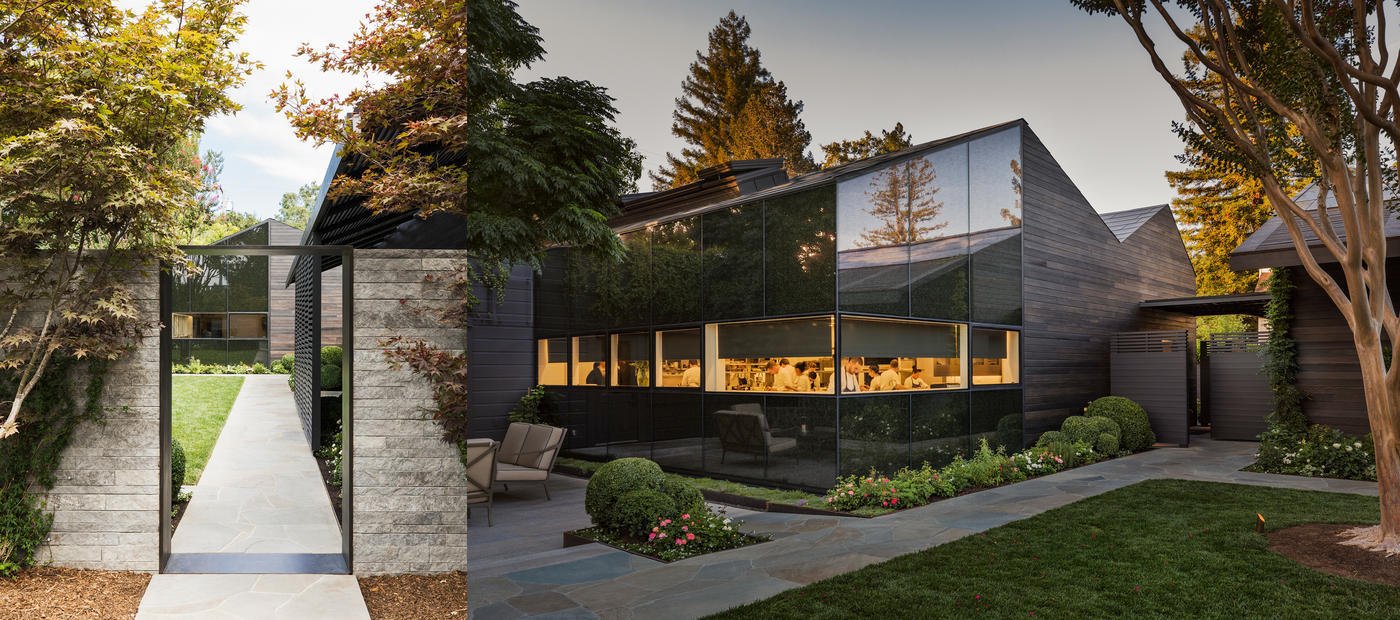
A Stone Building on Washington Street That Changed American Dining
Washington Street in Yountville is quiet in the way that only a small California wine-country town can manage: a two-lane road, old sycamores, the smell of oak and alluvial soil drifting in from the vineyards. The building at 6640 is unassuming from the outside, a nineteenth-century stone structure that once housed a French steam laundry. Nothing about its exterior announces consequence. That restraint is, it turns out, entirely intentional, and it mirrors the discipline that has defined what happens inside for three decades.
The French Laundry sits at the centre of a specific and still-unresolved argument in American dining: whether fine dining here ever had a native grammar of its own, or whether it borrowed wholesale from France. Thomas Keller answered that question not by rejecting French technique but by applying it to American ingredients with a rigour that the industry had not previously attempted at scale. The result altered the expectations that American diners, chefs, and critics brought to the table. Much of what now reads as standard practice at serious tasting-menu restaurants across the country, from produce sourced within walking distance of the kitchen to the pacing of multi-course formats, traces some lineage to what was established in this building.
The Cultural Roots of the Format
French haute cuisine arrived in the United States through several channels: the grand hotel dining rooms of the late nineteenth century, the wave of French-trained chefs who settled in New York and California after the Second World War, and the influence of writers like M.F.K. Fisher and later Julia Child, who gave American audiences a language for thinking seriously about food. What remained missing for most of that period was a restaurant that could hold the technical standards of a Parisian brigade while being unambiguously, specifically American in its sourcing and sensibility.
The tasting-menu format itself carries French precedent. The progression from amuse-bouche through savoury courses to cheese and dessert, the insistence on wine pairings chosen with institutional seriousness, the brigade structure in the kitchen — these are French inventions, refined over centuries in houses like Alain Ducasse's Louis XV in Monte Carlo. The French Laundry imported that architecture and planted it in the Napa Valley, where the surrounding agriculture made a different kind of argument possible: that luxury did not require importation, that California's soil could support a table of that ambition. That argument now looks obvious. In the mid-1990s, it was a wager.
The wines that accompany the meal have always been treated as a co-equal element rather than an afterthought, a posture that reflects Napa Valley's own evolution from regional curiosity to a premium appellation whose Cabernet Sauvignon now prices against Bordeaux's upper-tier estates. For Napa wineries and the broader context of the valley's drinking culture, see our full Yountville wineries guide.
Where It Sits in the American Fine Dining Conversation
American fine dining at the top tier has never been a monolith. Le Bernardin in New York City operates from a different premise: classical French seafood technique, white tablecloths, the controlled formality of midtown Manhattan. Alinea in Chicago took the tasting-menu format and bent it toward avant-garde spectacle, making the experience itself the subject. Lazy Bear in San Francisco adapted the format for a more communal, less ceremonial register. Blue Hill at Stone Barns in Tarrytown made agricultural philosophy the organising principle.
The French Laundry's position within this peer set is defined by longevity and by the consistency of its Michelin recognition, which has been sustained across decades rather than awarded in a single strong season. That kind of sustained rating is what separates institutional reputation from a restaurant having a good run. Comparable sustained recognition in the West Coast context exists at Providence in Los Angeles and, in the Northern California region specifically, at Single Thread Farm in Healdsburg, which shares the agricultural-sourcing premise but frames it through a Japanese kaiseki-influenced lens. Internationally, the parallel institution-building project can be seen at 8 1/2 Otto e Mezzo Bombana in Hong Kong, where a European fine dining framework was transplanted into a different cultural context with similar long-term ambition.
Within Yountville itself, the restaurant anchors a dining ecosystem that ranges from the California-casual register of Lucy Restaurant and Bar to the approachable American comfort of R+D Kitchen. The town's reputation as a dining destination is inseparable from the presence of The French Laundry at its leading, which effectively set the ceiling against which everything else in the area is measured. For a broader view of what Yountville offers across price points and formats, our full Yountville restaurants guide maps the range.
The Award Record and What It Means in Practice
The awards documentation attached to The French Laundry credits Thomas Keller with raising the standard for fine dining in America. That framing, sourced from the restaurant's recognition history rather than from EP Club's own assessment, is worth interrogating rather than simply repeating. What it actually describes is the creation of a replicable model: a set of practices, sourcing standards, and service philosophies that other kitchens could study and adapt. Emeril's in New Orleans and Addison in San Diego each represent different regional answers to the same underlying question about what American fine dining should look and taste like, questions that The French Laundry's example helped sharpen.
The restaurant's Michelin three-star rating, maintained over an extended period, places it in a very small cohort of American restaurants that have achieved that status with durability rather than as a one-cycle achievement. Three stars in the Michelin framework signals a restaurant worth a special journey, not merely a very good meal. That designation carries logistical implications: the booking window is long, demand exceeds supply on most services, and the experience is priced to reflect its position in the market. Diners planning a visit to Yountville around The French Laundry should build their trip itinerary outward from a confirmed reservation rather than assuming availability will align with existing travel plans.
Planning a Visit
Yountville sits in the southern Napa Valley, accessible from San Francisco in roughly ninety minutes by car, making it a feasible day trip but more productively visited as part of an overnight stay that allows for the full arc of a tasting menu without the pressure of a return drive. The town's hotel options, covered in our full Yountville hotels guide, include properties calibrated to the fine-dining traveller. The bar and drinks scene, lighter in depth than the restaurant offer but improving, is mapped in our full Yountville bars guide, and afternoon options including winery visits and curated experiences are covered in our full Yountville experiences guide.
The French Laundry operates as a reservation-only venue at a price point that puts it firmly in the occasion-dining category for most travellers. The wine list, consistently treated as an institutional asset rather than a supplementary revenue line, adds material cost to the total. Approaching the meal as an extended afternoon or evening rather than a quick dinner, and booking well in advance through the official reservation channel, are the two practical decisions that shape the experience most directly. Everything else, the stone walls, the garden, the progression of the menu, tends to take care of itself once you are seated.
Frequently Asked Questions
Budget Reality Check
These are the closest comparables we have in our database for quick context.
| Venue | Price | Awards | Notes |
|---|---|---|---|
| The French Laundry | At this former French steam laundry, chef Thomas Keller has raised the standard… | This venue | |
| Le Bernardin | $$$$ | Michelin 3 Star | French, Seafood, $$$$ |
| Lazy Bear | $$$$ | Michelin 2 Star | Progressive American, Contemporary, $$$$ |
| Alinea | $$$$ | Michelin 3 Star | Progressive American, Creative, $$$$ |
| Atelier Crenn | $$$$ | Michelin 3 Star | Modern French, Contemporary, $$$$ |
| Benu | $$$$ | Michelin 3 Star | French - Chinese, Asian, $$$$ |
Need a table?
Our members enjoy priority alerts and concierge-led booking support for the world's most difficult tables.
Get Exclusive Access