The Elderflower

Michelin Plate · AA Rosettes 3 Rosettes
Our verdict
A Michelin Plate-recognised restaurant occupying a Grade II listed Georgian building on Lymington's quayside, The Elderflower runs a multi-course tasting menu built around seasonal sourcing and the day's coastal catch. A sharing menu option — featuring dishes such as beef Chateaubriand and trout en croûte — gives the format genuine flexibility for different table occasions.

Pearl is the En Primeur Club membership app — saves, bookings, and concierge access live there. Same editors, same standards.
- Address
- 4A Quay St, Lymington SO41 3AS, United Kingdom
- Phone
- +44 1590 676908
- Hours
- Mon–Tue ClosedWed–Sat 12–2 PM, 6–9 PMSun 12–2 PM
- Website
- elderflowerrestaurant.co.uk
- Directions
- Get directions
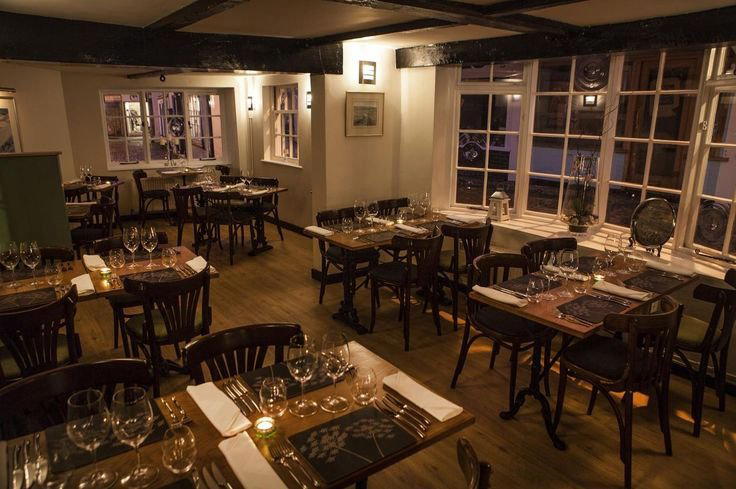
Cobblestones, Georgian Brick, and the Discipline of What's Local
Quay Street in Lymington does not announce itself. The cobbled approach, the low Georgian shopfronts, the proximity of the tidal quay — it reads more like a working harbour town than a dining destination. That context is precisely what makes The Elderflower's address meaningful. A Grade II listed building in this part of Hampshire carries a specific weight: the architecture imposes a kind of discipline on what happens inside, and in this case, the kitchen appears to have accepted that constraint rather than fought it. The room's proportions, the setting's connection to the water, the proximity of the Solent and the New Forest — these are not incidental details but active ingredients in how the menu is constructed.
In the broader map of serious tasting-menu restaurants across the south of England, The Elderflower occupies a particular niche. It holds Michelin Plate recognition for both 2024 and 2025, a designation that signals consistent cooking quality without reaching the star tier held by destinations like Gidleigh Park in Chagford or hide and fox in Saltwood. The Michelin Plate is a useful calibration: it means the inspectors found food worth noting at a price point that, at ££££, asks something serious of the diner. For a town of Lymington's scale, that combination of recognition and setting is uncommon. For our full picture of where it sits in the local dining scene, see our full Lymington restaurants guide.
What the Sourcing Argument Actually Means Here
The relationship between coastal geography and a restaurant menu is easily romanticised and rarely delivered. The Elderflower's positioning by the quayside, and the explicit mention of a daily catch among the menu's focal points, puts that claim to a practical test. Hampshire and Dorset waters produce day-boat fish and shellfish that move through Lymington's harbour with regularity: bream, bass, plaice, crab, and lobster depending on season. When a kitchen is this close to the source, the argument for freshness is not aspirational but logistical.
The broader sourcing discipline at this price tier matters because ££££ tasting menus in rural England live or die on ingredient quality in a way that urban restaurants can sometimes compensate for through technique alone. Compare this with tasting-menu operations further up the recognition ladder, L'Enclume in Cartmel built its identity around a working kitchen garden, while Moor Hall in Aughton integrates estate-sourced produce into multi-course formats. The logic is the same at The Elderflower, scaled to a New Forest and Solent coastline context rather than the Lake District. Proximity to source is the point; what that means in practice at any given visit depends on what the season and the boats have provided.
New Forest itself adds a terrestrial sourcing layer that is worth noting. The forest's commoners still graze cattle and pigs under ancient rights, producing meat with provenance that is specific to this part of England. Trout en croûte, meanwhile, points to the chalk rivers of Hampshire, the Itchen and the Test, which produce fly-fishing trout with a reputation that extends well beyond the county. At this price point, the expectation is that these connections are intentional rather than incidental.
Format: Tasting Menu and the Sharing Alternative
Multi-course tasting menu is the primary format, and the experience is structured accordingly: succession of courses, kitchen-led sequencing, the kind of progression that asks the diner to commit to the full arc. That is standard at this price tier. What is less standard is the explicit sharing menu alternative, which restructures the experience around dishes for two, Chateaubriand and trout en croûte are the confirmed examples. This is a meaningful structural choice. In many rural tasting-menu restaurants, there is no viable alternative to the set format; the sharing option at The Elderflower gives the room more flexibility for occasions where a table wants substance without the formal procession of a full tasting sequence.
For those planning a wider visit, Lymington supports a full itinerary. See our full Lymington hotels guide for accommodation options, our full Lymington bars guide for pre- or post-dinner drinking, and our full Lymington experiences guide for what the town and surrounding area offer beyond the table.
Where It Sits in the Wider Serious-Dining Picture
For context on the range of modern cuisine operating at this price tier across the UK, the spectrum runs from metropolitan two- and three-star operations, The Ledbury in London, Midsummer House in Cambridge, Opheem in Birmingham, through destination-driven country houses like Le Manoir aux Quat' Saisons in Great Milton and Restaurant Andrew Fairlie in Auchterarder, down to Michelin Plate restaurants in regional towns where the ratio of ambition to scale is often more interesting than the headline tier would suggest. The Elderflower is clearly in this last category. Internationally, the modern cuisine tasting-menu format continues to evolve through operations like Frantzén in Stockholm and FZN by Björn Frantzén in Dubai; The Elderflower is not competing at that register, but it is operating in the same genre with a different set of constraints and a different kind of locational argument.
Two Michelin Plate recognitions in a row matter in this context not because a Plate is the same as a star, but because it confirms that external scrutiny has found the kitchen consistent. In a market where ££££ pricing requires the food to carry the expenditure, that external check is what separates a restaurant from an expensive local option.
Planning Your Visit
The Elderflower is at 4A Quay St, Lymington SO41 3AS, in the Georgian quarter close to the town quay. Given the price tier and the tasting menu format, advance booking is advisable; Lymington draws significant visitor traffic in summer, and the capacity of a building of this period and listed status is not large. The sharing menu format makes it more accessible for those who prefer to eat at their own pace, but either way, this is an occasion rather than a drop-in. For wineries in the area to pair with a broader New Forest visit, see also our full Lymington wineries guide.
Frequently asked questions
What should I budget for a meal at The Elderflower?
Pricing at The Elderflower is listed as ££££.
Fast Comparison
| Venue | Cuisine | Price | Awards |
|---|---|---|---|
| The ElderflowerThis venue — the venue you are viewing | Modern French-British Fine Dining | $50–100 | Michelin Plate · AA Rosettes 3 Rosettes |
| The Ledbury | Modern European, Modern Cuisine | Not listed | Michelin 3 Star |
| Sketch, The Lecture Room and Library | Modern French | Not listed | Michelin 3 Star |
| CORE by Clare Smyth | Modern British | Not listed | Michelin 3 Star |
| Restaurant Gordon Ramsay | Contemporary European, French | Not listed | Michelin 3 Star |
| Dinner by Heston Blumenthal | Modern British, Traditional British | Not listed | Michelin 2 Star |
Recognition history
Dated appearances from independent guides and award organizations, with the underlying list record or original source where available.
Michelin Plate
Michelin
AA Rosettes 3 Rosettes
AA Rosettes
Full recognition history (4 entries)
Michelin Plate
Michelin
Michelin Plate
Michelin
Continue exploring
More in Lymington
Restaurants in Lymington
Browse all →
Bars in Lymington
Browse all →
Hotels in Lymington
Browse all →

Details
- Intimate
- Cozy
- Elegant
- Classic
- Date Night
- Special Occasion
- Historic Building
- Extensive Wine List
- Local Sourcing
- Tasting Menu
- Vegetarian Friendly
- Gluten Free Options
Current opening hours
- Monday
- Closed
- Tuesday
- Closed
- Wednesday
- 12–2 PM, 6–9 PM
- Thursday
- 12–2 PM, 6–9 PM
- Friday
- 12–2 PM, 6–9 PM
- Saturday
- 12–2 PM, 6–9 PM
- Sunday
- 12–2 PM
Hours can change for holidays and private events. Last verified .
Classy French bistro atmosphere that is cosy, intimate, and welcoming with informal yet accurate service.