
The kitchen anchors itself in classic Cantonese cooking traditions, including noodle-forward preparations, at a mid-to-upper price point that sits a tier below Taipei's full-starred Chinese dining rooms.
Pearl is the En Primeur Club membership app — saves, bookings, and concierge access live there. Same editors, same standards.
- Address
- 100, Taiwan, Taipei City, Zhongzheng District, Section 1, Zhongxiao E Rd, 12號No.12, B1 B1
- Phone
- +886 2 2321 1818
- Website
- sheratongrandtaipei.com
- Directions
- Get directions
 Saves & bookings on Pearl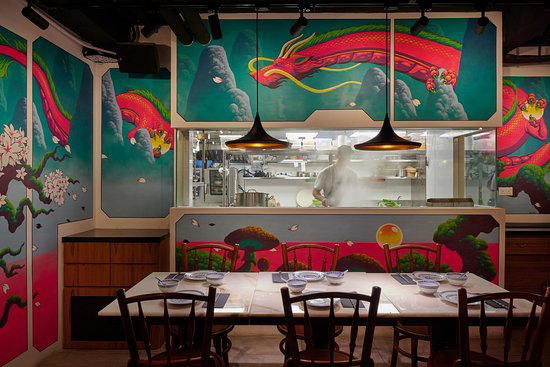
Cantonese Below Street Level: The Zhongzheng Context
Taipei's Chinese fine dining scene distributes itself across a surprisingly wide register. At the ceiling sit rooms like Le Palais and Ya Ge, both carrying full Michelin stars and price points to match. Below that, a mid-tier of recognised Cantonese and regional Chinese kitchens operates with fewer theatrics, more regulars, and pricing that reflects Taiwanese rather than Hong Kong or Macau hospitality economics. That volume of reviews, for a basement room on Zhongxiao East Road, points to a local dining anchor rather than a tourist stop.
The basement address matters as context. Zhongzheng District, built around the civic axis of Zhongxiao East Road, is a working commercial and administrative quarter. Restaurants here tend to survive on neighbourhood loyalty and weekday lunch traffic rather than on destination dining. A Michelin Plate in this setting is a different kind of credential than it would be in the Xinyi hotel corridor: it confirms that the kitchen is technically coherent within its category, not that it competes for the starred dining crowd. For Cantonese specifically, that distinction is useful. The tradition has a long history of expressing itself through unpretentious neighbourhood rooms that prioritise craft over ceremony, from Hong Kong's dai pai dongs to the noodle houses of Guangzhou's older residential quarters.
The Noodle Tradition Inside Cantonese Cooking
Cantonese cuisine's relationship with noodles is older and more technical than its reputation in Taiwan might suggest. In the broader Cantonese canon, noodle preparation functions as a separate discipline: wonton noodle soup demands tightly-crimped, thin-skinned dumplings and alkaline egg noodles with a specific springiness; lo mein requires tossing technique and timing precise enough to coat each strand without waterlogging the sauce; dry-tossed preparations depend on noodle texture holding against condiment weight. Across the Chinese regional noodle spectrum, hand-pulled lamian and knife-cut dao xiao mian from the northern provinces occupy one end; Cantonese preparations sit at a different technical pole, where the craft is in the mixing and resting of alkaline dough and the quality of the broth rather than the dramatic pulling or cutting theatrics.
Where restaurants at this tier distinguish themselves is in that broth quality and in the ratio of noodle to accompaniment. A kitchen confident in its Cantonese credentials treats the soup base as a long project, not a shortcut. The same applies to the wider menu: Cantonese cooking rewards patience in timing, fat rendering, and sauce reduction in ways that are easy to shortchange under commercial pressure. A Michelin Plate signals that the inspectors found the kitchen meeting a basic standard of competence and consistency. For noodle-forward Cantonese rooms, consistency is especially relevant criterion: the broth should be the same on a Tuesday lunch as on a Saturday evening.
Comparing Taipei's Cantonese Register
Across the Chinese-speaking world, Cantonese dining has a clear hierarchy: Hong Kong remains the reference point, with rooms like Forum representing the high end of classical technique; Macau has developed its own high-end Cantonese tier, illustrated by Chef Tam's Seasons; and mainland China has added to the register with places like 102 House in Shanghai. Taipei operates in a different register from all three. The city's Cantonese rooms are not trying to replicate Hong Kong pricing or presentation; they are feeding a city with strong local Taiwanese and Hokkien food culture, where Cantonese cuisine occupies a specific niche rather than a dominant position.
Within Taipei's recognised restaurant scene, the upper end of Chinese dining skews heavily toward the hotel Cantonese format: large rooms, comprehensive dim sum programmes, banquet facilities. The Dragon's basement location and price point suggest a leaner operation, closer in spirit to the workhorse Cantonese rooms that populate Hong Kong's mid-levels than to the hotel dining rooms. For diners already familiar with Lin Ju or the broader local Chinese dining circuit, The Dragon represents an accessible point of entry into Michelin-recognised Cantonese cooking without the formal restaurant overhead that attaches to the starred tier.
Where The Dragon Fits in the Wider Taipei Dining Picture
Taipei's dining scene in 2024 runs from intensive tasting menu rooms at the leading end, the city now holds a meaningful cluster of starred and Plate-listed restaurants across European, Japanese, and Chinese categories, to intensely local street-level cooking that the Michelin programme largely leaves unranked. The restaurant sits in the recognised middle: technically assessed, publicly reviewed at scale, and positioned within a cuisine tradition that rewards familiarity and repeat visits over first-impression spectacle.
For visitors already using the Michelin guide as a filter, the Plate designation signals that inspectors found the cooking technically sound. In a city where places like JUNTO and 85TD approach dining from entirely different angles, the restaurant occupies the Cantonese tradition corner of the map with a credibility that 1,900-plus Google reviews at 4.3 reinforces independently of the Michelin assessment.
Readers building a broader Taiwan dining itinerary will find the full picture at our full Taipei restaurants guide. For context beyond Taipei, the island's diversity extends to JL Studio in Taichung, GEN in Kaohsiung, A Cun Beef Soup in Tainan, and further afield, Akame in Wutai Township and Volando Urai Spring Spa & Resort in Wulai District.
Know Before You Go
- Address: B1, No. 12, Section 1, Zhongxiao East Road, Zhongzheng District, Taipei City 100, Taiwan
- Cuisine: Cantonese
- Price range: $$$ (mid-to-upper tier)
- Recognition: Michelin Plate 2024 3 from 1,912 reviews
Cost Snapshot
Comparable venues nearby, for context on price, style, and recognition.
| Venue | Cuisine | Price | Awards | Notes |
|---|---|---|---|---|
| The DragonThis venue — the venue you are viewing | Liming, Cantonese | $$$ | Michelin Plate | Not listed |
| 85TD | Jingxin, Contemporary Cantonese | $$$$ | Michelin Plate | Not listed |
| EMBERS | Dun'an, Modern Taiwanese Fine Dining | $$$$ | Michelin Plate | Not listed |
| Sinchao Rice Shoppe | Xingya, Modern Taiwanese Fried Rice | $$$ | Bib Gourmand | Not listed |
| Yong-Kang Beef Noodle | Not listed | $$ | Not listed | Fuzhu, Traditional Taiwanese Beef Noodle Soup |
| JUNTO | Guangfu, Modern Cantonese | $$$ | Michelin Plate | Not listed |
Recognition history
Dated appearances from independent guides and award organizations, with the underlying list record or original source where available.
Michelin Plate
Michelin
Michelin Plate
Michelin
Continue exploring
More in Taipei
Restaurants in Taipei
Browse all →
Bars in Taipei
Browse all →
Hotels in Taipei
Browse all →
Wineries in Taipei
Browse all →
At a Glance
- Elegant
- Modern
- Cozy
- Business Dinner
- Group Dining
- Family
- Special Occasion
- Hotel Restaurant
- Private Dining
- Sake Program
Current opening hours
- Monday
- 11:30 AM–2 PM, 6–9:30 PM
- Tuesday
- 11:30 AM–2 PM, 6–9:30 PM
- Wednesday
- 11:30 AM–2 PM, 6–9:30 PM
- Thursday
- 11:30 AM–2 PM, 6–9:30 PM
- Friday
- 11:30 AM–2 PM, 6–9:30 PM
- Saturday
- 11:30 AM–2 PM, 6–9:30 PM
- Sunday
- 11:30 AM–2 PM, 6–9:30 PM
Hours can change for holidays and private events. Last verified .
Contemporary décor with Chinese details, tan wood finishes, comfy chairs, and bright environment creating a serene and elegant atmosphere.