Our verdict
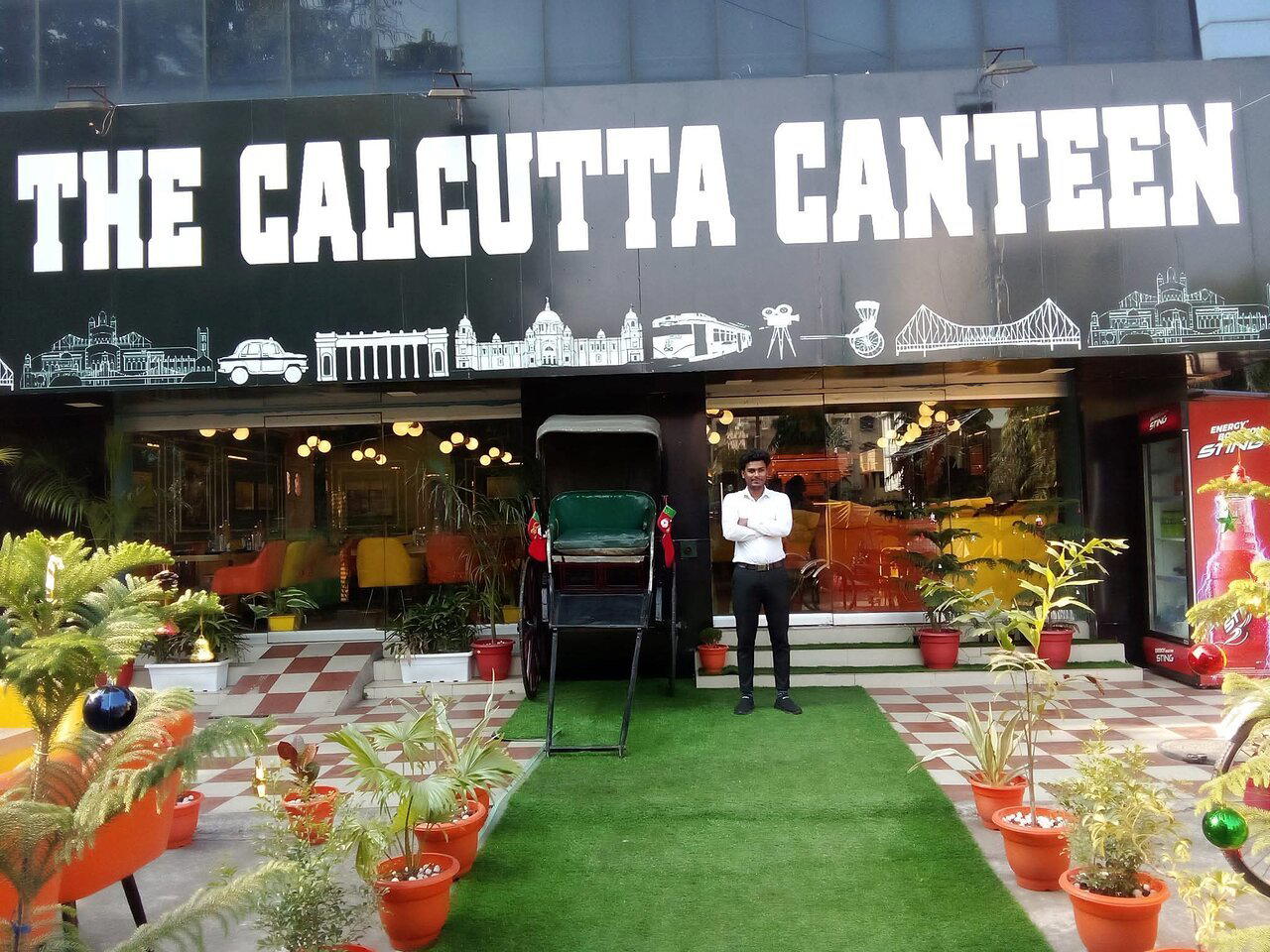
The Calcutta Canteen occupies a corner of Bidhannagar, Durgapur's planned residential quarter, where Bengal's cooking traditions meet an everyday neighbourhood dining register. The address — next to SBI Bank on SSB Sarani — signals accessibility over ceremony, placing it squarely in the tier of local restaurants that sustain a city rather than define its fine-dining ceiling. For visitors and residents alike, it represents a direct entry point into the flavours Durgapur eats on its own terms.

Pearl is the En Primeur Club membership app — saves, bookings, and concierge access live there. Same editors, same standards.
- Address
- A1/ 03, SSB SARANI, next to SBI BANK, Aranyak (West), Bidhannagar, Durgapur, West Bengal 713212, India
- Phone
- +918538870777
- Hours
- Daily 11 AM–11 PM
- Directions
- Get directions
Durgapur's Neighbourhood Table: Where Bengali Cooking Feeds a Steel City
Durgapur was designed as a planned industrial city — steel plants and engineering colleges, grid roads and residential sectors laid out in deliberate order. Bidhannagar, one of its quieter residential pockets, does not attract the kind of dining attention that Kolkata's Park Street or Behala corridors do, but it sustains the type of local restaurant that actually shapes how a city eats: affordable, consistent, rooted in the cooking people grew up with. The Calcutta Canteen sits on SSB Sarani in Aranyak West, beside an SBI branch, which is about as embedded in everyday neighbourhood logic as a restaurant address can get. The name itself signals an intention: not a temple to high technique, but a canteen in the original sense — a place to eat well, regularly, without occasion.
What the Name Carries: Calcutta's Culinary Inheritance
Restaurants that invoke Calcutta, the city's pre-2001 name, still preferred by Bengali speakers for its cultural weight, are making a specific claim about provenance. Calcutta's food identity is one of the most layered in the subcontinent: Mughal-influenced biryanis adapted into the city's own rice-heavy, potato-added style; fish preparations that treat mustard as a foundational spice rather than a condiment; street snacks like kati rolls and puchka that have migrated into sit-down menus across Bengal; and a Bengali sweet tradition built around chhena (fresh curd cheese) that produced rasgolla, sandesh, and mishti doi. When a canteen in Durgapur carries that Calcutta reference, it is positioning itself within that tradition, sourcing its cooking identity from the state capital roughly 170 kilometres away, even as it serves a local residential audience. This is a common model in secondary Indian cities: the name functions as a shorthand for the culinary register the kitchen intends to work in.
The ingredient logic of Calcutta-style cooking matters here. Bengal's river fish, rohu, katla, hilsa when in season, have defined the region's protein hierarchy for centuries, with mustard oil as the dominant cooking medium. The mustard itself, pressed locally across West Bengal, carries a pungency that refined vegetable oils do not replicate, and it is the single ingredient most responsible for Bengali food tasting distinctly of its geography. Restaurants that reference Calcutta tradition are, implicitly, referencing that sourcing chain: mustard oil, freshwater fish, panch phoron (the five-spice blend of fenugreek, nigella, cumin, mustard, and fennel), and the region's particular approach to slow-cooked lentils and vegetable preparations. Whether The Calcutta Canteen executes this sourcing with precision is something a visit would confirm, but the culinary grammar it invokes is specific and verifiable. For comparable examples of how Indian regional sourcing drives restaurant identity at higher price points, the ingredient philosophy at Farmlore in Bangalore or the tandoor-centric supply chain at Bukhara in New Delhi illustrate what happens when that same regionalism is applied at a premium tier.
The Neighbourhood Context: What Bidhannagar Tells You
Bidhannagar in Durgapur is a residential sector rather than a commercial dining strip, which places The Calcutta Canteen in a specific category of Indian urban restaurant: the neighbourhood anchor. These are not restaurants that draw cross-city traffic or feature in metropolitan food media. They serve the immediate community, families on weekday evenings, office workers at lunch, weekend groups who want something reliable rather than something new. In the broader ecology of a city like Durgapur, this tier of restaurant is where most eating actually happens, and it operates under different pressures than destination dining. Consistency matters more than creativity. Price accessibility is non-negotiable. The kitchen must cover enough of the menu to serve a table of four with entirely different preferences. Across India, the restaurants that sustain this model in industrial cities, from Jamshedpur to Rourkela to Bhilai, are rarely the ones that appear in national food rankings, but they carry the practical weight of feeding a working population. For a broader picture of how Durgapur's dining options sit within this framework, our full Durgapur restaurants guide maps the city's options by tier and neighbourhood.
How It Compares: The Secondary-City Canteen Model Across India
The canteen-register restaurant, named explicitly as such, priced for daily use, serving regional cooking with a recognisable geographic identity, appears in some form across every mid-sized Indian city. In Amritsar, the model produces institutions like Beera Chicken House, where a single protein preparation, executed without variation for decades, becomes the entire identity. In smaller towns across Gujarat and Rajasthan, the equivalent often takes a vegetarian form, as at Dadi Ki Rasoi in Budaun. What distinguishes the Bengali version of this model is the fish, its centrality to the menu, the sourcing dependency on local river and farm supply, and the degree to which freshness determines quality in a way that meat or grain-based cooking does not. A canteen working in the Calcutta tradition that sources its fish well is doing something ingredient-dependent in a way that a dal-and-roti operation simply is not. This is worth noting for anyone eating in Durgapur specifically: the quality ceiling of a Bengali restaurant is largely set by its fish supply, not its technique.
For reference points at the opposite end of the price and format spectrum, where sourcing philosophies receive explicit documentation and become part of a restaurant's public narrative, Esphahan in Agra and Leela Kerala Terrace in Trivandrum show how Indian regional cooking translates into hotel-grade fine dining. The distance between those formats and a neighbourhood canteen in Durgapur is not just price, it is the entire infrastructure of sourcing documentation, front-of-house narration, and menu curation that formalises what in the canteen remains implicit.
Planning a Visit: What to Know Before You Go
The Calcutta Canteen is located at A1/03, SSB Sarani, next to SBI Bank in Aranyak (West), Bidhannagar, Durgapur, a residential address that is most straightforwardly reached by auto-rickshaw or app-cab from Durgapur's central areas. Phone number and hours were not available at the time of writing; confirming both before travel to Durgapur is advisable, particularly if you are visiting from outside the city. Price range data is similarly unavailable, but the format and location profile it firmly within the affordable everyday dining bracket rather than any premium tier. Visitors with specific dietary requirements or strong preferences for particular Bengali preparations should treat the first visit as exploratory.
Frequently asked questions
Is THE CALCUTTA CANTEEN a family-friendly restaurant?
The residential Bidhannagar address places it squarely within a neighbourhood format that is structured around family dining in Durgapur. Canteen-register restaurants at this tier in Indian secondary cities typically seat groups across multiple generations without requiring advance coordination. Walk-in family visits are the expected mode, not the exception.
What should I expect atmosphere-wise at THE CALCUTTA CANTEEN?
The location on SSB Sarani in Bidhannagar — a residential sector, not a commercial dining strip — points toward a functional, community-facing room rather than a designed dining environment. Expect the practical warmth of a neighbourhood canteen: regulars, straightforward seating, and cooking that takes precedence over decor. This is Durgapur's daily-use dining format, not a destination showcase.
Does The Calcutta Canteen serve specifically Bengali cuisine, or does it cover a broader Indian menu?
The name references Calcutta — a culinary identity centred on freshwater fish, mustard oil cooking, and the spice logic specific to West Bengal rather than a pan-Indian menu approach. Invoking that name carries a specific claim about cooking tradition, one that distinguishes it from the generic multi-cuisine format common at many secondary-city restaurants across India.
What do people recommend at THE CALCUTTA CANTEEN?
Restaurants in the Calcutta canteen tradition typically anchor their menus around freshwater fish preparations, mustard oil-based curries, and rice-centred meals drawn from West Bengal's cooking canon. Asking staff directly at the Bidhannagar address for the day's fish is the standard approach in this format.
How do I find THE CALCUTTA CANTEEN?
THE CALCUTTA CANTEEN is located at A1/ 03, SSB SARANI, next to SBI BANK, Aranyak (West), Bidhannagar, Durgapur, West Bengal 713212, India, Durgapur.
Do they take walk-ins at THE CALCUTTA CANTEEN?
For a neighbourhood canteen on SSB Sarani in Bidhannagar, walk-in dining is the assumed and likely default mode. Arriving at meal service times without a booking is standard practice at this category of Durgapur restaurant.
Comparable Spots, Quickly
Comparable venues nearby, for context on price, style, and recognition.
| Venue | Cuisine | Price | Notes |
|---|---|---|---|
| THE CALCUTTA CANTEENThis venue — the venue you are viewing | Indian, Chinese & European | $1–10 | Not listed |
| Zing | World of Flavors Buffet - Asian, Italian, Indian & Maharashtrian | Not listed | Chikalthana MIDC |
| The Pavillion | Indian, Chinese & Continental | Not listed | Rajpur Road |
| Omya | Modern Indian Fine Dining | $100–150 | Lodhi Road |
| Tadka | Awadhi & North-West Frontier Indian Fine Dining | Not listed | Cantonment |
| Peter Cat | Indian Chelo Kebab | $10–20 | Park Street |
Details
- Cozy
- Family
- Casual Hangout
- A La Carte
- Vegetarian Friendly
Current opening hours
- Monday
- 11 AM–11 PM
- Tuesday
- 11 AM–11 PM
- Wednesday
- 11 AM–11 PM
- Thursday
- 11 AM–11 PM
- Friday
- 11 AM–11 PM
- Saturday
- 11 AM–11 PM
- Sunday
- 11 AM–11 PM
Hours can change for holidays and private events. Last verified .
Cozy atmosphere suitable for quick lunches or family dinners