The Burger Truck
Street food in the Swiss Alps carries its own logic, and The Burger Truck on Rue de la Délèze plants that logic firmly in Martigny, a town better known for its Roman amphitheatre and Rhône Valley wine corridors than its casual dining scene. In a canton where lunch still tends toward fondue or raclette, a truck format signals something deliberate about accessibility and speed. Find it in context alongside Martigny's wider food options at our full city guide.
Pearl is the En Primeur Club membership app — saves, bookings, and concierge access live there. Same editors, same standards.
- Address
- Rue de la Délèze 11, 1920 Martigny, Switzerland
- Phone
- +41788967734
- Website
- theburgertruck.ch
 Saves & bookings on Pearl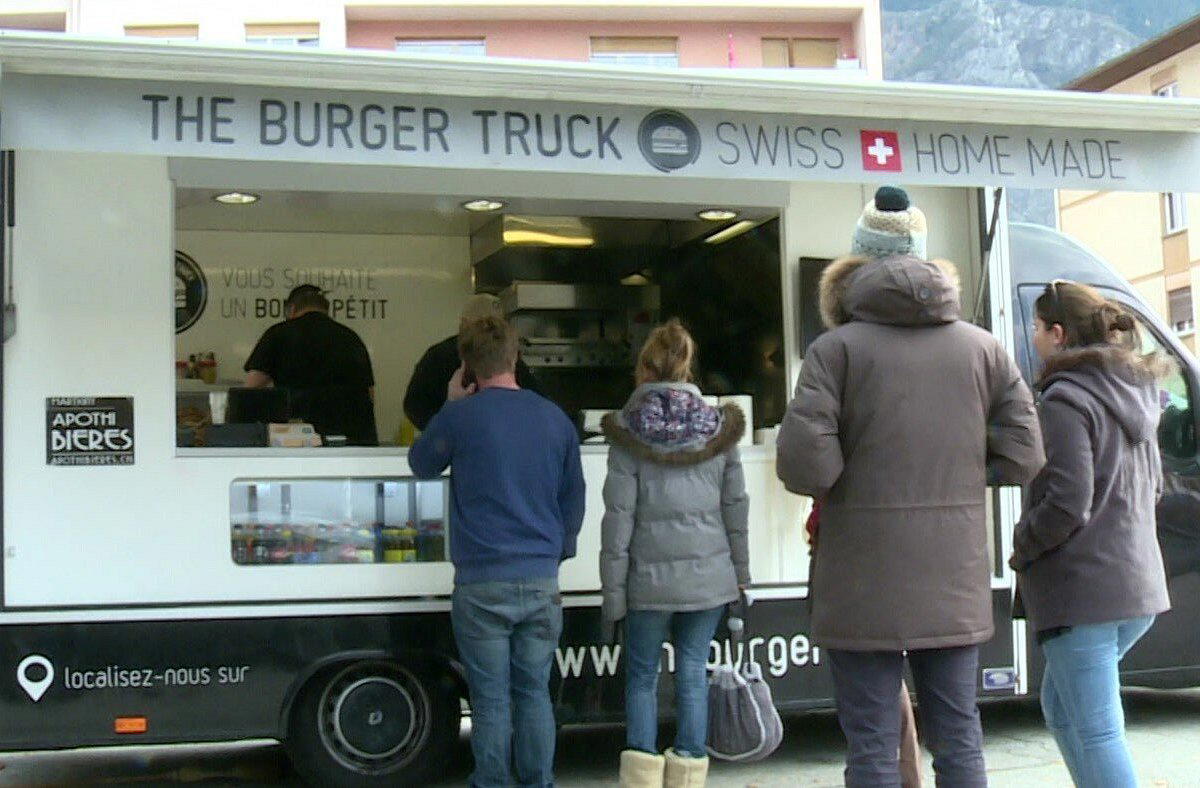
Where the Valais Meets the Street
Martigny sits at a geographic hinge point in the western Swiss Alps, where the Rhône bends sharply and the valley opens toward the Grand-Saint-Bernard Pass. The town draws Roman history tourists, Fondation Pierre Gianadda visitors, and hikers moving between Mont Blanc and the Bernese Oberland, which means its food scene has to absorb a wide range of appetites and timetables. Sit-down restaurants in the canton, from mountain chalets serving fondue to the wine-paired menus tied to Valais appellations, are well represented. What is less common in a town this size is the deliberate street-format operator: a truck anchored to a specific address rather than rotating through markets, building a local regular trade rather than chasing festival footfall.
The Burger Truck at Rue de la Délèze 11 occupies that gap. In Swiss food culture, where even casual dining often comes with table service and a printed menu, a truck format is a statement about pace and directness. You order, you wait briefly, you eat. That rhythm suits Martigny's daytime energy, which moves between the old town and the commercial district in the kind of purposeful foot traffic that rewards fast, satisfying food.
The Sourcing Question That Defines the Format
Across Switzerland, the argument for quality street food almost always returns to the same point: ingredient provenance. The country's agricultural standards are among the tightest in Europe, which means even casual-format operators draw from a supply chain that, by default, sits above the baseline of most comparable markets. Valais in particular produces beef from mountain cattle raised at altitude, pork from small-scale farms in the valley, and a vegetable and dairy culture shaped by short growing seasons and intense flavour concentration.
For a burger truck in this environment, sourcing is not an abstract virtue, it is the structural difference between a product that justifies eating in the cold and one that does not. The Valais beef tradition, connected to breeds like the Hérens, a hardy mountain cattle known for the female-led cow fights that still mark local agricultural festivals, puts traceable, character-rich meat within reach of any operator willing to prioritise it over cost. Whether The Burger Truck draws directly from local Valais producers is not confirmed, but the regional context means the expectation is reasonable.
Switzerland's premium dining circuit, with addresses like Schloss Schauenstein in Fürstenau, Memories in Bad Ragaz, and focus ATELIER in Vitznau, has spent the past decade making sourcing transparency a core part of their editorial identity. That sensibility has filtered downward through the market. Even informal operators in Swiss cities now face a customer base that has been trained by fine dining discourse to care about where protein comes from. In Martigny, a town with its own wine-literate, produce-aware population, that pressure applies to the street level too.
What to Order
The more useful framing is categorical. In a burger format, the core product is the beef patty and the bun, and the variables that separate a competent version from a forgettable one are grind coarseness, fat ratio, and bun structure relative to patty weight. In a market like Switzerland, where bread culture is serious and dairy is a point of national pride, cheese selection on a burger carries more weight than it would in markets where processed slices are the norm. If there is a house-made sauce or a regional cheese option on the menu, that is where the sourcing story becomes legible on the plate.
For a broader read on what Martigny's food scene looks like beyond the truck format, Les Touristes represents the French Contemporary end of the local spectrum. The contrast between the two formats tells you something useful about how the town handles the gap between its tourist-facing dining and its everyday food culture.
The Swiss Street Food Context
Street food in Switzerland has historically been underdeveloped relative to comparable European markets. The combination of high fixed costs, strict cantonal food safety regulation, and a restaurant culture built around permanent premises kept mobile formats marginal for longer than in France, Germany, or the UK. That has shifted meaningfully since roughly 2015, when Swiss cities began licensing street food festivals and semi-permanent truck parks, and when urban populations in Geneva, Zurich, and Lausanne started demanding faster, cheaper alternatives to sit-down lunch.
The question for a truck in a smaller city like Martigny, population around 17,000, is whether the local demand base sustains a permanent pitch rather than a festival appearance. A fixed address on Rue de la Délèze suggests the operator has made that calculation and found it viable, which implies a consistent enough local customer base to anchor the model. That is a different competitive position from the food truck operating in Geneva's rotation of covered markets or the mobile operators serving ski resort lunch crowds higher up in the valley.
For readers tracking Switzerland's dining range from the street level up to the formal end, the country's upper tier is well documented: Hotel de Ville Crissier, Cheval Blanc by Peter Knogl in Basel, IGNIV Zürich by Andreas Caminada, La Table du Lausanne Palace, Einstein Gourmet in Sankt Gallen, Da Vittorio in St. Moritz, Colonnade in Lucerne, Magdalena in Schwyz, 7132 Silver in Vals, and La Brezza in Ascona. What links these addresses and a burger truck in Martigny is the same underlying Swiss reality: the ingredients available to any operator in this country are, by European standards, structurally good.
Planning Your Visit
The address is confirmed at Rue de la Délèze 11, 1920 Martigny. Martigny is served by direct rail connections from Geneva (roughly one hour) and from Lausanne (around 40 minutes), making it easily reachable without a car. The SBB Swiss rail network runs frequent services through the Rhône Valley corridor. Practical advice is to arrive during standard Swiss lunch hours, roughly 11:30 to 14:00. Payment preferences for mobile operators in Switzerland vary, but card acceptance is now close to universal across the country.
Comparable Venues
Comparable venues nearby, for context on price, style, and recognition.
| Venue | Cuisine | Price | Awards | Notes |
|---|---|---|---|---|
| The Burger TruckThis venue — the venue you are viewing | Swiss Gourmet Burgers | $$ | Not listed | Not listed |
| Les Touristes | Modern Valaisan French | $$$ | Michelin Plate | centre |
| Hans im Glück Muri | American Burgers | $$ | Not listed | Gümligen |
| Hey Buddy | Smash Burgers | $$ | Not listed | Aeschen |
| Pretty Patty - Smash Burger | Smash Burgers | $$ | Not listed | Le Prieuré |
| BurgerChuchi | American Burgers | $$ | Not listed | Unterer Graben |
At a Glance
- Trendy
- Rustic
- Casual Hangout
- Standalone
- Local Sourcing
Casual street food atmosphere with efficient service and generous portions.