The Big Four
Tucked inside the Huntington Hotel on Nob Hill, The Big Four anchors itself in a strain of San Francisco dining that predates the city's farm-to-table moment: silver-service American classics, dark wood paneling, and a room that has watched the city's fortunes rise and fall for decades. Chicken pot pie and crab Louie are the signatures, holding steady while the neighborhood changes around them.
Pearl is the En Primeur Club membership app — saves, bookings, and concierge access live there. Same editors, same standards.
- Address
- 1075 California St, San Francisco, CA 94108
- Phone
- (415) 775-1140
- Website
- thehuntingtonhotel.com
- Directions
- Get directions
 Saves & bookings on Pearl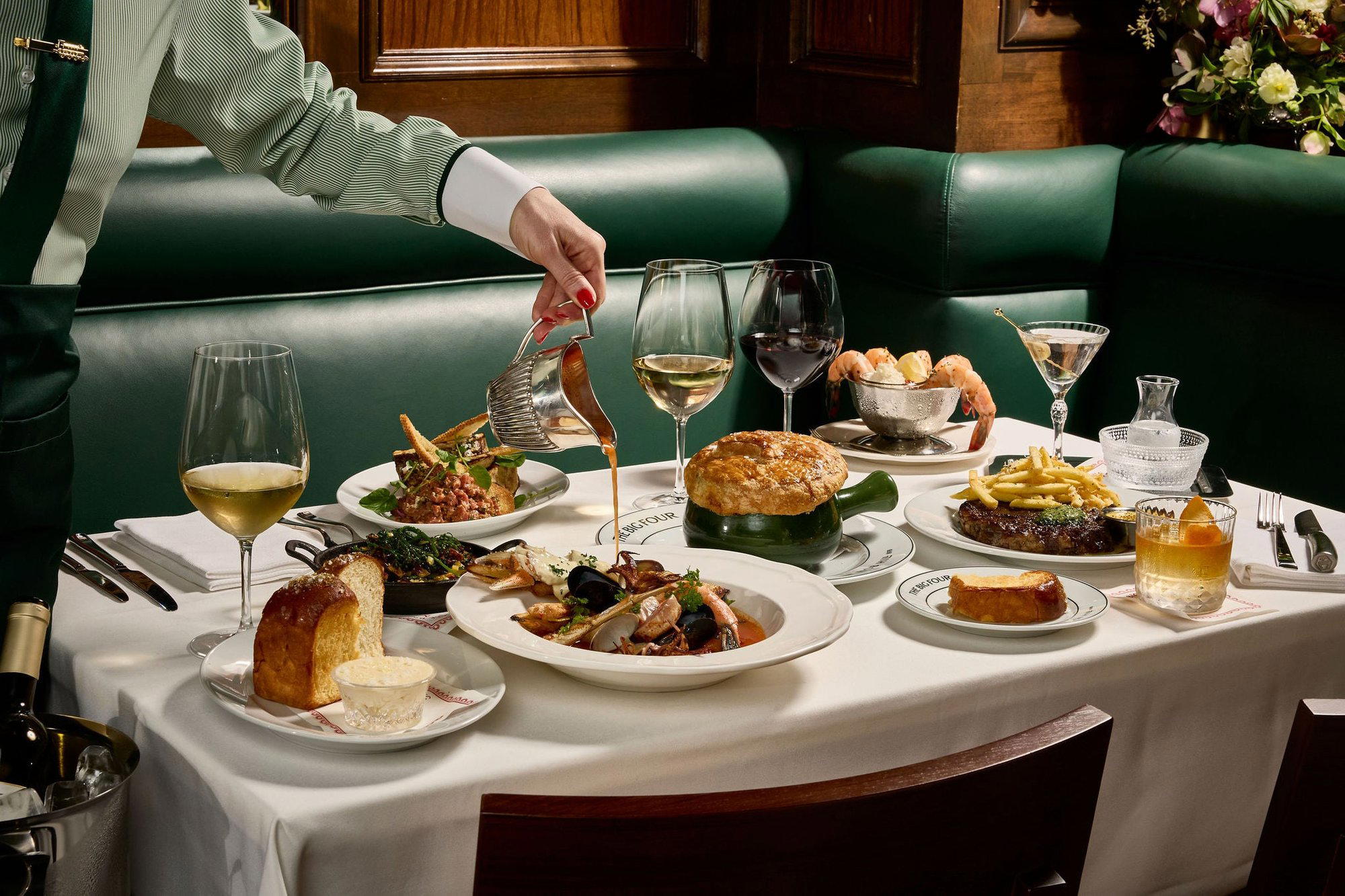
Nob Hill and the Architecture of the Old-Money Dining Room
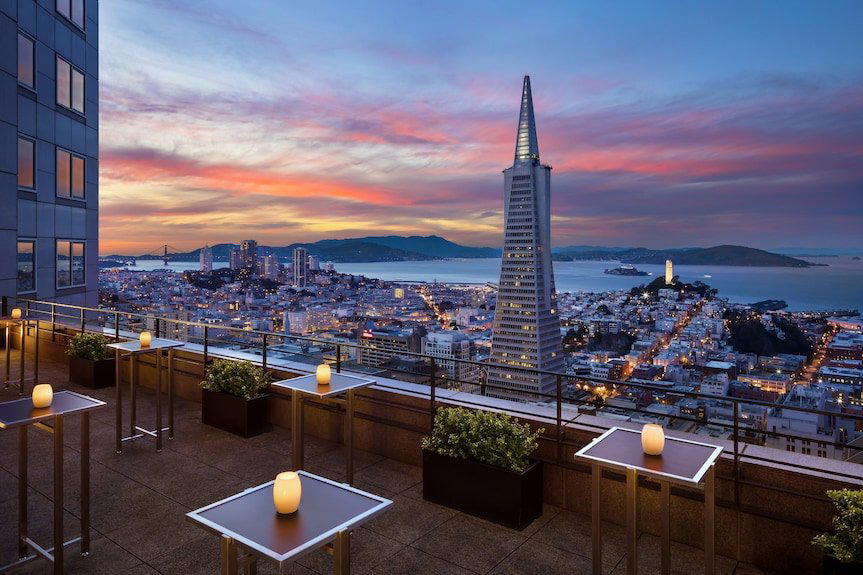
California Street's upper stretch, where the cable car strains toward the crest of Nob Hill, has always played host to a particular kind of San Francisco institution: the dining room that exists in deliberate contrast to whatever the city is doing at any given moment. When the Mission was building out its taqueria-to-tasting-menu pipeline, Nob Hill kept its leather booths. When SoMa was filling with open kitchens and fermentation jars, the rooms up here maintained their oil portraits and dark wood paneling. The Big Four, at 1075 California Street in San Francisco, belongs firmly to that tradition.
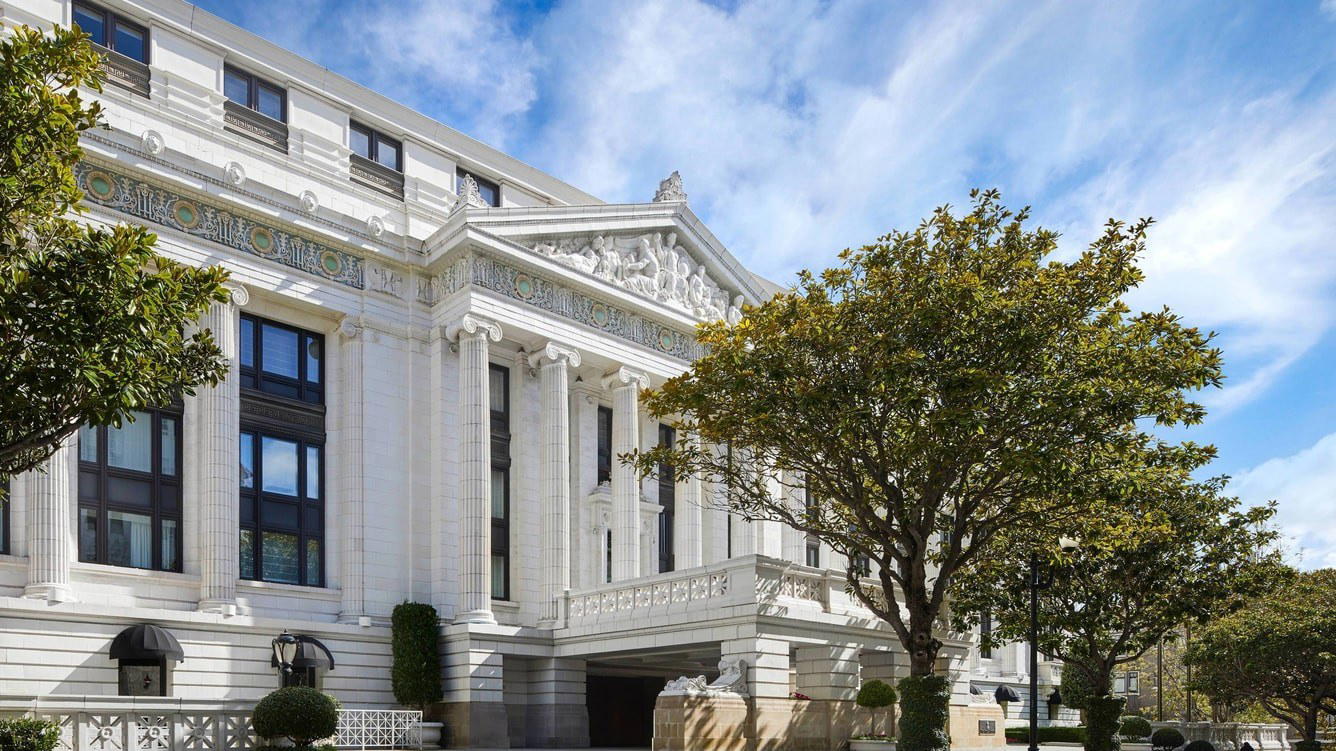
The physical environment announces the intent before any menu appears. This is a room modeled on the private clubs and railroad baron parlors that once defined civic power in San Francisco, the kind of space where the lighting is calibrated to flattery rather than Instagram, where the noise level stays low enough for conversation, and where the architecture itself signals a certain continuity with the city's pre-tech, pre-counterculture past. Approaching the entrance, you are already being asked to adjust your pace and register. The Big Four does not rush.
The Meal as a Structured Arc
American classic dining at this register follows a recognizable progression, and The Big Four works squarely within that framework rather than subverting it. The opening moves tend toward the cocktail and the nibble, the sort of start that gives the room time to settle around you. This is not the hyperactive amuse-bouche sequence of San Francisco's contemporary tasting-menu circuit, places like Lazy Bear or Saison, where the arrival rituals can feel like performance, but something more deliberate and less theatrical.
The crab Louie is among the more historically loaded dishes in the San Francisco repertoire. The recipe dates to the early twentieth century, with the city's grand hotel dining rooms among its primary custodians. Ordering it here is less a nostalgic gesture than a direct line into the culinary history of a specific institution type: the hotel restaurant that understood itself as a civic anchor. At the restaurant, it functions as the kind of first-act dish that establishes tone, cold, composed, coastal, measured.
The chicken pot pie sits at the opposite end of the temperature and weight spectrum, which is precisely where it belongs in a well-structured American meal. As a centerpiece, it reads as both comfort architecture and a test of kitchen confidence. A pot pie at this level has nowhere to hide: the pastry either holds or it does not, the filling either carries depth or it collapses into thickened blandness. Its presence on the menu signals a kitchen that is not embarrassed by the vernacular. The same impulse runs through the American classics tradition at restaurants like Emeril's in New Orleans, where the regional and the comforting are handled with equal seriousness.
Progression from crab Louie through to something as grounded as a pot pie traces a particular arc: coastal and bright to inland and warm, the kind of movement through a meal that mirrors San Francisco's own geographic identity, a city that is simultaneously a maritime port and a cold-climate inland town, depending on which microclimate you happen to be standing in.
Where The Big Four Sits in San Francisco's Dining Order
San Francisco's upper tier of restaurants has sorted itself into two broad categories over the past two decades. On one side: the progressive, technique-forward rooms, Benu, Atelier Crenn, Quince, where the meal is framed as a singular authored experience, the chef's vision the organizing principle, and the price point reflects tasting-menu economics. On the other: the hotel dining room, the club-adjacent restaurant, the room that competes on continuity and atmosphere rather than on the cutting edge of American technique.
The restaurant operates in the second category without apology. Its competitive peers are not the Michelin-chasing kitchens of SoMa and Hayes Valley but the handful of dining rooms across American cities, think comparable operations to Le Bernardin in New York City or Alinea in Chicago in the sense of category anchors, that have found their identity and held it against considerable pressure to update. In San Francisco specifically, that pressure is enormous: the city has more culinary ambition per square mile than almost any American city, and the gravitational pull toward the new is constant. Holding a room like this together across decades requires a different kind of discipline than chasing stars.
For context on how Northern California's premium restaurant range compares, the corridor between San Francisco and Napa offers an instructive comparison: The French Laundry in Napa and Single Thread Farm in Healdsburg represent the apex of the authored tasting-menu format, while Providence in Los Angeles and operations at the level of 8 1/2 Otto e Mezzo Bombana in Hong Kong or Alain Ducasse's Louis XV in Monte Carlo show how the grand-room tradition plays out internationally. The restaurant draws from the same historical lineage as those latter rooms, though its register is distinctly American and distinctly San Franciscan.
Planning the Visit
The Huntington Hotel's address at 1075 California Street puts the restaurant within walking distance of Grace Cathedral and the Flood Mansion, and a short cable car ride from Union Square. For visitors building a broader San Francisco itinerary, the hotel's Nob Hill position makes it a natural anchor point. Booking in advance is advisable for dinner, particularly on weekends; the room's capacity and its loyal local following mean tables move. The dress code orientation of the room, dark, formal, unhurried, rewards dressing accordingly, even if no code is explicitly enforced.
How It Stacks Up
Comparable venues nearby, for context on price, style, and recognition.
| Venue | Cuisine | Price | Notes |
|---|---|---|---|
| The Big FourThis venue — the venue you are viewing | Classic New American | $$$ | Not listed |
| The Harlequin | New American | $$$ | Financial District/South Beach |
| Range | Modern California-Inspired American | $$$ | Mission |
| Hillstone | Modern American with Asian influences | $$$ | North Beach |
| Bix | Modern American Supper Club | $$$ | Chinatown |
| Presidio Social Club | California Comfort Cuisine | $$$ | Presidio |
Continue exploring
More in San Francisco
Restaurants in San Francisco
Browse all →
Bars in San Francisco
Browse all →
Hotels in San Francisco
Browse all →
At a Glance
- Classic
- Elegant
- Sophisticated
- Well Known
- Business Dinner
- Special Occasion
- Date Night
- Live Music
- Hotel Restaurant
- Historic Building
- Craft Cocktails
- Local Sourcing
Dim lighting, wood paneling, live piano music, and quiet, club-like atmosphere with polished service.