Teru Sushi
A Ventura Boulevard fixture since the valley's sushi boom years, Teru Sushi occupies a particular place in Studio City's dining history: neighbourhood institution rather than destination counter. The address at 11940 Ventura Blvd places it squarely in the corridor where casual Japanese dining took root across the San Fernando Valley, and where regulars still measure newer arrivals against its long-established standard.
Pearl is the En Primeur Club membership app — saves, bookings, and concierge access live there. Same editors, same standards.
- Address
- 11940 Ventura Blvd, Studio City, CA 91604
- Phone
- +18187636201
- Website
- terusushi.com
- Directions
- Get directions
 Saves & bookings on Pearl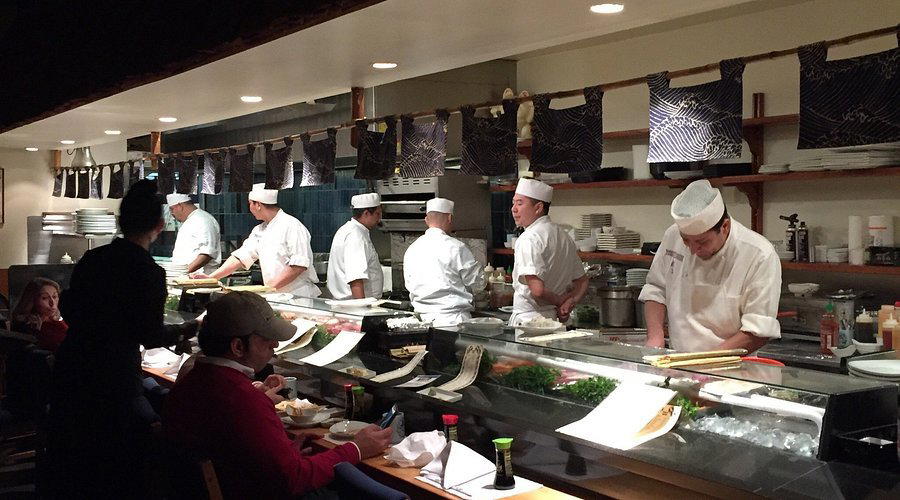
Ventura Boulevard and the Valley's Sushi Lineage
The stretch of Ventura Boulevard running through Studio City represents one of Los Angeles County's more durable dining corridors. Unlike the chef-driven tasting-menu circuit concentrated in West Hollywood or downtown, this strip built its identity on neighbourhood regulars, family-run kitchens, and the kind of consistency that keeps tables full on a Tuesday without a publicist in sight. Sushi took root here during the San Fernando Valley's expansion years, when Japanese restaurants seeded themselves across suburban Los Angeles well before omakase counters became a citywide status marker. Teru Sushi, at 11940 Ventura Blvd, belongs to that earlier wave.
The broader Ventura Boulevard dining scene still carries traces of that era. Art's Delicatessen & Restaurant has anchored the deli end of the strip for decades. Caioti Pizza Cafe occupies the California-casual corner. More recently, Feu has pulled in a younger crowd with a more contemporary format. Teru Sushi represents a different category entirely: the long-tenured neighbourhood sushi house that predates the city's current obsession with sourcing provenance and itamae credentials.
What Longevity Means on a Restaurant Strip
Survival on Ventura Boulevard over multiple decades is not incidental. The strip has absorbed the closure of dozens of restaurants that couldn't hold their regulars through economic contractions, shifting demographics, and the arrival of newer competition. The establishments that endure typically do so because they've established a rhythm with a local clientele that values reliability over novelty. In the sushi category specifically, that means a consistent fish quality standard, a menu that doesn't drift too far from what the regulars expect, and a room that feels familiar rather than provisional.
This is a different competitive logic from the one governing, say, an omakase counter in Brentwood or a chef-table format like Providence in Los Angeles, where the reputation is built on innovation, citation in named publications, and award recognition. On the neighbourhood end of the spectrum, tenure itself becomes the credential. The question for any long-running venue is whether tenure reflects genuine quality maintenance or simply the inertia of a loyal base that hasn't updated its options.
The Sushi Corridor: Where Teru Sits Relative to Its Peers
Studio City's Japanese dining options have grown more layered in recent years. Iroha Sushi occupies a similar neighbourhood-institution position on the boulevard. Katsu-Ya introduced a more design-conscious format that pushed the category slightly upmarket. Together these venues define a local comparable set that operates below the reservation-required, premium-omakase tier represented nationally by counters covered alongside Atomix in New York City or regionally by the tasting-format restaurants increasingly crowding the west side of Los Angeles.
Within that local comparable set, differentiation tends to come from consistency of fish rotation, the breadth of the menu between traditional nigiri and cooked preparations, and the degree to which the kitchen has absorbed or resisted the California-roll-and-special-roll format that homogenised much of suburban American sushi from the 1990s onward. Where a venue like Teru sits along that spectrum is the more interesting editorial question than any single menu item.
The Evolution of a Neighbourhood Sushi House
Sushi restaurants in American suburban markets have followed a legible arc over the past forty years. The first generation opened to serve Japanese-American communities and a narrow slice of adventurous non-Japanese diners, often running tight menus focused on traditional preparations. The second phase brought broad Americanisation: specialty rolls, cooked options, teriyaki adjacencies, and expanded sake lists designed to hold tables longer. A third shift, underway now, has seen some neighbourhood operations begin incorporating sourcing transparency, seasonal fish notes, and formats borrowed from higher-end Japanese dining, even at mid-market price points.
Long-running venues on Ventura Boulevard have had to decide where they sit in that arc. Those that didn't adapt at all found their regulars slowly shifting toward newer operations with more current formats. Those that adapted too aggressively sometimes shed the loyal customer base that sustained them through lean years. The more durable middle path has been incremental evolution: adding to the menu without wholesale reinvention, updating the room without alienating the regulars who remember an earlier version. This is the evolutionary logic that governs most neighbourhood institutions, whether in Studio City or anywhere else the strip-mall sushi format took hold. The parallel in fine dining terms plays out differently: tasting-format restaurants like The French Laundry in Napa or Alinea in Chicago reinvent through concept; neighbourhood sushi houses reinvent through quiet menu and room adjustments that most diners notice only in retrospect.
Situating Teru in the Wider California Sushi Picture
California's sushi market is segmented more sharply now than at any earlier point. At the upper end, omakase-only counters in West Hollywood and Beverly Hills price against premium Japanese destinations globally, and their reservation mechanics resemble those of Le Bernardin in New York City or Single Thread Farm in Healdsburg more than they resemble anything on Ventura Boulevard. At the lower end, fast-casual and supermarket sushi has commoditised the basic California roll to near-irrelevance as a differentiator.
The middle tier, where neighbourhood sushi houses like Teru operate, has consequently become greater pressure-tested segment: squeezed from above by consumers who now have access to genuinely serious omakase and squeezed from below by the convenience of grab-and-go options. Venues in this bracket that have survived do so by offering something neither extreme provides: a sit-down room with familiar faces, a menu broad enough for the group that includes non-sushi eaters, and a price point that doesn't require advance financial planning. That's a specific and durable value proposition, even if it's not one that generates award citations or columns in named food publications.
Planning Your Visit
Teru Sushi is located at 11940 Ventura Blvd in Studio City, positioned in the dense mid-boulevard dining stretch that also contains most of the neighbourhood's other long-running independents.
Recognition Snapshot
Comparable venues nearby, for context on price, style, and recognition.
| Venue | Cuisine | Price | Notes |
|---|---|---|---|
| Teru SushiThis venue — the venue you are viewing | Authentic Japanese Sushi | $$$ | Not listed |
| Katsu-Ya | Traditional Japanese Sushi | $$$ | Studio City |
| Lala's Argentine Grill | Argentine Steakhouse | $$$ | Studio City |
| Talesai | Classic Thai | $$$ | Studio City |
| Yen Izakaya & Sushi | Japanese Izakaya & Sushi | $$$ | Studio City |
| The Six Restaurant | Rustic American Gastropub | $$ | Studio City |
Continue exploring
More in Studio City
Restaurants in Studio City
Browse all →
Bars in Studio City
Browse all →
Hotels in Studio City
Browse all →
Wineries in Studio City
Browse all →
At a Glance
- Lively
- Cozy
- Intimate
- Date Night
- Casual Hangout
- Open Kitchen
- Sake Program
- Sustainable Seafood
- Garden
Current opening hours
- Monday
- 5–9 PM
- Tuesday
- 5–9:30 PM
- Wednesday
- 5–9:30 PM
- Thursday
- 5–9:30 PM
- Friday
- 5–10:30 PM
- Saturday
- 5–10:30 PM
- Sunday
- 5–9:30 PM
Hours can change for holidays and private events. Last verified .
Warm and lively ambiance with a small Japanese garden, long sushi bar, and distinct dining areas creating an intimate atmosphere.