
Tabelog 100 #63
Our verdict
Tempura Dokoro Hirao Akurosu ten brings Fukuoka’s everyday tempura culture into a sharper frame: counter seating, fish-led frying, and a Tabelog Tempura 100 selection in 2025. It is the kind of low-price, high-turnover meal that explains why Tenjin’s underground dining floors matter as much as the city’s headline restaurants.

Pearl is the En Primeur Club membership app, where members save venues, book tables and use the concierge.
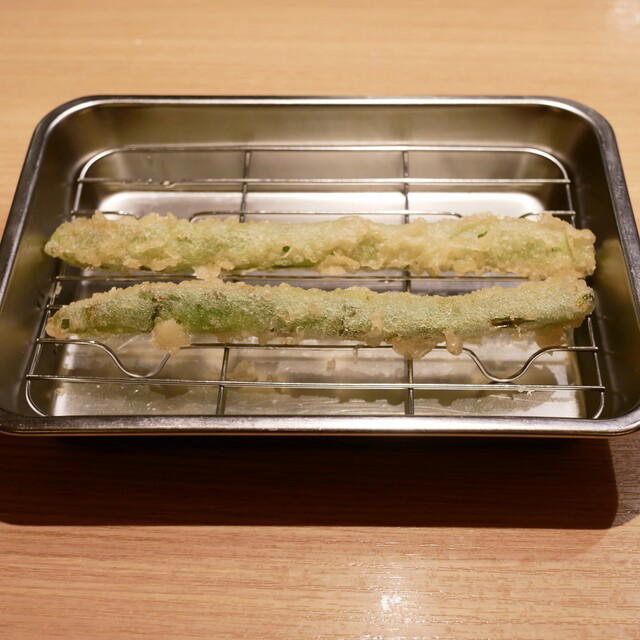
The menu
What to order
- お好み定食 (Okonomi set meal)
- 天ぷら定食 (Tempura teishoku)
- あじわい定食 (Ajiwai set)
- いかの塩辛 (squid shiokara)
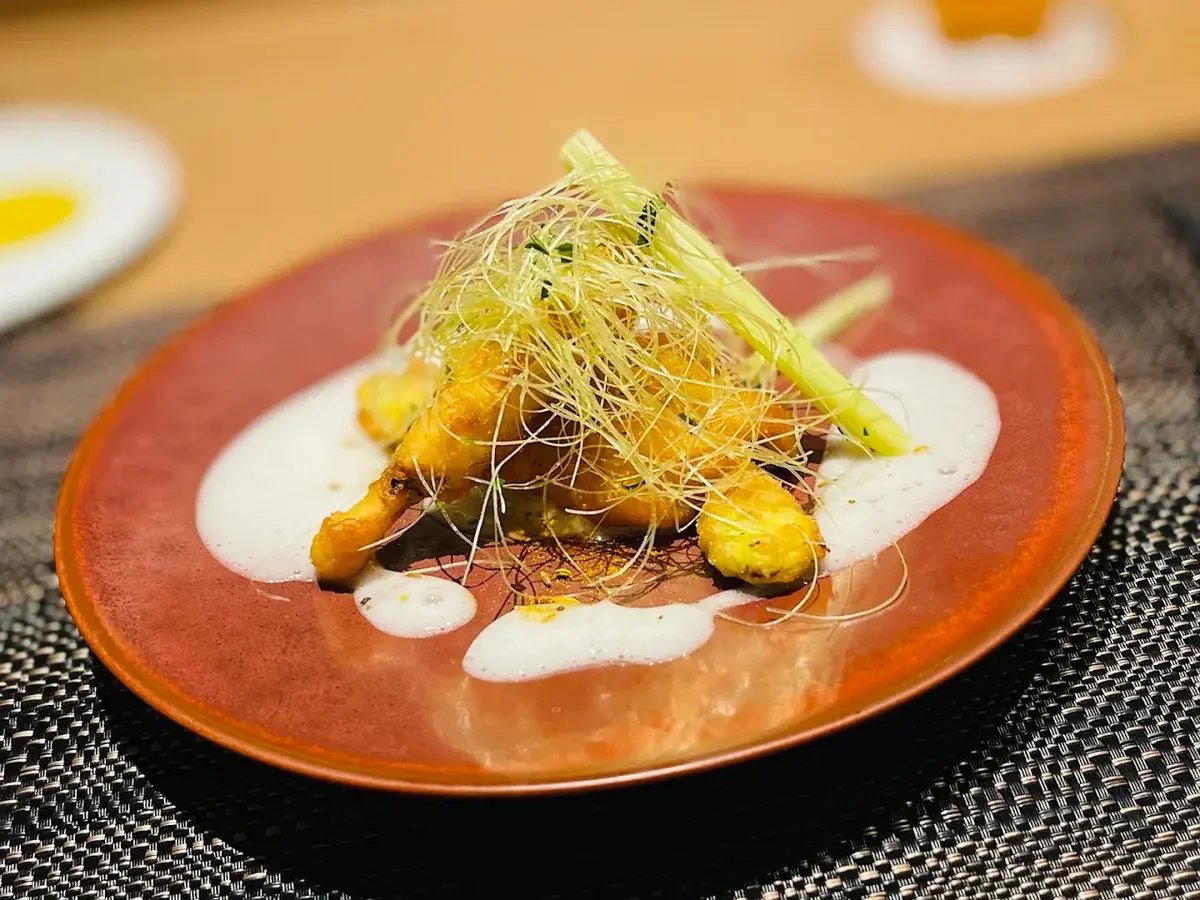
In Fukuoka, the city’s dining rhythm often shifts from destination meals to quick decisions: office workers, shoppers, families, and solo diners moving through compact restaurant zones where counters do the serious work. Tempura fits naturally here. The appeal is immediacy, not ceremony: batter, oil, rice, sauce, and the short interval between fryer and plate. Tempura Dokoro Hirao Akurosu ten sits in that practical urban tradition, with a tempura identity closer to Fukuoka’s daily eating culture than to hushed special-occasion dining.
Tempura in Japan often splits two ways. Formal counters turn frying into a long-course performance, priced and paced around seasonal progression. Local specialists focus on speed, repetition, and value, with technical judgment visible in turnover rather than explained at length. Fukuoka has a strong appetite for the second mode. Its best casual restaurants often earn loyalty by doing one narrow thing with discipline, from frying to other everyday formats. For a wider map of that range, Our full Fukuoka restaurants guide is the useful companion.
Tempura in Fukuoka's everyday dining circuit
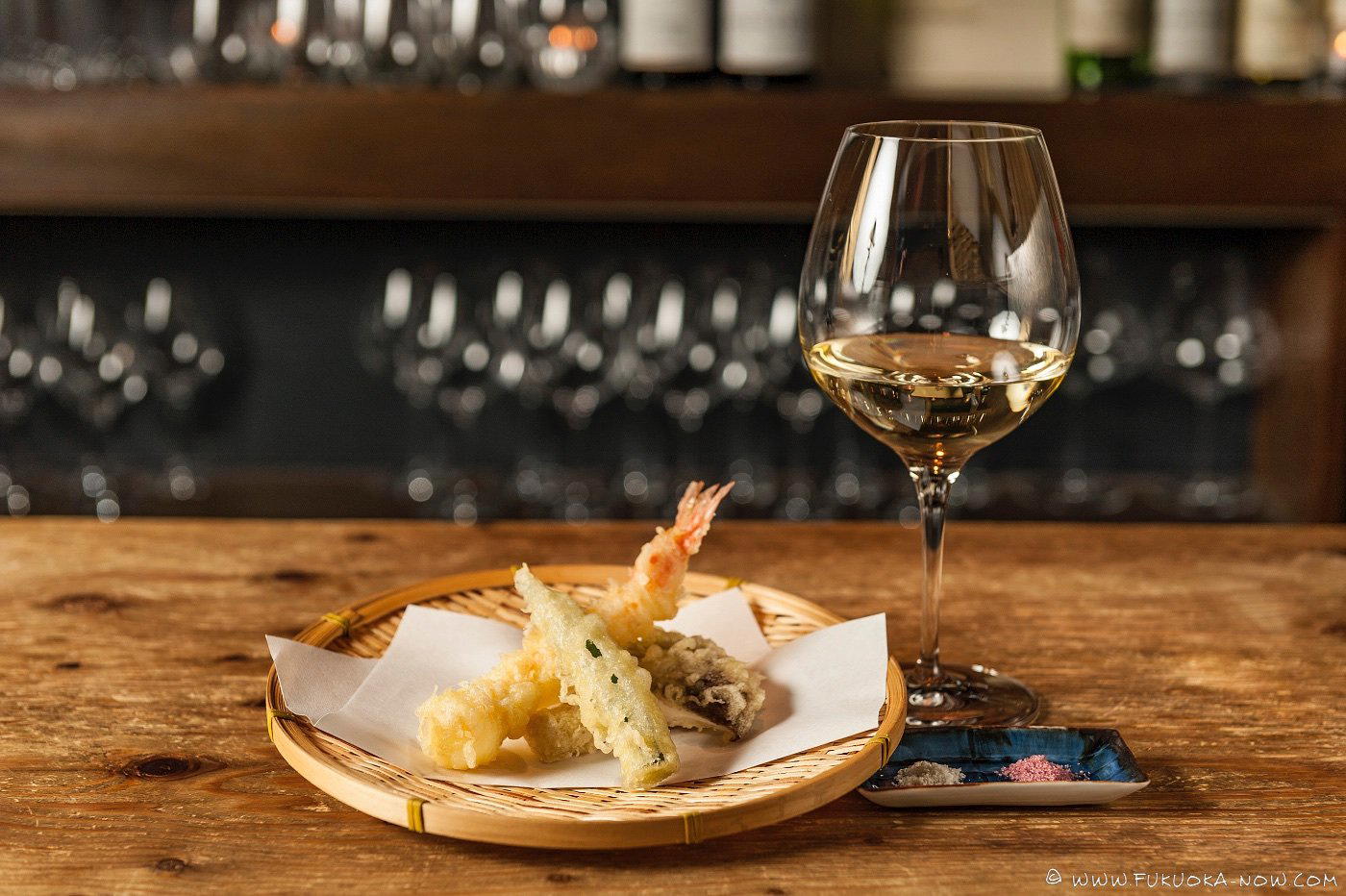
The defining signal is specialization. The restaurant is categorized as tempura, placing the meal in a clear Japanese register: frying, rice-driven pacing, and a format where timing matters. Its Tabelog score of 3.66 and selection for Tabelog 100 - Tempura - 2025 give it an external marker in a category where consistency matters more than novelty. That recognition matters because tempura is judged not only by flavor, but by control: batter, oil, sequence, and the interval between cooking and eating.
The better comparison is not grand tasting-menu tempura, but Fukuoka’s disciplined casual specialists. Other local dining rooms work adjacent everyday lanes, while the city also rewards tight concepts outside Japanese formats. That is the scene: compact restaurants, clear propositions, and enough repeat business to make precision non-negotiable. Tempura Dokoro Hirao Akurosu ten belongs in that conversation because its appeal is direct rather than decorative.
Tempura is unforgiving. Batter that sits too long loses purpose; tired oil weighs down the meal; mishandled ingredients have nowhere to hide. A counter-style meal reduces the distance between cooking and eating, the category’s great advantage. The room needs no theatrical staging. The point is sequence, service, and how well a kitchen keeps frying controlled across a full day of diners.
Why the recognition matters more at this price tier
A Tabelog 100 selection means different things by category. In expensive sushi or kaiseki, recognition often confirms what scarcity and price already imply. In casual tempura, it is more revealing. Accessible restaurants rely on volume, repeat visits, and minimal friction; they cannot hide behind long menus or luxury cues. Selection for Tabelog 100 - Tempura - 2025 places Tempura Dokoro Hirao Akurosu ten in a national conversation while keeping it local and accessible.
That contrast is useful in Fukuoka. Riki Hanten sits in a much higher spending bracket, while Tonkatsu Wakaba occupies another everyday-frying category. Shokuji to Sake Dokoro Makoto reads more like a casual meal-with-drinks proposition, and WAN STEAK HOUSE or Shin-shin Nishinakasu shop speak to different appetites. The lesson is not that one tier is superior. Fukuoka’s strength is range: a diner can spend heavily, eat quickly, drink locally, or focus on one craft, often within a compact urban plan.
The restaurant reads as part of Fukuoka’s current dining machine rather than as a nostalgia play. This is the city at its most practical: accessible meals, clear formats, focused propositions, and reliable turnover. For travelers, that makes the experience legible. It shows how Fukuoka eats between appointments, shopping routes, and evening plans, not only on special-occasion nights.
How to read it within a Fukuoka itinerary
Use this kind of restaurant as a calibration meal. Fukuoka’s visitor reputation often starts with ramen, yatai, and seafood, but its daily dining culture is broader. A tempura specialist gives a fast read on local expectations: frying treated as craft, value kept visible, and the meal kept focused. It also suits a day built around Fukuoka rather than one destination reservation.
The surrounding editorial map sharpens the decision. Other Fukuoka dining rooms point to different modes of Japanese eating, while the broader travel layer includes Our full Fukuoka hotels guide, Our full Fukuoka bars guide, Our full Fukuoka wineries guide, and Our full Fukuoka experiences guide. Those links matter because Fukuoka rewards clustering: lunch, shopping, a bar, and a hotel transfer can fit one compact urban plan.
For readers comparing Japanese casual specialists more broadly, the national pattern is instructive. Across Japan, single-category dining often succeeds when the core product is handled with confidence, the format is easy to understand, and the value proposition is clear. The same idea travels beyond Japan as well: narrow formats work when they are disciplined, repeatable, and direct.
The verdict is simple. Tempura Dokoro Hirao Akurosu ten is not the place for luxury tempura theater; it is the place to understand why Fukuoka’s casual specialists deserve serious attention. The 2025 recognition supplies trust, the tempura format supplies immediacy, and the Fukuoka setting supplies urban context. In a city where value and craft often sit closer together than outsiders expect, that combination is the story.
Frequently asked questions
Where is Tempura Dokoro Hirao Akurosu ten in Fukuoka?
Fukuoka.
What should I budget for a meal at Tempura Dokoro Hirao Akurosu ten?
Pricing at Tempura Dokoro Hirao Akurosu ten is listed as - JPY 999 - JPY 999, with dinner and lunch both listed as - JPY 999.
How hard is it to get a table at Tempura Dokoro Hirao Akurosu ten?
Specific reservation and seating details are not provided here. Its Tabelog Tempura 100 selection for 2025 and Tabelog score of 3.66 point to notable recognition in Fukuoka.
What has Tempura Dokoro Hirao Akurosu ten built its reputation on?
The restaurant’s profile is built on tempura. Recognition in Tabelog’s Tempura 100 for 2025 gives that reputation a clear external marker.
Can Tempura Dokoro Hirao Akurosu ten adjust for dietary needs?
Those details are not provided here. Check the venue's official channels for the latest details.
Comparison Snapshot
Comparable venues by category and price.
| Venue | Cuisine | Price | Awards | Notes |
|---|---|---|---|---|
| Tempura Dokoro Hirao Akurosu tenThis venue (the venue you are viewing) | Casual Tempura Specialist | $10–20 | Tabelog 100 #63 | Not listed |
| Miyake | Traditional Hakata Udon | $1–10 | Tabelog 100 #74 | Hakata |
| Tempura Dokoro Hirao Daimyou ten | Casual Tempura Specialist | $10–20 | Tabelog 100 #30 | Chūō |
| Bomber Kitchen Yakuin honten | Japanese-style Western set meals (yoshoku) | $10–20 | Tabelog 100 #22 | Chūō |
| SACHiA Beef stroganoff | Beef stroganoff-focused Yoshoku (Japanese-style Western) | $10–20 | Tabelog 100 #41 | Higashi |
| Tanakadashiki Seafood Shokudo Uochu | Tanakadashiki-style seafood set-meal diner | $20–30 | Tabelog 100 #71 | Chūō |
Recognition history
Dated appearances from independent guides and award organizations, with the underlying list record or original source where available.
Tabelog 100 #63 · No. 63
Tabelog · Tabelog 100 - Tempura - 2025
Continue exploring
More in Fukuoka
Restaurants in Fukuoka
All restaurants in Fukuoka →
Details
- Lively
- Casual
- Solo
- Family
- Casual Hangout
- After Work
- Group Dining
- Chefs Counter
- Standalone
- Local Sourcing
- Set Menu
- A La Carte
- Counter Dining
- Sake
- Shochu
- Pescatarian Friendly
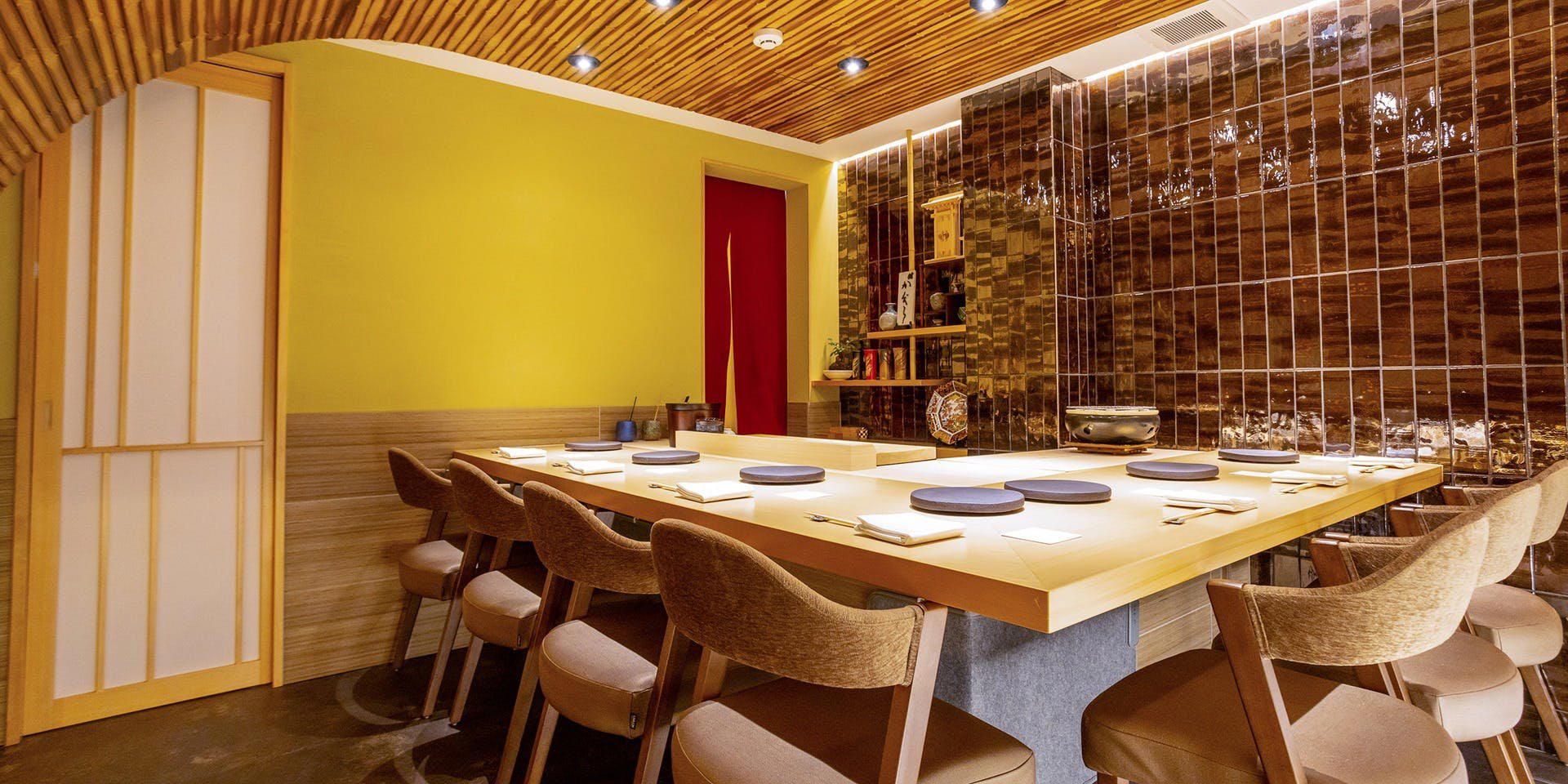
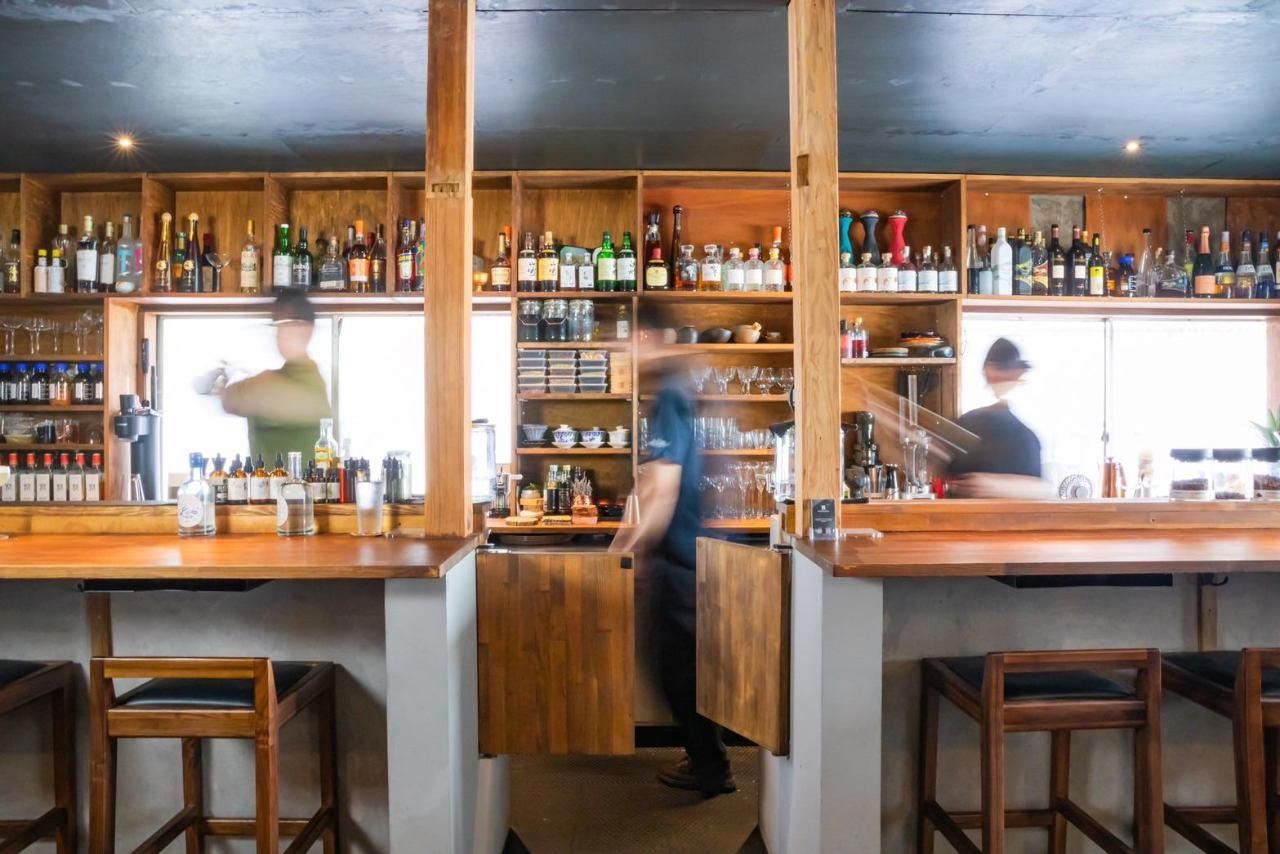
Bright, functional underground food-court style space with a bustling counter, quick turnover, and a focus on efficient service over décor.