Tam o Shanter
One of Los Angeles's oldest continuously operating restaurants, Tam o Shanter on Los Feliz Boulevard has anchored the city's dining scene since 1922. The Lawry's-family institution is known for its prime rib carving tradition and Tudor-style dining room, representing a strand of American restaurant keeping that prioritizes consistency and longevity over trend cycles. A counterpoint to the city's newer wave of concept-driven dining.
 Discover on Pearl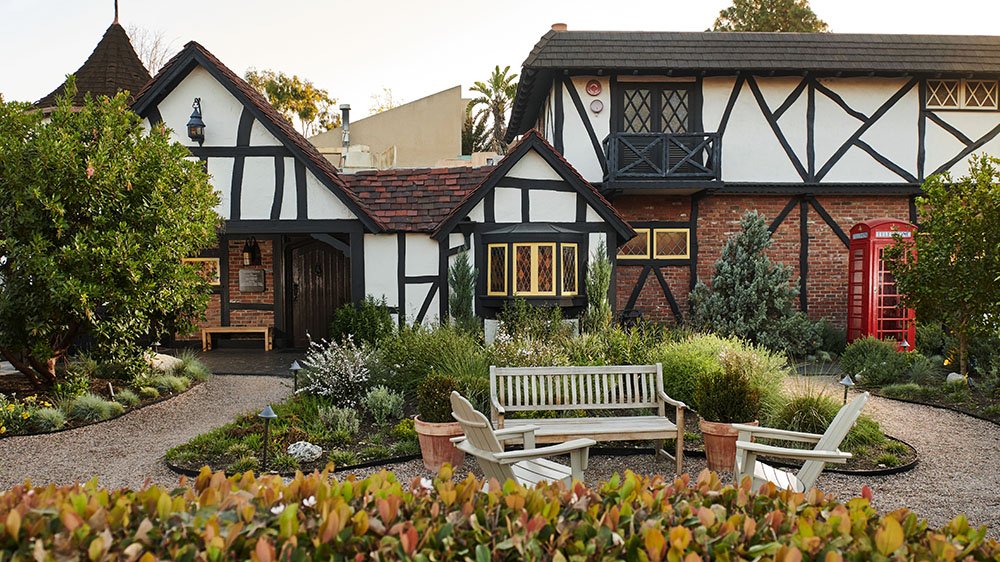
A Century of Consistency on Los Feliz Boulevard
Los Angeles has always been faster to demolish than to preserve, which makes the endurance of certain institutions quietly instructive. Tam o Shanter, at 2980 Los Feliz Blvd, has been operating since 1922, placing it among the oldest continuously running restaurants in the city. That kind of longevity in a market that churns through dining concepts at speed is not accidental. It reflects a relationship with regulars, a neighbourhood, and a format that has remained legible across generations of Los Angeles life. For context on where Tam o Shanter sits within the wider LA dining spectrum, our full Los Angeles restaurants guide maps the city's dining character across every tier and tradition.
The Tudor-revival building itself is a period artefact that would be hard to replicate or justify constructing today. In a city where most dining rooms are designed with a five-to-seven-year aesthetic lifecycle in mind, Tam o Shanter's physical character predates that logic entirely. The room belongs to a tradition of American supper club dining that treated the dining room as permanent rather than provisional, an argument made in dark wood, low ceilings, and a fireplace that anchors rather than decorates.
Longevity as a Sustainability Argument
The conversation around sustainability in restaurants has, in recent years, focused heavily on sourcing credentials, supply chain transparency, and waste reduction programmes. Those are legitimate and important frames. But there is a separate, less-discussed sustainability argument that institutions like Tam o Shanter embody by default: the conservation of built environment, culinary tradition, and community infrastructure.
A restaurant that has operated for over a century has not required the energy expenditure of a full build-out, re-brand, or redesign cycle that most modern dining concepts absorb every few years. The kitchen team, built over decades rather than assembled for a launch, operates with institutional knowledge that reduces the systemic waste of constant staff turnover. The supplier relationships that come with a century of operation tend to be more stable and accountable than those assembled quickly by a new opening. These are not the metrics that appear on a sustainability report, but they are real.
Compare this with the newer generation of technically accomplished LA restaurants, many of which do excellent sourcing work. Providence, one of the city's most decorated seafood restaurants, has built a serious sourcing programme around responsible fishing. Single Thread Farm in Healdsburg takes the farm-to-table argument to its logical endpoint with an on-site farm supplying the kitchen. These are deliberate, articulated positions. Tam o Shanter's sustainability case is more structural than philosophical, but no less real for that.
The Prime Rib Tradition and What It Represents
Tam o Shanter is operated by the Lawry's family, the same ownership behind Lawry's The Prime Rib on La Cienega, and that lineage matters for understanding the kitchen's focal point. The tableside prime rib carving format that Lawry's popularised in Los Angeles is one of the more durable American dining rituals, predating the contemporary fashion for theatrical service by decades. At Tam o Shanter, the prime rib sits at the centre of the menu, carved to order in the manner that defines the Lawry's tradition.
This format is not without its critics in a moment when American dining has largely moved away from the carving trolley toward more ingredient-diverse, technique-led menus. The newer wave of LA dining, represented by venues like Kato with its New Taiwanese tasting format, Hayato with its kaiseki precision, or Somni with its molecular ambition, represents a different set of priorities entirely. But the prime rib carving tradition answers a different question. It is not asking what is possible in a kitchen. It is asking what a particular community wants to repeat, week after week, across decades.
That is a coherent and legitimate dining argument, even if it sits outside the critical discourse that tends to cluster around Michelin recognition and avant-garde technique. For readers interested in where that avant-garde tradition runs in Los Angeles, Osteria Mozza represents the Italian end of the city's serious restaurant culture, while nationally, Alinea in Chicago and Le Bernardin in New York City define the upper register of American fine dining ambition.
The Los Feliz Neighbourhood Context
Los Feliz has evolved considerably since 1922, moving through working-class, bohemian, and now firmly gentrified phases without losing its neighbourhood-rather-than-destination character. The strip of Los Feliz Boulevard where Tam o Shanter sits is not a dining corridor in the way that Melrose or Beverly Boulevard have been, which has probably protected the restaurant from the competitive pressure that comes with high foot-traffic blocks. It draws a local regular base alongside visitors who make the trip specifically for the restaurant, a booking pattern more common to the older, institution-style model than to the buzzier openings further west.
For a broader read on the city's hospitality infrastructure, our full Los Angeles hotels guide, our full Los Angeles bars guide, and our full Los Angeles experiences guide cover the city's wider offerings. Our full Los Angeles wineries guide is relevant for readers interested in the regional wine picture that pairs with the city's dining scene.
Where Tam o Shanter Sits in the Broader American Picture
Restaurants with century-plus operating histories exist in most major American cities, and they tend to occupy a specific critical blind spot: too established to be interesting to trend coverage, too local to draw the international attention that falls on decorated fine dining. Emeril's in New Orleans occupies a comparable position in a different city, carrying decades of local authority without the ongoing critical spotlight. Lazy Bear in San Francisco and The French Laundry in Napa represent the decorated end of Northern California dining for comparison. Further afield, Atomix in New York City and 8 1/2 Otto e Mezzo Bombana in Hong Kong define the premium end of their respective markets.
Tam o Shanter is not competing in that tier and has never positioned itself to do so. Its competitive set is the group of multigenerational American restaurants that hold their communities together through consistency, through a room that feels genuinely historical rather than designed to feel historical, and through a menu format that delivers on its own terms without apology.
Planning Your Visit
Tam o Shanter is located at 2980 Los Feliz Blvd, Los Angeles, CA 90039, in the Los Feliz neighbourhood. The restaurant draws on its long-standing local following, and while it is not a bookings-intensive property in the way of the city's tasting menu restaurants, visiting on a weekend evening without advance planning carries some risk during busier periods. Given the sparse operational data currently confirmed for this property, readers should check current hours, reservation availability, and menu details directly with the restaurant before visiting, as service formats and hours for long-running institutions can shift without wide press coverage. Allergy and dietary queries are leading directed to the restaurant directly, where the kitchen team can confirm specific accommodations.
Frequently Asked Questions
- What do people recommend at Tam o Shanter?
- The prime rib is the dish most closely associated with Tam o Shanter, reflecting the Lawry's family ownership tradition that built its Los Angeles reputation on tableside carving formats. The restaurant's place in the Lawry's lineage gives the kitchen a specific reference point that distinguishes it from the broader range of contemporary LA restaurants including the city's newer tasting menu formats at venues like Kato or the awarded seafood programme at Providence.
- Do they take walk-ins at Tam o Shanter?
- Tam o Shanter has historically accommodated walk-in diners more readily than the city's reservation-intensive fine dining properties, though this is subject to day and time. Los Angeles dining in general has become more reservation-led post-pandemic, so contacting the restaurant ahead of arrival is advisable, particularly for groups or weekend evenings. For reference, this is a materially different booking environment from LA's tasting menu tier, where advance booking windows of weeks to months are standard.
- What do critics highlight about Tam o Shanter?
- Critical attention to Tam o Shanter tends to focus on its longevity and its role as one of Los Angeles's oldest continuously operating restaurants rather than on technical cuisine innovation. The Tudor-revival room, the Lawry's prime rib heritage, and the consistent neighbourhood institution character are the recurring reference points. It occupies a different critical register from the city's Michelin-tracked restaurants such as Hayato or Somni, where technique and tasting menu construction drive the conversation.
- Is Tam o Shanter allergy-friendly?
- Allergy accommodation details for Tam o Shanter are not confirmed in our current data. Readers with specific dietary requirements should contact the restaurant directly before booking, as policies and kitchen capabilities are leading confirmed at source. This applies to any Los Angeles dining venue where the menu format and kitchen setup are not publicly documented in detail.
- How does Tam o Shanter's history connect to Lawry's The Prime Rib?
- Both Tam o Shanter and the better-known Lawry's The Prime Rib on La Cienega Boulevard are operated by the same family ownership, making Tam o Shanter one of the longer-running expressions of a Los Angeles dining lineage that helped define the tableside carving format in the city. Operating since 1922, Tam o Shanter predates even Lawry's The Prime Rib, which opened in 1938, placing it at the origin point of that culinary tradition in Los Angeles rather than as a secondary expression of it.
Cuisine Context
A quick look at comparable venues, using the data we have on file.
| Venue | Cuisine | Awards | Notes |
|---|---|---|---|
| Tam o Shanter | This venue | ||
| Kato | New Taiwanese, Asian | Michelin 1 Star | New Taiwanese, Asian, $$$$ |
| Hayato | Japanese | Michelin 2 Star | Japanese, $$$$ |
| Vespertine | Progressive, Contemporary | Michelin 2 Star | Progressive, Contemporary, $$$$ |
| Camphor | French-Asian, French | Michelin 1 Star | French-Asian, French, $$$$ |
| Gwen | New American, Steakhouse | Michelin 1 Star | New American, Steakhouse, $$$$ |
Need a table?
Our members enjoy priority alerts and concierge-led booking support for the world's most difficult tables.
Get Exclusive Access