
Takamime brings Miyazaki-style chicken cookery into the slower ritual of an evening built around skewers, regional dishes, and drink. Its 2025 selection for Tabelog 100 in chicken cuisine, 42-seat room, counter and tatami formats, and focus on shochu give it a clear place in Japan’s serious poultry dining tier without pushing into formal tasting-menu territory.
Pearl is the En Primeur Club membership app — saves, bookings, and concierge access live there. Same editors, same standards.
- Address
- 3-35 Takamatsucho, Miyazaki, 880-0003, Japan
- Phone
- +81 985-61-7477
- Website
- tabelog.com
 Saves & bookings on Pearl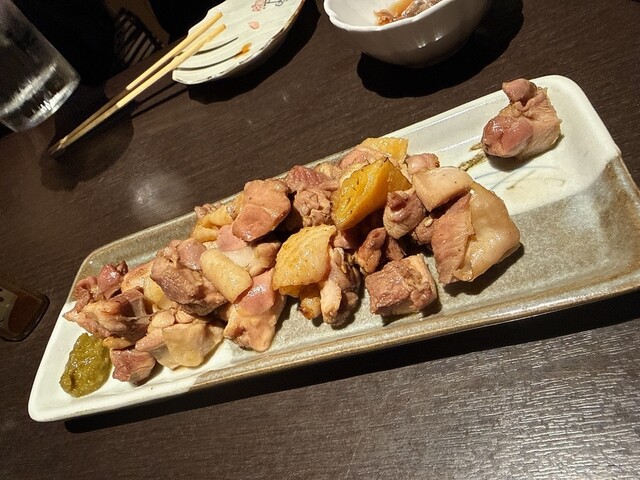
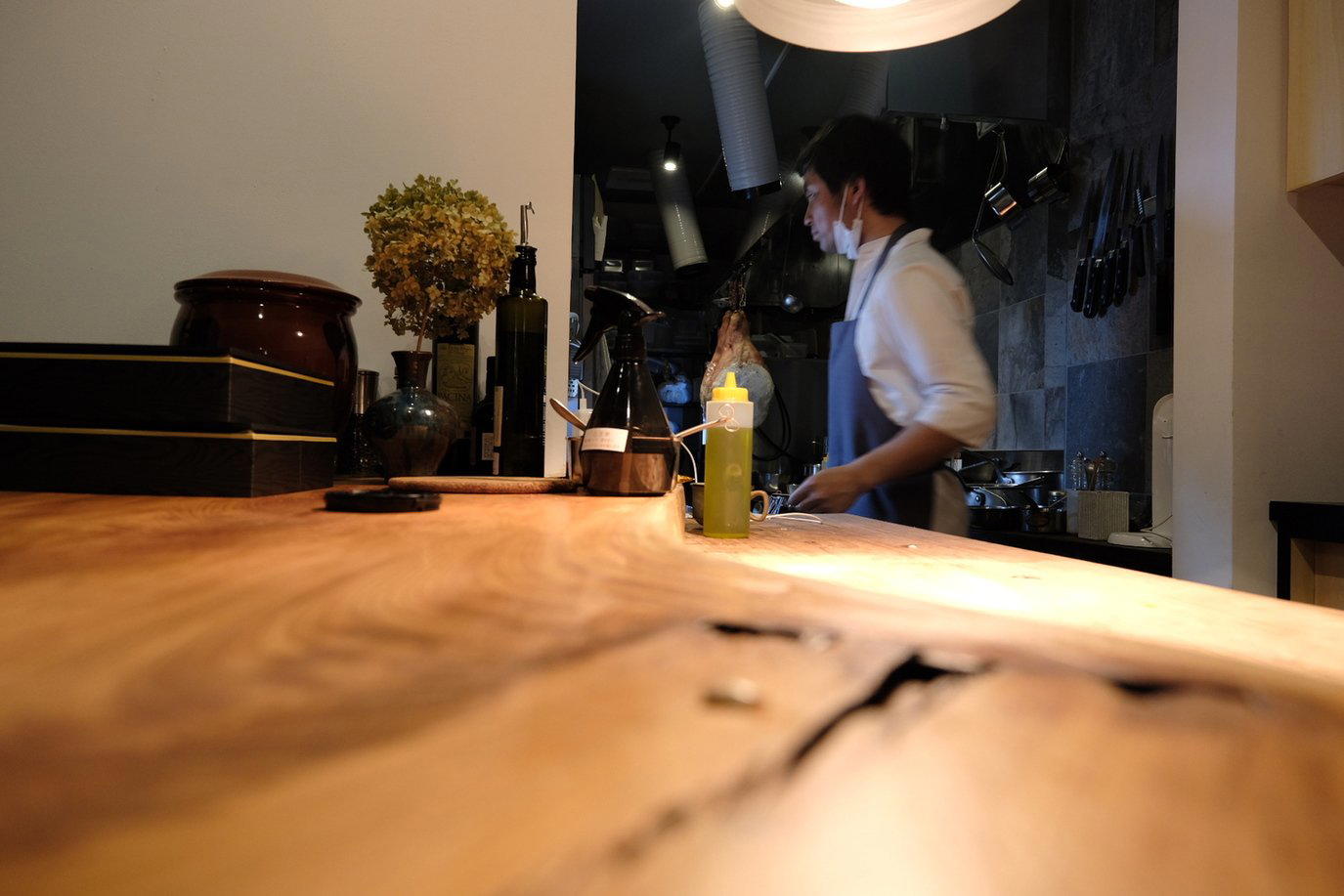
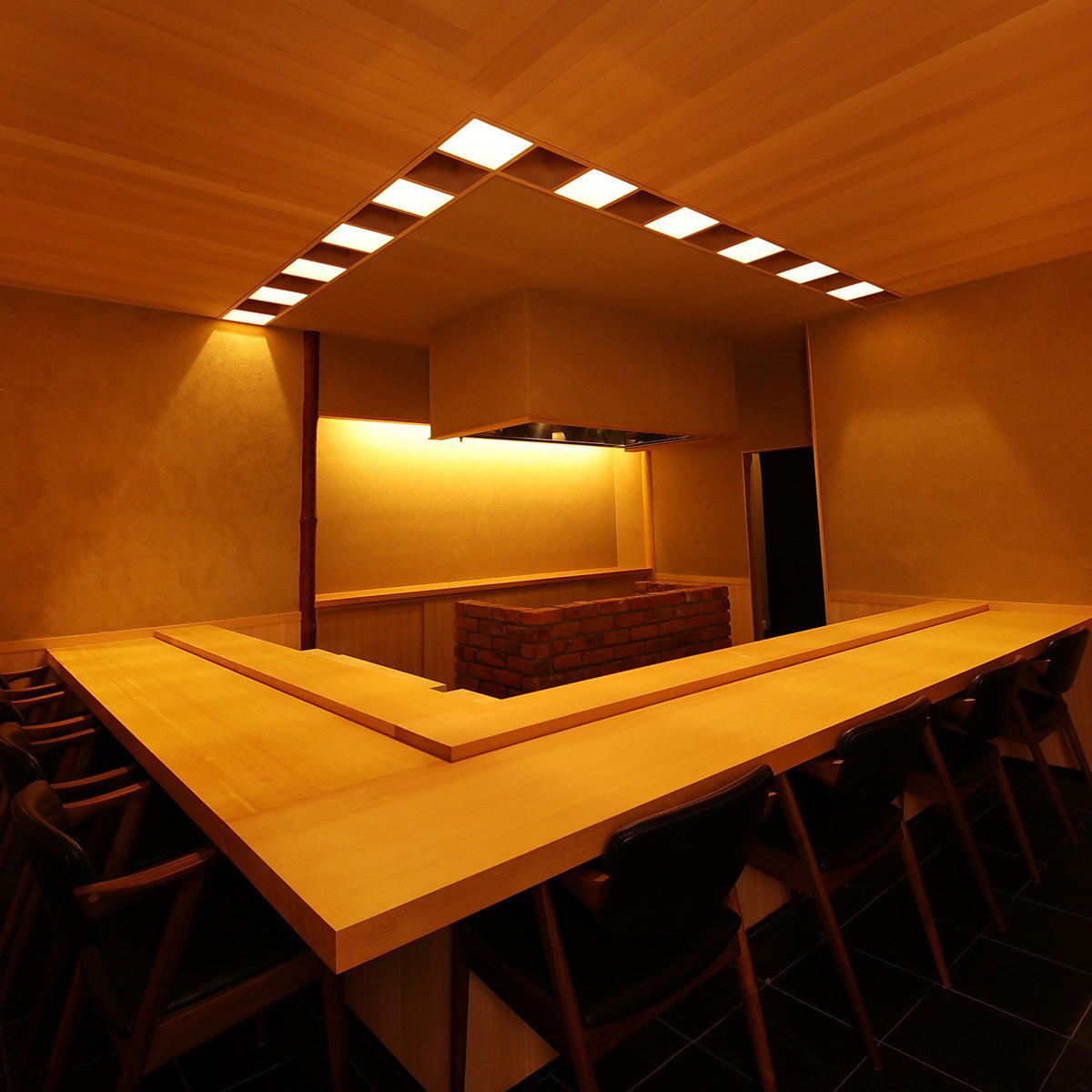
The room signals the meal’s rhythm before the first order: counter seating for close-range grill watching, tatami and sunken seating for longer drinking tables, and private rooms for groups that treat chicken cookery as an evening rather than a quick stop. In Japan, serious poultry restaurants sit between izakaya looseness and chef-led counter discipline. Takamime belongs to that middle register, where the customs matter: order in rounds, drink alongside the grill, and let regional chicken dishes do the work that beef or sushi often performs in more famous dining categories.
Chicken as the centre of the evening, not a supporting dish
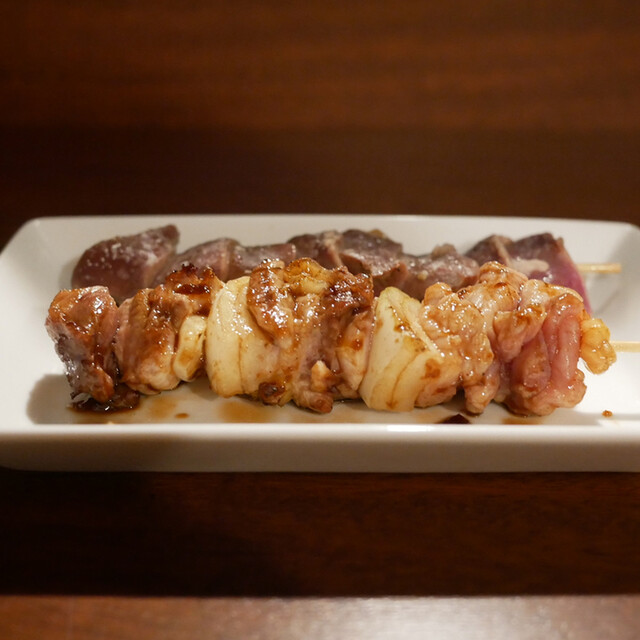
Japan’s chicken restaurants reward attention to pacing. Yakitori can be a sequence of skewers; regional chicken cookery can broaden that sequence into shared plates, rice-friendly dishes, and drinking food built for shochu. Takamime’s public classification, chicken dishes, yakitori, and regional cuisine, places it in that broader tradition rather than a narrow skewer-only format. That distinction matters for travellers deciding how to use the night: this is not a snack before a second dinner, but a poultry-led meal with enough range for counter diners, families, and small groups.
The clearest external signal is its selection for Tabelog 100 - Chicken cuisine - 2025, a category that separates poultry specialists from the wider field of casual izakaya. Its Tabelog score of 3.63 also puts it in a competitive bracket where consistency and local demand matter more than spectacle. In a country where chicken cooking is often judged through repetition, heat control, and drink compatibility, that recognition is a useful filter. It says less about luxury and more about category focus.
The drinks programme reinforces the dining ritual. Sake, shochu, wine, and a particular emphasis on shochu point toward the southern Japanese habit of letting distilled spirits sit beside grilled and regional dishes. Miyazaki is shochu country, and that context changes the table. The meal is less about a linear tasting arc than about managing smoke, salt, fat, and pour size over time. For readers building a wider Japan itinerary, that makes Takamime a useful counterpoint to noodle-led stops such as Chikusei Honten, Furukawa Udon, and Furusato Udon, where speed, broth, and texture define the meal more than drinking tempo.
The ritual is flexible: counter, tatami, family tables
Format is not a minor detail in this style of dining. A 42-seat room with counter seating, tatami, sunken seating, one private room for six, and two semi-private rooms can support several versions of the same meal. The counter suits diners who want the immediacy of grill work and a tighter order-by-order rhythm. Tatami and sunken seats slow the evening down. Private and semi-private rooms shift the experience toward group drinking, where shared plates and repeated pours matter as much as the sequence of food.
That flexibility separates the restaurant from more rigid high-end Japanese formats. Omakase sushi and kappo often ask the diner to submit to a fixed cadence. Chicken restaurants like this ask for participation: deciding when to add another skewer, when to move from beer or sake into shochu, and when the table has had enough rice or regional dishes to close the night. The service details support that range, with children welcome, strollers accepted at the entrance, non-smoking policy, and payment by major credit cards, transport IC cards, and d Barai. Those are practical signals, but they also explain the room’s social function. It is built for regular use, not only for special-occasion performance.
Price gives another clue. Dinner sits at JPY 5,000 - JPY 5,999, with a listed appetizer charge of JPY 440. In Japan’s poultry category, that places the meal above casual chain yakitori but below the highly compressed luxury counter tier. The comparison set provided here underlines the point: Tenichi appears in the same JPY 5,000 - JPY 5,999 dinner band, while Ranpu Tei is higher at JPY 8,000 - JPY 9,999 and places itself in yoshoku and European cooking rather than poultry. GRILL Ranman and Oak operate in lower price bands, and Kamaage Udon Odamaki Honten belongs to a different low-cost noodle economy. Takamime’s role is clearer against those contrasts: not a splurge restaurant by Tokyo standards, not a quick bowl, but a full evening organized around chicken and drink.
How it fits a serious Japan food itinerary
For travellers using Takamatsu as a base, the broader dining map is usually dominated by Sanuki udon, local seafood, and compact drinking rooms. That is why a chicken-focused selection has editorial value even when the address belongs to Miyazaki rather than the expected Takamatsu circuit: it points to a regional Japanese pattern that rewards category specialists outside the major international dining cities. The same itinerary can hold udon shops, okonomiyaki counters, and poultry rooms without treating any one style as secondary. Fumiya Okonomiyaki Honten and Azuma make sense in that wider reading, as do wider city resources such as Our full Takamatsu restaurants guide, Our full Takamatsu hotels guide, Our full Takamatsu bars guide, Our full Takamatsu wineries guide, and Our full Takamatsu experiences guide.
The smarter way to read Takamime is through category discipline. The 2025 Tabelog 100 chicken-cuisine selection, regional-cuisine classification, shochu emphasis, and multi-format seating all point in the same direction: a restaurant built around the Japanese ritual of eating poultry slowly, with enough structure to take the food seriously and enough informality to let the table breathe. Travellers comparing other Japanese dining formats can place it alongside beef-focused cooking at -Grilled beef Sukiyaki- KAMAKURA TANUKIAN 鎌倉 たぬき庵 in Kamakura, seafood and charcoal at. 鮪と炭火焼き うお炭 秋葉原店 in Tokyo, café culture at.cafe in Osaka, contemporary dining at.know in Kumamoto, Vietnamese cooking at (Shoku) Vietnam in Kawasaki, curry specialization at [Curry Senmon Ten] Maruyama Kyoju. in Sapporo, sake-bar dining at Jōdo Saké Bar in Los Angeles, and rice-ball minimalism at Onigiri Time in Pasadena. The thread is specialization: each table asks the diner to understand a format before judging the meal.
Cuisine and Awards Snapshot
Comparable venues to calibrate price, style, and recognition.
| Venue | Cuisine | Price | Notes |
|---|---|---|---|
| TakamimeThis venue — the venue you are viewing | Miyazaki local chicken izakaya & yakitori | $$ | Not listed |
| Standing Sushi Bar Shichiko (立ち喰い寿司 七幸) | Standing Sushi Bar | $$ | 高松市中心部 |
| Waribashi | Traditional Miyazaki chicken izakaya | $$ | . Miyazaki City |
| Udon Ippuku | Traditional Sanuki Udon Shop | $ | Takamatsu |
| Chikusei Honten | Traditional Sanuki Udon | $ | Takamatsu |
| Azuma | Traditional Kagawa Udon | $ | Takamatsu |
Recognition history
Dated appearances from independent guides and award organizations, with the underlying list record or original source where available.
Tabelog 100 #88 · No. 88
Tabelog · Tabelog 100 - Chicken cuisine - 2025
Continue exploring
More in Takamatsu
At a Glance
- Cozy
- Lively
- Rustic
- Intimate
- Casual Hangout
- After Work
- Group Dining
- Family
- Solo
- Late Night
- Private Dining
- Standalone
- Sake Program
- Local Sourcing
Current opening hours
- Monday
- 5:30 PM–12 AM
- Tuesday
- 5:30 PM–12 AM
- Wednesday
- 5:30 PM–12 AM
- Thursday
- 5:30 PM–12 AM
- Friday
- 5:30 PM–12 AM
- Saturday
- 5:30 PM–12 AM
- Sunday
- 5:30 PM–12 AM
Hours can change for holidays and private events. Last verified .
Warm, wood-accented interior with counter, tatami, and sunken seating that feels welcoming and relaxed, comfortable for solo diners (including women), families, and small groups in a lively izakaya-style atmosphere.