
A former hawker stall that has operated from Shek Tong Tsui since the 1990s, Tak Kee holds its place in Hong Kong's Chiu Chow dining tradition through daily market sourcing and an unhurried approach to technique. The second-generation owner manages the kitchen alongside daily grocery runs. Grey mullet with Puning bean paste and pre-ordered steamed eel in lotus leaf are the dishes that draw repeat visitors.
Pearl is the En Primeur Club membership app — saves, bookings, and concierge access live there. Same editors, same standards.
- Address
- Yick Fung Garden Block A, 3號 Belcher's St, Shek Tong Tsui, Hong Kong
- Phone
- +852 2819 5568
- Website
- facebook.com
- Directions
- Get directions
 Saves & bookings on Pearl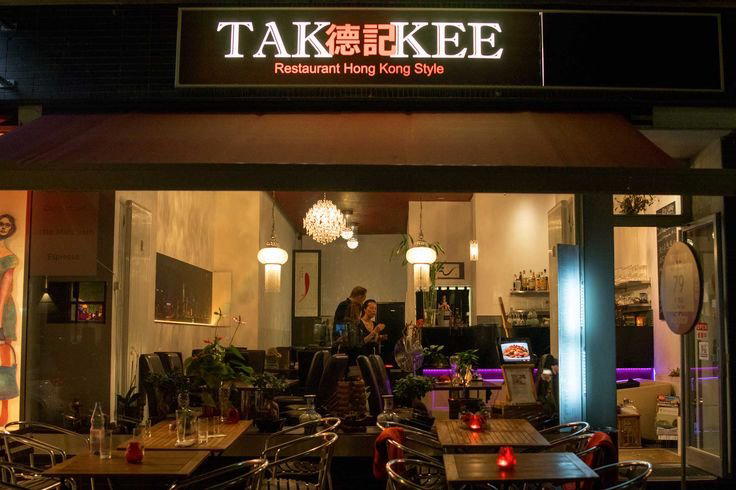
Chiu Chow Cooking in a City That Never Sits Still
Hong Kong's dining scene has a way of burying its most persistent culinary traditions beneath successive waves of new openings. The city that houses three-Michelin-starred Italian at 8 1/2 Otto e Mezzo Bombana and technically ambitious French contemporary cooking at Amber also sustains a quieter register of family-run regional Chinese kitchens where the measures of quality are procurement habits and generational consistency, not tasting-menu architecture. Chiu Chow cuisine occupies a particular position in that register. Rooted in the Chaoshan region of eastern Guangdong, it arrived in Hong Kong through waves of Teochew migration across the twentieth century, and the tradition has held its ground in the city's outer districts long after Central absorbed the fine-dining expansion.
Shek Tong Tsui, on the western fringe of Hong Kong Island, has always sat outside the primary dining circuits. That positioning matters: the neighbourhood retains a density of working-class Cantonese and Chiu Chow eateries that have not been renegotiated by gentrification to the degree seen in Sheung Wan or Kennedy Town. Tak Kee, at Yick Fung Garden on Belcher's Street, began as a hawker stall in the 1990s and has remained in the area since.
What Chiu Chow Technique Actually Means at This Price Point
Chiu Chow cooking is built around restraint in a specific sense: ingredients are rarely obscured. The cuisine relies on high-quality raw material treated with minimal intervention, which places it in an interesting comparative position against the contemporary fine-dining logic visible at places like Alléno Paris au Pavillon Ledoyen or Aponiente, where transformation of the ingredient is the point. Here, the discipline runs in the opposite direction: how little can be added while still producing a coherent, considered dish.
The editorial angle that matters at Tak Kee is not technique in the modernist sense but technique as precision applied to local ingredients with deep knowledge of their properties. Grey mullet, a fish common across the Pearl River Delta and the South China Sea, is handled here in ways that illustrate the Chiu Chow commitment to temperature control and condiment precision. Served chilled after steaming, the fish is paired with Puning bean paste, a fermented soybean condiment from Puning County in the Chaoshan region. The paste is saline, slightly sweet, and deeply fermented; it functions less as a sauce and more as a tonal anchor for the fish's mild, clean flesh. The same fish can be prepared with dried plums or salted lemon and served hot, shifting the flavour axis entirely. Two preparations of the same base ingredient, each calibrated to a different sensory register, is the kind of kitchen discipline that does not announce itself but accumulates into something coherent across a meal.
For parties of four or more, the steamed eel in lotus leaf requires a minimum two-day advance order. Pre-ordering is not simply a logistical requirement; it signals that the dish is prepared fresh to order rather than held in rotation. Lotus leaf steaming is a technique shared across Cantonese regional traditions, where the leaf imparts a faint grassy fragrance and holds moisture during cooking. At this price point ($$, placing it well below the $$$ and $$$$ registers occupied by Hung's Delicacies or formal Chiu Chow banquet formats like Chiu Ka Banquet), a dish requiring two days of preparation and fresh sourcing is notable.
Daily Procurement as Editorial Position
The second-generation owner's daily grocery runs are the operational detail that carries greater weight here. In a city where supply chains have largely standardised through central wholesale markets, daily sourcing by the owner-operator signals both economic constraint and deliberate choice. It positions Tak Kee in the same informal quality framework as neighbourhood kitchens across the region where the market visit is the menu-planning step, not a secondary concern. Chiu Chow cooking's reliance on fresh seafood and specific fermented condiments makes daily procurement more consequential than in cuisines where pantry ingredients drive the dish. What arrives at the market that morning shapes what the kitchen can do that afternoon.
This is not a romanticised account of artisanal practice. It is a structural observation: kitchens that source daily carry higher ingredient variability and require more adaptive kitchen judgment than operations running fixed menus from pre-ordered deliveries. The second-generation transition also matters as context. Chiu Chow cooking in Hong Kong has always been transmitted through family structures rather than culinary institutions, and the persistence of a hawker-origin operation into a second generation, retaining the casual format and the original preparations, represents a continuity that is genuinely uncommon in a city with Hong Kong's rate of restaurant turnover.
Where Tak Kee Sits in the Broader Hong Kong Chiu Chow Scene
Hong Kong's Chiu Chow restaurants occupy a wide range. At the formal end, banquet houses serve cold crab, braised goose, and oyster omelettes across large round tables, often in the Kowloon districts with the highest Teochew residential concentration. At the accessible end, operations like Tak Kee and Chiuchow Delicacies maintain a simpler menu structure focused on a smaller number of preparations executed with consistent sourcing. The mid-range Chiu Chow format has contracted in Hong Kong over the past two decades as rents have restructured what neighbourhood restaurants can sustain; the survival of hawker-origin operations in accessible outer districts is partly a function of lower overhead rather than purely culinary reputation.
The comparison with the city's higher-format kitchens is worth holding in mind without overstating it. The discipline applied at Arzak or Lazy Bear operates at a different scale of investment and intentionality, but the underlying principle of ingredient-led cooking and tight preparation sequences is recognisable across formats. What the restaurant represents, in its own register, is a kitchen that has not expanded beyond what it can source and prepare with the consistency its format requires.
Planning a Visit
The restaurant is at Yick Fung Garden Block A, 3 Belcher's Street, Shek Tong Tsui, Hong Kong Island. The price range is $$, placing it among the more accessible entries in Hong Kong's Chiu Chow category. Groups of four or more should pre-order the steamed eel in lotus leaf at least two days in advance. The grey mullet preparations, both the chilled version with Puning bean paste and the hot versions with dried plums or salted lemon, are the dishes to anchor a visit around.
Quick reference: the restaurant, Belcher's Street, Shek Tong Tsui, Hong Kong Island. Price: $$. Pre-order steamed eel in lotus leaf minimum two days ahead for groups of four or more.
What Dish Is Tak Kee Famous For?
The restaurant is most associated with its grey mullet preparations, particularly the version steamed and served chilled with Puning bean paste, a fermented soybean condiment from eastern Guangdong that anchors the dish's flavour. The steamed eel in lotus leaf is a secondary signature requiring advance notice of at least two days and is well suited to groups of four or more. Both dishes reflect the Chiu Chow approach of minimal intervention with high-quality sourced ingredients and specific regional condiments. The kitchen's awards record is limited to two total awards, with no Michelin stars or James Beard awards recorded.
Reputation Context
Comparable venues nearby, for context on price, style, and recognition.
| Venue | Cuisine | Price | Awards | Notes |
|---|---|---|---|---|
| Tak KeeThis venue — the venue you are viewing | Authentic Teochew (Chiu Chow) | $$ | Bib Gourmand | Not listed |
| Chiuchow Delicacies | Authentic Chiu Chow | $$ | Bib Gourmand | Tai Pak |
| Heartwarming (Prince Edward) | Black Sesame Dessert Specialist | $$ | Bib Gourmand | Yau Tsim Mong North |
| Putien (Causeway Bay) | Authentic Fujian Heng Hwa Cuisine | $$ | Bib Gourmand | Wan Chai |
| Wang Fu | Beijing-Style Handmade Dumplings | $ | Bib Gourmand | Central |
| Fung Shing (North Point) | Traditional Shunde Cantonese Dim Sum | $$ | Bib Gourmand | Tai Pak |
Recognition history
Dated appearances from independent guides and award organizations, with the underlying list record or original source where available.
Michelin Bib Gourmand
Michelin
Michelin Bib Gourmand
Michelin
Michelin Bib Gourmand
Michelin
Continue exploring
More in Hong Kong
Restaurants in Hong Kong
Browse all →
Bars in Hong Kong
Browse all →
At a Glance
- Lively
- Classic
- Family
- Casual Hangout
- Standalone
- Local Sourcing
Current opening hours
- Monday
- Closed
- Tuesday
- 11:30 AM–10 PM
- Wednesday
- 11:30 AM–10 PM
- Thursday
- 11:30 AM–10 PM
- Friday
- 11:30 AM–10 PM
- Saturday
- 11:30 AM–10 PM
- Sunday
- 11:30 AM–10 PM
Hours can change for holidays and private events. Last verified .
Bustling family-style eatery with crowded tables, minimal service, and a casual local atmosphere focused on quick hearty meals.