At 466 Crawford Lane in Kallang, Tai Hwa Pork Noodle has earned Michelin recognition for its bak chor mee, a dish that rewards patience, queues form early and move slowly. The stall operates within a tradition of Singapore hawker precision, where a single bowl refined over decades carries more weight than a multi-course menu. For anyone mapping the city's serious food culture, this address is foundational.
 Discover on Pearl
Pearl is the En Primeur Club membership app — saves, bookings, and concierge access live there. Same editors, same standards.
- Address
- 466 Crawford Ln, #01-12, Singapore 190466
- Phone
- +6592723920
- Website
- taihwa.com.sg
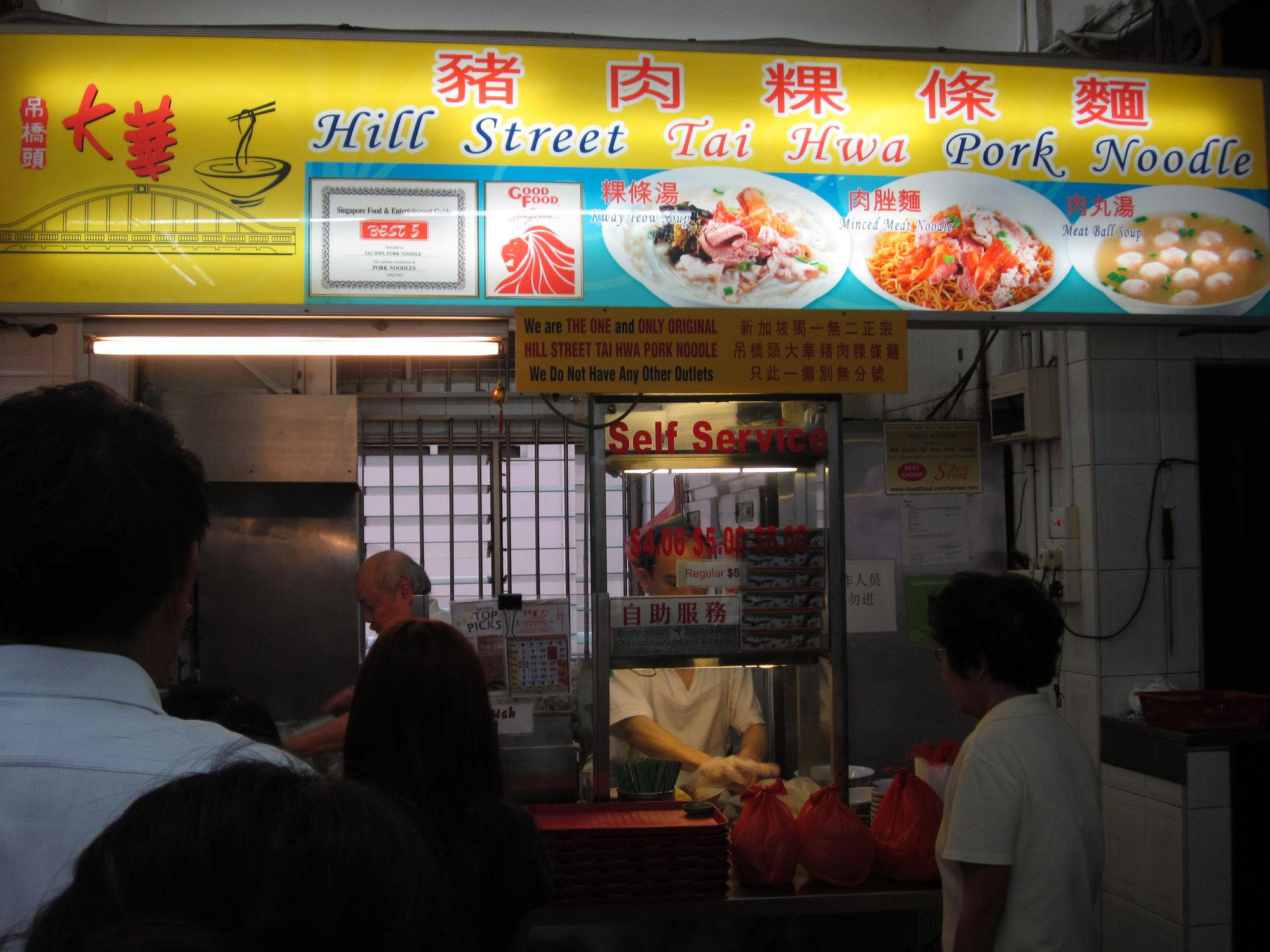
Crawford Lane and the Weight of a Single Bowl
The covered walkway leading into Blk 466 Crawford Lane does nothing to prepare you for what waits inside. The signage is modest, the tables are the familiar laminate-and-plastic of any Singapore hawker centre, and the air carries the low hum of ceiling fans working against the midday heat. What sets this particular stall apart from the surrounding units is the queue. By mid-morning, the line at Tai Hwa Pork Noodle stretches well past the adjacent stalls, and the people standing in it are not tourists filling time. They are regulars who have mapped their morning around this stop, many of them returning weekly.
That dynamic, a crowd calibrated by genuine preference, not social-media novelty, tells you something important about how Singapore's hawker culture actually functions at its upper tier. The city has long maintained a two-speed food system: the internationally decorated restaurants and the hawker stalls where culinary seriousness has no dress code, no reservation system, and no tasting menu format. Tai Hwa operates in that second tier, but its Michelin recognition has collapsed any remaining distinction between the two in the public mind.
Bak Chor Mee as Ritual
Bak chor mee, minced pork noodles, is one of Singapore's most discipline-dependent dishes. Unlike a braise or a slow-cooked preparation where time absorbs error, bak chor mee is assembled to order under pressure, each component requiring exact timing: the noodles blanched to a specific texture, the vinegar-and-chilli sauce applied in a ratio that the cook adjusts intuitively based on portion and noodle type, the pork slices and liver added at the moment that preserves their texture without overcooking. It is a dish that exposes the gap between a practised hand and an approximation of one.
At the highest end of Singapore's bak chor mee tradition, the ritual of ordering carries its own etiquette. Regulars know to specify noodle type, typically mee kia (thin egg noodle) or kway teow (flat rice noodle), and to state their preference for soup or dry preparation without hesitation. The dry version, tossed in the house vinegar-and-chilli sauce, is the format that draws the longest discussion among those who take the dish seriously. The sauce balance at Tai Hwa is the element most frequently cited in the public record as the stall's distinguishing characteristic. For context on the broader hawker category, nearby comparison points like San Yuan 汉源潮州粿条面 and 大巴窑93号粿条 operate in the same Kallang corridor and serve the same general tradition, giving diners a geographic cluster for understanding how the dish varies across practitioners. See our full Kallang restaurants guide for a broader map of the area's eating options.
What Michelin Recognition Means Here
Singapore's Michelin Guide has, since its 2016 launch, created a specific category of attention for hawker stalls, one that European dining culture had no prior framework for. The Guide's recognition generated discussion about whether tasting-menu criteria translate meaningfully to a stall producing a single dish at high volume under fluorescent light. That debate aside, the practical effect of Michelin recognition on Tai Hwa has been measurable: queue lengths increased, international visitors began routing itineraries through Kallang specifically, and the stall entered a reference tier that places it in conversation with decorated restaurants rather than simply with other hawker stalls.
For diners more familiar with Singapore's fine-dining circuit, Tai Hwa represents a useful recalibration. The bowl costs a fraction of what any of those restaurants charge per course, the room requires no booking, and the experience is over in twenty minutes. The seriousness, however, is structural. The stall has been refining a single dish across generations; the consistency expected of it is the same consistency that Michelin assessors expect of any starred kitchen.
The Patience Required
Queue culture in Singapore is well-documented and deeply observed. At Tai Hwa, arriving before the stall opens is the reliable strategy for avoiding a wait that can exceed an hour at peak times. The queue moves at the pace of a single-operator kitchen handling complex assembly, not the pace of a counter serving pre-prepared food. That friction is part of the ritual for regulars. The wait creates a specific kind of anticipation that a reservation system would dissolve. It also functions as a natural filter: the people who reach the front of the queue have made a conscious decision to prioritise this bowl above other options available to them in Singapore's extraordinarily competitive eating environment.
Practical planning for a first visit: the stall is located within Blk 466 Crawford Lane at unit #01-12. The Lavender MRT station is the nearest rail access point, placing the stall within a short walk for those coming from the city centre. Phone booking is not available, and the stall operates on a walk-in basis. Arriving early in the morning service is the conservative approach. Crawford Lane sits at a remove from the tourist-facing hawker centres in Chinatown or the CBD, which means the crowd skews local even on weekends.
Where Tai Hwa Sits in a Broader Eating Day
Kallang is not a dining destination in the way that Chinatown, Tanjong Pagar, or the Orchard corridor are. It is a residential and light-industrial district whose eating options are distributed across neighbourhood hawker centres and coffeeshops rather than concentrated in a restaurant strip. That character makes Tai Hwa a deliberate stop rather than an incidental one. Diners tend to combine it with other Kallang addresses, the Kallang area has a cluster of well-regarded hawker operations, or route it as a morning stop before moving to other parts of the city.
For those building a broader Singapore itinerary that spans hawker culture and formal dining, the contrast is instructive. The city's hawker stalls and its Michelin-starred restaurants (Les Amis, Imperial Treasure, and the rest) are not competing categories in the local frame of reference, they are parallel tracks of the same food culture. Tai Hwa Pork Noodle makes that point concisely. Bring small bills and arrive with time.
Category Peers
Comparable venues nearby, for context on price, style, and recognition.
| Venue | Cuisine | Price | Awards | Notes |
|---|---|---|---|---|
| Tai Hwa Pork NoodleThis venue — the venue you are viewing | Michelin-Starred Teochew Bak Chor Mee | $ | , | |
| San Yuan 汕源潮州粿条面 | Traditional Chinese Fishball Noodles | $ | , | Kallang |
| 大巴窑93筍粿 | Modern Chinese Dim Sum | $$$ | , | Kallang |
| Soon Wah Fishball Kway Teow Mee | Teochew Fishball Noodles | $ | , | Newton Circus |
| Lor 29 Geylang | Singaporean Fried Hokkien Mee | $ | , | ALJUNIED |
| Ann Chin Popiah | Traditional Handmade Popiah | $ | , | Outram |
At a Glance
- Iconic
- Hidden Gem
- Casual Hangout
- Standalone
Bustling hawker center atmosphere with the energy of queues and street food vibrancy.