

Michelin Plate · Macarfi 7.7 Food Rating · Guía Repsol 1 Sol
Our verdict
Among Madrid's Salamanca neighbourhood traditional restaurants, Taberna Pedraza positions itself firmly in the open-fire, market-driven tier: Michelin Plate recognised in 2024 and 2025, with a menu anchored by wood-grilled fish and meat, a celebrated three-stage Cocido de Carmen, and a Tortilla de Betanzos that has become one of the district's most tracked dishes. The price point sits well below Madrid's creative fine-dining bracket, making it a considered choice for traditional Spanish cooking at a mid-range spend.

Pearl is the En Primeur Club membership app, where members save venues, book tables and use the concierge.
The menu
What to order
- Tortilla de Betanzos
- Cocido de Carmen
- Croquetas
Where Traditional Madrid Cooking Holds Its Ground
Calle de Recoletos runs through the upper edge of Salamanca, one of Madrid's most composed residential and commercial districts, where the density of mid-range and upscale dining options is higher than almost anywhere else in the city. In a neighbourhood increasingly populated by modern Spanish bistros and international formats, the taberna model, open grill, market-led daily specials, long lunches, persists with quiet conviction. Taberna Pedraza, at number 4, a few metres from the gates of the Biblioteca Nacional, occupies that traditional tier with a degree of institutional confidence that most newer openings can't match.
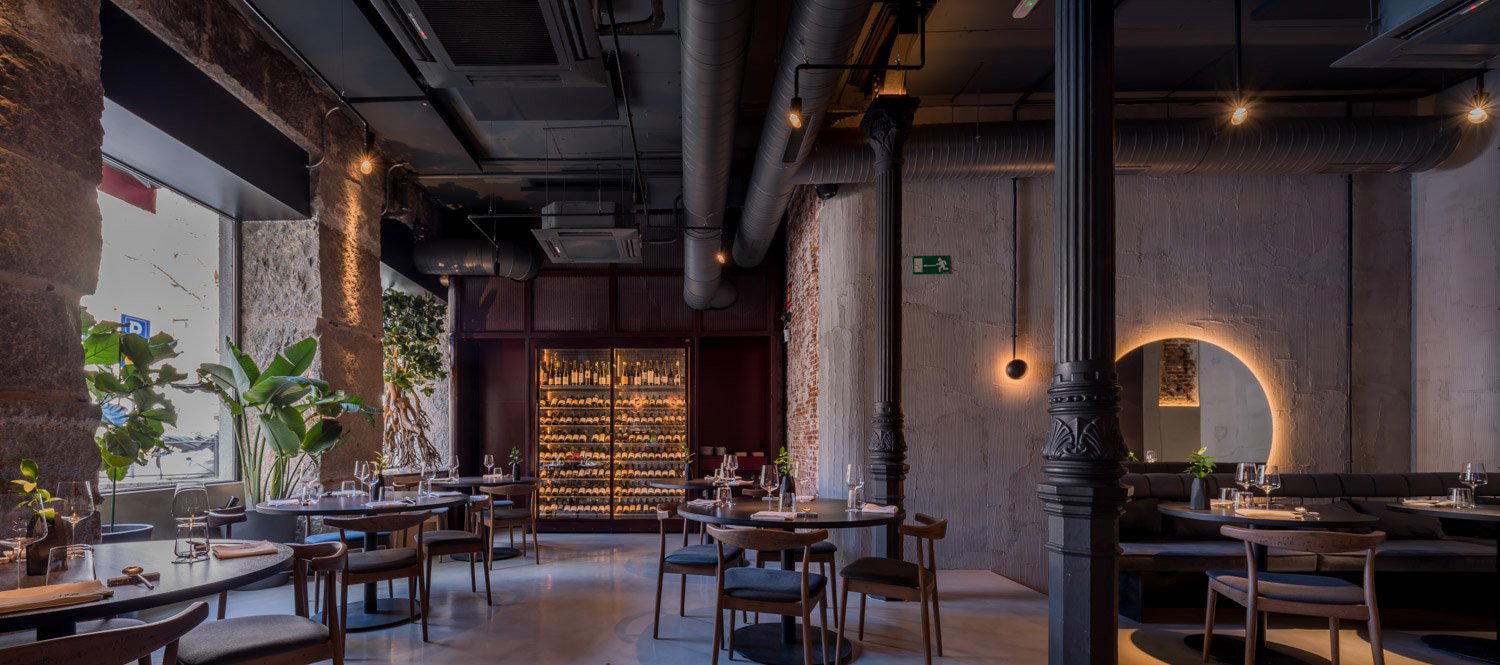
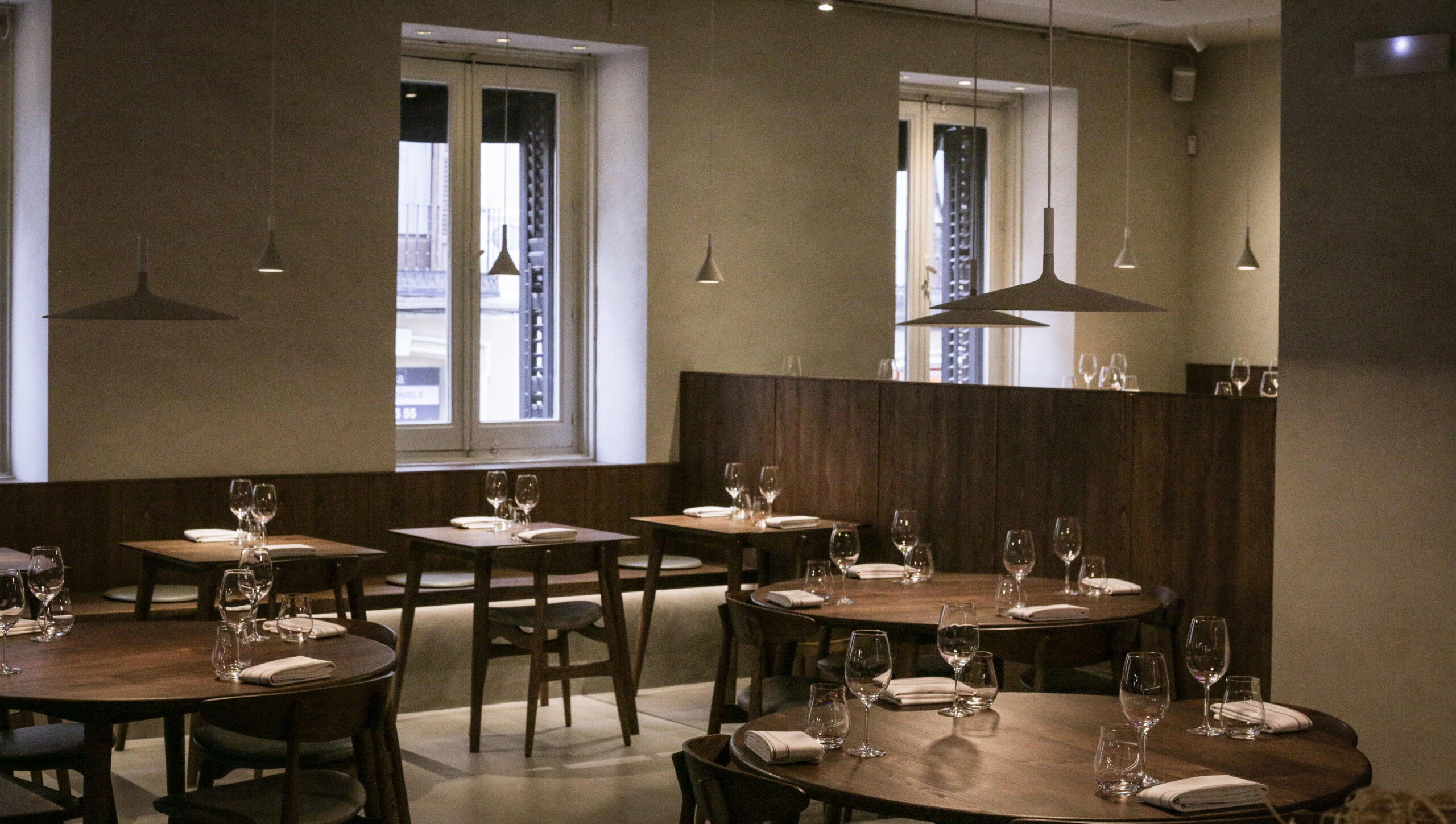
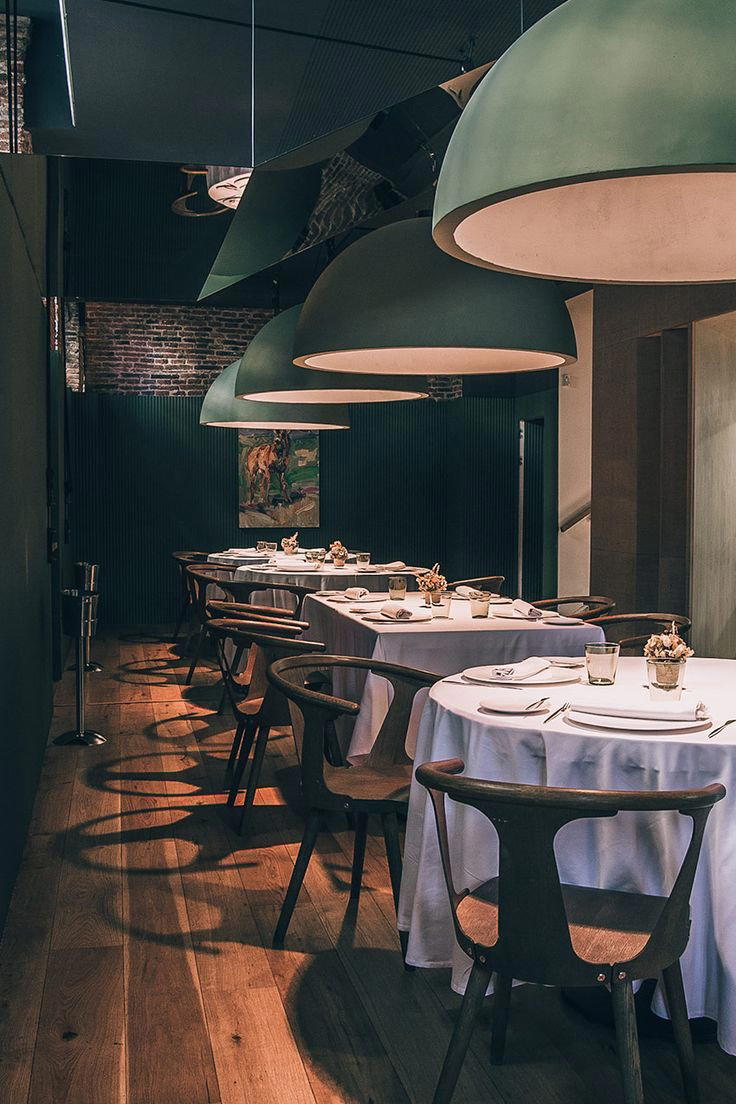
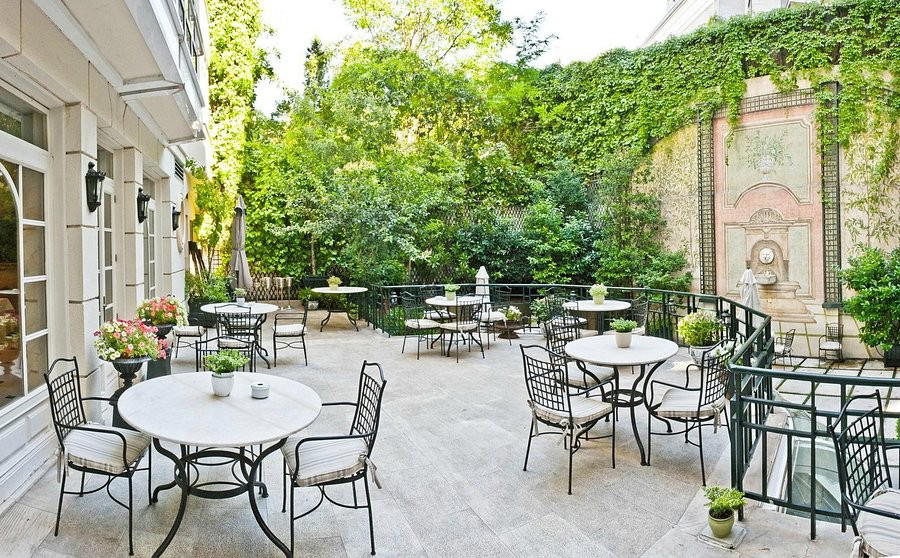
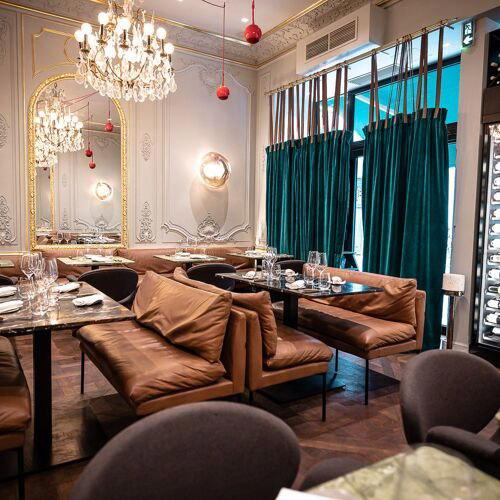
The physical setting signals the register before you order. Stone and wood interiors, a room scaled for conversation rather than spectacle, and a kitchen grammar built around fire rather than technique-led transformation. This is not the format of DiverXO, Deessa, or Coque, all of which sit at the €€€€ tier and represent Madrid's creative ambition. Taberna Pedraza's €€ price point and à la carte format place it in a different conversation entirely: one about whether Spain's most rooted cooking can survive, and in some cases sharpen, inside one of the capital's most pressured postcodes.
The Open Grill as Editorial Statement
Across Spain's serious traditional restaurants, the open grill remains the most honest indicator of intent. The technique demands sourcing discipline: you cannot improve inferior product with a sauce, a reduction, or a construction. Wood-fired fish and meat arrive with their own structure exposed. At Taberna Pedraza, the grill anchors the menu not as a nostalgic device but as the primary cooking argument. This positions the kitchen in a long Spanish tradition that runs from the asadores of Castile through to contemporary practitioners who have updated the format without abandoning its logic, kitchens like Quinqué in Madrid, which also operates within a product-first, fire-forward ethos.
At this price tier, the discipline required to execute simply is underestimated by critics who typically spend more time at the €€€€ end. A daily stew on an à la carte requires consistent sourcing and timing that tasting-menu kitchens, with their advance booking and controlled covers, can more easily manage. The fact that Taberna Pedraza carries both a rotating stew and two anchoring set-pieces alongside the grill work suggests a kitchen that has structured itself around repetition and refinement rather than novelty.
The Rice Question, and Why the Tortilla Matters More Here
That framing, however, sits awkwardly with Taberna Pedraza's actual identity. The kitchen does not appear to position rice as a central pillar. Madrid's traditional restaurant scene, unlike Valencia's, tends to organise itself around stews, roasts, and egg dishes rather than rice formats. The Tortilla de Betanzos is the cleaner signal here.
Betanzos-style tortilla, the version from the Galician town of the same name, characterised by a loose, barely-set interior and a ratio of egg to potato that inverts most Madrid conventions, has become one of the more contested dishes in the capital's ongoing conversation about what a good tortilla actually means. Taberna Pedraza has tracked its Betanzos tortilla count since 2014, an unusual piece of transparency that functions as both a confidence signal and a form of accountability. The counter invites scrutiny: if you're going to count, the dish has to hold up. That framing connects to the same logic underpinning Valencian rice discipline, the idea that a simple, traditional format becomes a test of precision rather than an exercise in elaboration. In both cases, the fewer variables you introduce, the more visible the quality of your execution becomes.
For a broader view of how Spain's most technically ambitious kitchens handle traditional formats, the reference points span the country: Arzak in San Sebastián, El Celler de Can Roca in Girona, Quique Dacosta in Dénia (whose rice work is among the most cited in Spain), Aponiente in El Puerto de Santa María, Azurmendi in Larrabetzu, and Disfrutar in Barcelona. Each of these operates at a different register from Taberna Pedraza, but the underlying question, what do you do with Spain's most rooted ingredients and techniques, connects them.
Cocido de Carmen: The Three-Stage Format in Context
Madrid's cocido madrileño has a codified service logic that most serious tabernas follow: the broth first, then the vegetables and legumes, then the meats. The three-stage sequence is not theatre; it reflects the physical structure of the dish, in which a single pot produces three distinct eating moments at different intensities. The Cocido de Carmen at Taberna Pedraza follows this structure, with Pedrosillano chickpeas, a smaller, firmer variety from the Salamanca province, prized for holding their skin under long cooking, as the legume of record.
The choice of Pedrosillano over the more commonly used garbanzo lechoso is a sourcing decision that signals regional specificity. It also places the dish in a defined quality tier: Pedrosillano commands a premium in Madrid's wholesale markets and requires more precise cooking to achieve the right texture. At the €€ price point, absorbing that ingredient cost is a deliberate margin call. Michelin's Plate recognition in both 2024 and 2025, a designation that signals consistent, recommended cooking rather than star-level ambition, confirms the kitchen's positioning as a serious entry in the category rather than a tourist-facing approximation of it.
How It Sits Against Madrid's Broader Dining Map
Madrid's restaurant scene has bifurcated sharply over the past decade. The creative fine-dining tier, DSTAgE, Coque, Deessa, DiverXO, competes on global terms and prices accordingly. Below that, a mid-range tier has fragmented between modern Spanish bistros, international formats, and traditional operators. Taberna Pedraza belongs to the last group, alongside a shrinking number of kitchens that treat the cocido, the tortilla, and the grill as complete culinary arguments rather than nostalgic context. That scarcity makes the format more, not less, significant to the overall map. For readers planning a Madrid itinerary across multiple register levels, our full Madrid restaurants guide covers the breadth of the scene, while our Madrid hotels guide, Madrid bars guide, Madrid wineries guide, and Madrid experiences guide cover the surrounding context.
For comparison at equivalent or adjacent creative registers internationally, Le Bernardin in New York City offers a useful reference for what sustained product-first discipline looks like at higher price points, while Atomix in New York City represents the counter-position: tradition reframed through a contemporary lens at fine-dining prices.
Planning Your Visit
| Venue | Cuisine Tier | Price Range | Lunch Service | Michelin Recognition |
|---|---|---|---|---|
| Taberna Pedraza | Traditional Spanish | €€ | Tue–Sun, 1–4:30pm | Plate 2024, 2025 |
| DiverXO | Progressive Creative | €€€€ | Limited | 3 Stars |
| Deessa | Modern Spanish Creative | €€€€ | Yes | 1 Star |
| Coque | Spanish Creative | €€€€ | Yes | 2 Stars |
| Smoked Room | Progressive Asador | €€€€ | Limited | 1 Star |
Taberna Pedraza is closed on Mondays. Lunch runs Tuesday through Sunday, 1pm to 4:30pm. Dinner service runs Wednesday through Saturday, 8pm to 11:30pm, with no dinner on Tuesday or Sunday. The address is Calle de Recoletos, 4, in the Salamanca district, a short walk from the Biblioteca Nacional and the Colón metro station.
Frequently asked questions
Which chef is Taberna Pedraza associated with?
The chef associated with Taberna Pedraza is Santiago Pedraza.
What should I budget for a meal at Taberna Pedraza?
Pricing at Taberna Pedraza is listed as €€.
What's the must-try dish at Taberna Pedraza?
The kitchen has two signature dishes, and both are worth ordering around. The Cocido de Carmen arrives in three stages: broth first, then Pedrosillano chickpeas, then the meats, a format that follows Madrid's codified cocido logic precisely. The Tortilla de Betanzos has its own counter tracking every omelette served since 2014, which is a reasonable indicator of how seriously the kitchen takes it.
What type of food is Taberna Pedraza known for?
Is Taberna Pedraza open every day?
Hours at Taberna Pedraza: Hours: Monday Closed Tuesday 1–4:30 pm Wednesday 1–4:30 pm, 8–11:30 pm Thursday 1–4:30 pm, 8–11:30 pm Friday 1–4:30 pm, 8–11:30 pm Saturday 1–4:30 pm, 8–11:30 pm Sunday 1–4:30 pm.
Where is Taberna Pedraza located?
Taberna Pedraza is located at C. de Recoletos, 4, Salamanca, 28001 Madrid, Spain, Madrid.
Is Taberna Pedraza Michelin-listed?
Taberna Pedraza has received recognition including: Located just a few steps from the national library, this restaurant champions traditional flavours and the essence of cooking that never goes out of fashion, as highlighted by its signature dishes, namely fish and meat cooked on the open gr….
A Lean Comparison
| Venue | Cuisine | Price | Awards | Notes |
|---|---|---|---|---|
| Taberna PedrazaThis venue (the venue you are viewing) | Traditional Spanish Tavern | $50–100 | Michelin Plate · Macarfi 7.7 Food Rating | Not listed |
| DiverXO | Avant-Garde Spanish Tasting Menu | $300–500 | 3 Michelin Stars · World's 50 Best #4 | Progressive - Asian, Creative |
| Deessa | Modern Valencian Fine Dining | $150–200 | 2 Michelin Stars · La Liste Top Restaurants | Modern Spanish, Creative |
| Smoked Room | Modern Japanese Fire Omakase | $200–300 | 2 Michelin Stars · La Liste Top Restaurants | Progressive Asador, Contemporary |
| Coque | Modern Spanish Fine Dining | $300–500 | 2 Michelin Stars · La Liste Top Restaurants | Spanish, Creative |
| Paco Roncero | Avant-Garde Spanish Fine Dining | $150–200 | 2 Michelin Stars · La Liste Top Restaurants | Creative |
Recognition history
Dated appearances from independent guides and award organizations, with the underlying list record or original source where available.
Michelin Plate
Michelin
Guía Repsol 1 Sol
Guía Repsol
Macarfi 7.7 Food Rating
Macarfi
Opinionated About Dining Casual in Europe Recommended
Opinionated About Dining
Full recognition history (6 entries)
Michelin Plate
Michelin
Michelin Plate
Michelin