

At Level 52 of Capital Tower, SUSHISAMBA Singapore fuses Japanese, Brazilian, and Peruvian cooking traditions in one of the city's most dramatically positioned dining rooms. Recognised with a White Star on Star Wine List in April 2025, the restaurant's menu architecture draws on the same cross-cultural framework that defines the SUSHISAMBA brand globally. For Singapore's high-altitude dining circuit, it occupies a distinct niche.
Pearl is the En Primeur Club membership app — saves, bookings, and concierge access live there. Same editors, same standards.
- Address
- 168 Robinson Rd, Level 52 Capital Tower, Singapore 068912
- Phone
- +65 6550 2290
- Website
- sushisamba.com
- Directions
- Get directions
 Saves & bookings on Pearl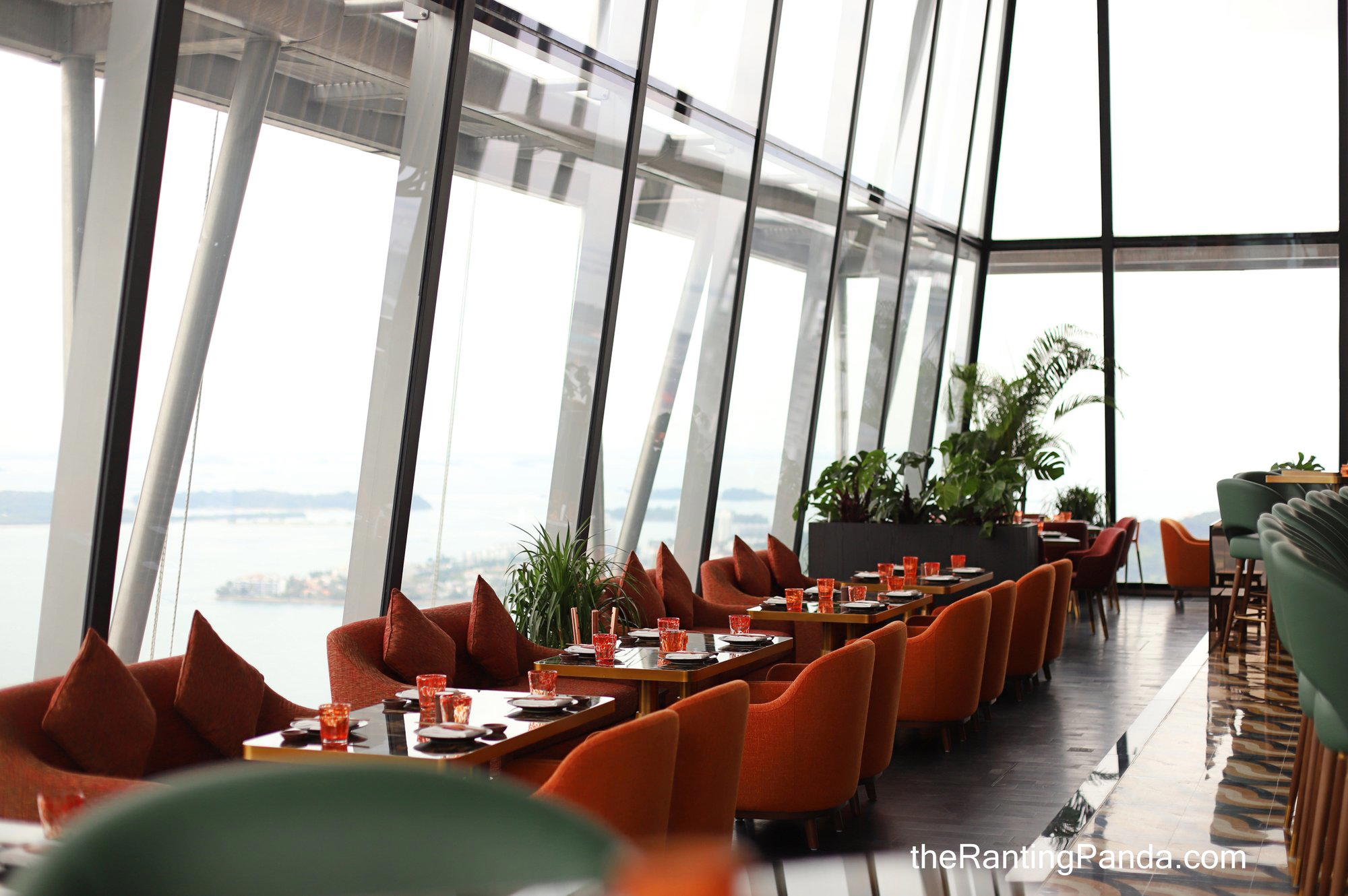
Fifty-Two Floors Up, Where Three Culinary Traditions Converge
Singapore has developed a particular relationship with altitude and ambition. The dining room at Level 52 of Capital Tower on Robinson Road sits firmly in that tradition. From this height, the financial district spreads out in every direction, and the physical remove from street level signals something about the cooking below: this is not a neighbourhood drop-in. It is a destination with a specific point of view, one that asks its guests to travel upward before it asks them to travel, through the menu, across three continents.
SUSHISAMBA as a concept occupies a category that Singapore's dining scene has relatively few representatives of: the fusion-by-design restaurant where the cross-cultural logic is structural rather than incidental. The brand's framework draws simultaneously on Japanese precision, Brazilian abundance, and Peruvian acidity. In Singapore, a city whose own food culture is already a study in productive collision between culinary traditions, that proposition lands with some resonance. The local dining public is experienced with technique-led cooking and culturally layered menus. The question SUSHISAMBA always has to answer is whether its fusion operates at the level of concept or at the level of the plate.
Menu Architecture: The Logic of Three Cuisines
The structural ambition of a SUSHISAMBA menu is worth examining carefully, because it tells you something about how the restaurant positions itself relative to both the broader Singapore dining market and its global comparable set. The menu assigns each tradition a structural role. Japanese technique governs the raw preparations, from sashimi cuts to nigiri formats, where temperature, texture, and the quality of the rice are load-bearing. Brazilian influence shapes the cooked and robata sections, where wood fire and intensity of flavour do work that restraint-driven Japanese cooking deliberately avoids. Peruvian cooking, with its citrus-forward ceviches and the presence of ingredients like aji amarillo and leche de tigre, provides the acidic counterpoint that prevents the menu from reading as heavy.
This is a more disciplined architecture than it might initially appear. Many restaurants that operate under a fusion brief produce menus where the cultural references are decorative rather than functional. The SUSHISAMBA model, at its most coherent, assigns each tradition a specific job within the meal's progression. Guests moving from raw to cooked to sweet are, in effect, moving between culinary registers, each governed by its own internal logic. Whether the Singapore execution realises that architecture fully is something the kitchen determines service by service, but the blueprint itself is more considered than a three-flag concept might suggest.
The city's most decorated addresses, including Odette, Les Amis, and Zén, operate in a tasting-menu format where a single culinary tradition is developed with great depth. Jaan by Kirk Westaway and Meta occupy the innovative tier where the chef's point of view drives the format. SUSHISAMBA exists in a different register: à la carte, table-sharing friendly, visually theatrical, and pitched at a guest who wants a strong sense of occasion without the commitment of a long tasting menu. That niche is real and not well-served by the Michelin-oriented tier of Singapore dining.
The Wine List and the White Star Recognition
The wine list has been recognised with a White Star from Star Wine List. For a restaurant whose menu spans three culinary traditions, wine list construction presents a genuine editorial challenge: what do you serve alongside leche de tigre, wagyu robata, and maki in a single sitting? The White Star designation suggests the program has found a working answer, most likely through a selection that prioritises breadth of style over depth in any single region. Vermouth-based cocktails and sake also play a structural role in the broader drinks architecture at most SUSHISAMBA locations, reflecting the same multi-tradition logic that shapes the food menu. The drinks program, taken as a whole, is designed to move with the meal rather than anchor it to a single tradition.
For wine-focused guests, the recognition provides a useful reference point. It places the restaurant in a comparable set that includes addresses where the beverage program is taken seriously as a complement to the food, not treated as a revenue afterthought. In Singapore's premium dining circuit, where several of the city's most acclaimed restaurants carry strong wine credentials, that recognition carries weight.
Where It Fits in Singapore's Dining Circuit
Singapore's premium restaurant market has expanded considerably over the past decade, with international brands making the city a priority destination. SUSHISAMBA's arrival at Capital Tower places it on Robinson Road, in the heart of the CBD, where lunch traffic from the financial sector coexists with dinner guests from across the city. The address is more corporate in character than the shophouse-lined streets of Duxton Hill or the gallery-adjacent context of the National Museum precinct, but at Level 52 the street-level character is largely irrelevant. The view and the height reframe the room entirely.
SUSHISAMBA functions as the format-breaker: a dinner that operates on different terms from a precision tasting menu at a French or Nordic-influenced address. Globally, the brand occupies a position analogous to restaurants like Le Bernardin in New York City or Alinea in Chicago in the sense that its concept is coherent enough to travel across cities while adapting to local context. Other international reference points include Lazy Bear in San Francisco, Emeril's in New Orleans, 8½ Otto e Mezzo Bombana in Hong Kong, Alain Ducasse at Louis XV in Monte Carlo, Alléno Paris au Pavillon Ledoyen, and Aponiente in El Puerto de Santa María, each of which represents a different model for how a distinctive culinary concept can be sustained at the premium end of the market.
Visit Notes
SUSHISAMBA Singapore is located at 168 Robinson Road, Level 52, Capital Tower, in the central business district. The restaurant sits at 168 Robinson Rd, Level 52 Capital Tower, Singapore 068912. Booking ahead is recommended, particularly for groups and for window seats.
Recognition Snapshot
Comparable venues nearby, for context on price, style, and recognition.
| Venue | Cuisine | Price | Awards | Notes |
|---|---|---|---|---|
| SUSHISAMBA SingaporeThis venue — the venue you are viewing | Japanese-Peruvian-Brazilian Fusion | $$$$ | Not listed | Not listed |
| Roia | Modern French-Indian Fusion | $$$$ | Michelin Plate | TYERSALL |
| Béni | French-Japanese Fusion | $$$$ | Michelin Plate | SOMERSET |
| Restaurant Born | Contemporary French-Chinese Fusion | $$$$ | Not listed | CHINATOWN |
| Jin Ting Wan | Refined Modern Cantonese | $$$$ | Not listed | BAYFRONT SUBZONE |
| ASIN | Progressive Asian Fine Dining | $$$$ | Not listed | Clarke Quay |
Recognition history
Dated appearances from independent guides and award organizations, with the underlying list record or original source where available.
Star Wine List
Star Wine List
Wine Spectator Best of Award of Excellence
Wine Spectator
Continue exploring
More in Singapore
Restaurants in Singapore
Browse all →
Bars in Singapore
Browse all →
At a Glance
- Lively
- Trendy
- Elegant
- Sophisticated
- Energetic
- Date Night
- Business Dinner
- Celebration
- Special Occasion
- Rooftop
- Panoramic View
- Craft Cocktails
- Sake Program
- Sommelier Led
- Skyline
Current opening hours
- Monday
- 11:30 AM–2:30 PM, 6–11 PM
- Tuesday
- 11:30 AM–2:30 PM, 6–11 PM
- Wednesday
- 11:30 AM–2:30 PM, 6 PM–12 AM
- Thursday
- 11:30 AM–2:30 PM, 6 PM–12 AM
- Friday
- 11:30 AM–2:30 PM, 6 PM–1 AM
- Saturday
- 12–3 PM, 6 PM–1 AM
- Sunday
- Closed
Hours can change for holidays and private events. Last verified .
Dark moody and glamorous with dramatic panoramic city views, lively party atmosphere, DJ music, and lively entertainment.