
Tabelog 100 #62
Our verdict
Sumi Daruma sits in Osaka’s izakaya conversation through fish-led cooking, yakitori, sake and shochu, with selection for Tabelog 100 Izakaya WEST 2025 giving it a clear reputation signal. The appeal is not luxury theater but the tighter end of the tavern format: counter seating, a compact room, and a price tier that asks diners to treat izakaya cooking as a serious evening meal.

Pearl is the En Primeur Club membership app — saves, bookings, and concierge access live there. Same editors, same standards.
- Address
- 大阪府大阪市北区豊崎5-2-26 藤井ビル 1F
- Phone
- +819081228378
- Website
- tabelog.com
- Directions
- Get directions
The menu
What to order
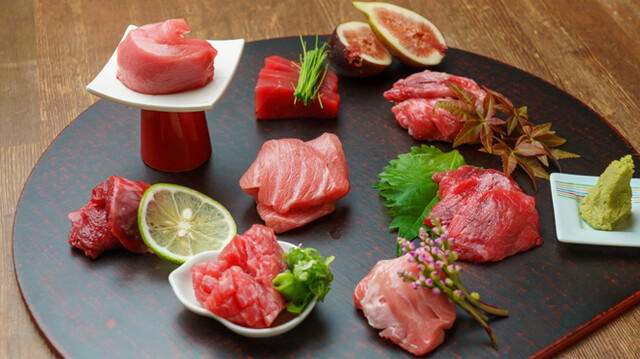
- Assorted seasonal sashimi platter
- Whole Wakayama mikan chicken yakitori
- Tuna course with all-you-can-drink
- Seasonal grouper course
In Osaka, the izakaya register changes. The city’s busy dining areas can feel engineered for volume, while smaller rooms work differently: counter-style meals, fish, grilled skewers and a tavern rhythm rather than destination-restaurant performance. Sumi Daruma belongs to that Osaka category, closer to a serious tavern than a casual stop-in, and its selection for Tabelog 100 Izakaya WEST 2025 places it among the region’s recognized izakaya addresses rather than the city’s louder restaurant names.
Osaka is often reduced to takoyaki, okonomiyaki and late-night appetite, but its strongest dining culture is broader: specialist counters, neighborhood drinking rooms, ramen queues, curry shops and other compact dining rooms within a few train stops. In that wider field, Takeuchi Udon Ten and Mugito Mensuke sit at the lower-ticket end, while La Barcaccia represents a more considered dinner bracket. Sumi Daruma occupies another lane: not noodles or a Western-style dining room, but an izakaya where seafood and yakitori carry the evening.
Fish, skewers and the serious end of Osaka izakaya culture
The modern izakaya is elastic enough to mean almost anything, from chain beer halls to reservation-led counters. The useful distinction is format discipline. At the serious end, the room is often compact, the menu is built for drinking without becoming secondary to drinks, and the kitchen’s choices matter more than a long list of crowd-pleasers. Sumi Daruma’s stated categories, izakaya, seafood and yakitori, put it in the middle ground where fish and grilled chicken coexist without becoming a tasting-menu restaurant.
That combination is particularly Osaka. Some cities split genres into narrower lanes; Osaka is comfortable letting a night move between seafood, grilled chicken and the easy tempo of a Japanese tavern. The Tabelog score of 3.64 is not casual in Japan’s conservative rating culture, and the 2025 Izakaya WEST selection matters because it recognizes the category on its own terms. This is not Michelin-style formality. It is reputation inside a domestic dining system where regulars, booking friction and consistency count.
The price band calibrates expectations. Dinner sits in the JPY 8,000 to JPY 9,999 range, making this a considered izakaya booking rather than cheap beer-and-snacks. That matters in Osaka, where excellent low-cost eating is abundant, including ramen and udon specialists. Here the premium is for a focused tavern format and the reputation attached to the Hyakumeiten selection.
Osaka gives the room its scale
Osaka’s advantage is proximity without losing texture. Close enough to fit into a serious city dining itinerary, its smaller restaurant scale changes the night. A compact izakaya reads differently here than in a hotel district or department-store restaurant floor. The format favors diners who understand that an izakaya meal is paced around drinking and sharing as much as ordering.
The category also changes the audience. This is an adult tavern mode rather than a family-restaurant template, and that distinction matters for travelers deciding what kind of Osaka dinner they want. For some, the appeal is precisely the lack of polish associated with international comfort; for others, it requires more deliberate planning. Osaka still splits visibly between restaurants designed for tourism and rooms operating by domestic expectations. Sumi Daruma belongs closer to the latter camp.
Planning culture reinforces that reading. A recognized izakaya with a dinner budget of JPY 8,000 to JPY 9,999 should be approached as a deliberate booking rather than a casual fallback. The diner is dealing with a compact Osaka tavern in a recognized category, not a brand-managed restaurant built for frictionless travel.
How to place it in an Osaka itinerary
For travelers mapping Osaka by appetite rather than landmarks, Sumi Daruma works well as a city dinner anchored around seafood, yakitori and izakaya pacing. It can sit alongside other Osaka dining without duplicating it: one night for a tavern, another for noodles, another for curry, and another for a more formal room.
The editorial point is not that an izakaya should replace Osaka’s famous street foods. It should sit beside them. A traveler who only eats through snacks and queues misses the adult drinking-room tradition that has shaped Japanese urban dining for decades. The stronger Osaka itinerary alternates registers: one meal at a counter, one at a tavern, one at a noodle shop, one at a more formal restaurant. Sumi Daruma gives the izakaya slot critical validation, compact scale and a price signal separating it from casual drinking chains.
Planning should be deliberate. Recognized izakaya are not always the easiest rooms to treat casually, and the Tabelog 100 Izakaya WEST 2025 selection gives Sumi Daruma a clearer reason to book around it rather than hope it fits at the last minute. For diners who want Osaka’s broader context before choosing, start with Our full Osaka restaurants guide, then cross-check adjacent planning through Our full Osaka hotels guide, Our full Osaka bars guide, Our full Osaka wineries guide and Our full Osaka experiences guide.
For comparison within Osaka, the casual-specialist spectrum runs wide: IRISH CURRY Nakatsu ten, Takeuchi Udon Ten, Mugito Mensuke, Ramen Yashichi and La Barcaccia show how different formats can carry local dining identity. Sumi Daruma belongs to that same broader map, but its point of difference is the recognized izakaya lane: seafood, yakitori and a dinner price band that signals a more considered tavern meal.
Frequently asked questions
Where is Sumi Daruma in Osaka?
Osaka.
Is Sumi Daruma more mid-range or high-end?
Pricing at Sumi Daruma is listed as JPY 8,000 - JPY 9,999.
How far ahead should I plan for Sumi Daruma?
Sumi Daruma is listed for Tabelog 100 Izakaya WEST 2025, so planning ahead is sensible. Treat it as a deliberate Osaka izakaya booking rather than a casual fallback.
What's the signature at Sumi Daruma?
The clearest anchor is the izakaya focus, backed by seafood and yakitori on the menu profile. The price range is JPY 8,000–9,999 in Osaka.
Cost Snapshot
Comparable venues to place this listing in its category.
| Venue | Cuisine | Price | Awards | Notes |
|---|---|---|---|---|
| Sumi DarumaThis venue — the venue you are viewing | Seasonal Seafood & Yakitori Izakaya | $50–100 | Tabelog 100 #62 | Not listed |
| Higyu | Japanese Yakiniku | Not listed | Tabelog 100 #79 | Kita, Japanese Yakiniku |
| Taishu Shokudo Kawaramachi Blanc | Japanese Western (Yoshoku) Bistro | $50–100 | Tabelog 100 #1 | Kita, Japanese Western (Yoshoku) Bistro |
| Tonkatsu Koshirou | Omakase Tonkatsu Counter | $50–100 | Tabelog 100 #35 | Chūō, Omakase Tonkatsu Counter |
| Midosuji Lodge | Yoshoku (Japanese-style Western) | $30–50 | Tabelog 100 #60 | Chūō, Yoshoku (Japanese-style Western) |
| Sushi Minoki | Intimate Omakase Sushi Counter | $150–200 | Tabelog 100 #94 | Kita, Intimate Omakase Sushi Counter |
Recognition history
Dated appearances from independent guides and award organizations, with the underlying list record or original source where available.
Tabelog 100 #62 · No. 62
Tabelog · Tabelog 100 - Izakaya - WEST - 2025
Continue exploring
More in Osaka
Restaurants in Osaka
Browse all →




Bars in Osaka
Browse all →




Hotels in Osaka
Browse all →




Wineries in Osaka
Browse all →
Details
- Lively
- Cozy
- Energetic
- After Work
- Group Dining
- Casual Hangout
- Celebration
- Date Night
- Standalone
- Sake Program
- Beer Program
- Local Sourcing
- Sustainable Seafood
- A La Carte
- Set Menu
- Small Plates
- Sake
- Beer
- Pescatarian Friendly
A bustling, tightly packed izakaya with counter and table seating, where guests enjoy fresh sashimi and charcoal-grilled yakitori in a casual, smoky, sake-fueled atmosphere ideal for friends and groups.