
Strandhaus on Georgstraße holds a Michelin Plate for 2024 and 2025, placing it among Bonn's most recognised Mediterranean tables. The kitchen works within an open-flame and minimal-intervention register that suits the cuisine's sourcing logic.8 across 425 reviews suggests consistent execution rather than occasional brilliance.
Pearl is the En Primeur Club membership app — saves, bookings, and concierge access live there. Same editors, same standards.
- Address
- Georgstraße 28, 53111 Bonn, Germany
- Phone
- +49 228 3694949
- Website
- strandhaus-bonn.de
- Directions
- Get directions
 Saves & bookings on Pearl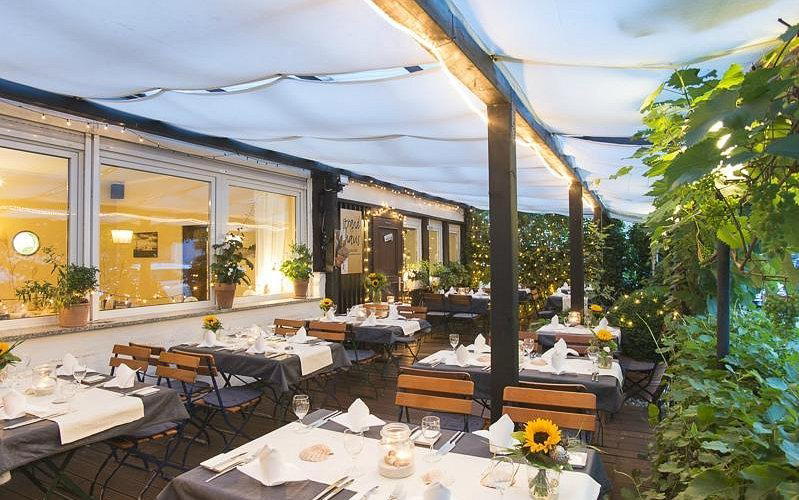
Where the Rhine Meets the Southern Table
Georgstraße cuts through the older residential fabric of Bonn's Altstadt, a street that sits closer to the Rhine embankment than the tourist circuit around the Marktplatz. Approaching Strandhaus from that direction, the name makes a kind of literal sense: Strandhaus translates as beach house, and the address carries a low-key waterside logic that distances it aesthetically from the formal dining rooms clustered around the city's concert halls and government ministries. Mediterranean cooking in Germany's Rhine corridor tends to arrive in one of two modes: the white-tablecloth southern-Italian format, or the looser, grill-centred idiom borrowed from Catalonia, the Balearics, and the Levantine coast. Strandhaus sits firmly in the second camp.
The Michelin Plate and What It Signals
The Michelin Plate, awarded in both 2024 and 2025, is the Guide's threshold recognition for restaurants serving food of sufficient quality to warrant attention, without the full star apparatus. In a mid-sized German city like Bonn, that designation carries more weight than it might in Frankfurt or Munich, where the competition for inspector attention is denser. Bonn's recognised dining tier is relatively compact: halbedel's Gasthaus operates at the €€€€ level in Modern French, Yunico holds a comparable price point in Japanese, and several €€€ addresses including Konrad's and Redüttchen cover Contemporary and Modern Cuisine respectively. Strandhaus sits at €€€, which positions it at the mid-upper tier of that field. The sustained recognition across two consecutive years signals consistency in the kitchen rather than a single strong performance timed to an inspection cycle.
Grilled Simplicity as a Culinary Position
Mediterranean cooking's most honest argument is that fire, salt, and well-sourced ingredients do more work than technique. The open-flame and minimal-intervention register that defines Strandhaus's kitchen philosophy connects to a broader movement across Europe's leading casual-fine tables, where the grill is no longer a back-of-house utility but the centrepiece around which a menu is organised. This approach demands better sourcing discipline than elaborate cooking does: when a dish is essentially protein or vegetable over live fire with limited adornment, the quality of the ingredient has nowhere to hide.
That logic runs through the better addresses in this category across Germany and the wider region. JAN in Munich has built a Michelin-recognised program on a similar foundation, as has the approach at Schwarzwaldstube in Baiersbronn, where French rigour meets regional sourcing discipline. At the opposite end of the ambition spectrum, Aqua in Wolfsburg and CODA Dessert Dining in Berlin demonstrate how far formal German dining has moved from classical complexity toward ingredient precision. Strandhaus occupies a different register entirely, one closer to Mediterranean informality than to the tasting-menu format, but the underlying sourcing logic is the same.
Internationally, particularly instructive comparisons are with restaurants like La Brezza in Ascona and Arnaud Donckele and Maxime Frédéric at Louis Vuitton in Saint-Tropez, both of which frame Mediterranean cuisine through restraint and product quality rather than elaboration. Strandhaus operates at a more accessible price point than either, but the culinary sensibility is recognisably aligned.
Bonn's Dining Character and How Strandhaus Fits
Bonn has a different dining culture from most German cities of comparable size. Its decades as West Germany's federal capital created a diplomatic and institutional dining circuit that still shapes the top end of the restaurant market, where expense-account spending and international clientele have historically sustained formal European cuisine. That legacy explains why halbedel's Gasthaus remains one of the Rhine region's most enduring Modern French addresses, and why Vendôme in nearby Bergisch Gladbach or ES:SENZ in Grassau represent the kind of formal ambition that the wider region has historically supported.
Against that backdrop, Strandhaus represents something different: a Mediterranean sensibility that prioritises ease and directness over formality.8 from 448 reviews is a meaningful data point in this context. That volume of feedback at that score suggests a guest base that returns regularly and refers, rather than a restaurant sustained by single-visit occasion dining. It also suggests the kitchen performs consistently across service, which is harder to achieve in a grill-centred format than in a tightly scripted tasting menu where variables are controlled from the beginning.
The Mediterranean Address in a Northern European City
Mediterranean cuisine transplanted to northern Europe carries an inherent tension. The produce logic of that cooking, built around local fish, stone-fruit vegetables, and olive oil from short supply chains, requires either sourcing relationships that replicate the geography or a willingness to adapt the cooking to available northern European ingredients. The restaurants that handle this well in Germany tend to be those that treat Mediterranean not as a regional cuisine to replicate exactly but as a cooking philosophy to apply: open fire, acid, olive oil, restraint. That approach travels. What does not travel particularly well is importing the soft tomatoes, fresh anchovies, and salt-marsh lamb that give the cuisine its character at the source, which is why the better Mediterranean tables in German cities tend to work with a tight, seasonal menu rather than trying to reproduce a fixed Mediterranean repertoire year-round.
For direct comparison within Bonn's Italian-adjacent tier, Oliveto operates at the lower €€ price point and covers Italian cuisine specifically, where Strandhaus's broader Mediterranean frame allows more flexibility in sourcing and menu construction. That breadth is part of the Michelin Plate logic: the Guide recognises a kitchen's command of a cooking tradition, not just its fidelity to a single national cuisine.
Planning a Visit
Strandhaus is at Georgstraße 28, in Bonn's Altstadt, within walking distance of the central train station and the Rhine embankment. At €€€, expect a spend in the mid-to-upper range for Bonn's non-starred tier, broadly comparable to Konrad's and Redüttchen. particularly for weekend dinner.
Awards and Standing
Comparable venues nearby, for context on price, style, and recognition.
| Venue | Cuisine | Price | Awards | Notes |
|---|---|---|---|---|
| StrandhausThis venue — the venue you are viewing | Contemporary Mediterranean Seafood | $$$ | Michelin Plate | Not listed |
| Redüttchen | Modern German Fine Dining | $$$ | Michelin Plate | Alt-Godesberg |
| El Tarascon | Argentinian Steakhouse | $$$ | Not listed | Poppelsdorf |
| Konrad's | Modern Mediterranean Fine Dining | $$$ | Michelin Plate | Platz der Vereinten Nationen |
| Forissimo Ristorante Italiano | Authentic Italian Ristorante | $$$ | Not listed | Zentrum |
| Il Punto | Modern Italian | $$$ | Not listed | Südstadt |
Recognition history
Dated appearances from independent guides and award organizations, with the underlying list record or original source where available.
Michelin Plate
Michelin · 2026 Michelin Plate
Michelin Plate
Michelin
Michelin Plate
Michelin
Continue exploring
More in Bonn
Restaurants in Bonn
Browse all →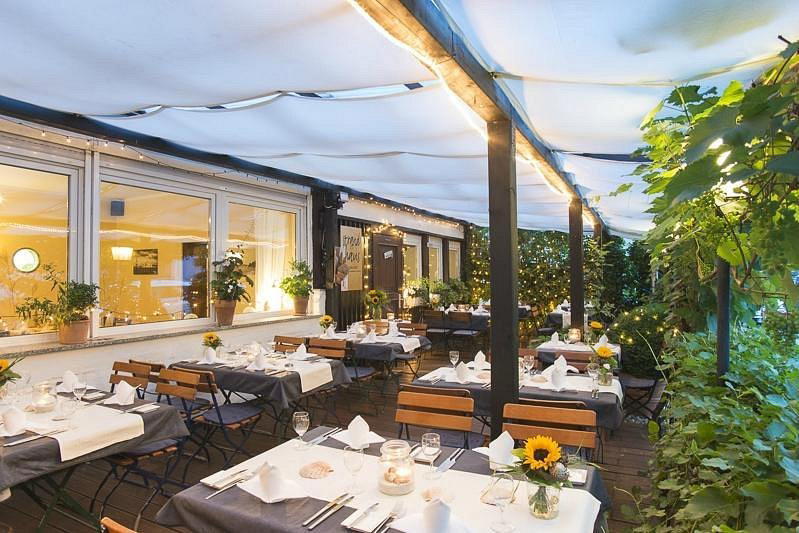
Bars in Bonn
Browse all →

Hotels in Bonn
Browse all →


At a Glance
- Romantic
- Cozy
- Elegant
- Sophisticated
- Intimate
- Date Night
- Business Dinner
- Special Occasion
- Celebration
- Terrace
- Private Dining
- Extensive Wine List
- Sommelier Led
- Local Sourcing
- Sustainable Seafood
Current opening hours
- Monday
- 6–11 PM
- Tuesday
- 6–11 PM
- Wednesday
- 6–11 PM
- Thursday
- 6–11 PM
- Friday
- 6–11 PM
- Saturday
- Closed
- Sunday
- Closed
Hours can change for holidays and private events. Last verified .
Warm, inviting maritime-themed dining room with pale nautical tones, subtle shell decorations, and measured lighting; secluded terrace provides airy outdoor option with deliberate privacy despite central location.