Our verdict
Storia occupies a central position on Place de Verdun in Tarbes, one of the Hautes-Pyrénées' main civic squares. The address places it within walking distance of the city's covered market and the cultural institutions around the town centre. For visitors building a Tarbes itinerary, it sits alongside a small group of independently run dining rooms that define the city's mid-range scene.

Pearl is the En Primeur Club membership app — saves, bookings, and concierge access live there. Same editors, same standards.
- Address
- 9 Pl. de Verdun, 65000 Tarbes, France
- Phone
- +33562449550
- Hours
- Mon–Thu 12–2 PM, 7–10 PMFri–Sat 12–2 PM, 7–10:30 PMSun 11:30 AM–2 PM, 7–10 PM
- Website
- europe-tarbes.com
- Directions
- Get directions
The menu
What to order
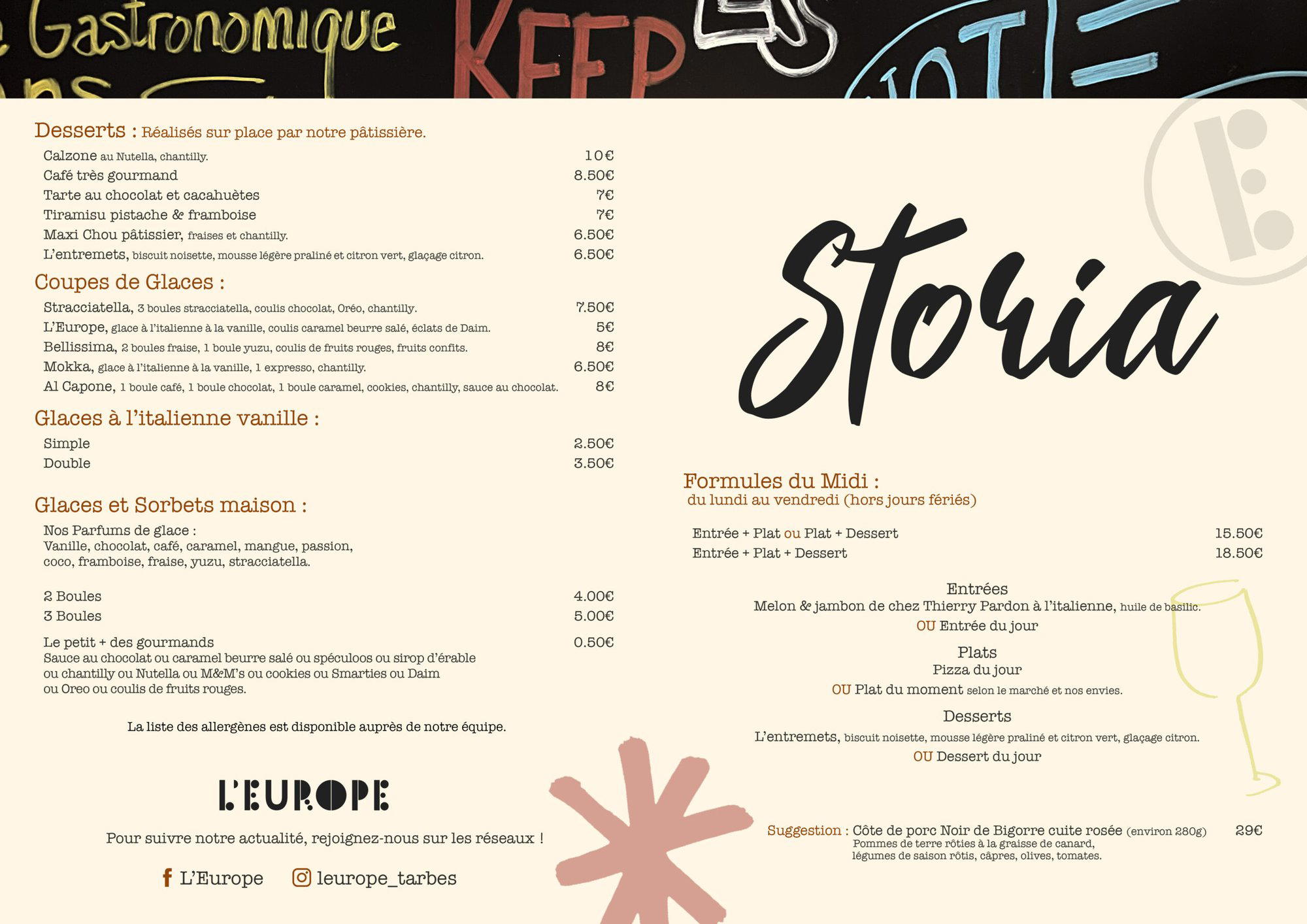
- Ravioli stuffed with veal, chicken and tartufata
Place de Verdun and the Texture of Tarbes Dining
Tarbes is not a city that announces itself loudly on France's gastronomic map. It sits in the Hautes-Pyrénées, close enough to the Spanish border that the regional cooking absorbs Gascon fattiness, Basque pepper heat, and mountain produce in roughly equal measure. The city's dining scene is small by French regional standards, dominated by independently operated rooms rather than hotel restaurants or group-backed concepts. That independence tends to produce cooking that is locally anchored and commercially pragmatic, serving a clientele of locals, market visitors, and travellers passing through on the way to Lourdes or the Pyrenean ski resorts.
Storia occupies a table on Place de Verdun, Tarbes' central civic square, at number 9. The square is a working urban space, not a tourist set piece, ringed by institutional buildings and animated by the rhythms of daily life in a departmental capital of around 40,000 people. A restaurant on this square is embedded in the practical life of the city in a way that a side-street address rarely is. The positioning says something about the kind of room this is intended to be: accessible, centrally placed, part of the ordinary fabric of the city rather than apart from it.
What the Regional Context Tells You
French regional cooking in the southwest operates under a set of cultural expectations that are distinct from what you find in Lyon, Paris, or Alsace. The tradition here runs through duck confit, garbure (the thick Gascon vegetable and cured meat soup), Bigorre black pork, haricots tarbais, and the local white bean that carries a protected designation of origin. These are not luxury ingredients in the Périgord truffle sense; they are peasant-rooted products that have been absorbed into the regional identity over centuries and now carry a specific cachet among those who know them.
Haricots tarbais, in particular, are one of the more specific local markers. The bean is grown in the alluvial plains around Tarbes, protected by Label Rouge status, and appears in local cooking in ways that range from simple cassoulet-adjacent preparations to more considered treatments in kitchens that pay attention to the calendar. A restaurant on Place de Verdun, in the middle of the department that gives the bean its name, operates in a place where that specificity can mean something if a kitchen chooses to use it.
The broader southwest dining tradition also rewards comparison with what is happening at the region's more decorated addresses. Bras in Laguiole has built a philosophy around Aubrac terroir and plant-forward cooking, while the multi-generational tradition represented by rooms like Auberge de l'Ill in Illhaeusern shows how deeply French regional identity can be encoded in a kitchen over decades. At the scale of Paris, addresses like Alléno Paris au Pavillon Ledoyen demonstrate how far formal technique and regional produce can travel when the resources support it. Tarbes operates at a different register entirely, but the cultural materials are not lesser for it.
Storia Within the Tarbes Peer Group
The independently run dining rooms of Tarbes form a compact competitive set. L'Empreinte operates in a creative register at the €€ price point, while Le Petit Gourmand and Popôte occupy the modern cuisine bracket, the latter at the more accessible € tier. Le Fil A la Patte and L'Arpège round out the city's mid-scale offer. In a city this size, the dining scene functions more like a relay than a hierarchy: different rooms serve different occasions, and a local tends to know all of them rather than gravitating toward one.
Storia's Place de Verdun address puts it in the civic heart of that small constellation. What the address does confirm is the room's orientation toward the daily life of the city rather than destination dining for out-of-town visitors. That distinction matters when building a Tarbes itinerary.
Arriving and Planning
Place de Verdun is walkable from Tarbes' main transport infrastructure, including the SNCF station that connects the city to Toulouse by rail in roughly an hour and a half. The square itself is direct to reach on foot from the city centre hotels and from the covered market, making Storia logistically simple for visitors who have oriented themselves around the centre. Because no booking platform or contact details are publicly confirmed in the available record, the practical approach is to arrive at the address directly or make contact through the venue in person, particularly if you are planning around a specific time or day. For visitors who want to map Storia alongside the rest of Tarbes' dining options, the full Tarbes restaurants guide provides the clearest picture of the city's current offer.
For context on how Tarbes sits within the broader register of French regional dining, the contrast with awarded addresses in other parts of the country is instructive. Mirazur in Menton, Flocons de Sel in Megève, and Troisgros - Le Bois sans Feuilles in Ouches each represent a version of French regional identity taken to a level of formal recognition that requires significant investment, both from the kitchen and from the diner. The rooms in Tarbes, Storia among them, serve a different function: they are where the city eats, and that has its own value in understanding a place.
For those extending a French dining itinerary beyond the southwest, rooms like Assiette Champenoise in Reims, AM par Alexandre Mazzia in Marseille, Au Crocodile in Strasbourg, and Paul Bocuse in Collonges-au-Mont-d'Or illustrate the range of what France's regional tradition produces when resources and ambition combine. At the international end, Le Bernardin in New York City and Atomix in New York City show how French and Korean fine dining traditions have translated into the American context.
Frequently asked questions
Is Storia a family-friendly restaurant?
Place de Verdun is Tarbes' main civic square, a working public space in a departmental city of around 40,000 people. Restaurants in that position tend to serve a broad local clientele rather than a narrow demographic. Nothing in Storia's address or placement suggests a format that would exclude families, though confirming specific provisions is worth a direct contact before visiting with young children.
What kind of setting is Storia?
Storia occupies 9 Place de Verdun, the central square of Tarbes. That address puts it at the civic and commercial core of the city, surrounded by institutional buildings and everyday foot traffic rather than a tourist quarter or gastronomic district. It is a town-square restaurant in the French provincial tradition.
Is Storia worth visiting as part of a Hautes-Pyrénées food trip?
Tarbes functions as the regional hub of the Hautes-Pyrénées, making it a logical base for anyone moving between Lourdes, the Bigorre plateau, and the mountain valleys to the south. Storia's Place de Verdun address puts it in the working centre of that hub, accessible from the SNCF station that connects Tarbes to Toulouse. For travellers already passing through the city, it represents a straightforward option within a dining scene that remains largely off the national radar.
What do regulars order at Storia?
Tarbes sits in the Hautes-Pyrénées, a region whose cooking traditions draw on haricots tarbais (a protected-designation legume), duck, lamb from the mountain valleys, and produce from the Gers and Bigorre. Check the venue's official channels for the latest details.
What part of town is Storia in?
Storia is located at 9 Pl. de Verdun, 65000 Tarbes, France, Tarbes.
How far ahead should I plan for Storia?
Tarbes draws visitors during the Pyrenean summer season and around the Lourdes pilgrimage calendar, which runs from April through October and brings significant traffic to the wider département. During those periods, central Tarbes restaurants can fill quickly. Booking at least a week ahead for weekend visits in high season is a reasonable precaution.
What's the standout thing about Storia?
The address on Place de Verdun is the clearest distinguishing fact: it places Storia at the geographic centre of Tarbes within a compact independent dining scene. In a city where the restaurant peer group is small and the civic square carries genuine daily life rather than tourist staging, that position carries practical weight for anyone planning a meal around the town centre.
Price and Positioning
Comparable venues nearby, for context on price, style, and recognition.
| Venue | Cuisine | Price | Awards | Notes |
|---|---|---|---|---|
| StoriaThis venue — the venue you are viewing | Traditional French Brasserie and Trattoria | Not listed | Not listed | Not listed |
| Le Petit Gourmand | Modern French Bistro | $30–50 | Michelin Plate | centre-ville, Modern French Bistro |
| Le Fil A la Patte | French Bistro with Local Seasonal Specialties | Not listed | Not listed | Tarbes center, French Bistro with Local Seasonal Specialties |
| L'Arpège | French Fine Dining with Japanese Influences | $50–100 | Michelin Plate | Place de Verdun, French Fine Dining with Japanese Influences |
| L'Empreinte | Modern French Creative Bistro | $30–50 | Michelin Bib Gourmand | centre historique, Modern French Creative Bistro |
| Popôte | Modern French Bistro | $30–50 | Michelin Plate | Arsenal, Modern French Bistro |

Details
- Cozy
- Warm
- Group Dining
- Family
- Casual Hangout
- Open Kitchen
- A La Carte
Current opening hours
- Monday
- 12–2 PM, 7–10 PM
- Tuesday
- 12–2 PM, 7–10 PM
- Wednesday
- 12–2 PM, 7–10 PM
- Thursday
- 12–2 PM, 7–10 PM
- Friday
- 12–2 PM, 7–10:30 PM
- Saturday
- 12–2 PM, 7–10:30 PM
- Sunday
- 11:30 AM–2 PM, 7–10 PM
Hours can change for holidays and private events. Last verified .
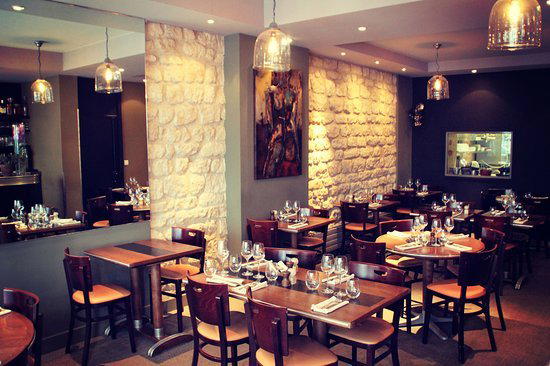
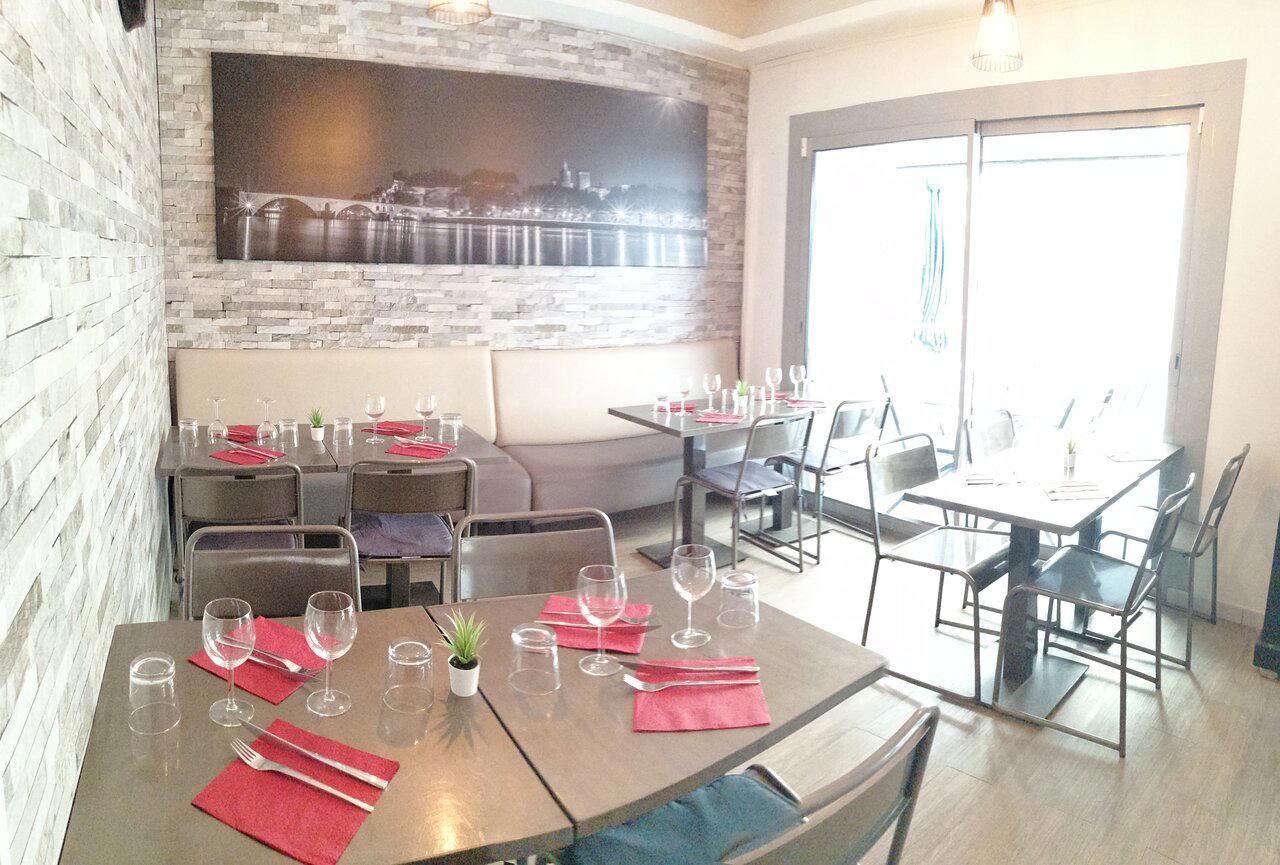
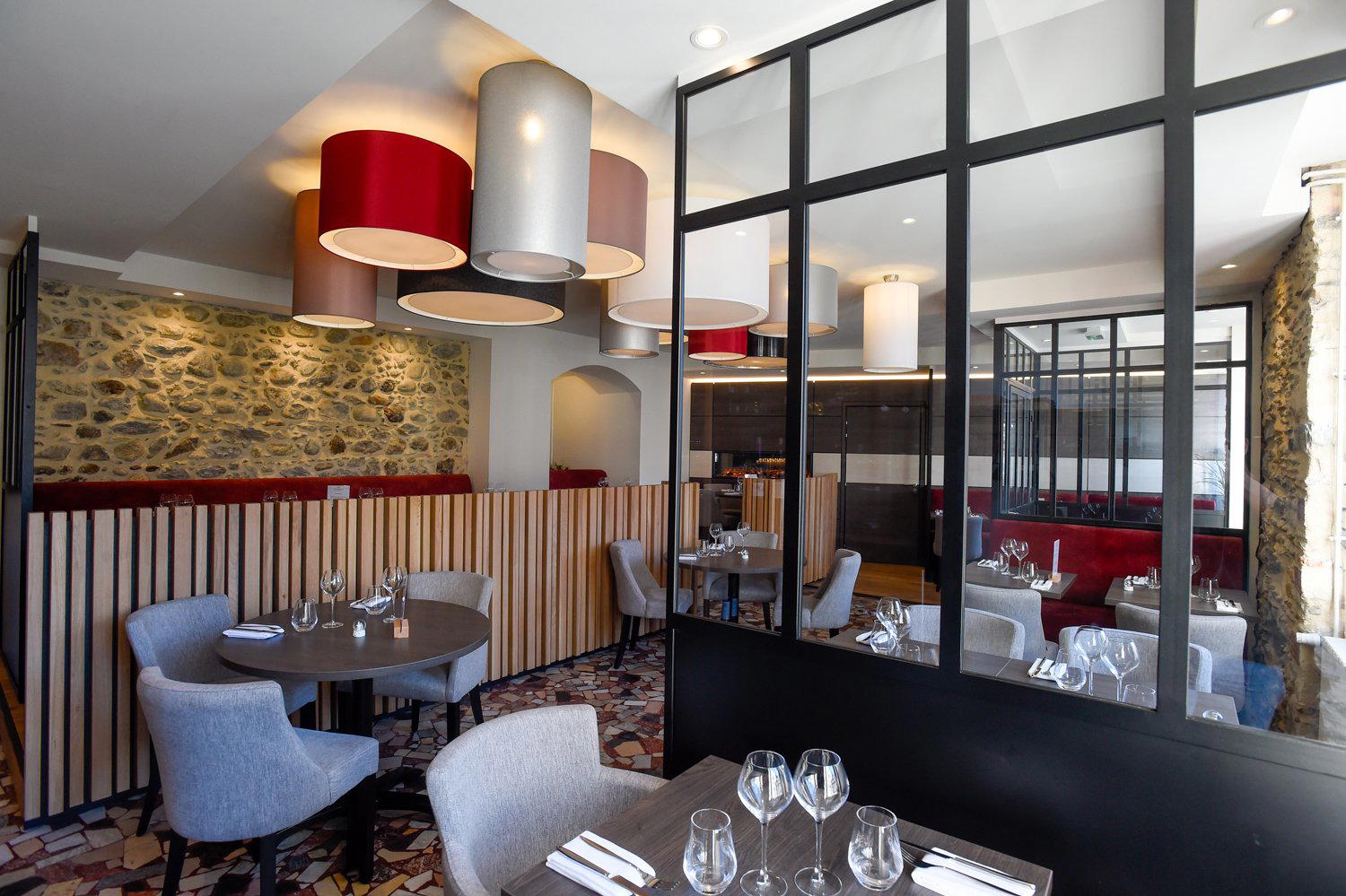
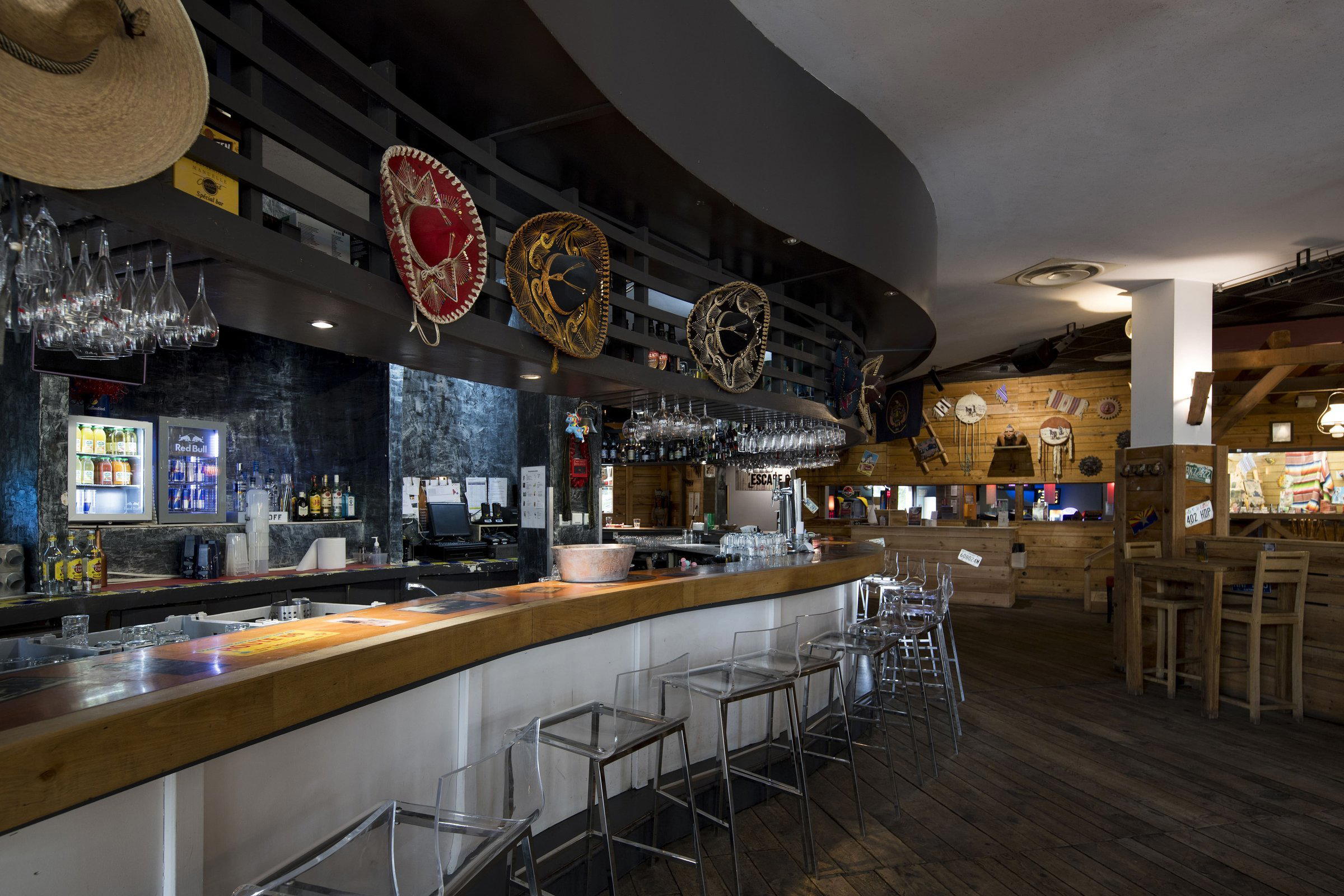
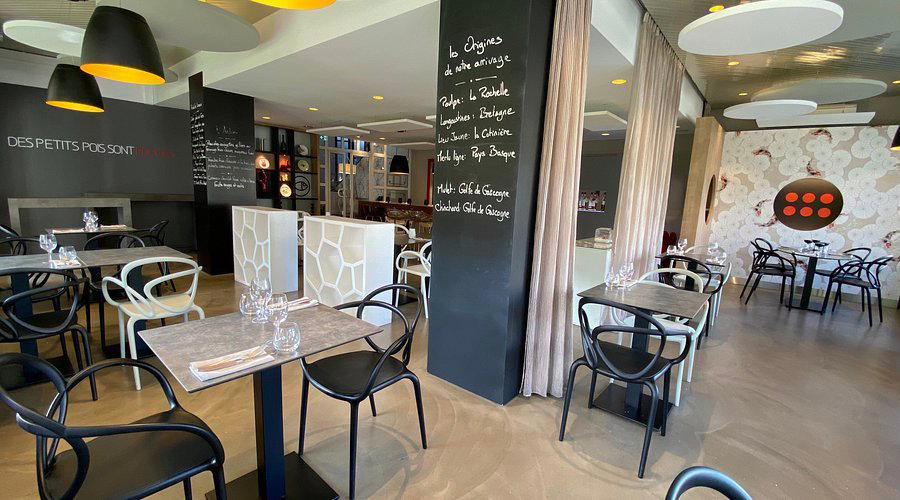
Warm spaces warmed by the light of an open fire, ideal for sharing meals.