Sternen - Badstube

A Michelin-starred inn in Wangen bei Dübendorf, Sternen - Badstube operates from a 16th-century barrel-vaulted dining room where classical technique meets seasonal Swiss ingredients. The kitchen, under continuous ownership since 2005, offers both a seasonal set menu and an à la carte selection of regional classics. It represents the kind of quietly serious country restaurant that Switzerland does particularly well.
Pearl is the En Primeur Club membership app — saves, bookings, and concierge access live there. Same editors, same standards.
- Address
- Sennhüttestrasse 1, 8602 Wangen-Brüttisellen, Switzerland
- Phone
- +41 44 833 44 66
- Website
- sternenwangen.ch
- Directions
- Get directions
 Saves & bookings on Pearl
A 16th-Century Vault and the Case for Serious Country Cooking
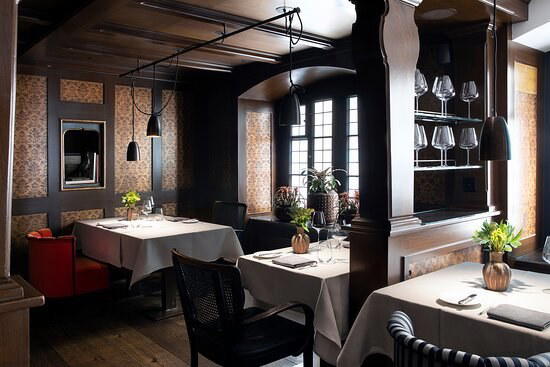
The barrel-vaulted ceiling of the Badstube dates to the 16th century, and walking into it sets an immediate expectation: this is not a room designed for casual dining. Stone and timber absorb the noise. The proportions are intimate without being cramped. In Switzerland's restaurant culture, where urban fine dining increasingly gravitates toward the kind of spare, design-forward rooms found in Zurich or Geneva, the Sternen inn at Wangen-Brüttisellen is a Michelin-starred restaurant serving classical Swiss fine dining, earning its star through consistency and ingredient discipline.
Wangen sits in the Glattal corridor east of Zurich, a stretch of peri-urban Switzerland that most visitors pass through rather than stop in. That the Badstube has held a Michelin star since well within its current tenure, the Brunner family has run the property since 2005, says something both about the kitchen's stability and about how Michelin reads this category of Swiss restaurant: the star rewards the classical cooking tradition, precisely sourced materials, and a dining room that takes the work seriously regardless of address.
Where the Food Comes From, and Why It Shapes the Plate
Classical Swiss cooking puts the focus on provenance and seasonality. In Swiss classical cooking, that phrase carries specific weight. The country's geography fragments into micro-regions, Alpine pastures, lake valleys, sub-Alpine agricultural zones, each producing distinct beef breeds, dairy products, and seasonal vegetables with traceable provenance. A kitchen that anchors its sourcing at this level is making a commitment that shapes the entire menu, not just the premium line items.
The regional beef tenderloin signals exactly this orientation. Sourcing beef tenderloin regionally in the greater Zurich canton means engaging with Swiss lowland and sub-Alpine cattle production, where shorter supply chains and established relationships with local farms allow for the kind of aging and selection decisions that underpin classical French-influenced technique. The harissa sabayon and winter vegetables that accompany it suggest a kitchen comfortable reaching across culinary references while keeping the primary product, the beef itself, as the point of the dish. That approach, in which the main ingredient justifies the plate, is characteristic of classical cuisine at this level.
Swiss seasonal cooking follows the Alpine calendar closely: white asparagus appears in late spring, game seasons anchor the autumn menu, and winter vegetables carry the table through December. A restaurant with both a seasonal set menu and a standing à la carte section is making a practical argument about its sourcing philosophy: the set menu follows what the land is producing, while the à la carte classics give regulars a stable reference point built around ingredients reliable enough to carry year-round. The set menu is the more direct expression of what the sourcing relationships make possible at any given moment.
The Two Rooms: Classical Dining and the Gaststube Alternative
The Sternen property runs two distinct dining formats under one roof, which is a common Swiss inn structure but executed here with more intentionality than most. The Badstube is the Michelin-starred operation: the barrel vault, the seasonal menus, the wine pairings, the full classical service. The Gaststube operates as a separate room with traditional cuisine at a different price register, a cosy, rustic-style alternative for those who want the setting and the sourcing philosophy without the full tasting menu commitment.
This split matters for how visitors should approach the booking. The Gaststube is not a lesser version of the Badstube; it is a different product sharing a kitchen with strong ingredient standards. At lunchtime, a reasonably priced set menu further extends the accessibility range. For a destination at the €€€ price tier, the presence of multiple format options across a single visit is a genuine practical advantage, a group with mixed appetite for formality can divide across the two rooms, or a solo traveller can eat at the Gaststube counter and still benefit from the same sourcing relationships that underpin the main dining room.
Classical Cuisine in Switzerland's Starred Tier
Switzerland's Michelin landscape has shifted in the direction of creative and modern Swiss cooking at its upper tier. Properties like Schloss Schauenstein in Fürstenau, Memories in Bad Ragaz, and focus ATELIER in Vitznau operate in the modern Swiss and creative categories at the €€€€ tier, as does IGNIV Zürich by Andreas Caminada in Zurich. The Badstube sits in a smaller category: classical cuisine, one Michelin star, €€€ pricing, operating outside the major urban centres. This positioning is not a compromise, it is a different value proposition. The restaurant is not competing with Zurich's creative scene; it is serving the classical tradition that preceded it and still defines a significant share of what serious Swiss cooking looks like in the regions.
For comparison outside Switzerland, the classical format at this level shares more in common with Maison Rostang in Paris, a long-tenured classical house that maintains its standards through consistency rather than reinvention, than with the more experimental end of the starred spectrum. Within the Swiss German-speaking region, Einstein Gourmet in Sankt Gallen and Cheval Blanc by Peter Knogl in Basel both represent the classical-leaning end of the Swiss fine dining continuum, against which the Badstube's one-star positioning reads as a well-established regional anchor rather than an outlier.
The Wine List and the Rhythm of Service
Michelin's description flags "savvy wine recommendations" as a specific attribute, which in Swiss wine terms carries its own significance. Swiss wine production is dominated by Chasselas in the Vaud and Romand regions, Pinot Noir across German-speaking cantons, and a range of Valais varieties that rarely appear on export markets. A wine program described as savvy at a country inn near Zurich likely draws on this domestic range alongside the French and European selections that classical cuisine typically demands. For a visitor unfamiliar with Swiss wine, the service team's guidance here is a practical asset, not just a courtesy.
Service runs Tuesday through Saturday, 8:30 AM to midnight, with Monday and Sunday closed. The extended daily hours, running from morning through the end of evening service, suggest the Sternen functions partly as a neighbourhood gathering point across different meal occasions, not only as an evening destination. Overnight guests can stay in the Gasthof's guestrooms, which makes the property a viable base for anyone exploring the Glattal region or using Wangen as a Zurich-adjacent stop.
Planning a Visit
The Sternen inn is located at Sennhüttestrasse 1, 8602 Wangen-Brüttisellen. The kitchen operates Tuesday through Saturday, closing Sunday and Monday. Advance booking for the Badstube is advisable, particularly for weekend dinners; the Gaststube and lunchtime set menu represent lower-friction access to the same kitchen. Guests looking to extend the experience can book one of the property's guestrooms directly. For comparable classical kitchens elsewhere in Switzerland, Colonnade in Lucerne and 7132 Silver in Vals offer alternative reference points, and Hotel de Ville Crissier in Crissier represents the French-classical tradition at the upper end of the Swiss tier.
Fast Comparison
Comparable venues nearby, for context on price, style, and recognition.
| Venue | Cuisine | Price | Awards | Notes |
|---|---|---|---|---|
| Sternen - BadstubeThis venue — the venue you are viewing | Classic Swiss Fine Dining | $$$ | Michelin 1 Star | Not listed |
| Wöschi | Modern European Fine Dining | $$$$ | Michelin 1 Star | Wollishofen |
| Aux Trois Amis | Swiss Fine Dining | $$$ | Michelin 1 Star | Ligerz |
| Villa Sommerlust | Spanish Avant-Garde with South American & Asian Influences | $$$ | Michelin 1 Star | Schaffhausen |
| Zur Gedult | Modern Creative Fine Dining | $$$$ | Michelin 1 Star | lower old town |
| Alpenblick | Michelin-Starred Swiss Gourmet | $$$ | Michelin 1 Star | Wilderswil |
Recognition history
Dated appearances from independent guides and award organizations, with the underlying list record or original source where available.
Michelin 1 Star
Michelin
Michelin 1 Star
Michelin
Continue exploring
More in Wangen bei Dübendorf
Restaurants in Wangen bei Dübendorf
Browse all →
Bars in Wangen bei Dübendorf
Browse all →
Hotels in Wangen bei Dübendorf
Browse all →
Wineries in Wangen bei Dübendorf
Browse all →
At a Glance
- Classic
- Cozy
- Rustic
- Elegant
- Intimate
- Date Night
- Special Occasion
- Business Dinner
- Historic Building
- Extensive Wine List
- Local Sourcing
Current opening hours
- Monday
- Closed
- Tuesday
- 8:30 AM–12 AM
- Wednesday
- 8:30 AM–12 AM
- Thursday
- 8:30 AM–12 AM
- Friday
- 8:30 AM–12 AM
- Saturday
- 8:30 AM–12 AM
- Sunday
- Closed
Hours can change for holidays and private events. Last verified .
Cozy and rustic with historic vaulted ceilings in the Badstube, offering an intimate and elegant atmosphere praised for its charm and warmth.