SoulPhil
Our verdict
SoulPhil sits at an intersection that few Los Angeles restaurants have seriously attempted: Black American cooking and Filipino cuisine, merged not as novelty but as a sustained culinary argument about diaspora, agriculture, and shared ingredient logic. The result is one of the city's more intellectually honest fusion concepts, operating in a dining culture that rewards exactly this kind of specificity.

Pearl is the En Primeur Club membership app — saves, bookings, and concierge access live there. Same editors, same standards.
- Address
- Los Angeles, United States
The menu
What to order
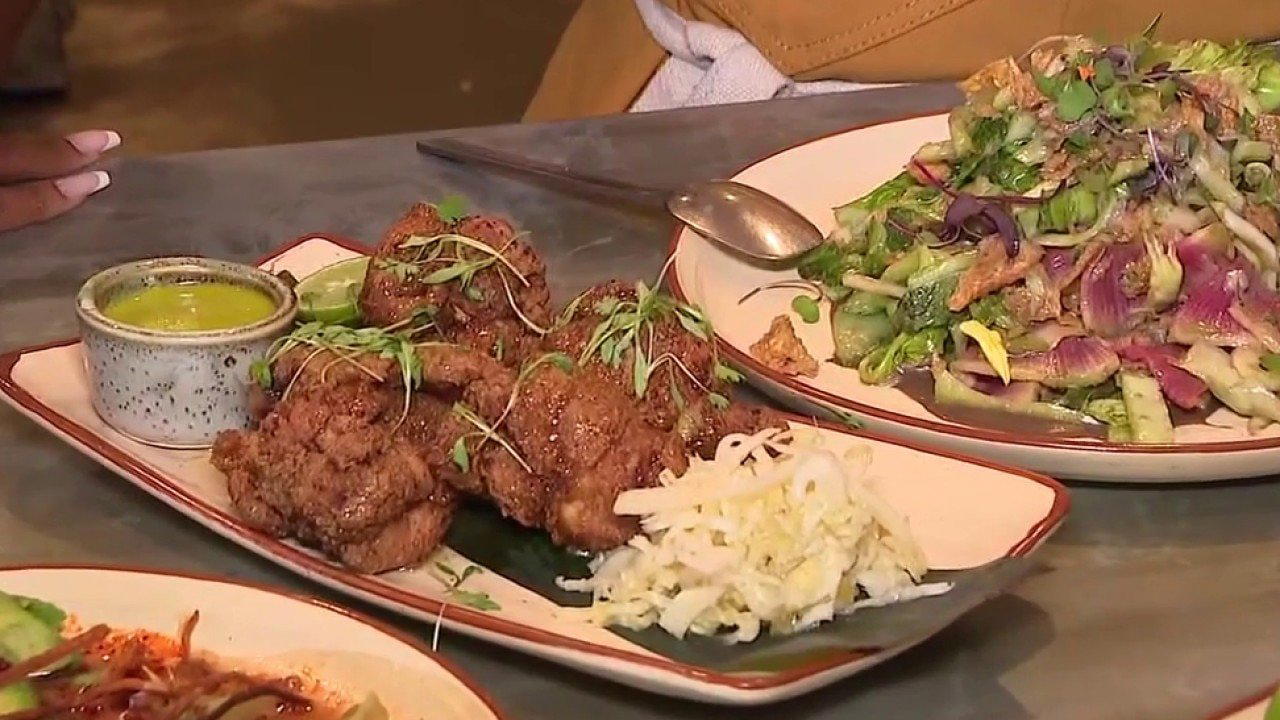
- Patise Fried Chicken Wings
- Gumbo Collard Green Lubia
- Adobo Short Ribs with Grits
- Crispy Hoppin' John Fried Rice
- Macapuno Cornbread
- Collard Green Salad with Fried Chicken Skins
Where Two Ingredient Traditions Converge
Los Angeles has spent the better part of a decade rewarding restaurants that treat fusion as a serious structural proposition rather than a marketing shorthand. Kato built its reputation on New Taiwanese cooking with enough technical discipline to earn sustained critical attention. Hayato brought kaiseki rigor to a city already fluent in Japanese dining. What SoulPhil attempts is different in kind: the pairing of Black American culinary tradition with Filipino cooking, two food cultures that share more ingredient logic than their geographic distance might suggest. Pork, rice, vinegar, slow-cooked proteins, fermented condiments, the deep use of offal and secondary cuts — the overlap is real, and a kitchen that takes that overlap seriously can produce something that reads as coherent rather than forced.
That coherence is the editorial argument SoulPhil is making. This is not a restaurant built around spectacle or provocation. It sits inside a Los Angeles dining culture that has grown comfortable with the idea that diaspora cooking can be rigorous cooking, and that the most interesting ingredient sourcing decisions often come from chefs who understand why certain ingredients matter to specific communities before they think about what to do with them technically.
The Ingredient Logic Behind the Fusion
The Black American pantry and the Filipino pantry share an agricultural and historical context that most fusion concepts ignore entirely. Both traditions developed in conditions where resourcefulness shaped flavor: braised collard greens and sinigang share the same principle of using acidity and long cooking to transform tough, undervalued ingredients. Adobo and the vinegar-based preparations that run through Southern cooking use acid not as a finishing note but as a structural element. Lechon and whole-animal Southern barbecue both treat pork as a ceremonial protein, slow-cooked over time, finished with smoke or dry heat.
When a restaurant premises itself on this kind of ingredient archaeology rather than on simple aesthetic novelty, sourcing decisions become central. The question is not only what to put on a plate but where those ingredients come from, and whether the sourcing choices honor the agricultural communities that developed them. Los Angeles gives a kitchen like SoulPhil unusual geographic access: California's Central Valley produces rice varieties that can speak to both Filipino and Southern American cooking traditions, while the state's proximity to Pacific fishing routes and its large Filipino-American farming community means that sourcing with specificity is possible in a way it might not be elsewhere.
This matters comparatively. Consider how Single Thread Farm in Healdsburg treats ingredient provenance as an organizing principle for the entire dining experience, or how Lazy Bear in San Francisco frames its sourcing decisions within a broader narrative about Northern California's food systems. SoulPhil is operating in that same register of intentional provenance, but applied to a fusion tradition that is historically underrepresented at the premium end of the American dining market.
SoulPhil in the Context of Los Angeles Fusion
The upper tier of Los Angeles dining has consolidated around a small number of formats: the long tasting menu in the mode of Somni, the chef-driven a la carte room like Osteria Mozza, and the counter-service omakase that Hayato represents. SoulPhil does not fit cleanly into any of these categories, which is part of what makes it worth tracking. It is operating in the space between neighborhood restaurant and concept restaurant, where the food is the argument and the format is secondary.
Nationally, the conversation around Black American fine dining has accelerated. Restaurants that take Southern and African-American cooking traditions seriously at a technical level now appear in the Michelin guides and on the James Beard shortlists in ways they did not a decade ago. The parallel conversation around Filipino cuisine has been slower to arrive at the premium tier, though restaurants like Providence have demonstrated that Los Angeles diners will engage with ingredient-forward cooking that demands some cultural literacy. SoulPhil lands at the intersection of both conversations.
For comparison outside California: Emeril's in New Orleans showed how a Southern-inflected kitchen could find institutional recognition without abandoning its ingredient roots. Le Bernardin in New York City demonstrates what sustained technical commitment to a specific ingredient category looks like over decades. SoulPhil is earlier in that story, but the category it occupies — Black and Filipino fusion with an ingredient-first discipline, has no obvious incumbent in the American fine dining market.
Seasonal and Agricultural Timing
Filipino cooking is deeply seasonal in ways that are not always apparent to diners unfamiliar with the cuisine. The availability of green mangoes, fresh coconut, calamansi, and specific pork cuts tied to festival calendars shapes what a Filipino-inflected kitchen should be doing at different points in the year. Black American cooking has its own seasonal rhythm: fresh field peas in summer, root vegetables and braised proteins through winter, the late-summer abundance that drives preservation and pickling traditions. A kitchen that genuinely integrates both calendars will read differently in March than it does in August, and that seasonal sensitivity is one of the marks of a concept operating with real ingredient conviction rather than a fixed menu that uses fusion as decoration.
Visitors planning around ingredient seasonality should note that Los Angeles's year-round growing climate compresses some of these distinctions, but the late summer and early fall window tends to align the two culinary calendars most productively: stone fruits, fresh chiles, and the transition toward braised proteins create a natural overlap between what Southern cooking and Filipino cooking are doing well at the same time.
Planning Your Visit
SoulPhil sits in a Los Angeles dining market where booking ahead is the operative standard for any restaurant generating genuine critical interest. The city's premium dining tier, including Kato and Hayato at the $$$$ price point, typically requires reservations placed two to four weeks in advance for weekday seats and six to eight weeks for prime weekend slots. Walk-in availability at concept-driven restaurants in this market tends to be limited, particularly once word-of-mouth reaches a tipping point. Specific booking details, hours, and current pricing for SoulPhil should be confirmed directly, as the restaurant's format and service structure have not been formally documented in public records at the time of writing.
For broader planning across the city, EP Club's full Los Angeles restaurants guide provides the most complete picture of where SoulPhil fits in the wider dining ecosystem. Visitors building a longer itinerary can also consult our Los Angeles hotels guide, bars guide, wineries guide, and experiences guide for a complete picture of the city. Those traveling from outside the US seeking a reference point for the technical ambition SoulPhil represents might look at what Alinea in Chicago, The French Laundry in Napa, 8½ Otto e Mezzo Bombana in Hong Kong, or Alain Ducasse at Louis XV in Monte Carlo each represent in terms of cuisine-as-argument dining.
Frequently asked questions
How would you describe the cuisine at SoulPhil?
How does SoulPhil's Black and Filipino fusion differ from other fusion restaurants in Los Angeles?
Most fusion concepts in Los Angeles pair cuisines on the basis of flavor profile or chef biography alone. SoulPhil grounds its Black and Filipino fusion in a shared agricultural and historical context, specifically the overlapping pantry traditions that developed across both cultures through comparable patterns of resourcefulness and adaptation. That distinction means the menu functions as a coherent argument rather than an eclectic collection, which places it closer in spirit to concept-driven LA restaurants like Kato than to broader pan-Asian or pan-diaspora formats.
What should I order at SoulPhil?
SoulPhil's menu is built around the structural overlap between Black American and Filipino pantry staples, so dishes that foreground that intersection are where the concept is most coherent. Preparations that draw on shared fermentation, braising, or vinegar-forward techniques tend to illustrate what makes this Black and Filipino fusion format worth the trip. Check current menu availability directly with the restaurant, as the kitchen works with seasonal and agricultural timing central to Filipino cooking traditions.
Do they take walk-ins at SoulPhil?
SoulPhil operates in a Los Angeles dining market where restaurants generating genuine critical interest fill tables through advance bookings rather than walk-in availability. Contacting the restaurant directly before arriving is the practical approach. Same-day seats, if they exist, are the exception rather than the rule for a concept positioned in LA's chef-driven fusion tier.
What's the signature at SoulPhil?
The defining proposition at SoulPhil is the structural argument that Black American and Filipino cooking share agricultural and historical common ground that most fusion restaurants never engage seriously. That thesis, expressed through the cuisine itself, is what separates the restaurant from surface-level crossover concepts in Los Angeles. The signature is less a single dish than a consistent ingredient logic running through the menu.
Is eating at SoulPhil worth the cost?
Price range data for SoulPhil is not currently published, so direct cost comparisons with other Los Angeles fusion restaurants are not possible here. What the concept offers is a Black and Filipino fusion framework grounded in shared culinary history, which is a rarer structural position in LA dining than the number of fusion restaurants in the city might suggest. Whether that proposition justifies a given spend depends on how much the diner values conceptual coherence alongside the food itself.
Nearby-ish Comparables
| Venue | Cuisine | Price | Awards | Notes |
|---|---|---|---|---|
| SoulPhilThis venue — the venue you are viewing | Filipino-Soul Food Fusion | $30–50 | Not listed | Not listed |
| Kato | Modern Taiwanese Fine Dining | $300–500 | 2 Michelin Stars · World's 50 Best #49 | New Taiwanese, Asian |
| Hayato | Traditional Japanese Kaiseki | $300–500 | 2 Michelin Stars · La Liste Top Restaurants | Japanese |
| Vespertine | Avant-Garde Tasting Menu | $200–300 | 2 Michelin Stars · La Liste Top Restaurants | Progressive, Contemporary |
| Camphor | Modern French with Southeast Asian influences | $150–200 | Michelin Plate · World Best Burgers World's 101 Best Burgers #15 | French-Asian, French |
| Gwen | Contemporary American Steakhouse | $50–100 | Michelin Plate · Wine Spectator Best of Award of Excellence | New American, Steakhouse |