Our verdict
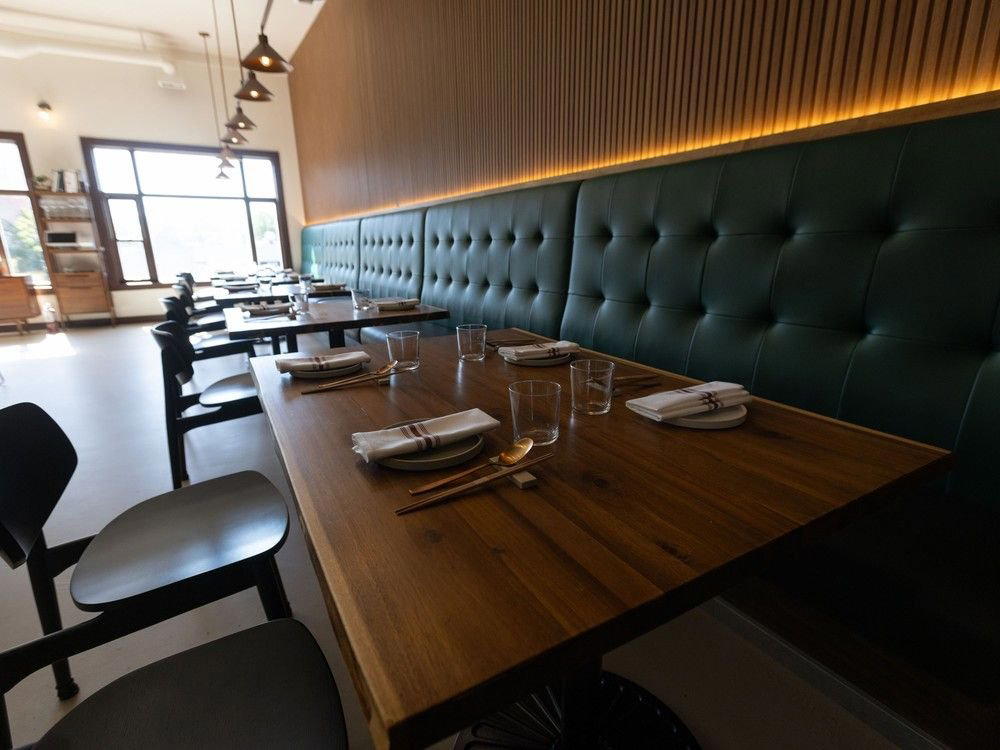
SOT occupies a corner of Inglewood at 1216 9 Ave SE, placing it inside Calgary's most concentrated block of independent dining. The address alone signals intent: this is a neighbourhood where technique-driven kitchens have quietly reshaped what the city expects from a dinner out. Visit for cooking that draws on global methods applied to the produce and proteins that define the Canadian prairies.

Pearl is the En Primeur Club membership app — saves, bookings, and concierge access live there. Same editors, same standards.
Inglewood and the Conditions That Made SOT Possible
Calgary's fine-dining conversation used to centre almost entirely on the downtown core and the hotel dining rooms attached to it. The shift over the past decade has been gradual but unmistakable: independent kitchens with serious culinary programs have taken root in Inglewood, the inner-city neighbourhood that runs along 9th Avenue SE between the Elbow River and the old industrial corridor. SOT sits at 1216 9 Ave SE, which places it inside that cluster rather than apart from it. The address is not incidental. Inglewood rewards a specific kind of operator: one willing to forgo the walk-in volumes of a downtown location in exchange for a neighbourhood audience that eats out regularly and pays attention to what lands on the plate.
That context matters because it shapes what kitchens in this area feel licensed to do. When the room is small and the regulars are knowledgeable, a chef can take positions on sourcing and technique that a higher-volume downtown room might not sustain. Across Calgary's independent dining scene, the most interesting cooking has tended to happen in exactly these conditions. Venues like Alloy built their reputations on applied precision in a city that once prioritised steakhouse scale. Annabelle's Kitchen Downtown has demonstrated that a focused menu with a clear point of view can hold its audience without celebrity chef infrastructure. SOT belongs to that same current.
Local Ingredients, Global Method: The Operating Logic of Prairie Fine Dining
The most instructive frame for SOT is not what it is individually but what it represents as a category. Alberta's food producers are, by any serious measure, among the strongest in the country. The beef is documented: the province accounts for a dominant share of Canada's fed cattle production, and the ranching traditions that support it run generations deep. But the ingredient story extends beyond beef into bison, game birds, root vegetables that develop intensity in short growing seasons, foraged mushrooms from the foothills, and cold-climate grains that have attracted the attention of serious chefs across the country.
What has changed in the past fifteen years is the technique applied to those ingredients. A cohort of Canadian cooks trained in European kitchens, or under chefs who did, returned with a set of methods, from fermentation and preservation to precise temperature control and sauce-building traditions rooted in classical French cuisine, and applied them to the specific proteins and produce of their home regions. This is the same dynamic that produced Tanière³ in Quebec City, where indigenous and hyperlocal ingredients meet a technical vocabulary borrowed from high European cooking, or that underpins the approach at AnnaLena in Vancouver. Calgary's version of this intersection has its own character, one defined by the hard, cold, protein-rich specifics of the Albertan larder rather than by coastal seafood or Quebec's forest tradition.
The broader Canadian dining conversation has been shaped by kitchens willing to hold both sides of that equation simultaneously: rigorous classical training and genuine commitment to the ingredients immediately around them. Alo in Toronto built one of the country's most recognised tasting menu programs on exactly that tension. Restaurant Pearl Morissette in Lincoln has extended the logic to wine production and farming simultaneously. SOT occupies Calgary's position in that national conversation.
The Inglewood Dining Cluster: Where SOT Fits
Understanding SOT requires mapping it against its immediate neighbours. Aloha Modern Kitchen demonstrates how culturally specific cooking can anchor itself in Inglewood without compromising ambition. Alforno Eau Claire represents the neighbourhood's appetite for Italian-rooted formats. Across the city, A Certain Flair Catering at Lougheed House shows how heritage settings can anchor serious food programs. What Inglewood as a whole has proven is that Calgary's dining audience does not need to be in the financial district to support kitchens operating at a high level.
The comparison to restaurants like Eigensinn Farm in Singhampton or The Pine in Creemore is useful here. Both of those Ontario destinations built serious reputations by operating outside major urban centres, forcing the food itself to justify the journey. Calgary's inner-city independent kitchens are not destination restaurants in the geographic sense, but they operate with a similar self-sufficiency: the room cannot rely on foot traffic or tourist volumes, so the cooking has to carry the room. That pressure tends to produce more considered menus.
For readers tracking the national picture, the most useful international reference points are kitchens where the discipline comes from classical or contemporary global training and the ingredients are resolutely local. Le Bernardin in New York City has long demonstrated what sustained technical rigour looks like when applied to a specific category of ingredient. Atomix in New York City shows how cultural specificity and precise technique can coexist without one subordinating the other. The Canadian iteration of that sensibility, from Jérôme Ferrer's Europea in Montreal to Narval in Rimouski and Aux Anciens Canadiens in Quebec, is still being written, and SOT is part of that ongoing draft.
Barra Fion in Burlington offers a useful comparison for readers tracking how mid-size Canadian cities handle the same local-global technique dynamic outside the major metros.
Know Before You Go
- Address: 1216 9 Ave SE, Calgary, AB T2G 0T1, Canada
- Neighbourhood: Inglewood, inner-city Calgary
- Pricing: Price range not confirmed; check directly before visiting
- Website: Not currently listed; search directly or contact via social channels
- Accessibility: 9th Avenue SE is served by Calgary Transit; street parking is available along the Inglewood strip
Frequently asked questions
Where is SOT located?
SOT is located at 1216 9 Ave SE, Calgary, AB T2G 0T1, Canada, Calgary.
Is SOT in Calgary's Inglewood a good choice for a special occasion dinner?
SOT sits at 1216 9 Ave SE in Inglewood, a neighbourhood that has become Calgary's most concentrated stretch of ambitious independent dining. The format — fine dining grounded in Alberta producers — suits occasions where the meal itself is the focus rather than a backdrop. The room is not a hotel banquet hall, which means the experience scales with attention to the food rather than event-industry polish.
What's the best thing to order at SOT?
SOT's kitchen operates within the Alberta producer tradition, meaning the most rewarding dishes tend to be those built around locally sourced proteins and seasonal prairie ingredients. Because the menu changes with supply, the server's recommendation on any given evening is worth taking seriously. Arrive without a fixed agenda and the kitchen will direct you well.
Do I need a reservation for SOT?
For a fine-dining room in Inglewood's increasingly competitive dining cluster, walk-ins are a gamble — particularly on weekends when the neighbourhood draws consistent traffic from across Calgary. Booking ahead is the practical approach.
What do critics highlight about SOT?
Coverage of SOT consistently returns to its place within Calgary's broader shift away from downtown hotel dining toward independent neighbourhood rooms. Inglewood's position as a proving ground for serious cooking gives SOT a context that amplifies what it does: local sourcing applied with technical discipline rather than rural nostalgia.
How does SOT handle allergies?
Kitchens operating at this level in Calgary's fine-dining tier routinely accommodate dietary restrictions when notified at booking. Given SOT's Inglewood address at 1216 9 Ave SE, the clearest path is to flag any allergies when you secure your reservation so the kitchen can adjust ahead of service.
Pricing, Compared
Comparable venues nearby, for context on price, style, and recognition.
| Venue | Cuisine | Price | Notes |
|---|---|---|---|
| SOTThis venue — the venue you are viewing | Modern Korean | $50–100 | Not listed |
| Cheongdam Korean BBQ - Seton | Korean BBQ (All-You-Can-Eat) | $30–50 | Seton, Korean BBQ (All-You-Can-Eat) |
| Roy's Korean Kitchen | Modern Korean | Not listed | 4th Street SW, Modern Korean |
| Pigeonhole Downtown | Modern Canadian Small Plates | $30–50 | Downtown Commercial Core, Modern Canadian Small Plates |
| Alva | Canadiana comfort food and cocktails | Not listed | Downtown Calgary, Canadiana comfort food and cocktails |
| FinePrint | Contemporary French-Inspired Fine Dining | $50–100 | Downtown Commercial Core, Contemporary French-Inspired Fine Dining |