

Michelin Guide Plate · The Best Chef One Knife · Tatler Best New Restaurant
Our verdict
Somma occupies a fourth-floor space in Singapore's New Bahru complex, where rugged stone, marble, and leather set the scene for Italian cooking with a research-led edge. Chef Mirko Febbrile runs a cocktail and pasta bar alongside an R&D lab, producing dishes such as spaghettone with red carrot reduction and slipper lobster, and lamb saddle finished over charcoal with wild boar lardo. It sits at the sharper end of Singapore's Italian dining conversation.

Pearl is the En Primeur Club membership app, where members save venues, book tables and use the concierge.
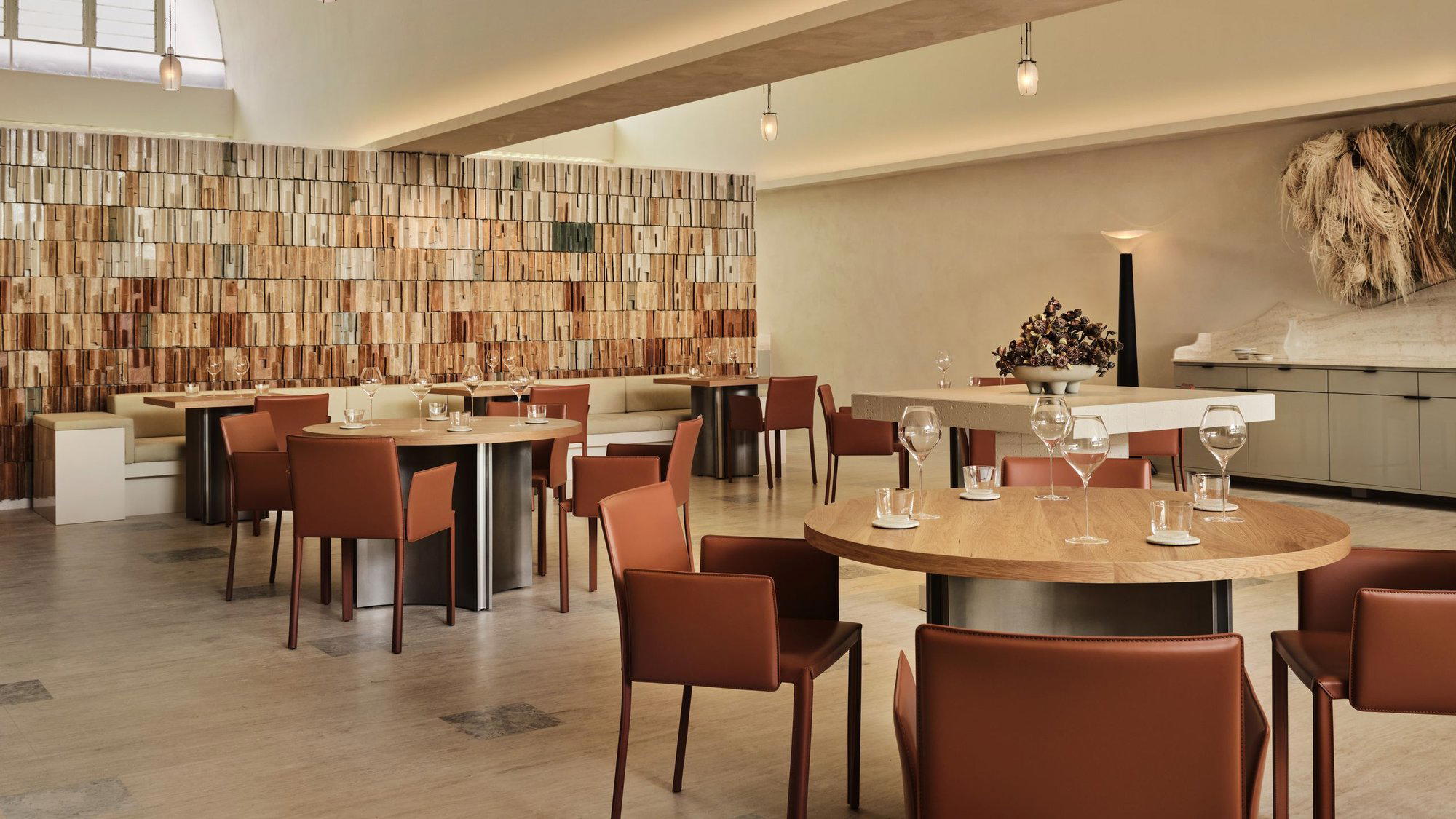
Stone, Marble, and the Italian Kitchen Reimagined in Singapore
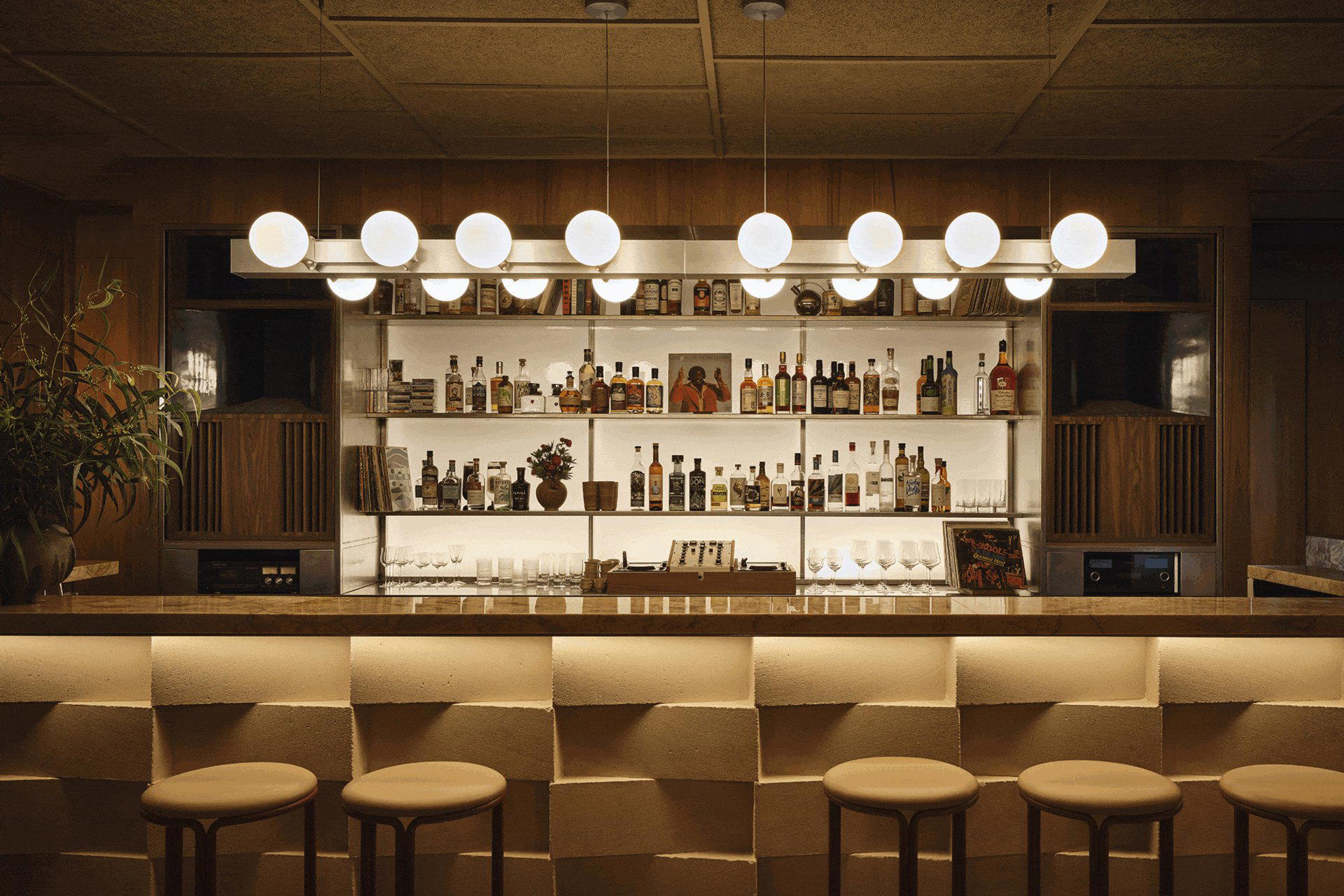
The fourth floor of New Bahru's School Block is not where you would instinctively look for one of Singapore's more considered Italian tables. The complex itself, a converted 1950s school compound on Kim Yam Road in the River Valley corridor, has become a layered destination since its relaunch, drawing independent food and retail operators who read the space's raw bones as an asset rather than an obstacle. Somma fits that logic. The room announces itself through materials: rugged stone, marble surfaces, and leather seating that together create something closer to a sculptural environment than a dressed dining room. There is no softening of the edges here, no tropical rattan to signal "Singapore contemporary." The aesthetic declares a different conversation.
That conversation is Italian, but not in the red-sauce, linen-tablecloth register that once defined the category across Southeast Asian dining cities. Italian cooking in Singapore has grown considerably in ambition over the past decade, moving from hotel-anchored trattorias toward a smaller cohort of chef-driven rooms where the cuisine's technical foundations are taken seriously and regional Italian traditions are treated as a living, adaptable body of knowledge rather than a set of fixed recipes. Somma positions itself within that cohort.
What the R&D; Lab Signals About the Menu
The presence of an on-site research and development lab is an editorial detail worth pausing on, because it signals something real about kitchen methodology rather than being merely decorative. In a dining culture where the phrase "research-led" is applied liberally, a dedicated physical space for experimentation indicates that iteration is built into how the menu evolves, not added retrospectively as a marketing note. Comparable structures exist in the back-of-house operations of some of Asia's most technically ambitious kitchens, including the development programs at restaurants recognised by the World's 50 Best organisation and similar bodies. The presence of such infrastructure at Somma places Chef Mirko Febbrile's operation in a category where cooking is treated as an ongoing investigation rather than a fixed product.
Febbrile's background is Italian, and the menu reflects the discipline of that lineage, though applied with the ingredient access and multicultural reference points that Singapore's position as a logistics and hospitality hub affords. Spaghettone with a red carrot reduction and slipper lobster is a dish that requires understanding of pasta geometry and cooking time, the structural differences between spaghettoni and thinner formats, and how a vegetable-based reduction can carry enough body to hold against crustacean sweetness without overwhelming it. The mantis shrimp bisque draws on a classic French-Italian bisque technique applied to a crustacean that is more common in Asian coastal kitchens than in European ones. Lamb saddle finished over charcoal with wild boar lardo is a preparation that reads directly from the Italian tradition of lardo as both a curing and finishing ingredient, applied to a protein treated with live-fire technique. These are dishes that reward knowing what came before them.
Italian Cooking's Deep Reference Points
The cultural roots of Italian cuisine are worth framing for readers approaching Somma without prior immersion in the subject. Italian food is, above all else, a regional cuisine that was never fully unified into a national standard. The north uses butter, cream, and egg-rich pasta; the south favours olive oil, durum wheat, and seafood; Emilia-Romagna has arguably produced the most technically rigorous pasta tradition anywhere in the world; Lazio, Sicily, and Campania each maintain distinct identities. The pasta bar format that Somma operates as part of its offer connects to this regional inheritance in a specific way: in Italy, stand-alone pasta-focused counters exist as a category, particularly in Bologna and Rome, where the discipline of pasta-making is treated as a subject worthy of its own dedicated venue rather than a section within a broader Italian menu.
In Singapore, the pasta bar as a format has appeared with increasing frequency as Italian dining has matured. What separates the more serious operators from the derivative ones is usually the pasta itself: whether the dough is made fresh, whether formats are selected with attention to how sauce adheres to surface texture, and whether cooking water and timing are treated with the same discipline as a Japanese kitchen applies to dashi. Somma's cocktail and pasta bar component, running alongside the main dining room, provides a point of entry at a different register and a different price expectation, which is a structurally intelligent way to serve a broader audience without diluting the kitchen's ambitions at the upper end.
Placing Somma in Singapore's Italian and Fine Dining Context
Singapore operates one of Asia's most competitive fine dining markets. The city's Michelin Guide presence, the concentration of international chef outposts, and the density of locally grown serious restaurants mean that any new room enters a market where the reference points are high and well-informed diners have seen considerable range. The Italian category specifically includes long-established operators that have held critical recognition across multiple years, and newer entries that have brought European training into a Singapore context.
Somma is not playing in the same price tier as the three-Michelin-star rooms that represent Singapore's ceiling. Odette and Les Amis operate in the French contemporary register at the top of the market. Zén brings Swedish-influenced European Contemporary to a similar tier. Jaan by Kirk Westaway represents British contemporary at a three-Michelin-star level. For diners calibrating where Italian cuisine with genuine technical ambition sits within this field, the more relevant comparison set is the mid-to-upper bracket of chef-driven rooms where the cooking has a clear point of view but the format allows for a wider range of visit contexts. Meta, which operates in the innovative category, provides a reference point for what a chef-driven room with research-oriented methodology looks like at a similar ambition level. For global context, kitchens like 8½ Otto e Mezzo Bombana in Hong Kong represent the Italian fine dining register in Asia at its most awarded, while European benchmarks such as Alain Ducasse at Louis XV in Monte Carlo and Alléno Paris au Pavillon Ledoyen define what technical rigour at the continental level looks like.
Internationally, Le Bernardin in New York demonstrates how a cuisine anchored in a single national tradition can sustain multi-decade critical relevance through consistency and technical depth. Atomix in New York, Lazy Bear in San Francisco, and Aponiente in El Puerto de Santa María each represent different versions of the same principle: a kitchen where research methodology is woven into the operational structure, not bolted on. Somma's R&D; lab places it in that conversation at its own scale, operating at a Singapore address rather than a European or American one. For completeness on Singapore's broader hospitality context, EP Club maintains guides across restaurants, hotels, bars, wineries, and experiences.
Planning Your Visit
Somma sits at 46 Kim Yam Road, New Bahru, on the fourth floor of the School Block. The New Bahru complex is accessible from the River Valley area and benefits from Singapore's taxi and ride-hail infrastructure, which makes the slightly refined position within the compound direct to reach. Given that the format combines a pasta bar with a full dining room and an R&D-driven; menu, the experience will differ depending on which component you access, and clarifying the format options when booking is advisable.
For readers oriented toward Italian cooking with genuine technical ambition, Emeril's in New Orleans offers a point of comparison for what a chef-driven room with strong regional identity looks like in a different culinary culture, which may help calibrate expectations for what Somma is doing within its own tradition.
Quick reference: Somma, 46 Kim Yam Road, New Bahru, #04-02A School Block, Singapore 239351.
Frequently asked questions
What do people recommend at Somma?
The dishes that speak most directly to the kitchen's approach are the ones where Italian technique meets Asian ingredients: the spaghettone with red carrot reduction and slipper lobster, and the mantis shrimp bisque, both demonstrate what an Italian-trained kitchen can do with crustaceans that are more common in Southeast Asian fish markets than in European ones. The lamb saddle with wild boar lardo is a more purely Italian preparation and the cleaner reference point for readers assessing Febbrile's command of the tradition. If your primary interest is pasta rather than the full dinner format, the cocktail and pasta bar component offers a different register and a focused point of entry into the kitchen's work.
How far ahead should I plan for Somma?
In Singapore's current fine dining environment, rooms operating at this ambition level with limited seating and a dual-format offer tend to fill quickly on premium evenings, particularly Thursday through Saturday. If you are visiting Singapore for a specific travel window and Somma is a priority, contacting the venue as soon as your dates are confirmed is the lowest-risk approach. The pasta bar component may carry different availability dynamics than the full dining room, which is worth asking about directly.
Standing Among Peers
A small set of peers for context, based on recorded venue fields.
| Venue | Cuisine | Price | Awards | Notes |
|---|---|---|---|---|
| SommaThis venue (the venue you are viewing) | Modern Puglian Italian | $200–300 | Michelin Guide Plate · The Best Chef One Knife | Not listed |
| Zén | Yakitori & Japanese Izakaya | $50–100 | Tabelog 100 #92 | European Contemporary |
| Jaan by Kirk Westaway | Modern British Fine Dining | $200–300 | 2 Michelin Stars · Michelin Guide 2 Stars | British Contemporary |
| Burnt Ends | Modern Australian Barbecue | $100–150 | 1 Michelin Star · Michelin Guide 1 Star | Australian Barbecue, Barbecue |
| Summer Pavilion | Michelin-Starred Cantonese | $100–150 | 1 Michelin Star · Michelin Guide 1 Star | Cantonese |
| Born | Contemporary Fusion Fine Dining | $200–300 | 1 Michelin Star · Michelin Guide 1 Star | Creative Cuisine, Innovative |
Recognition history
Dated appearances from independent guides and award organizations, with the underlying list record or original source where available.
Michelin Guide Plate
Michelin Guide
Tatler Best New Restaurant
Tatler
The Best Chef One Knife
The Best Chef
Full recognition history (6 entries)
Tatler Best Service
Tatler
Tatler Best Singapore: Best New Restaurant
Tatler
Tatler Listed in Best Restaurants Asia-Pacific
Tatler
Continue exploring
More in Singapore
More from Chef Mirko Febbrile
Browse all →
Restaurants in Singapore
All restaurants in Singapore →
Bars in Singapore
All bars in Singapore →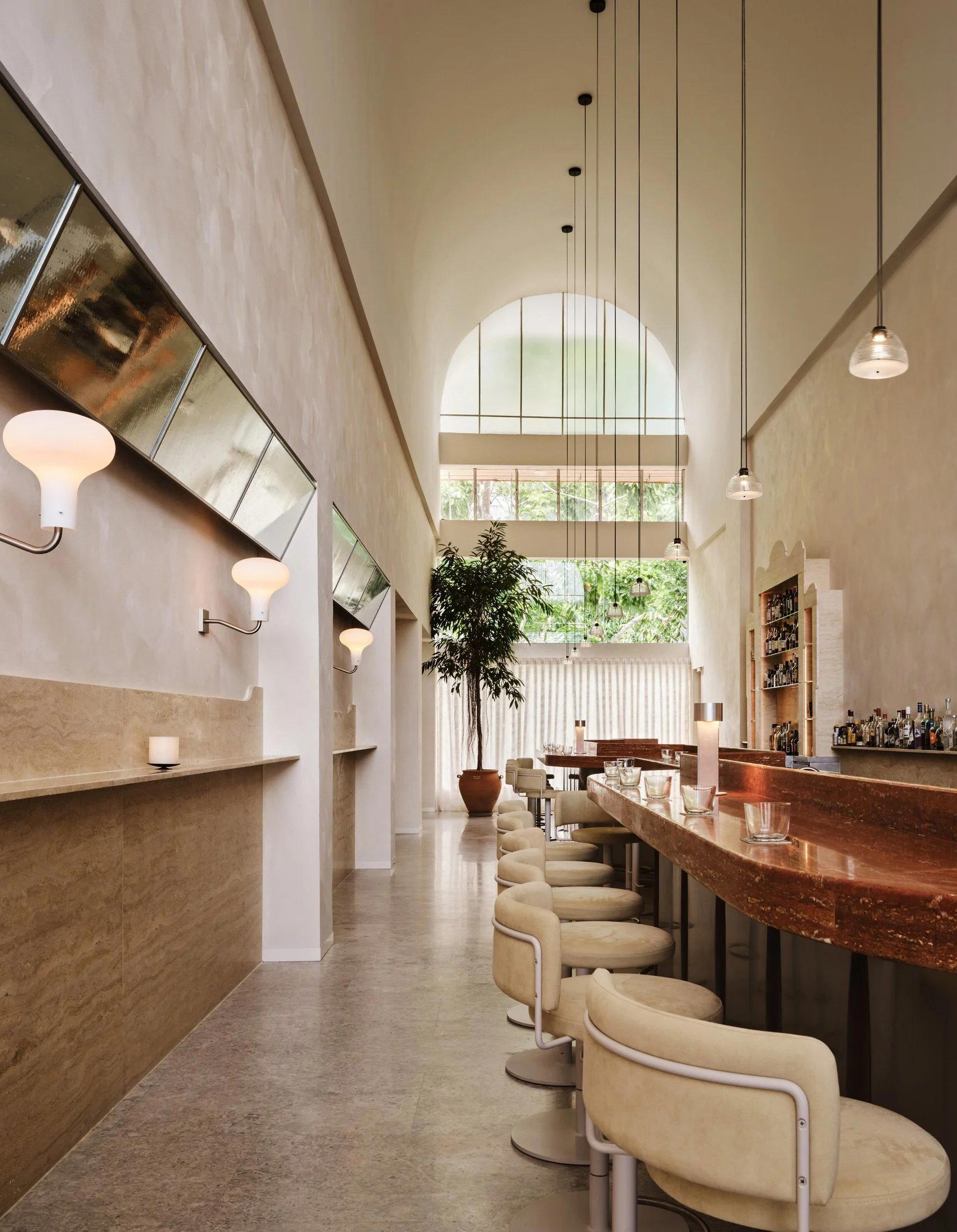
Details
- Intimate
- Elegant
- Bohemian
- Sophisticated
- Date Night
- Special Occasion
- Open Kitchen
- Historic Building
- Wine Cellar
- Local Sourcing
- Tasting Menu
- Set Menu
Current opening hours
- Monday
- Closed
- Tuesday
- 6–10:30 PM
- Wednesday
- 6–10:30 PM
- Thursday
- 6–10:30 PM
- Friday
- 6–10:30 PM
- Saturday
- 6–10:30 PM
- Sunday
- Closed
Hours can change for holidays and private events. Hours as of .
Soft beige-toned intimate 36-seater with raw seed artworks, Italian roof tiles, lofty arched ceilings, hush meditative atmosphere, and naturalistic displays.