Smith & Mills
Smith & Mills occupies a narrow former carriage house on North Moore Street in Tribeca, one of the neighbourhood's more low-key drinking addresses. The bar's compact format and deliberate pacing set it apart from the louder cocktail rooms of lower Manhattan. It draws a crowd that values a well-made drink over spectacle, and has done so consistently since the mid-2000s.
Pearl is the En Primeur Club membership app — saves, bookings, and concierge access live there. Same editors, same standards.
- Address
- 71 N Moore St, New York, NY 10013
- Phone
- (646) 858-1433
- Website
- smithandmills.com
- Directions
- Get directions
 Saves & bookings on Pearl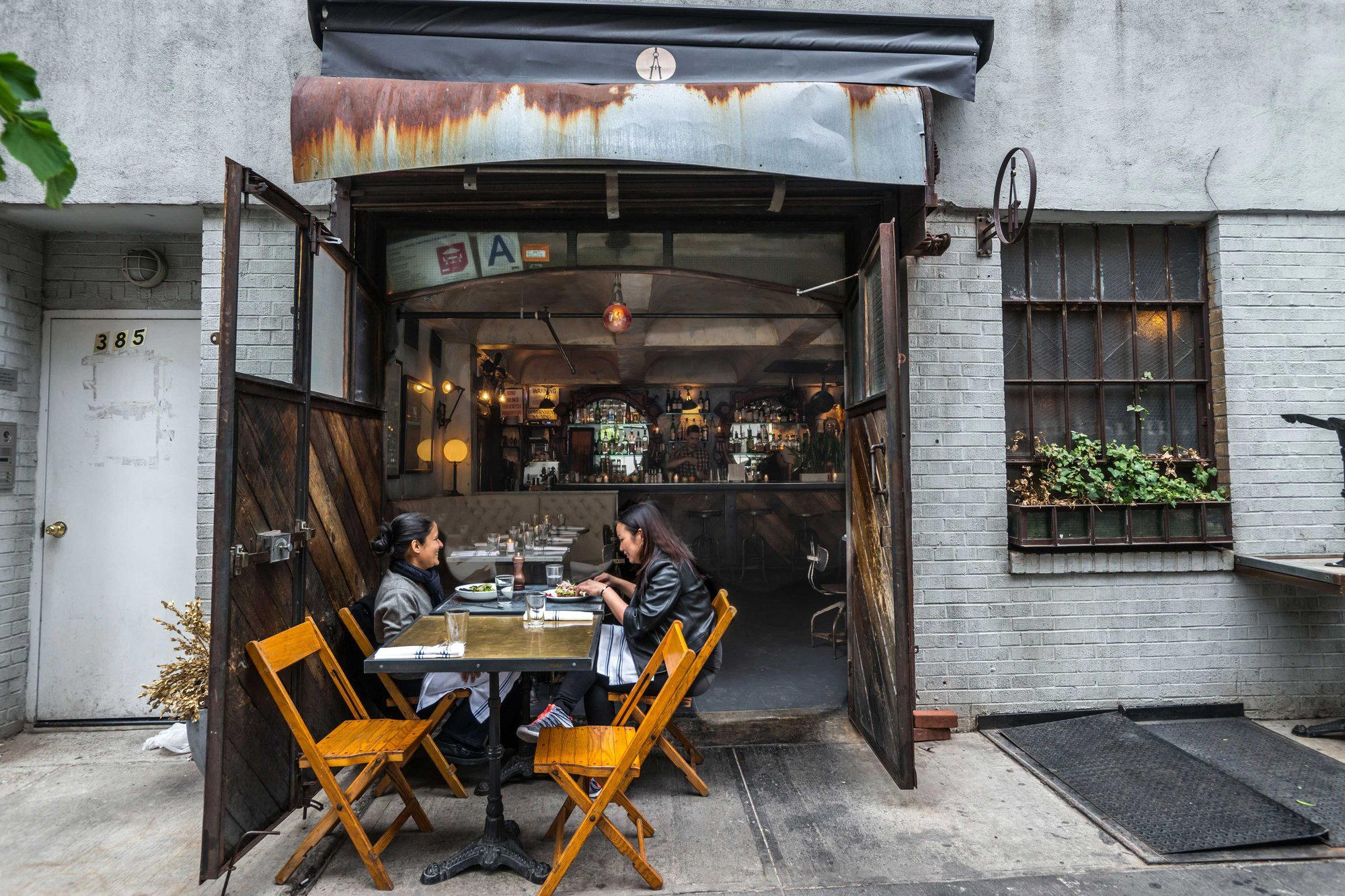
A Tribeca Address Built for the Ritual of the Drink
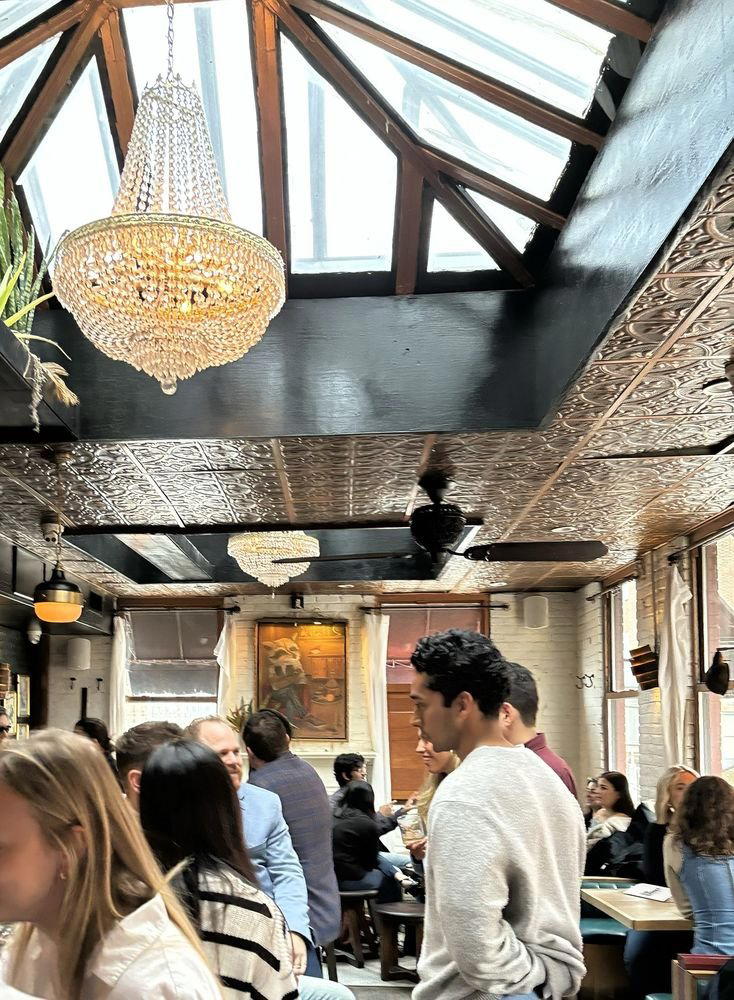
Smith & Mills is an American raw bar and small plates restaurant at 71 N Moore St in New York City, with. Smith & Mills did not arrive with a press campaign. It arrived as a room: roughly 600 square feet of exposed brick, mismatched furniture, and the kind of dim lighting that makes every conversation feel like it was meant to be private. That restraint has, over nearly two decades, become the bar's most consistent credential.
Tribeca's drinking culture has always sat at a slight remove from the more programmatic cocktail scenes downtown. The neighbourhood draws a crowd that tends to resist the high-concept bar format, partly because the residents and regulars who sustain its hospitality economy have seen enough trends cycle through. What survives here tends to be the rooms that understand ritual over novelty: the idea that arriving, sitting, ordering, and staying are themselves the point.
The Format: Small by Design
Few bars in lower Manhattan operate at this scale deliberately. The footprint at 71 North Moore Street is small enough that the room fills before a crowd forms, which changes the dynamics of the evening entirely. There is no queue strategy, no velvet rope, and no cover. The bar either has room or it does not, and that simplicity shapes how the space is used.
This kind of format has precedents across the city's better cocktail rooms, but Smith & Mills arrived at it before the compact-bar template became a self-conscious design choice. The effect on the drinking ritual is direct: you are closer to the bar, closer to the process, and closer to the people making your drink. The performance gap that opens up in larger venues, where the bartender is working to a room rather than a table, does not exist here.
New York's cocktail culture has passed through several distinct phases since the early 2000s. The speakeasy revival prized obscurity and theatrical entry. The technical program era, which produced the clarified-drink formats and elaborate garnish conventions now associated with places like Eleven Madison Park's bar program and the rooms around it, prioritised visible craft. Smith & Mills belongs to neither camp in a strict sense. Its posture is closer to the European bar tradition: a place where the drink is made correctly, served without ceremony, and left to do its work.
Where Smith & Mills Sits in New York's Drinking Order
Positioning a bar without published awards data or a formal price tier requires reading the room against its comparable set. In Tribeca, the relevant comparison is not with the $$$$ cocktail programs at destination dining rooms like Le Bernardin, Per Se, or Masa, where a drink arrives as part of a structured multi-hour meal. Nor is it the kind of technically driven Korean-inflected program you find at Atomix. The comparison set is smaller and neighbourhood-specific: bars that have held a regular clientele in a residential pocket of lower Manhattan for long enough to become part of how that neighbourhood organises its evenings.
That is a more durable form of status than a listing in a ranking, and it is harder to manufacture. The bars that survive in Tribeca for fifteen-plus years do so because residents return, not because tourists seek them out. Smith & Mills sits in that category.
The Pacing of an Evening Here
The ritual at a bar of this size is unhurried by architecture. There is no second floor to migrate to, no side room where a different mood operates. The evening moves at the speed of the room, and the room moves slowly. That is not a criticism. It is the design logic.
Bars that reward this kind of lingering tend to have a specific relationship with their drinks list: one that favours depth over breadth, and classics executed with precision over seasonal novelty menus that change every eight weeks. Whether Smith & Mills maintains that approach in its current iteration, the bones of the space have always pushed toward it. A small room with high acoustics and low capacity does not support a high-turnover drinks operation.
This places it in a tradition that runs through the better craft bars of the city and across comparable formats elsewhere in the country. At Lazy Bear in San Francisco, the ritual is structured around a tasting format with fixed seating. At Smyth in Chicago, the pacing is set by a kitchen. At Smith & Mills, the pacing is set by the room itself, which is a different and older kind of hospitality logic.
Tribeca as Context
North Moore Street sits at the quieter northern edge of Tribeca's commercial strip. The block is residential in character, with the carriage-house architecture that defines much of the neighbourhood's 19th-century building stock. That context matters because it shapes the bar's catchment: people who are already in the neighbourhood, or who have come specifically, rather than foot traffic from a busier arterial street.
Tribeca's premium dining has gravitated toward the more formal end of the spectrum. The neighbourhood hosts some of the city's most expensive tasting menus and a wine culture that tracks closely with what Michelin-recognised rooms in the city's top tier, like Eleven Madison Park, have established as the standard for structured dining. Smith & Mills operates at the other end of that register: informal, unbooked, and resistant to the structured-occasion format that drives Tribeca's restaurant economy at the leading end.
That positioning is both a constraint and a strength. The bar is not competing for the pre-theatre reservation or the anniversary dinner. It is competing for the end of the evening, the post-dinner drink, the unplanned hour. Those are harder slots to fill consistently than a booked tasting menu, and filling them for nearly two decades says something specific about the room's hold on its neighbourhood.
Blue Hill at Stone Barns in Tarrytown, Providence in Los Angeles, Addison in San Diego, The French Laundry in Napa, Single Thread Farm in Healdsburg, Frasca Food & Wine in Boulder, Emeril's in New Orleans, The Inn at Little Washington, Atelier Moessmer Norbert Niederkofler in Brunico, and Dal Pescatore in Runate.
Peers in This Market
Comparable venues nearby, for context on price, style, and recognition.
| Venue | Cuisine | Price | Notes |
|---|---|---|---|
| Smith & MillsThis venue — the venue you are viewing | American Raw Bar & Small Plates | $$$ | Not listed |
| David Burke Kitchen | Modern American Fine Dining | $$$ | SoHo |
| Little Park | Seasonal American Farm-to-Table | $$$ | Tribeca-Civic Center |
| Urban Cove Society and Kitchen | Modern American with Global Fusion | $$$ | Financial District-Battery Park City |
| The Commissary | Modern American Bistro | $$$ | Chinatown-Two Bridges |
| The Dawson | Modern Irish-American Pub Fare | $$$ | Midtown-Times Square |
Continue exploring
More in New York City
Restaurants in New York City
Browse all →
Bars in New York City
Browse all →
Hotels in New York City
Browse all →
Wineries in New York City
Browse all →


At a Glance
- Intimate
- Cozy
- Trendy
- Sophisticated
- Industrial
- Date Night
- Casual Hangout
- After Work
- Late Night
- Craft Cocktails
Current opening hours
- Monday
- 4 PM–12 AM
- Tuesday
- 4 PM–12 AM
- Wednesday
- 4 PM–12 AM
- Thursday
- 4 PM–1 AM
- Friday
- 4 PM–1 AM
- Saturday
- 4 PM–1 AM
- Sunday
- 4 PM–12 AM
Hours can change for holidays and private events. Last verified .
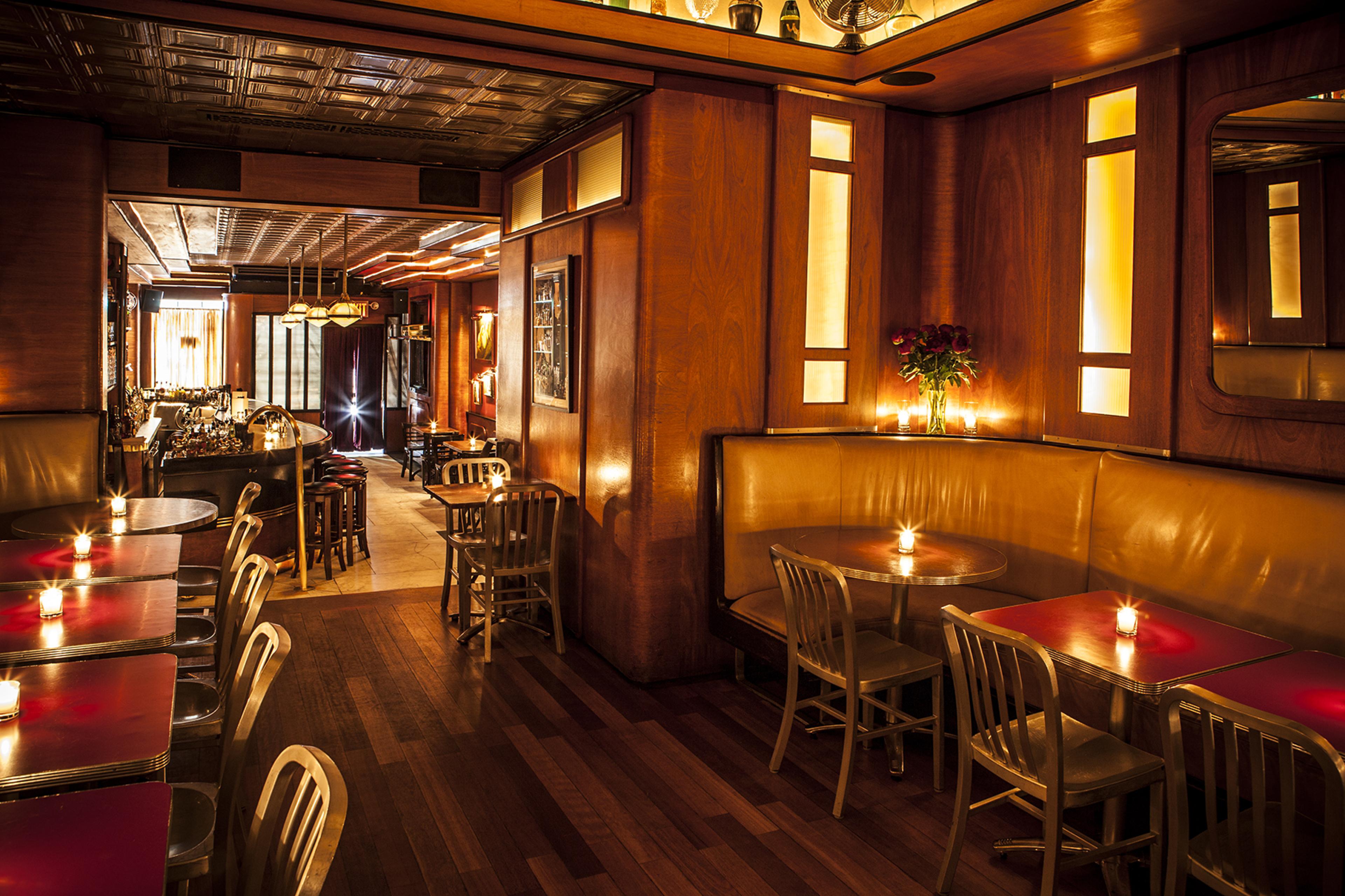
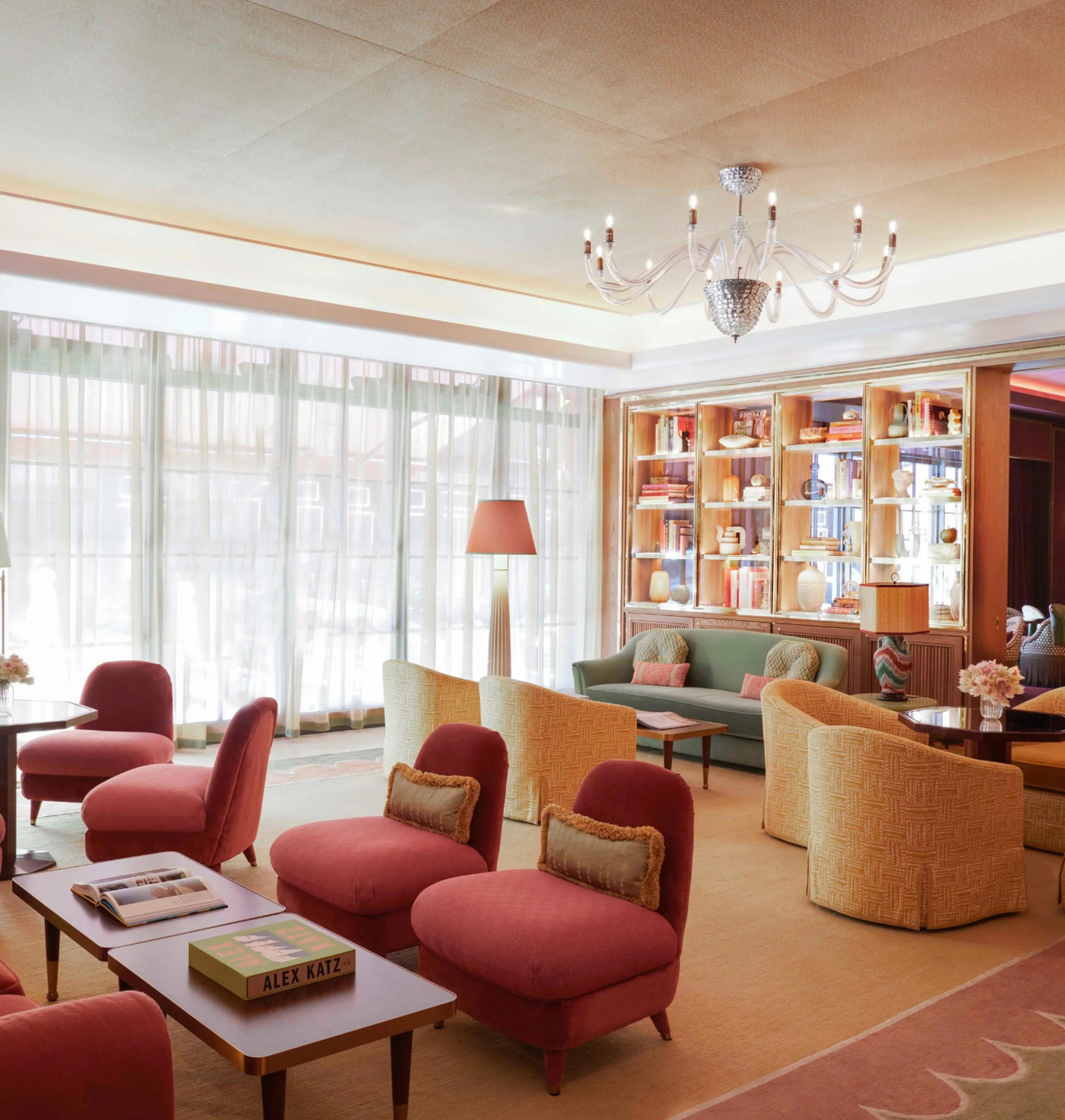
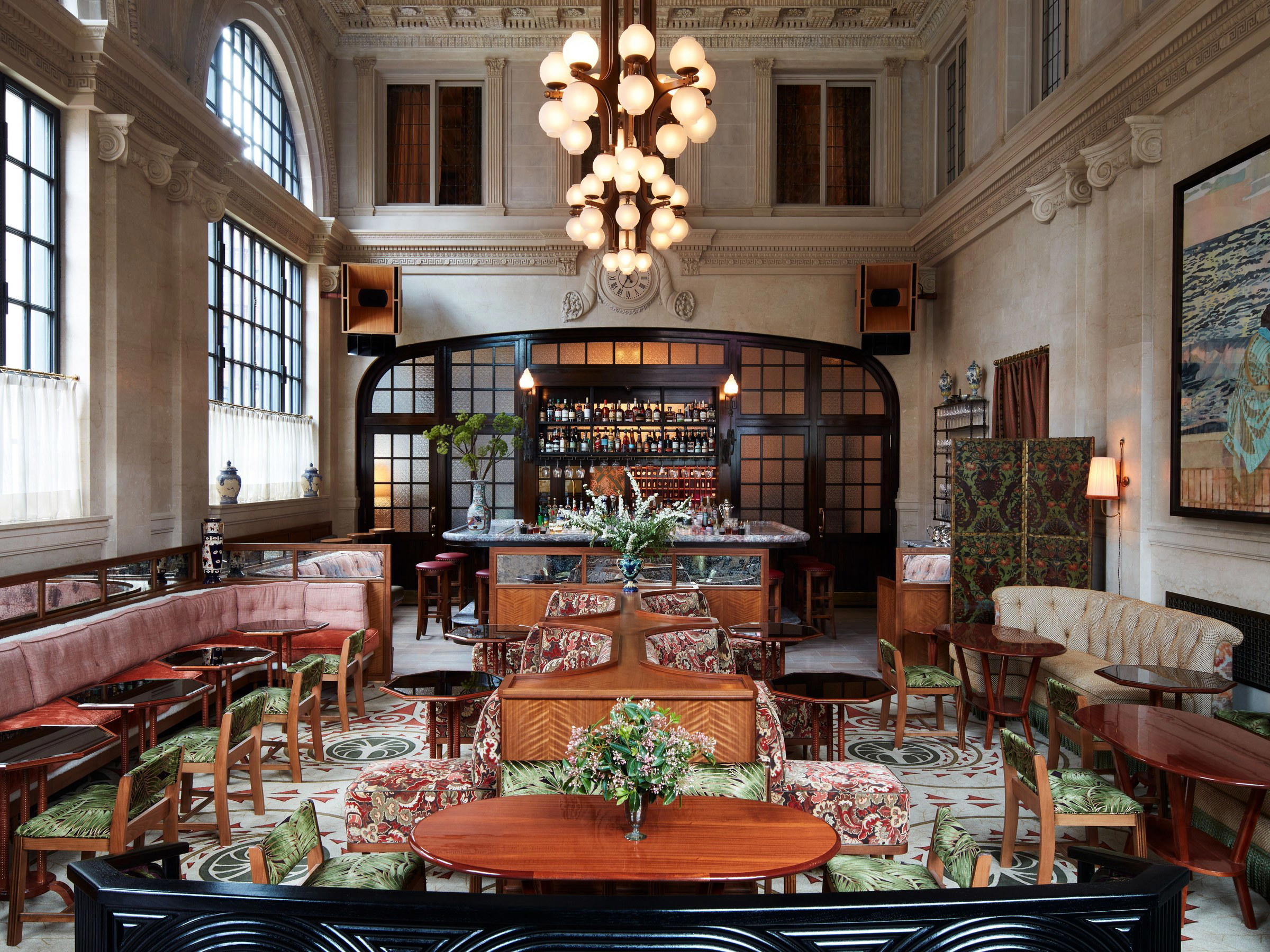
Soft lighting envelops aging materials like molded plaster walls and century-old wood, creating an intimate, moody atmosphere blending historic charm with modern flair.