


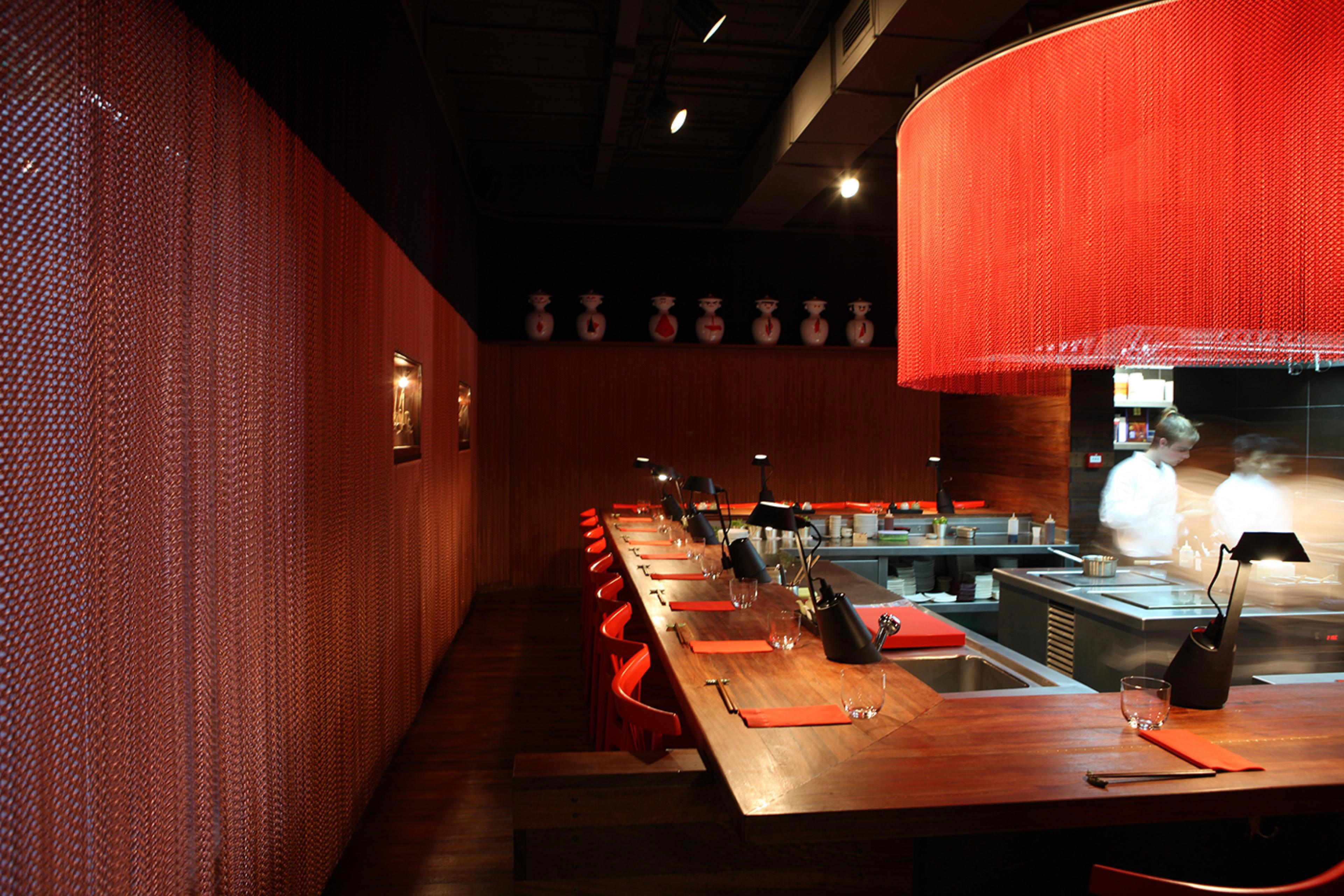
Slow & Low holds a Michelin star in Barcelona's Eixample, operating from an open-kitchen counter format that places diners in direct contact with the cooking process. Three tasting menus of varying length draw on Mexican, Spanish, Argentinian, and Thai references, producing internationally framed dishes delivered jointly by chefs and floor staff.8 across more than 3,500 ratings.
Pearl is the En Primeur Club membership app — saves, bookings, and concierge access live there. Same editors, same standards.
- Address
- Carrer del Comte Borrell, 119, Eixample, 08015 Barcelona, Spain
- Phone
- +34 936 25 45 12
- Website
- slowandlowbcn.com
- Directions
- Get directions
 Saves & bookings on Pearl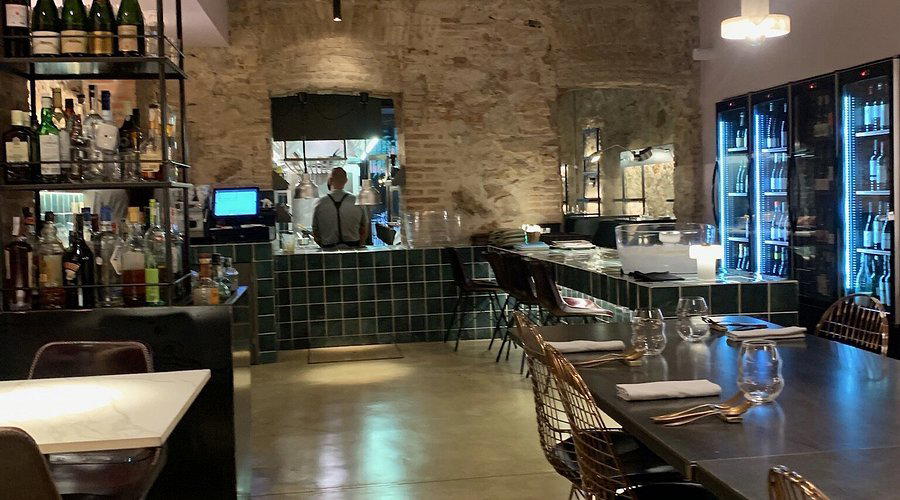
Counter Seating and the Rhythm of an Open Kitchen
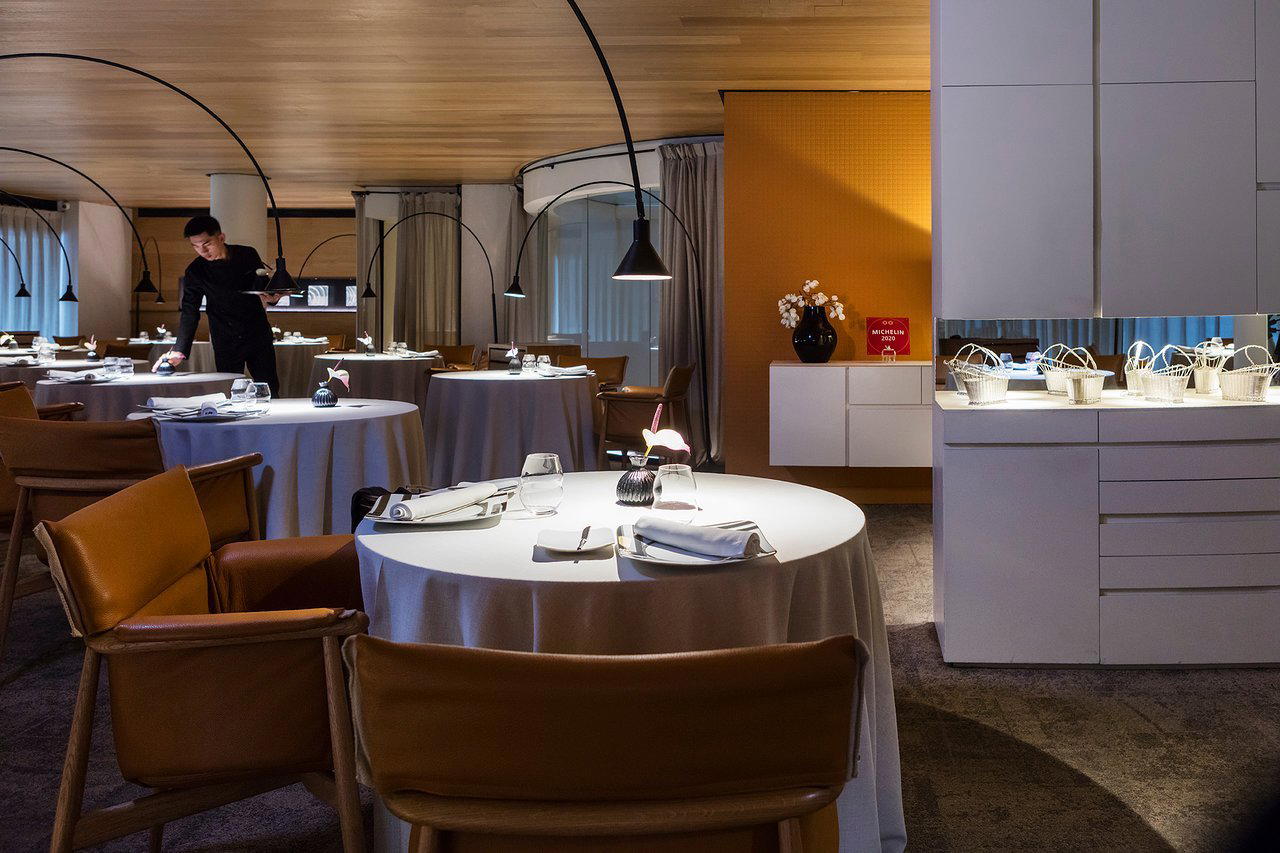
Barcelona's Eixample has settled into a particular mode of serious dining: rooms that keep their formats deliberate, their sightlines clear, and their service architectures tight. Slow & Low is a one-star Michelin restaurant in Barcelona's Eixample, with tasting menus that begin at about $150 per person. Slow & Low sits within that pattern, anchored near the Modernist-era Sant Antoni market on Carrer del Comte Borrell. The open-kitchen layout, built around two counters, puts the preparation sequence directly in front of diners rather than behind closed doors. What arrives at the pass is visible from the moment it begins, and that transparency shapes how the meal reads from first course to last.
Counter-format restaurants occupy a distinct position in the broader hierarchy of tasting-menu dining. The format enforces discipline, there is nowhere for the kitchen to hide, and the pacing of service becomes a public event rather than a backstage operation. In Barcelona, where destination dining tends toward the theatrical at the leading end (see Enigma or the spatial drama of Disfrutar), Slow & Low's counter-first approach represents a more focused proposition: the food and its execution, observed directly.
Three Menus, One Kitchen Logic
The tasting-menu structure here is deliberately tiered. SLOW, SLOW&LOW, and SLOW&LONG share the same kitchen and the same sourcing philosophy but differ in the number of courses on offer. The distinction matters for how the meal builds: the longer the menu, the more fully the kitchen's international frame expands and the more time each sequence has to develop cumulative weight.
The cuisine is described as internationally inspired, with Mexican influence marking the clearest through-line alongside nods to Spanish, Argentinian, and Thai cooking. That geographic spread is not unusual in a city where restaurants like Cocina Hermanos Torres and ABaC work firmly within Catalan and Spanish idioms, making Slow & Low's internationally composite approach a deliberate departure from the regionalist mainstream. For comparison points outside Barcelona, the same category of globally referential tasting menus appears at AYU in Gzira and Boîte in Sint-Idesbald, though the geographic and cultural contexts differ considerably.
Fish and vegetarian preparations feature prominently across all three menu lengths, which positions Slow & Low within a wider shift in Spanish tasting-menu cooking: the move away from meat-centric progression toward seafood and plant-based courses as structural anchors rather than optional additions.
The Arc of the Longer Menu
The editorial logic of a tasting-menu restaurant is best understood through what the longer format permits that shorter ones cannot. In the case of SLOW&LONG, the extended sequence allows for what the restaurant's Michelin citation specifically flags: a presentation moment involving a small seafood box, displayed with ice and seaweed decoration in the manner of a fish auction. That detail is not incidental. It signals a kitchen thinking about the theatre of presentation as a structural element of the meal's arc rather than a garnish applied to individual dishes.
Within the broader context of Spanish fine dining, theatrical presentation has well-documented precedent. The molecular and avant-garde tradition associated with restaurants like El Celler de Can Roca in Girona and the earlier lineage of Ferran Adrià established presentation as narrative. Slow & Low's fish-auction sequence belongs to that general inheritance, but scaled to a format and price point that sits below the two- and three-star tier. The Michelin 2024 one-star recognition positions it in the bracket occupied by technically credible, creatively focused restaurants that haven't yet reached (or aren't targeting) the rarefied comparable set of Lasarte or the three-star category.
Service Architecture: Chefs at the Table
One structural choice at Slow & Low carries real weight for how the meal lands: the table service is shared between chefs and waiting staff, with each dish explained in detail at the moment of delivery. This approach, increasingly common at one-star counter restaurants across Europe, does more than deliver information. It removes the buffer between kitchen intent and diner comprehension, which matters considerably when the cuisine crosses multiple reference points in a single menu.
When a dish has simultaneous debts to Mexican technique and Thai seasoning, explanation becomes load-bearing. Without it, the cross-cultural references risk reading as arbitrary. With it, the progression acquires a logic that positions each course in the sequence. The counter format reinforces this: diners watching the kitchen during preparation arrive at the table explanation with a visual context already in place.
This service model also shifts what the meal is. It becomes less a passive consumption of courses and more an observed creative process, which aligns with the open-kitchen counter logic that defines the space from the outset.
Slow & Low in Barcelona's Tasting-Menu Hierarchy
Barcelona's tasting-menu scene at the €€€€ price tier is densely populated with Michelin-recognised restaurants. Slow & Low's one-star rating places it in the same general tier as several well-established names, though its internationally composite cuisine and counter format distinguish it from restaurants working within more defined national or regional traditions.
| Venue | Stars | Price | Format | Cuisine Frame | Service Days |
|---|---|---|---|---|---|
| Slow & Low | 1 Michelin (2024) | €€€€ | Counter / open kitchen | International (Mexican, Spanish, Argentinian, Thai) | Tue–Sat evenings |
| Disfrutar | 3 Michelin | €€€€ | Full dining room | Progressive Creative | Varies |
| Lasarte | 3 Michelin | €€€€ | Full dining room | Progressive Spanish, Creative | Varies |
| Cocina Hermanos Torres | 2 Michelin | €€€€ | Greenhouse dining room | Creative | Varies |
| ABaC | 2 Michelin | €€€€ | Hotel dining room | Creative | Varies |
For broader reference within Spain's serious dining circuit, other one-star and above restaurants taking globally informed approaches include Aponiente in El Puerto de Santa María, Arzak in San Sebastián, Quique Dacosta in Dénia, Azurmendi in Larrabetzu, and DiverXO in Madrid, though each occupies a different position in the national hierarchy and operates on distinct formats.
Slow & Low opens Tuesday through Saturday for evening service only, from 7 PM to 10 PM. Monday and Sunday are closed. The address is Carrer del Comte Borrell, 119, in the Eixample district, within walking distance of the Sant Antoni market. Reservations are essential.
At-a-Glance Comparison
Comparable venues nearby, for context on price, style, and recognition.
| Venue | Cuisine | Price | Awards | Notes |
|---|---|---|---|---|
| Slow & LowThis venue — the venue you are viewing | Avant-garde Fusion Tasting Menus | $$$$ | Michelin 1 Star | Not listed |
| Hofmann | Modern Spanish Fine Dining | $$$$ | Michelin 1 Star | Sant Gervasi - Galvany |
| Aürt | Mediterranean-Catalan-Japanese Fusion Tasting Menu | $$$$ | Michelin 1 Star | Diagonal Mar i el Front Maritim del Poblenou |
| Hisop | Modern Catalan Fine Dining | $$$ | Michelin 1 Star | Sant Gervasi - Galvany |
| Prodigi | Modern Catalan Fine Dining | $$$$ | Michelin 1 Star | la Dreta de l'Eixample |
| Via Veneto | Classic Mediterranean Fine Dining | $$$$ | Michelin 1 Star | Sant Gervasi - Galvany |
Recognition history
Dated appearances from independent guides and award organizations, with the underlying list record or original source where available.
Falstaff Restaurant - 94 Falstaff Points
Falstaff
Macarfi 8.3 Food Rating
Macarfi
Michelin 1 Star
Michelin
Michelin 1 Star
Michelin
Michelin 1 Star
Michelin
Continue exploring
More in Barcelona
Restaurants in Barcelona
Browse all →
Bars in Barcelona
Browse all →
Hotels in Barcelona
Browse all →
At a Glance
- Modern
- Trendy
- Intimate
- Sophisticated
- Date Night
- Special Occasion
- Open Kitchen
- Chefs Counter
- Extensive Wine List
Current opening hours
- Monday
- Closed
- Tuesday
- 7–10 PM
- Wednesday
- 7–10 PM
- Thursday
- 7–10 PM
- Friday
- 7–10 PM
- Saturday
- 1–2:30 PM, 7–10 PM
- Sunday
- Closed
Hours can change for holidays and private events. Last verified .
Modern and cozy with relaxed, casual atmosphere, open kitchen views, and rock & roll energy.