
Michelin Guide Bib Gourmand · Michelin Plate
Our verdict
A Michelin Plate-recognised claypot bak kut teh specialist on Joo Chiat Road, Sin Heng sits in the tier of hawker-heritage operations that Michelin has flagged for consistent quality without formal-dining price tags.

Pearl is the En Primeur Club membership app, where members save venues, book tables and use the concierge.
The menu
What to order
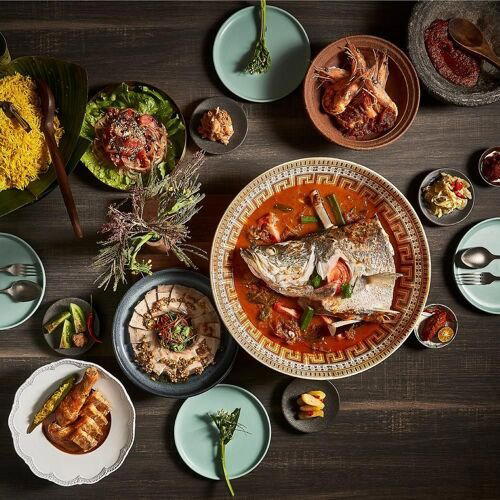
- Claypot Bak Kut Teh
- Sesame Oil Chicken
- Cereal Chicken
Joo Chiat and the Peppery Broth Tradition
Joo Chiat Road runs through one of Singapore's most culinarily layered corridors, where Peranakan shophouses share walls with Teochew seafood halls and decades-old coffee shops. The street functions less as a dining destination assembled for visitors and more as a working neighbourhood where regulars have established expectations across generations. In that context, Sin Heng Claypot Bak Koot Teh at number 439 occupies a position that requires no introduction to the residents of Katong and the surrounding East Coast district. The claypot arrives at the table still bubbling, the ceramic retaining heat in a way that no steel pot replicates, and the interaction between vessel and broth is central to why this format has persisted.
Bak kut teh itself divides cleanly between two schools: the Hokkien-Teochew style dominant in Singapore, which is peppery, clear, and assertive, and the darker, herbally complex Klang-style broth associated with Malaysia. Sin Heng operates squarely in the Singapore register, where white pepper drives the flavour architecture and the quality of the pork ribs determines whether the bowl achieves what regulars return for. That narrowness of focus is a deliberate posture, not a limitation.
What the Michelin Plate Signals for Hawker-Heritage Venues
Singapore's Michelin ecosystem is unusual globally because it extends recognition into price tiers that would be invisible in most other covered cities. The Michelin Plate, awarded to Sin Heng in 2025, sits below the star categories but above the general field, functioning as a quality signal within the hawker and zi char segment. For context, the same guide covers properties like Zén at the four-dollar-sign end and Summer Pavilion in the Cantonese fine-dining bracket; the Plate designation bridges those registers by acknowledging cooking on its own terms rather than against a fine-dining standard.
It reflects a predominantly local, repeat-visitor base rather than a tourist wave, and it suggests that the kitchen maintains consistency across service after service. For a specialist operation in a single-dish format, that consistency is the whole game. Venues like Kok Sen and Da Shi Jia Big Prawn Mee operate in adjacent territory, where hawker-level prices meet sustained recognition, and the peer logic applies: Michelin attention in this tier tends to follow venues with years of embedded local trust rather than those built for visibility.
The Claypot Format as Editorial Subject
The editorial angle on a bak kut teh specialist is not, strictly speaking, about wine. But the principle that applies to cellar depth and curation philosophy in a fine-dining context maps cleanly onto what a single-format hawker operation does with its broth. A focused list, tightly curated, achieves more than a sprawling one. The claypot bak kut teh format demands the same discipline: the broth is the programme, and every variable, pepper intensity, rib cut, braising duration, claypot size, is a decision that shapes the final result. Operations that have sustained recognition at this level, whether at Alain Ducasse's Louis XV or at a Joo Chiat shophouse, share that editorial coherence between concept and execution.
For readers accustomed to the tasting menu structure of venues like Atomix in New York or Lazy Bear in San Francisco, where the meal is sequenced and each course builds a cumulative argument, the hawker specialist offers a counterpoint: one dish, one argument, made every day. The persuasiveness of that argument is the whole review.
Placing Sin Heng in Singapore's Broader Eating Map
Singapore's eating culture resists the usual stratification. The city's hawker heritage operates at price points that sit far below comparable culinary investment elsewhere, which is why a $$ venue in Singapore can draw the same informed audience that a $$$$ venue draws in other cities. Boon Tong Kee and Chatterbox occupy the chicken rice register at different price tiers; Mustard Seed operates in the creative tasting menu space. Sin Heng sits in the specialist heritage tier, where the draw is not innovation but mastery of a fixed tradition.
The Singaporean bak kut teh tradition has also generated outposts elsewhere. FT Bak Kut Teh in Guangzhou and Old Bazaar Kitchen in Hong Kong carry the format into diaspora contexts, where the dish functions partly as a nostalgia object and partly as an introduction for non-Singaporean diners. At Joo Chiat, the context is different: this is the source register, and the audience already knows what to expect.
For visitors arriving from fine-dining contexts, the $$ price range is not a downgrade but a recalibration. Venues like Le Bernardin and 8½ Otto e Mezzo Bombana justify their pricing through labour-intensive technique and premium sourcing across a long tasting arc. A specialist claypot operation justifies its presence through a different logic: depth in one thing rather than breadth across many. Emeril's in New Orleans, another institution built on a regional tradition, operates on a similar premise at a different price tier.
Planning a Visit
Sin Heng sits on Joo Chiat Road, reachable from the Paya Lebar MRT interchange and within walking distance of the Katong neighbourhood's broader dining corridor. The East Coast area is leading explored across a half-day or full evening, given the concentration of Peranakan, seafood, and heritage operations within a short radius. Arrival timing matters for hawker-heritage venues in Singapore: mid-morning and lunchtime slots at bak kut teh specialists tend to draw the core local audience, while evening visits can coincide with higher footfall from the neighbourhood's restaurant trade.
The $$ price range places Sin Heng among Singapore's most accessible Michelin-recognised venues, consistent with the city's hawker culture.
For a fuller picture of where Sin Heng fits in the city's eating map, see our full Singapore restaurants guide. Related planning resources include our Singapore hotels guide, our Singapore bars guide, our Singapore experiences guide, and our Singapore wineries guide.
Quick reference: 439 Joo Chiat Rd, Singapore 427652. Michelin Plate (2025). Price range: $$.
Frequently asked questions
Does Sin Heng Claypot Bak Koot Teh have a Michelin star or similar recognition?
Sin Heng Claypot Bak Koot Teh has received recognition including: Michelin Plate (2025).
How do I find Sin Heng Claypot Bak Koot Teh?
Sin Heng Claypot Bak Koot Teh is located at 439 Joo Chiat Rd, Singapore 427652, Singapore.
What should I eat at Sin Heng Claypot Bak Koot Teh?
The house format is claypot bak kut teh, a peppery pork rib broth served in the vessel it's cooked in, a style more common to Singapore than to the lighter, herb-forward Malaysian versions. The claypot format keeps the broth active and hot through the meal, which is part of the point. Expect to build the table around that central pot, with rice and accompanying sides as the standard framework.
What should I expect cuisine-wise at Sin Heng Claypot Bak Koot Teh?
What's the price range at Sin Heng Claypot Bak Koot Teh?
Pricing at Sin Heng Claypot Bak Koot Teh is listed as $$.
How far ahead should I plan for Sin Heng Claypot Bak Koot Teh?
Sin Heng sits in the $$ price tier, which means it operates in the same informal, walk-in rhythm as most Joo Chiat Road eateries rather than a reservation-led model. Michelin Plate recognition in 2025 has increased foot traffic at comparable venues across Singapore, so arriving outside peak lunch and dinner windows reduces wait time. Phone and hours data are not published, so checking current opening days before visiting is advisable.
The Essentials
Comparable venues nearby, for context on price, style, and recognition.
| Venue | Cuisine | Price | Awards | Notes |
|---|---|---|---|---|
| Sin Heng Claypot Bak Koot TehThis venue (the venue you are viewing) | Claypot Bak Kut Teh | $10–20 | Michelin Guide Bib Gourmand · Michelin Plate | Not listed |
| Putien (Kitchener Road) | Authentic Putian Fujian Cuisine | $20–30 | Michelin Plate · Michelin Guide Plate | LAVENDER, Authentic Putian Fujian Cuisine |
| Straits Chinese (Cecil Street) | Authentic Peranakan Nyonya | $20–30 | Michelin Guide Plate · Michelin Plate | CECIL, Authentic Peranakan Nyonya |
| Wee Nam Kee Hainanese Chicken Rice | Hainanese Chicken Rice | $10–20 | Not listed | MOULMEIN, Hainanese Chicken Rice |
| Hock Hai (Hong Lim) Curry Chicken Noodle | Traditional Singaporean Curry Chicken Noodles | $1–10 | Michelin Guide Plate · Michelin Plate | BEDOK NORTH, Traditional Singaporean Curry Chicken Noodles |
| San Xiang Rou Cuo Mian | Singaporean Bak Chor Mee | $1–10 | Michelin Guide Plate · Michelin Plate | BEDOK NORTH, Singaporean Bak Chor Mee |
Recognition history
Dated appearances from independent guides and award organizations, with the underlying list record or original source where available.
Michelin Guide Bib Gourmand
Michelin Guide
Michelin Plate
Michelin