
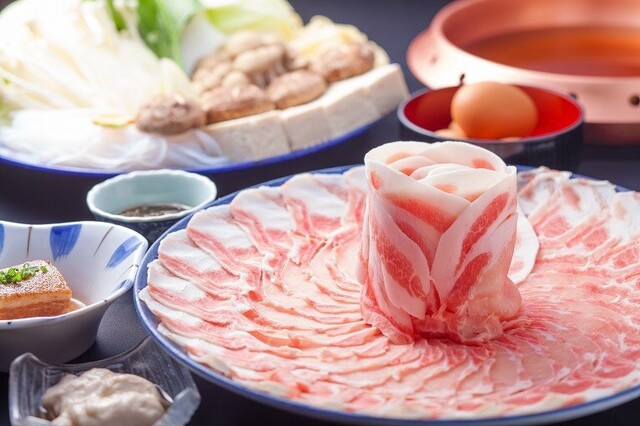
Agu pork shabu-shabu gives Shokusai Shubo Matsumoto its reason for being: Okinawan ingredient identity expressed through hot pot rather than resort-dining gloss. Its Tabelog 100 Hot Pot 2024 selection places it among Japan’s more closely watched sukiyaki and shabu-shabu rooms, with an izakaya-adjacent drinks range that keeps the experience grounded rather than ceremonial.
Pearl is the En Primeur Club membership app — saves, bookings, and concierge access live there. Same editors, same standards.
- Address
- 沖縄県那覇市松山1-10-8
- Phone
- +81988611890
- Website
- agu-matsumoto.com
 Saves & bookings on Pearl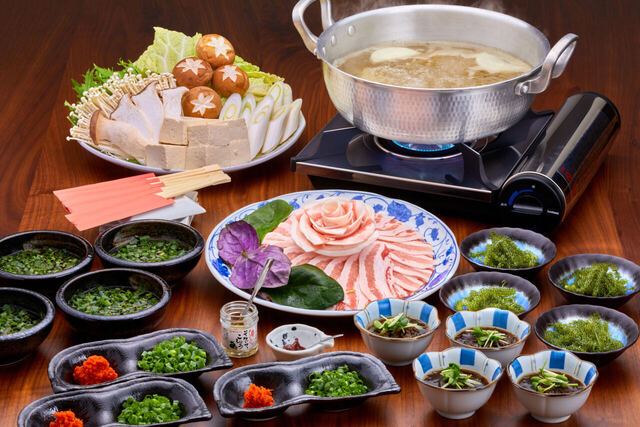
Matsuyama’s dining streets are not quiet in the evening, and the approach to an Okinawan pork shabu-shabu specialist belongs to that more social side of Japanese dining: steam, conversation, shared pots, and the rhythm of a room built for groups rather than hushed counter worship. In this category, the ingredient does the heavy lifting. Agu pork, Okinawa’s native pig, carries a different cultural charge from generic branded pork; it ties the meal to the islands’ livestock history and to a cuisine shaped by pork, sea routes, and long simmering traditions.
That matters because shabu-shabu can become anonymous when the sourcing is weak. Thinly sliced meat, a pot of broth, dipping sauce, vegetables: the format is simple enough to expose mediocrity. Shokusai Shubo Matsumoto is useful because it sits at the point where regional identity and hot-pot technique meet. The Tabelog 100 Hot Pot 2024 selection is the trust signal here, not as decoration but as a sign that a pork-focused Okinawan room can compete inside a national category usually dominated by beef sukiyaki, high-control counters, and specialist shabu-shabu houses.
Agu pork makes this a regional hot-pot argument, not just dinner in a pot
Okinawan pork culture is broader than a single restaurant genre. The islands have long treated pork as a whole-animal cuisine, with braised, boiled, and preserved preparations carrying as much weight as prime cuts. Shabu-shabu narrows that history into a cleaner format: meat briefly cooked, sauce doing less disguise work, texture kept in focus. A restaurant built around Agu pork therefore asks a precise question: can a regional ingredient hold attention in a dining format that gives it almost nowhere to hide?
The answer depends on restraint. Pork shabu-shabu works when the kitchen resists overcomplication and lets the meat read clearly against broth and condiments. That is also why the drinks list makes sense in this setting. Sake, shochu, wine, and cocktails create an izakaya-adjacent frame, but the category remains hot pot rather than bar dining. Compared with beef-led rooms such as Miyazaki Beef Specialty Restaurant Naha Miyachiku or higher-spend meat specialists like Niku no Hentai Shudan Shippu Horumon Kumoji honten, the emphasis here is less about steakhouse theatre and more about regional pork identity.
For a wider read on how this style fits the city’s dining map, Our full Matsuyama restaurants guide is the natural starting point. The contrast is useful: Dogo Kaishu (Japanese Cuisine) points toward a more classical Japanese-cuisine register, Chuka Soba Fukamidori toward noodle precision, and Hinode toward the city’s everyday dining habits. Read together, they show why a hot-pot room built around Okinawan pork occupies a different lane from the familiar sushi, kaiseki, ramen, and izakaya categories visitors often default to.
The room favors shared pace over counter minimalism
Japanese destination dining often gets reduced to small counters, silent concentration, and chef-led pacing. Hot pot follows another logic. It is communal, warmer in volume, and more forgiving of mixed groups. The presence of counter seating keeps solo or pair dining possible, while the larger room format and family-friendly positioning pull the experience away from preciousness. That distinction matters for travelers choosing between a formal tasting-menu night and a meal that can absorb children, dates, and multi-generational groups without turning the room brittle.
Private rooms are not part of the format, so the better expectation is a shared dining room rather than secluded entertaining. Non-smoking operation, wheelchair access, and Wi-Fi are practical signals that the room is designed for broader use, not just destination chasers moving through an awards list. The restaurant also accepts private use, which points to hot pot’s role in Japanese group dining: the format scales well because the cooking action sits at the table and the meal progresses collectively.
This is where the Tabelog 100 recognition has editorial value. Awards often pull attention toward rarity, but in hot pot the more interesting marker is consistency at volume. A 114-seat pork shabu-shabu restaurant selected in a national hot-pot list tells a different story from an eight-seat counter: not intimacy, but a repeatable regional format with enough discipline to survive scrutiny. In that sense, Shokusai Shubo Matsumoto belongs in a conversation with specialist formats across Japan, from -Grilled beef Sukiyaki- KAMAKURA TANUKIAN 鎌倉 たぬき庵 in Kamakura to category-specific urban rooms such as. 鮪と炭火焼き うお炭 秋葉原店 in Tokyo and.cafe in Osaka. The common thread is not cuisine type; it is the narrowing of identity around a format diners can understand before they sit down.
How to place it in a Matsuyama itinerary
The strongest case for this booking is not ceremony. It is a regionally specific dinner with enough structure for serious diners and enough ease for a group. Aso sits in a lower spend bracket, while BAR Owl and O’s House serve different evening needs entirely; those comparisons underline the decision. Choose pork shabu-shabu when the night calls for a table-centered meal rather than bar-hopping, steak, or a compact counter experience.
For travelers building more than one night, the smart move is variety. Pair this style with Bettei Oborozukiyo or Ino if the aim is to test different expressions of Japanese dining rather than repeat the same mood. Broader planning belongs in the city guides: Our full Matsuyama hotels guide for where to base, Our full Matsuyama bars guide for after-dinner drinking, Our full Matsuyama wineries guide for wine-led detours, and Our full Matsuyama experiences guide for cultural pacing around dinner.
Beyond Matsuyama, the page sits inside a larger EP Club map of focused Japanese and Japanese-adjacent dining:.know in Kumamoto, (Shoku) Vietnam in Kawasaki, [Curry Senmon Ten] Maruyama Kyoju. in Sapporo, plus overseas rooms such as Jōdo Saké Bar in Los Angeles and Onigiri Time in Pasadena. The useful comparison is specificity: the stronger venues in this orbit know exactly what they are built to serve. Here, that answer is Agu pork shabu-shabu, Okinawan cuisine, and an izakaya drinking frame kept in balance.
How It Stacks Up
Comparable venues by cuisine and price in the same metro.
| Venue | Cuisine | Price | Notes |
|---|---|---|---|
| Shokusai Shubo Matsumoto | Agu pork shabu-shabu & Okinawan izakaya | $$$ | Matsuyama |
| Shimabuta Ishiyaki San | Okinawan Pork & Japanese BBQ | $$ | Matsuyama |
| Oborozukiyo (別邸 朧月夜) | Seasonal Kaiseki | $$$$ | Dogo |
| Bettei Oborozukiyo | Traditional Japanese Kaiseki | $$$$ | Dogo Onsen |
| Sushi Kawanaka | Edomae Sushi Omakase | $$$ | Okaido |
| ベトナムフード | Traditional Vietnamese | $ | Katsuyama |
Recognition history
Dated appearances from independent guides and award organizations, with the underlying list record or original source where available.
Tabelog 100 #19 · No. 19
Tabelog · Tabelog 100 - Hot Pot - 2024
Continue exploring
More in Matsuyama
Restaurants in Matsuyama
Browse all →
At a Glance
- Cozy
- Intimate
- Lively
- Date Night
- Group Dining
- Family
- Celebration
- After Work
- Late Night
- Chefs Counter
- Standalone
- Beer Program
- Local Sourcing
Relaxed, cozy izakaya-style space in Naha’s nightlife district, where guests linger over leisurely shabu-shabu while staff cook and chat tableside, paired with Awamori and local beer.