
Tabelog 100 #33
Our verdict
Shinpei Udon sits in Takamatsu’s serious Sanuki udon circuit, where the ritual is quick, inexpensive, and judged by noodle texture and broth discipline rather than ceremony. Its 2024 Tabelog 100 selection for Kagawa udon, 35-seat format, English menu, and natural dashi approach make it a useful address for travelers who want local specificity without decoding a specialist counter cold.

Pearl is the En Primeur Club membership app, where members save venues, book tables and use the concierge.
The menu
What to order
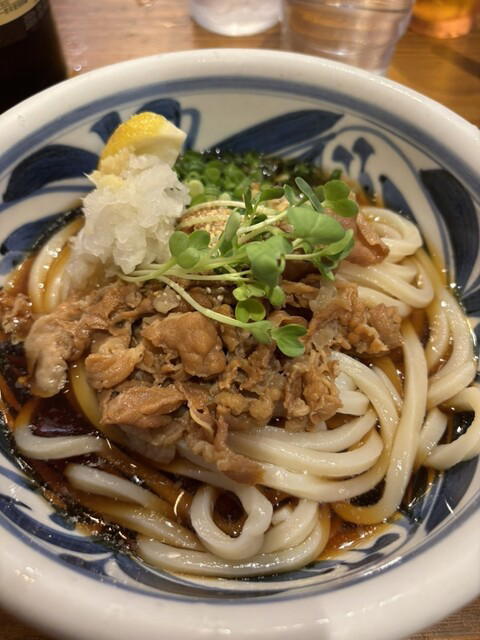
- Chicken Tempura Bukkake Udon
- Kake Udon
- Curry Udon
- Tantan Udon (seasonal)
- Niku Kake Udon
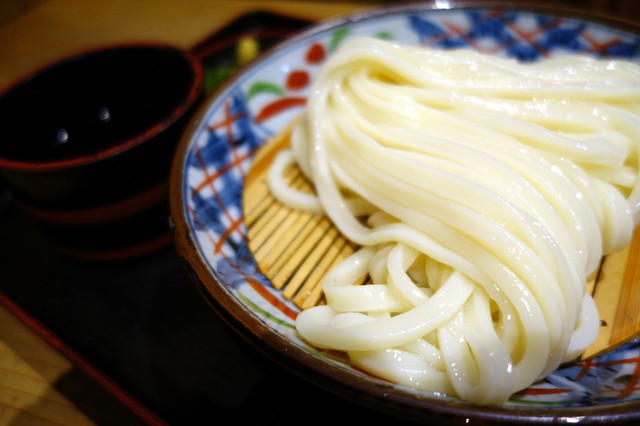
In Takamatsu, udon is less a restaurant category than a daily grammar: quick ordering, little fuss, and close attention to how noodles and broth behave in the bowl. The city’s udon culture rewards repetition. Regulars distinguish spring from mere resistance in a noodle and read dashi with the casual precision other cities reserve for espresso. Shinpei Udon belongs to that culture not as a theatrical destination, but as a Takamatsu address whose rhythm stays grounded in local habits.
The format matters because udon here is social as well as solo. Shinpei Udon sits between quick noodle eating and the more lingering pace suggested by an udon shop that is also categorized with tempura and izakaya-style dining. That middle register suits Takamatsu after dark: less simple refuel, more bowl-and-side-dish pacing, with tempura naturally beside wheat noodles. The listed categories, udon, tempura, and izakaya, show the meal can be brief, but need not be.
Udon after dark, with dashi doing the quiet work
Takamatsu’s udon reputation rests heavily on texture. Good noodles are judged by firmness, elasticity, and how well they hold their form in the bowl. In that context, Shinpei Udon is best understood through the regional grammar rather than through a luxury-restaurant lens. The appeal is the familiar Takamatsu equation of wheat noodles, supporting sides, and a casual room where the bowl remains the point.
The 2024 Tabelog Hyakumeiten selection gives the address a public trust signal in a city with many udon choices. It is not a luxury award, and should not be read that way. It works better as a sorting device: among many noodle shops, this one has entered a udon list. The Tabelog score of 3.63 reinforces the point, placing it in a serious local bracket without making the experience a trophy meal.
Price is part of the story. At JPY 1,000 to JPY 1,999, the cooking sits in the everyday-premium band, not the splurge tier. That is central to Takamatsu dining: the city’s strongest food traditions are often judged less by expense than by consistency, ingredient handling, and clean execution of a focused format. Compared with a broader dinner address such as Renge Ryori Ten, this is a different decision. Compared with quick local options such as Mendokoro Wataya Takamatsu ten, Menya Shichifuku Honten, or Fumiya Okonomiyaki Honten, it asks slightly more commitment while staying firmly casual.
The meal works because the ritual is legible
Good udon shops in Takamatsu do not need elaborate choreography. The sequence is familiar: noodles, broth, optional tempura, and a pace that respects the bowl. Shinpei Udon’s public categories keep that identity clear: udon first, tempura alongside it, and an izakaya-style register that allows the meal to stretch beyond a purely functional stop. For travelers, that clarity is useful in a city where rewarding noodle shops can otherwise blur together on a first visit.
The izakaya category nudges the experience toward evening use without turning it into formal dining. The combination is not unusual for an udon-adjacent casual restaurant, but it changes expectations. This is not only a fast bowl; it can fit a relaxed evening window in Takamatsu, when noodles and a few supporting plates can do dinner’s work without a long reservation-driven meal. The price band keeps that decision relaxed.
The Takamatsu location places it in a practical part of the city’s dining map. Takamatsu is compact enough that udon stops, casual restaurants, and evening dining can be planned together without treating one bowl as the entire itinerary. For travelers building a food day around udon, the category becomes less about one famous bowl and more about pattern recognition: compare a noodle-focused stop with a broader casual room, then compare both with okonomiyaki, sushi, ramen, and izakaya formats nearby.
That broader mapping is where Takamatsu becomes interesting. Udon may dominate the city’s food identity, but it does not flatten it. A local itinerary can move between other Takamatsu dining rooms and noodle addresses without needing every stop to be famous. The point is not collecting bowls for volume, but understanding how each shop handles elasticity, broth clarity, tempura support, and room tempo within the same local tradition.
How to place it in a Takamatsu food day
Shinpei Udon makes the strongest editorial sense as an udon stop for travelers who want the Takamatsu ritual with enough public recognition to feel comfortable. The price band keeps the decision low-risk, and the 2024 Tabelog Hyakumeiten selection gives it a credible place in the local noodle conversation. It is not for a long chef-led tasting format or rarefied counter performance. It is for seeing how a serious udon meal can remain casual, fast, and regionally specific.
For a wider city plan, start with Our full Takamatsu restaurants guide, then layer in Our full Takamatsu hotels guide, Our full Takamatsu bars guide, Our full Takamatsu wineries guide, and Our full Takamatsu experiences guide. Readers comparing Japanese casual formats can also use Shinpei Udon as a reference point: a Takamatsu udon, tempura, and izakaya-style address where the strongest argument is not spectacle, but how confidently a regional staple carries the meal.
Frequently asked questions
Where is Shinpei Udon located?
Takamatsu.
What should I budget for a meal at Shinpei Udon?
Pricing at Shinpei Udon is listed as JPY 1,000 - JPY 1,999.
What's the best way to book Shinpei Udon?
The public record lists no direct phone number. Because Shinpei Udon appears in the 2024 Tabelog Hyakumeiten selection, checking current listing details before going is sensible. Check the venue's official channels for the latest details.
What's the standout thing about Shinpei Udon?
Its 2024 Tabelog Hyakumeiten recognition is the clearest credential. The public record also lists it in the categories of udon, tempura, and izakaya-style dining, with a Tabelog score of 3.63. That combination makes it easy to place within Takamatsu’s udon scene. Check the venue's official channels for the latest details.
How does Shinpei Udon handle allergies?
Guests managing specific restrictions should confirm directly before visiting. Check the venue's official channels for the latest details.
Would Shinpei Udon be comfortable with kids?
The venue is listed as an udon, tempura, and izakaya-style restaurant in Takamatsu, so families should confirm current conditions directly before visiting. Check the venue's official channels for the latest details.
What It’s Closest To
Comparable venues by cuisine and price in the same metro.
| Venue | Cuisine | Price | Awards | Notes |
|---|---|---|---|---|
| Shinpei UdonThis venue (the venue you are viewing) | Sanuki udon noodle shop | $10–20 | Tabelog 100 #33 | Not listed |
| Teuchi Udon Hariya | Traditional Sanuki Udon Counter | $10–20 | Tabelog 100 #66 | Takamatsu |
| Kashimura Udon | Sanuki udon shop | $1–10 | Tabelog 100 #46 | Takamatsu |
| Chikusei Honten | Traditional Sanuki Udon | $1–10 | Tabelog 100 #69 | Takamatsu |
| Udon no Den | Traditional Sanuki udon shop | $1–10 | Tabelog 100 #82 | Takamatsu |
| Mensho Kusugami | Creative Sanuki udon & chuka soba | $10–20 | Tabelog 100 #89 | Takamatsu |
Recognition history
Dated appearances from independent guides and award organizations, with the underlying list record or original source where available.
Tabelog 100 #33 · No. 33
Tabelog · Tabelog 100 - Udon - KAGAWA - 2024
Continue exploring
More in Takamatsu
Restaurants in Takamatsu
All restaurants in Takamatsu →
Bars in Takamatsu
Browse all →

Details
- Lively
- Cozy
- Classic
- Solo
- Family
- Casual Hangout
- After Work
- Group Dining
- Standalone
- Street Scene
- A La Carte
- Counter Dining
- Beer
- Sake