Shawarma Joint
Our verdict
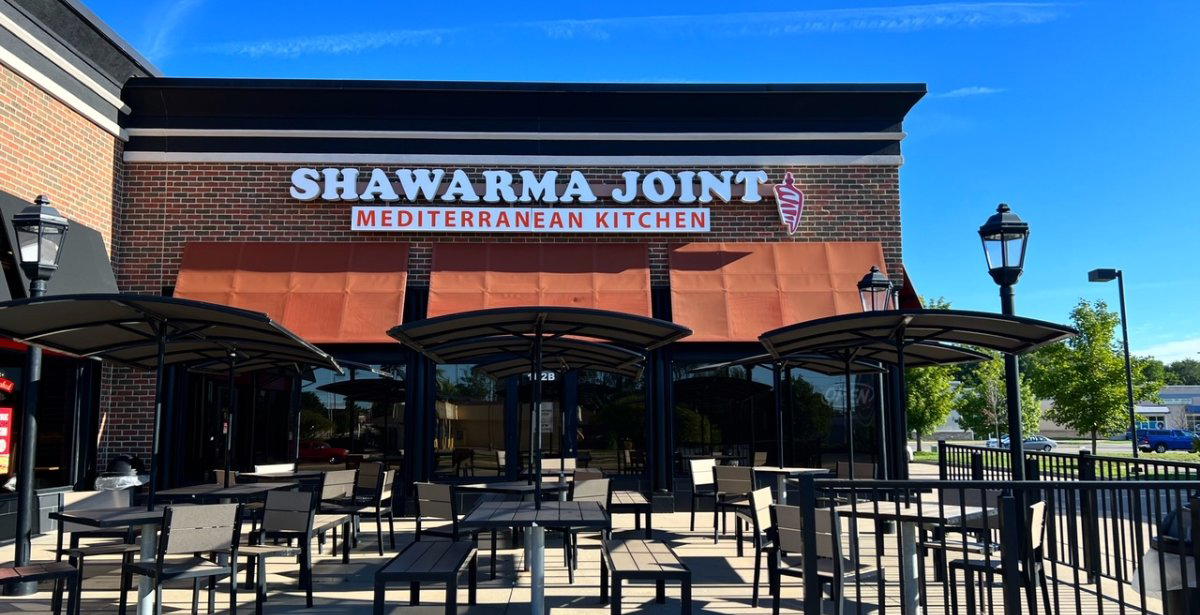
On a stretch of University Avenue that feeds Urbana's student population and long-term residents alike, Shawarma Joint at 102 E University Ave delivers the kind of focused, ingredient-led Middle Eastern cooking that rarely gets the critical attention it deserves in college towns. The format is casual, the execution deliberate, and the address keeps it anchored to one of Illinois's most food-curious communities.

Pearl is the En Primeur Club membership app — saves, bookings, and concierge access live there. Same editors, same standards.
East University Avenue and the Case for Serious Casual
College-town dining in the American Midwest occupies a particular niche: the pressure of a transient, budget-conscious population pulls menus toward volume and speed, while a rotating cast of internationally trained faculty, visiting researchers, and a genuinely curious student body creates demand for something more considered. Urbana, sitting alongside Champaign and anchored by the University of Illinois, has long threaded that needle better than its modest national profile suggests. The strip along East University Avenue is where that tension plays out most visibly, and Shawarma Joint at 102 E University Ave, Suite A is one of the addresses that takes the casual format seriously rather than using it as cover for mediocrity.
Shawarma, as a format, rewards sourcing discipline above almost any other street-food tradition. The dish's architecture, rotating protein slow-cooked on a vertical spit, compresses over hours, which means fat content, marinade penetration, and the quality of the base cut all become amplified rather than hidden. What you pull from a well-sourced spit is fundamentally different from what comes off a machine-packed, pre-seasoned block of undifferentiated protein. That distinction matters more here than it would in, say, a sauce-forward braise where secondary flavors can paper over sourcing gaps.
What the Ingredient-First Model Looks Like at This Price Point
The broader Midwestern shawarma scene has historically lagged behind Chicago's more densely populated Middle Eastern corridors, where Dearborn-adjacent suppliers and a larger diaspora community create natural sourcing infrastructure. Operating in Urbana requires a different logistical calculus. Venues at this address have to work harder to access the same quality inputs, which either shows in the product or it doesn't. The decision to operate at all in a market like this, rather than clustering in a larger metro, signals something about the operational model: this is a neighborhood restaurant in the truest sense, built for daily regulars rather than destination traffic.
That neighborhood orientation shapes everything from portion logic to seasoning decisions. Shawarma traditions across the Levant, Turkey, and the wider Middle East vary considerably in spice profile, fat distribution, and bread type. The garlic-forward toum that appears in Lebanese-influenced preparations differs structurally from the tahini-sesame axis of other regional traditions, and the choice of flatbread (saj, pita, or laffa) carries its own regional argument. Venues that commit to one tradition over a homogenized fusion approach tend to produce more coherent results, because the sourcing requirements align with a specific flavor logic rather than hedging across multiple ones.
For context on how ingredient sourcing functions as a differentiator across American dining, venues like Blue Hill at Stone Barns in Tarrytown and Single Thread Farm in Healdsburg have built entire reputations on farm-to-table provenance at the fine-dining tier. The principle translates downward through the price spectrum: sourcing choices are visible at every price point, just measured differently. In a shawarma context, you're not reading a provenance card on the menu; you're reading it in the texture and seasoning depth of the protein itself.
Urbana in the Broader American Dining Conversation
American restaurant culture at the fine-dining tier has produced a generation of technically ambitious kitchens. Alinea in Chicago operates at the extreme end of creative intervention, while Lazy Bear in San Francisco and The French Laundry in Napa represent the kind of destination dining that draws travelers across time zones. Le Bernardin in New York City and Atomix in New York City occupy similar heights within their respective categories. What rarely gets discussed is the supporting ecosystem of casual, ingredient-focused venues in smaller American cities that sustain the food culture those destination restaurants depend on for their pipeline of knowledgeable diners.
Urbana contributes to that ecosystem. The university creates a population that has often eaten widely and thinks about food with some rigor. That audience, even at the casual end, holds venues to a higher standard than equivalent foot traffic in a non-university market might. It's a dynamic that rewards operators who take sourcing seriously, because the customer base will notice when they don't.
Other American cities with active food scenes have demonstrated that the casual-but-deliberate model is commercially viable. Frasca Food and Wine in Boulder occupies a different price tier but shares the same logic: a university-adjacent market sustains more considered dining than the zip code might suggest. Bacchanalia in Atlanta, Causa in Washington, D.C., and Brutø in Denver each illustrate that regional American dining has moved well past coastal-centric assumptions about where serious food happens.
Planning Your Visit
Shawarma Joint is located at 102 E University Ave, Suite A, Urbana, IL 61801, positioned on a pedestrian-accessible stretch that serves both the university community and surrounding residential areas. Given the casual counter format typical of this category, walk-in visits are the standard approach, though peak lunch and dinner windows on weekdays draw consistent foot traffic from the university corridor. Arriving slightly outside the 12:00-13:00 and 18:00-19:30 windows typically means shorter wait times without sacrificing freshness, since high-turnover spit operations are often at their leading during active service periods rather than at opening or close. For broader context on what Urbana's dining scene offers across categories and price points, our full Urbana restaurants guide covers the city's range in detail.
Frequently asked questions
Is Shawarma Joint child-friendly?
The counter-service format at 102 E University Ave suits families with straightforward ordering and no formal dining protocol to navigate. Shawarma is a hand-held format that works well for younger diners. No dedicated children's menu is documented, but the casual setup makes it an accessible option.
What should I expect atmosphere-wise at Shawarma Joint?
The Suite A location on East University Avenue sits on a pedestrian-active stretch that draws a mixed crowd from the university and surrounding Urbana neighbourhoods. Expect a quick-service register and a pace that prioritises throughput over lingering. This is counter dining, not table-service.
What should I eat at Shawarma Joint?
The name signals the focus: shawarma is the core offering.
What part of town is Shawarma Joint in?
Shawarma Joint is located at 102 E University Ave Ste. A, Urbana, IL 61801, Urbana.
Can I walk in to Shawarma Joint?
Given the counter-service format and college-town context on East University Avenue, walk-in ordering is the expected mode of operation. No reservation system is documented. Arrival timing around the midday and early-evening rush is worth factoring in.
What's the signature at Shawarma Joint?
Shawarma is the stated centerpiece, which in a Midwestern college-town context already differentiates the venue from the burger-and-pizza defaults that dominate University Avenue corridors.
Comparable Venues
Comparable venues nearby, for context on price, style, and recognition.
| Venue | Cuisine | Price | Notes |
|---|---|---|---|
| Shawarma JointThis venue — the venue you are viewing | Middle Eastern Shawarma | $10–20 | Not listed |
| AYA Pastry | Modern patisserie & bakery | Not listed | West Town |
| Call Your Mother | Modern Bagel Deli | $10–20 | Wicker Park |
| Schneider Deli | Jewish Deli | $10–20 | River North |
| Cozy Dog Drive In | Classic Route 66 Corn Dogs | $10–20 | Southern View |
| Reza's Restaurant | Persian & Mediterranean | $20–30 | Oak Brook |
Continue exploring
More in Urbana
Restaurants in Urbana
All restaurants in Urbana →

Bars in Urbana
Browse all →
Details
- Lively
- Trendy
- Casual Hangout
- A La Carte
- Vegetarian Friendly
Current opening hours
- Monday
- 11 AM–8 PM
- Tuesday
- 11 AM–8 PM
- Wednesday
- 11 AM–8 PM
- Thursday
- 11 AM–8 PM
- Friday
- 11 AM–9 PM
- Saturday
- 11 AM–9 PM
- Sunday
- Closed
Hours can change for holidays and private events. Last verified .
Casual and fast-paced counter-service spot popular with students, featuring fresh preparations and accommodating service even when busy.