Shapiro’s Delicatessen

One of the few surviving Jewish delicatessens in the American Midwest, Shapiro's has anchored Indianapolis's South Meridian corridor since the early twentieth century. The cafeteria-style format, long hours, and corned beef that draws regulars from across the state make it a fixed point in the city's dining conversation.
Pearl is the En Primeur Club membership app — saves, bookings, and concierge access live there. Same editors, same standards.
- Address
- 808 S Meridian St, Indianapolis, IN 46225
- Phone
- (317) 631-4041
- Website
- shapiros.com
- Directions
- Get directions
 Saves & bookings on Pearl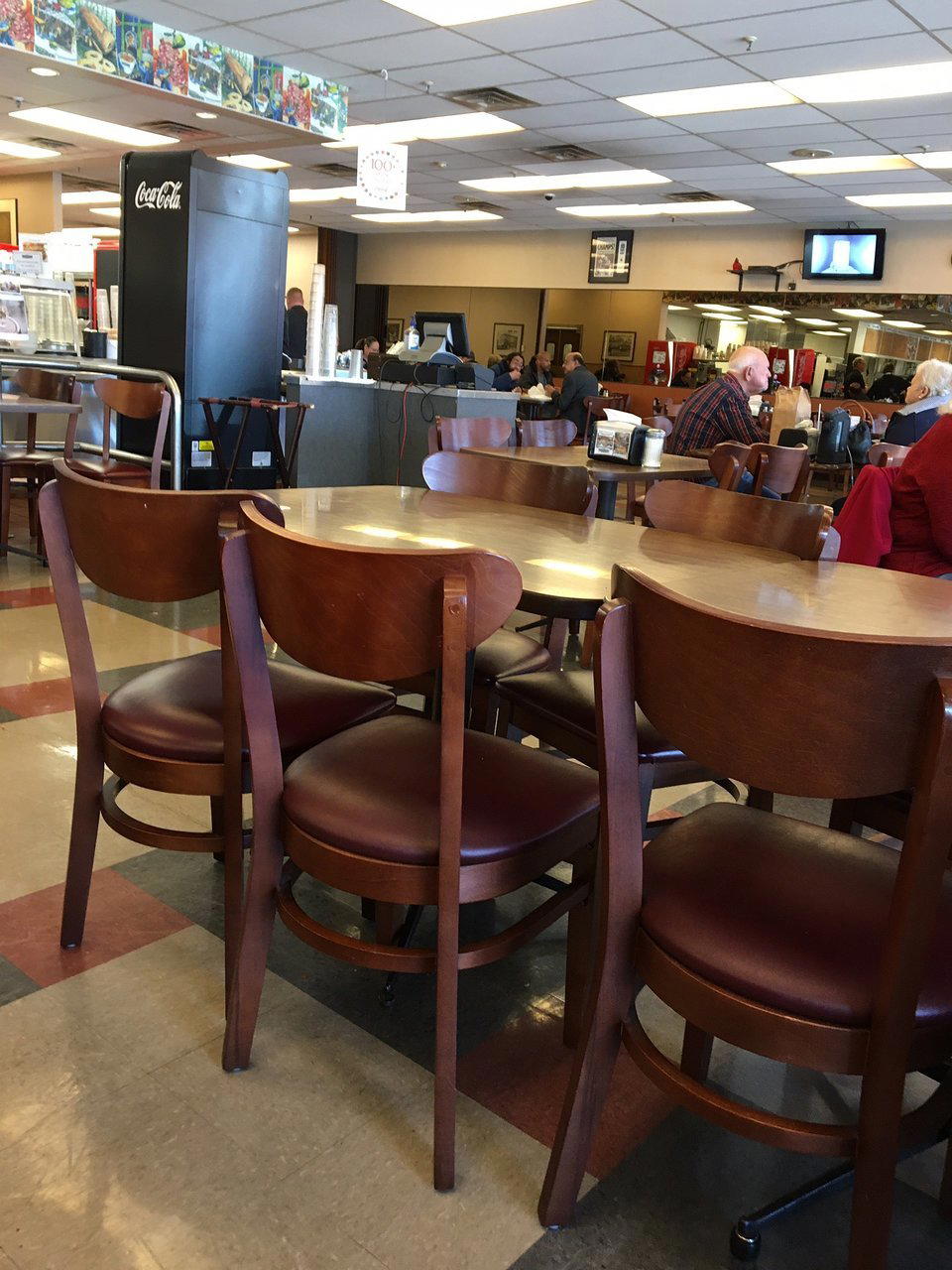
A Delicatessen Tradition in the American Heartland
Walk up to 808 S Meridian Street on any weekday and you encounter something increasingly rare in American cities: a full-service Jewish delicatessen operating in its original neighborhood format, drawing a line of regulars that stretches from the steam-table counter back toward the door. The room does not attempt to be anything other than what it is. Trays slide along rails past stacked rye loaves and the kind of institutional warmth that comes from decades of repetition rather than interior design. This is not the deli reimagined for a contemporary audience. It is the thing itself.
Jewish delicatessens once occupied every major American city in numbers that would be difficult to believe today. By the mid-twentieth century, New York alone counted hundreds of them. The gradual contraction of that format, driven by demographic shifts, rising real estate, and changing eating habits, means that survivors like Shapiro's carry a documentary weight that newer establishments simply cannot replicate. Institutions such as Attman's Delicatessen in Baltimore and Ben's Kosher Deli in New York City occupy the same category: places where the format predates the current dining culture by generations, and where continuity is itself a form of argument.
What the Cafeteria Format Actually Signals
The cafeteria-style service that Shapiro's uses is worth reading carefully. It is not a concession to efficiency or a nod to nostalgia aesthetics. It is the format in which American Jewish delicatessens were industrialized during the mid-twentieth century, when feeding large volumes of workers and families at reasonable prices was the primary design brief. The tray-and-rail model places every item in direct view, removes the mediation of a server, and creates an egalitarian transaction that mirrors the communal origins of deli culture itself.
That directness also means the food has nowhere to hide. Corned beef that has been properly brined and slow-cooked holds its color and texture at the counter. Pastrami cut thickly enough to show its smoke ring speaks before you taste it. The visual edit happens before the kitchen, not after plating. It is a format that rewards sourcing discipline and punishes shortcuts in a way that tasting-menu architecture often obscures. Compare this approach to the technical presentation at Alinea in Chicago or the precisely controlled seafood cookery at Le Bernardin in New York City, and the contrast is instructive: both modes demand precision, but deli precision is nakedly visible to every person moving down the line.
Indianapolis as a Deli City
The survival of a functioning Jewish delicatessen in Indianapolis speaks to something particular about the city's relationship with food institutions. Indianapolis is not a dining city that competes on density of fine-dining options, but it maintains a core of long-standing establishments that carry real community function. St. Elmo Steak House has held the same address since 1902. Shapiro's occupies a comparable position in a different register: a working institution rather than a special-occasion destination, but no less embedded in how the city understands its own food history.
That institutional character does not mean the dining scene around it stands still. Milktooth has built a national reputation for its daytime program, Goose the Market operates in a different register of charcuterie-led eating, and Vida and The Fountain Room address a more contemporary fine-dining appetite. Shapiro's coexists with all of these without competing against any of them. It answers a different question about what a city owes its diners.
Critical Recognition and What It Confirms
Opinionated About Dining, the critical database that operates at the more technical end of food evaluation, has listed Shapiro's on its Cheap Eats in North America ranking in consecutive years: a Recommended placement in 2023 and a ranked position of #574 in 2024. OAD's Cheap Eats methodology differs from its restaurant rankings in that it explicitly values institutions serving food of high quality at accessible price points, without penalizing for lack of fine-dining formality. A consecutive placement, moving from Recommended to a ranked number in a list that covers the breadth of the continent, signals consistency of execution rather than a single strong year.
Rating aggregates at that sample size tend to stabilize around a venue's actual performance level rather than fluctuating with individual experiences. The volume of feedback also reduces the distortion from single outlier visits. Together, the critical placement and the review aggregate describe an operation that maintains its standards without significant variance, which is the signal most worth attending to in a cafeteria-format institution where quality control depends entirely on process discipline rather than tableside intervention.
This contrasts with the recognition patterns you see at establishments like The French Laundry in Napa, Lazy Bear in San Francisco, or Single Thread Farm in Healdsburg, where recognition tracks culinary innovation and ingredient sourcing at the top tier of the price spectrum. Shapiro's recognition tracks a different quality: the reliable delivery of a format that many cities have lost entirely, at a price point that does not exclude.
Planning Your Visit
Shapiro's operates seven days a week, with weekday hours running from 10 am to 7:30 pm and weekend hours opening an hour earlier at 9 am. The South Meridian Street address sits south of the downtown core, accessible by car with parking on-site. The cafeteria format means no reservation is required or offered. Arrival at non-peak hours during the week tends to mean shorter lines; weekend mornings draw a larger crowd. Given the format and price point, this is a practical lunch destination that fits naturally alongside visits to other Indianapolis institutions. Our full Indianapolis restaurants guide maps the wider scene. For accommodation planning, see our Indianapolis hotels guide, and for a broader view of the city's food and drink, consult our bars guide, wineries guide, and experiences guide.
Cuisine Lens
| Venue | Cuisine | Awards |
|---|---|---|
| Shapiro’s DelicatessenThis venue — the venue you are viewing | Jewish Delicatessen | Not listed |
| Goose the Market | Tapas Bar-Barbecue | Tapas Bar-Barbecue |
| Milktooth | American | American |
| St. Elmo Steak House | Steakhouse | Steakhouse |
Recognition history
Dated appearances from independent guides and award organizations, with the underlying list record or original source where available.
Opinionated About Dining Cheap Eats in North America Ranked #574
Opinionated About Dining
Opinionated About Dining Cheap Eats in North America in Recommended
Opinionated About Dining
Continue exploring
More in Indianapolis
Restaurants in Indianapolis
Browse all →

Bars in Indianapolis
Browse all →


At a Glance
- Classic
- Well Known
- Cozy
- Casual Hangout
- Family
- Historic Building
Current opening hours
- Monday
- 10 AM–7:30 PM
- Tuesday
- 10 AM–7:30 PM
- Wednesday
- 10 AM–7:30 PM
- Thursday
- 10 AM–7:30 PM
- Friday
- 10 AM–7:30 PM
- Saturday
- 9 AM–7:30 PM
- Sunday
- 9 AM–7:30 PM
Hours can change for holidays and private events. Last verified .
Bustling cafeteria-style setup with clean, nostalgic atmosphere evoking classic deli vibes amid a large selection of displayed foods and desserts.