SGD DUBU SO GONG DONG TOFU & KOREAN BBQ
SGD Dubu So Gong Dong Tofu & Korean BBQ brings the dual-format Korean dining tradition to Ridgewood, NJ, anchoring its menu around soon dubu jjigae (soft tofu stew) alongside tableside barbecue. The combination reflects a broader shift in Korean dining toward menus that balance communal grilling with broth-based comfort cooking, placing this Chestnut Street address within a small but growing category of suburban Korean restaurants operating outside New York City's Koreatown corridor.
Pearl is the En Primeur Club membership app — saves, bookings, and concierge access live there. Same editors, same standards.
- Address
- 16 Chestnut St, Ridgewood, NJ 07450
- Phone
- +15512364282
- Directions
- Get directions
 Saves & bookings on Pearl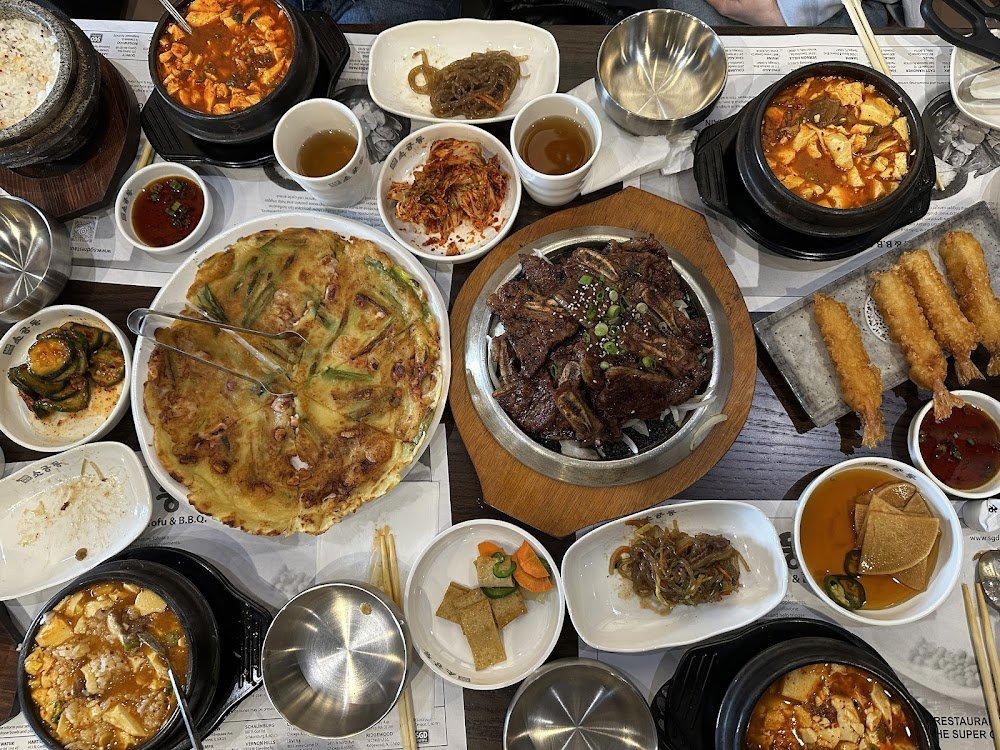
Where the Menu Does Two Jobs at Once
In Korean dining, the division between a tofu house and a barbecue restaurant has historically been firm. Soft tofu stew, or soon dubu jjigae, belongs to the tradition of Korean comfort food that centres on a single clay pot arriving at the table at a rolling boil, while Korean BBQ is a social, charcoal-centred format built around shared cuts and communal timing. SGD Dubu So Gong Dong Tofu & Korean BBQ is at 16 Chestnut St in Ridgewood, NJ, serving Korean Tofu Stew & BBQ at a casual, recommended-reservation price point of about $25 per person.
That dual structure is worth taking seriously, because it is not as common as it looks. Many Korean restaurants in suburban New Jersey lean toward one mode or the other, with the tofu specialist skewing toward solo diners or lunch trade, and the BBQ house calibrated for groups and weekend evenings. SGD Dubu So Gong Dong is part of a small cohort that has decided the two formats are complementary rather than competing, and the menu architecture reflects that bet.
Reading the Menu Structure
The menu at SGD Dubu So Gong Dong operates in two registers. The soon dubu side of the menu is built around a single base preparation, soft silken tofu in a spiced broth, differentiated by protein addition and heat level. This is the defining format of the So Gong Dong chain, which originated in Seoul and built its identity around the soon dubu category specifically. Ridgewood's location in Bergen County, NJ, places this address within a clear local dining context.
The BBQ component adds a second axis. Where the tofu section rewards solo or small-group dining, the grill tables shift the format toward group orders, shared plates, and a longer pace. This means the restaurant can serve two different dining occasions at the same address, which is a practical advantage in a suburb where a single Korean restaurant may need to function as the category anchor for an entire community rather than one option among many.
Ridgewood's dining scene, which also includes European and South Asian options such as Felina, Latour, Turmeric Indian Bistro, Meltemi Greek Restaurant, and Cafe 37, does not offer the density of Korean options available in Fort Lee or Palisades Park. That scarcity means SGD Dubu So Gong Dong carries more representational weight than a comparable restaurant would in a concentrated Koreatown. For a broader map of what the town offers, the full Ridgewood restaurants guide gives useful context across categories.
The Soon Dubu Tradition and What It Demands
Soon dubu jjigae is one of the few Korean dishes that is structured entirely around a single ingredient used in a specific form. The silken tofu must be soft enough to break apart at the touch of a spoon, and the broth must carry enough depth to support it without overwhelming it. Heat level functions as a variable, not a seasoning, meaning the spice gradations on a well-built soon dubu menu give the diner real control over the bowl's character. At So Gong Dong, that calibration has been a house signature since the format was refined in Seoul, and the consistency of the preparation across locations is one reason the chain has maintained recognition in Korean dining circles.
The dish is typically served with a raw egg cracked tableside into the boiling stew, and with a set of banchan, the small side dishes, and rice. That surrounding structure matters: the banchan selection frames the main bowl and determines the range of the meal, and the quality of that accompaniment is often the clearest indicator of a Korean restaurant's overall standard.
For comparison, menu precision is visible at a different scale in fine dining contexts. Atomix in New York City has redefined what Korean tasting menus can do at the Michelin two-star level, and its approach to texture and temperature across a progression of courses shares a philosophical root with what a serious soon dubu kitchen is doing, just at a different price and format point. The tradition of Korean cooking that prioritises broth depth, fermentation, and restrained heat is present in both registers.
Korean BBQ in the Suburbs: Format and Context
The Korean BBQ component at SGD Dubu So Gong Dong places it in a format that has expanded significantly across the United States over the past decade. Tableside grilling, once concentrated in a handful of Koreatown corridors in Los Angeles and New York, now appears in suburban markets that would not have supported it twenty years ago. Bergen County's Korean-American population has driven that shift in New Jersey specifically, making the format less of a novelty and more of an expected category option in the region.
The BBQ format demands a different kind of attention than the tofu side. Protein selection, marinade style, the balance between marinated and unmarinated cuts, and the pacing of the grill all shape the experience. Well-run Korean BBQ kitchens manage those variables through how they sequence orders and how attentive the floor team is to the grill's condition. In a restaurant that runs both formats simultaneously, the operational challenge is non-trivial: the two sides of the menu require different pacing, different table setups, and different service rhythms.
This operational complexity is one reason the dual-format model, though appealing on paper, requires a kitchen and floor team with clear protocols. Restaurants that manage it well tend to do so by training staff to read which mode a table is in and adjusting the service accordingly, rather than treating the menu as a single undifferentiated list.
Planning Your Visit
SGD Dubu So Gong Dong is located at 16 Chestnut Street in Ridgewood, NJ 07450, walkable from the center of Ridgewood's downtown and accessible by New Jersey Transit. Ridgewood sits on the Main Line of NJ Transit's Bergen County Line, making it reachable from Hoboken and Penn Station without a car. The restaurant's format suits both solo dining on the tofu side and group visits on the BBQ side. Booking details and current hours are best confirmed directly.
For those building a broader New Jersey or New York dining itinerary around Korean food and fine dining, the contrast between SGD Dubu So Gong Dong's accessible comfort format and the high-end Korean progression at Atomix is instructive. Further afield, the level of kitchen precision that defines American fine dining at its most ambitious is visible at venues like Le Bernardin in New York City, Blue Hill at Stone Barns in Tarrytown, Alinea in Chicago, The French Laundry in Napa, Lazy Bear in San Francisco, Providence in Los Angeles, Single Thread Farm in Healdsburg, Addison in San Diego, Emeril's in New Orleans, The Inn at Little Washington, and 8 1/2 Otto e Mezzo Bombana in Hong Kong. These are different categories entirely, but they define the range of ambition in which any serious restaurant finds its own position.
Reputation Context
Comparable venues nearby, for context on price, style, and recognition.
| Venue | Cuisine | Price | Notes |
|---|---|---|---|
| SGD DUBU SO GONG DONG TOFU & KOREAN BBQThis venue — the venue you are viewing | Korean Tofu Stew & BBQ | $$ | Not listed |
| Turmeric Indian Bistro | Modern Indian | $$ | Downtown Ridgewood |
| Village Green | New American Fine Dining | $$$ | Ridgewood |
| Meltemi Greek Restaurant | Authentic Greek | $$ | Ridgewood |
| Felina | Modern Italian | $$$$ | Ridgewood |
| Cafe 37 | Modern American | $$$ | Ridgewood |
Continue exploring
More in Ridgewood
Restaurants in Ridgewood
Browse all →
Bars in Ridgewood
Browse all →

Hotels in Ridgewood
Browse all →





At a Glance
- Cozy
- Trendy
- Group Dining
- Family
- Casual Hangout
- Open Kitchen
- Byob
Current opening hours
- Monday
- 11:30 AM–9:30 PM
- Tuesday
- 11:30 AM–9:30 PM
- Wednesday
- 11:30 AM–9:30 PM
- Thursday
- 11:30 AM–9:30 PM
- Friday
- 11:30 AM–10 PM
- Saturday
- 11:30 AM–10 PM
- Sunday
- 11:30 AM–9:30 PM
Hours can change for holidays and private events. Last verified .
Casual and neighborhood-focused atmosphere with a welcoming vibe for comforting Korean meals.