Seeds
Our verdict
Seeds occupies a modest address on Llanfyllin's High Street, placing serious food in one of mid-Wales's most quietly regarded market towns. The cooking draws on the agricultural landscape of the Tanat and Vyrnwy valleys, where sourcing decisions shape the menu as much as technique. For the Powys dining circuit, it represents a distinct point of reference.

Pearl is the En Primeur Club membership app — saves, bookings, and concierge access live there. Same editors, same standards.
- Address
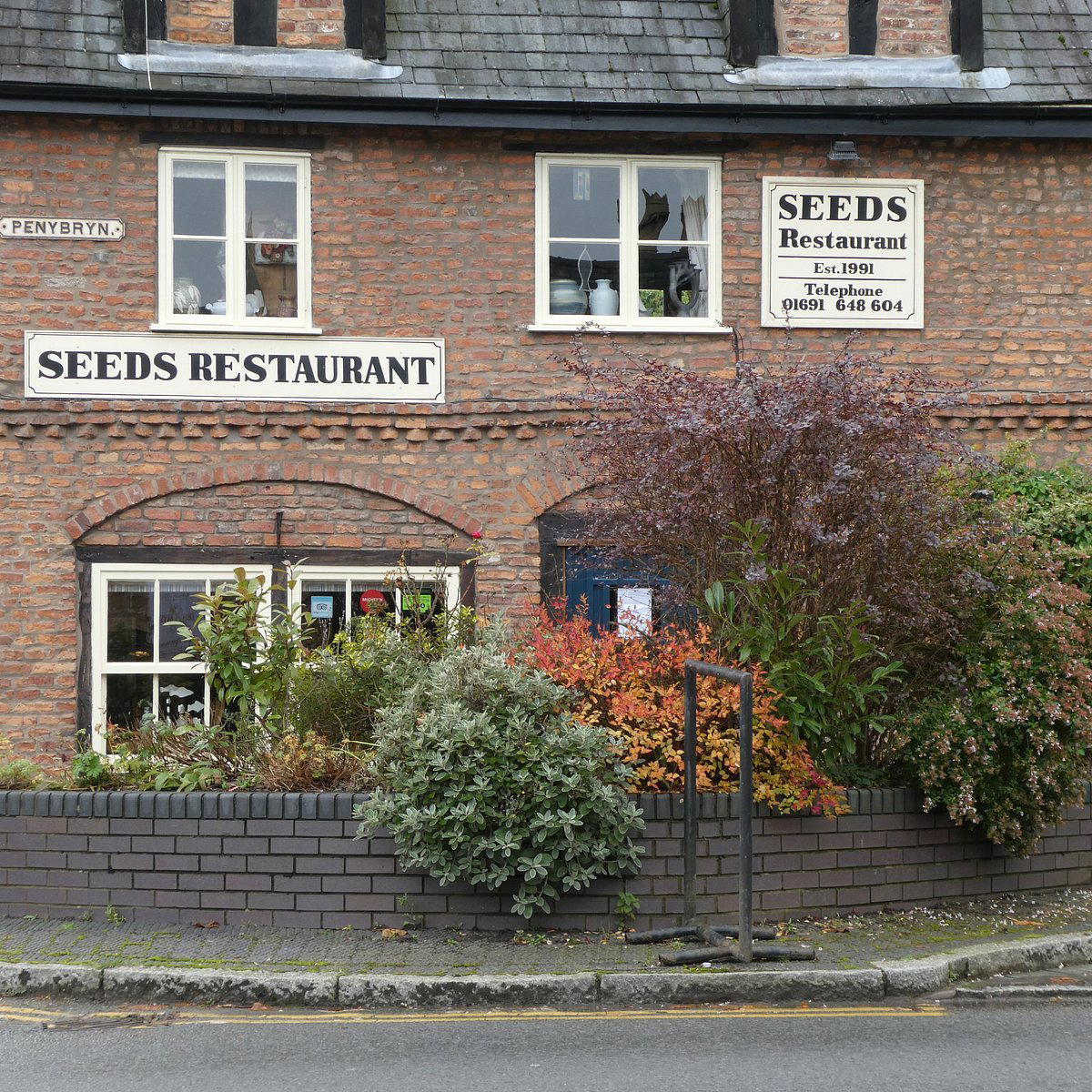
- 5-6, Penybryn Cottages, High St, Llanfyllin SY22 5AP, United Kingdom
- Phone
- +441691648604
- Hours
- Mon–Thu ClosedFri–Sat 6–9 PMSun Closed
- Directions
- Get directions
The menu
What to order
- Roast rack of Welsh lamb
- Fillet steak with brandy peppercorn sauce
- Treacle tart
Where Mid-Wales Puts Serious Food
The road into Llanfyllin from the A490 descends through sheep-grazed hillsides and past stone farmsteads that have supplied this part of Powys for generations. It is the kind of approach that, in certain corners of rural Britain, now precedes a genuinely considered meal. Seeds sits at 5-6 Penybryn Cottages on the High Street, occupying a compact terraced address that gives little away from outside. The interior scale is intimate in the way that many of the region's better small restaurants are: not a stage for spectacle, but a room that keeps attention on the plate.
Llanfyllin itself is a market town of around 1,400 people in northern Powys, historically a centre for the agricultural trade of the Tanat and Vyrnwy valleys. That agricultural identity is not incidental to what Seeds does. The valleys around the town produce lamb, beef, and dairy at a scale and quality that mid-Wales has long exported to buyers further east, often without much local credit. A restaurant working seriously with those supply chains is making a sourcing argument as much as a culinary one: that the raw material produced here is worth cooking at this address rather than being absorbed anonymously into supply chains heading toward Birmingham or Manchester.
This is a pattern visible across rural British dining. At L'Enclume in Cartmel, the connection to the Cumbrian coast and fells has become a defining part of the restaurant's identity and its critical reputation. At Moor Hall in Aughton, the kitchen garden anchors a sourcing story that runs through every tasting menu course. Seeds operates at a different scale and price point, but the underlying logic is similar: proximity to agricultural production creates opportunities for specificity that city restaurants, however technically accomplished, cannot replicate through supplier relationships alone.
The Sourcing Logic of Powys Farming
Powys is the largest county in Wales by area and among the least densely populated in Britain. The consequence for food producers is that land-to-table distances are short, and the variety of upland and valley terrain within a thirty-mile radius supports a wide range of produce. Welsh Black cattle, hill-bred lamb from the Berwyn foothills, game from the surrounding estates, and foraged material from the river valleys all sit within reasonable reach of a kitchen at this address.
The regional sourcing logic that applies here is one that has gained critical recognition elsewhere in the British Isles. Ynyshir Hall in Machynlleth, roughly forty miles to the southwest, built a nationally recognised programme substantially around Welsh-reared and foraged ingredients, and received sustained attention from the major guides as a result. Gidleigh Park in Chagford has used Dartmoor provenance as a throughline for decades. The point, in each case, is that terrain specificity becomes a form of culinary argument: the ingredient tells you something about where it comes from that a generic equivalent cannot.
For a restaurant in Llanfyllin, the sourcing terrain is unusually rich for a town of this size. The Vyrnwy valley carries its own microclimate, the nearby Tanat valley produces livestock grazed on unimproved hill pasture, and the River Cain runs close enough to the town centre to inform a kitchen's thinking about freshwater species and waterside forage.
Small-Town Dining in a Broader British Context
The comparison set for Seeds is not London. The relevant peer group is the cluster of smaller British restaurants, often in market towns or rural settings, that have built reputations through sourcing discipline and format clarity rather than through metropolitan visibility. The Hand and Flowers in Marlow, Hide and Fox in Saltwood, and 33 The Homend in Ledbury all represent versions of this model at different price points. What connects them is that the restaurant's location is part of the argument, not a compromise.
London's top-tier restaurants — CORE by Clare Smyth, Le Manoir aux Quat'Saisons in Oxford, or the Waterside Inn in Bray — operate with infrastructure, supplier networks, and price brackets that are not available to a small restaurant in a rural Welsh market town. What a place like Seeds can offer instead is directness: a shorter line between the farm and the plate, a room where the scale allows genuine attention, and a dining experience that is, by necessity, tied to what the surrounding countryside produces rather than what global supply chains deliver.
For visitors making the journey from Shrewsbury, about sixteen miles to the east, or from further afield along the A490 or B4393, the drive itself is part of the context. The town is not on a commuter circuit, and the restaurant does not benefit from passing trade. That means the audience it draws is largely intentional, and the atmosphere that results tends toward the considered rather than the casual. Planning ahead for a visit to Llanfyllin and including our full Llanfyllin restaurants guide in your research will give a clearer picture of what else the town offers alongside Seeds.
Planning a Visit
Llanfyllin is accessible by car from Welshpool (approximately nine miles) and from Oswestry across the border in Shropshire. Public transport options to the town are limited, making independent travel the practical choice for most visitors. The High Street address is within walking distance of the town's limited parking. Given the small scale typical of restaurants of this type, booking in advance is the sensible approach, particularly for weekend sittings. Specific hours, pricing, and booking arrangements are best confirmed directly with the restaurant, as none of those details are currently listed in public records.
For context on what comparable experiences look like elsewhere in the British Isles, the approach taken at Restaurant Sat Bains in Nottingham, Midsummer House in Cambridge, or Restaurant Andrew Fairlie in Auchterarder illustrates how smaller, format-driven British restaurants position themselves against the metropolitan tier. Seeds occupies its own point on that map, in a part of Wales where serious food has historically been underleveraged relative to the quality of what the land produces. For those who track the quieter end of the British dining circuit, the way attentive eaters follow Opheem in Birmingham or The Glenturret Lalique in Crieff for what they say about their respective regions, Llanfyllin and Seeds belong on the itinerary.
Frequently asked questions
Can I bring kids to Seeds?
Seeds is a small restaurant on the High Street in Llanfyllin, occupying a converted cottage setting at 5-6 Penybryn Cottages. The compact, intimate scale of the room means it suits families with older children more naturally than those with very young ones. check the venue's official channels to confirm suitability before booking.
What is the atmosphere like at Seeds?
The setting is a pair of stone cottages on Llanfyllin's High Street, which gives the dining room a low-ceilinged, close-quarters feel that reads as genuinely rural rather than styled to appear so. The town itself is a quiet market settlement in Powys, one of the least densely populated counties in Britain, so the pace outside matches the room. Expect a neighbourhood-scale atmosphere rather than anything resembling a destination dining room.
Is Seeds in Llanfyllin worth travelling from Welshpool or Oswestry for?
Llanfyllin sits approximately nine miles from Welshpool and a comparable distance from Oswestry across the Shropshire border, making Seeds a realistic destination for a meal rather than a passing stop. The relevant comparison is not urban restaurant density but the cluster of serious small-town British restaurants where the produce sourcing justifies the detour. Visitors making the drive are typically coming specifically for the Powys farming context that underpins the cooking at Seeds.
What do people recommend at Seeds?
What draws visitors consistently is the restaurant's relationship with Powys farming and the land-to-table sourcing that Llanfyllin's position in Mid-Wales makes possible. Checking recent visitor reviews closer to your travel date will give you the most accurate picture of the current menu.
Fast Comparison
Comparable venues nearby, for context on price, style, and recognition.
| Venue | Cuisine | Price | Awards | Notes |
|---|---|---|---|---|
| SeedsThis venue — the venue you are viewing | British-Welsh Cottage Dining | Not listed | Not listed | Not listed |
| Cafe Tabac | British Bohemian Cafe | Not listed | Not listed | Bold Street |
| Old Bushmills Distillery | British Comfort Food | Not listed | Not listed | Bushmills |
| Wreck | Modern British Bistro | $30–50 | The Good Food Guide GFG Good | Ropewalks |
| The Bookshop | Modern British Gastropub | $20–30 | The Good Food Guide GFG Good | Hereford city centre |
| Madresfield Butchers and Grill | British Farm-to-Fork Grill | $30–50 | Not listed | Great Malvern |
Continue exploring
More in Llanfyllin
Restaurants in Llanfyllin
Browse all →
Bars in Llanfyllin
Browse all →
Details
- Cozy
- Intimate
- Rustic
- Date Night
- Special Occasion
- Historic Building
- Set Menu
- Vegetarian Friendly
Current opening hours
- Monday
- Closed
- Tuesday
- Closed
- Wednesday
- Closed
- Thursday
- Closed
- Friday
- 6–9 PM
- Saturday
- 6–9 PM
- Sunday
- Closed
Hours can change for holidays and private events. Last verified .
Cosy and quaint with old wooden beams, simple wood tables with cushions, relaxed feel, and cheerful service.